


EA wanted a World of Warcraft killer when it bought BioWare in 2007, according to Dragon Age producer Mark Darrah. But he says BioWare's MMO, Star Wars: The Old Republic, never did WoW numbers, and EA's higher-ups always "hated" it as a result.
BioWare was first acquired in 2005 by a private equity fund alongside Pandemic Studios, makers of the original Star Wars: Battlefront games, and packaged under a single holding company. While Darrah notes that he was a programmer in this era, and thus didn't have a great insight into BioWare's financial situation, his "understanding is that we basically had no money left. We needed money to continue to exist."
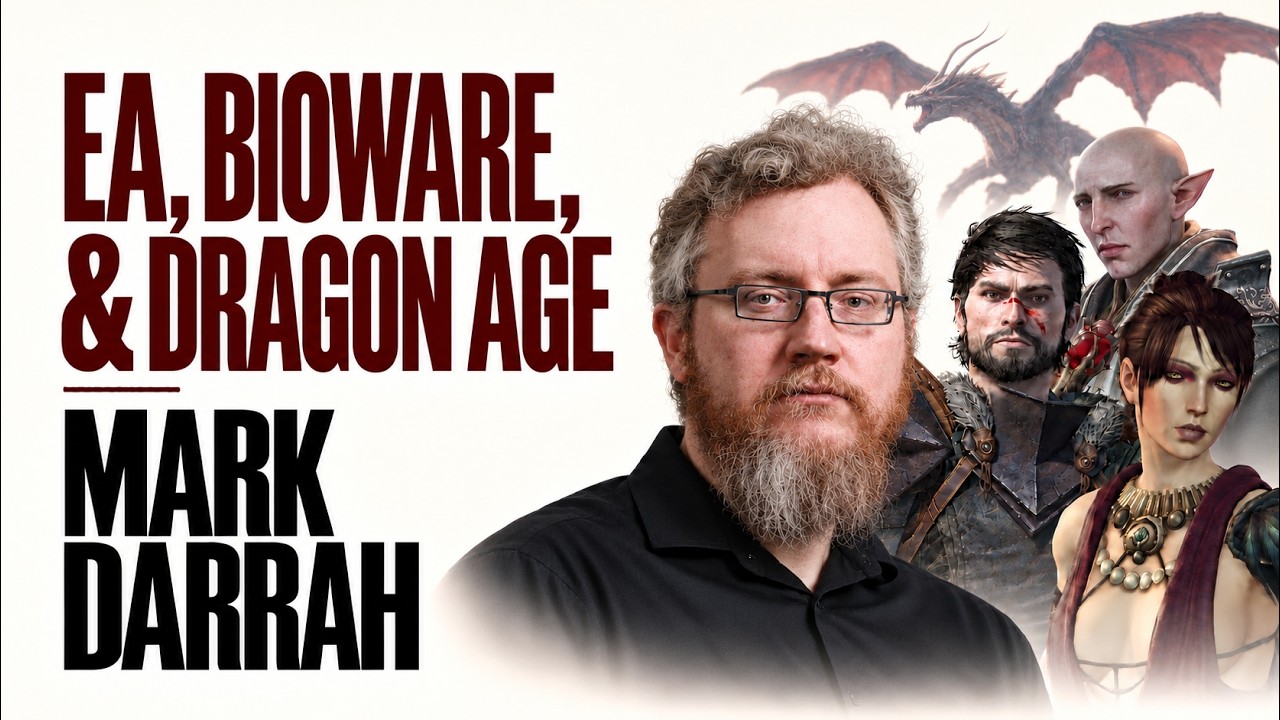
In an interview for podcast Pembridge TV, Darrah explains that BioWare intentionally "made games that were bigger than other people's games," and the studio continued to expand its scope by hiring more people. While the original studio, based in Edmonton, continued to develop single-player RPGs, BioWare opened a new studio in Austin, Texas to work on the massively multiplayer online game that would become Star Wars: The Old Republic. That, Darrah believes, is the true reason EA acquired BioWare.
"EA's always wanted everything to be a live service," Darrah says. "They just didn't use that language in the past. Back in the days before Destiny, the thing that was seen as the successful live service model was the MMO. Everyone wanted an MMO. World of Warcraft came out and totally redefined the space. Everyone wanted a World of Warcraft killer. I mean, it was Star Wars. Surely it could be the World of Warcraft killer."
So, as part of a package deal with BioWare's single-player RPG studio in Edmonton and Pandemic, EA bought its potential WoW killer. Darrah recalls speculating on why EA was laying out so much money for the acquisition: "It's like, 'okay, well, they really want Star Wars: The Old Republic. They want the MMO. They obviously want [Battlefront].' Then it's like, 'oh, and they're getting BioWare Edmonton.' For me, and for many people in Edmonton at the time of the acquisition, it looked like EA was buying Star Wars: The Old Republic and Pandemic and getting BioWare Edmonton as a side effect."
Of course, Pandemic ended up being an early casualty of the acquisition, as EA shut it down in 2009. "Star Wars: The Old Republic more than paid for itself eventually, but it took a really long time. The probably single best return on investment that EA got was BioWare Edmonton, even though it seemed like we were just an afterthought."
But while The Old Republic eventually made back EA's investment the publisher resented the game for failing to meet its lofty expectations at launch.
"EA hated SWTOR from the beginning," Darrah says, pointing particular blame at then-EA studios boss Patrick Söderlund. "They wanted it really bad, but all indication – and someone from Austin could probably speak to this more than me – it always seemed to me like they wanted it gone pretty much from the instant it launched and didn't hit its numbers. They never wanted to invest in it. They always wanted to push it out of the conversation. They talked about pulling people off of it for a really long time. But it did generate money."
Still, Darrah suggests that the exact same thing happened when BioWare made its next live-service game, Anthem. By that time, MMOs were looking like old news. "If you're not WoW are going to come out, and then they're going to go free-to- play and then they're going to slowly decay away," Darrah says. But he puts EA's perspective like this: "We don't want that. We want Destiny. Destiny's making so much money."
Then, of course, Anthem came out, had its moment, and slowly decayed away. The irony is that, at this point, The Old Republic – which is still running and receiving new content – is set to outlast Anthem, Destiny, and even BioWare itself.
"Maybe most corporations are incapable of learning those lessons," Darrah laments.

