





Black Panther was a cultural milestone for Black representation on-screen – and follow-up Black Panther: Wakanda Forever is walking in its predecessor's footsteps by bringing in a new side to the MCU that is rooted in Latin American mythology and culture.
Tenoch Huerta's Namor is ruler of Talokan, an underwater kingdom inspired by the mythical Aztecan Tlālōcān, in a change from the comics' Atlantis. He's joined by Namora, played by Mabel Cadena – and at a press conference attended by Total Film, both Marvel actors opened up on the importance of this representation in the sequel.
"It's amazing, we have Indigenous language for the first time in a movie like this," said Cadena. "To me, I feel proud about this challenge. It was really hard to learn about the Maya language, it's crazy. My coach said to me all the time, "Mabel, I want my people to be represented with dignity [with] this language, so you need to say it like [demonstrates accurate pronunciation].' It's like 'Okay, okay, okay, okay! Let me try again!' So yes, we have faced a lot of challenges, but I'm very happy because two days ago, when I watched the movie for the first time, as a Mexican woman, a Latin American woman, it's like, 'Oh my god, this is amazing.'
"This movie has a lot of diversity, a lot of colors, a lot of language, and I'm very proud to be part of something like this because it's not just a superhero movie," she continued. "And I think the first Black Panther movie, and all of these characters here, the legacy of that is, for me, to have the opportunity for people to be part of this world. And maybe before I never thought I could be a superhero, and now thanks to Black Panther, thanks to Ryan [Coogler, director], thanks to Kevin [Feige, Marvel Studios President], Nate [Moore, producer], and Lupita [Nyong'o], Letitia [Wright], Danai [Gurira], Chadwick [Boseman], I have this new opportunity for belief in me, in the world, in the fiction in my world. I have a new expectation about my career. And I'm very happy for being here."
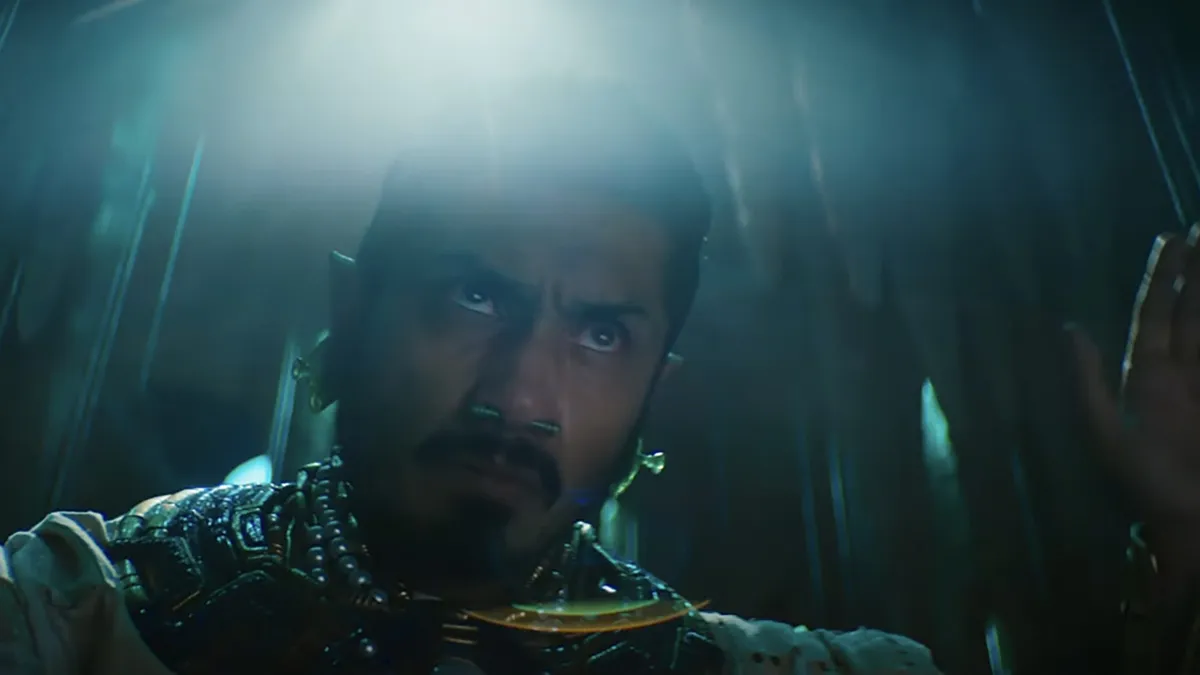
Huerta also discussed the change to Namor's lore. "When Ryan and all the team did decide to provide Namor with this background, it was a fantastic move. I think now is the perfect moment to speak about it. In Latin America, especially Mexico, we deny our Indigenous roots," he explained. "It's just like a token sometimes, but in general terms we deny it, because it's not about genes for us, because almost everybody in Mexico has Indigenous or African roots. It's about culture. So, culturally, we are apart from Indigenous roots. So, embrace those roots and honor these two sources, the main sources in Latin America, which is African and Indigenous roots, [they] are really important.
"And I hope this helps the people to embrace who they are, who we are, looking everybody at the mirror and seeing what is in the mirror is okay," Huerta added. "They taught us to be ashamed of who we are. But it's time to cut it off and say, 'Yeah, this is who I am and I never had [anything] wrong with me.' The mistake was in the eyes who were looking at us, who were judging us. Most of the time it was ourselves. So, it's time to change the glasses now, reconciliate who we are with our ancestors, with our grandparents, and embrace them. So yeah, be part of this movement, and now it's happening in a movie like this, Black Panther, Ryan Coogler and all this team, I think it's the best frame to talk about it, and that is exciting."
Black Panther: Wakanda Forever arrives in theaters this November 11 as the final movie of Marvel Phase 4. You can keep up to date with everything else the MCU has in store for us with our guides to Marvel Phase 5 and Marvel Phase 6.

