You are now subscribed
Your newsletter sign-up was successful
Want to add more newsletters?

Every Friday
GamesRadar+
Your weekly update on everything you could ever want to know about the games you already love, games we know you're going to love in the near future, and tales from the communities that surround them.

Every Thursday
GTA 6 O'clock
Our special GTA 6 newsletter, with breaking news, insider info, and rumor analysis from the award-winning GTA 6 O'clock experts.

Every Friday
Knowledge
From the creators of Edge: A weekly videogame industry newsletter with analysis from expert writers, guidance from professionals, and insight into what's on the horizon.

Every Thursday
The Setup
Hardware nerds unite, sign up to our free tech newsletter for a weekly digest of the hottest new tech, the latest gadgets on the test bench, and much more.

Every Wednesday
Switch 2 Spotlight
Sign up to our new Switch 2 newsletter, where we bring you the latest talking points on Nintendo's new console each week, bring you up to date on the news, and recommend what games to play.

Every Saturday
The Watchlist
Subscribe for a weekly digest of the movie and TV news that matters, direct to your inbox. From first-look trailers, interviews, reviews and explainers, we've got you covered.

Once a month
SFX
Get sneak previews, exclusive competitions and details of special events each month!
Hear ye, hear ye! Prime Day GPU deals are actually a thing this year, and it's restoring my faith in graphics card offers. The catch? Well, it's actually Newegg providing the Nvidia price cuts rather than Amazon, whereas Big Deal Days is catering to AMD builds.
The trick with Prime Day GPUs is finding models for under MSRP, and that's way harder than you'd expect. That's largely because custom versions of graphics cards like the Nvidia GeForce RTX 5070 and AMD Radeon RX 9070 tend to drift from their chip maker's recommended pricing, but Newegg and Amazon are offering restorative discounts.
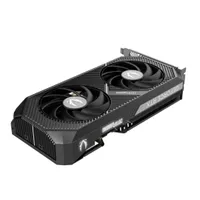
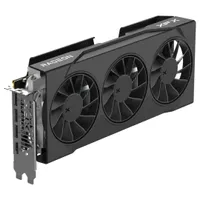
Both of these cards are down to what I'd call a fair price this Prime Day, but the RTX 5070 is the better deal on paper. That said, there are reasons to go for Nvidia or AMD when it comes to features and AI upscaling, as both companies use a slightly different approach.
For example, if you're purely looking to boost fps and aren't fussed over whether you're gaining "real frames", the RTX 5070 is the way to go. DLSS 4 uses Multi-Frame Generation that can increase average frame rates by 4x, resulting in a massive perceivable performance uplift.
The tool really comes in handy when trying to max out settings while still satiating the best gaming monitors with ridiculous refresh rates, and it's the reason why Nvidia felt like it could claim the RTX 5070 boasts GeForce RTX 4090 performance. Just so you're aware, that's not remotely true when it comes to native performance, but Multi-Frame Generation will help speed things up massively while curbing latency using Nvidia Reflex.
On the AMD side of things, the RX 9070 leans less into AI upscaling with FidelityFX Super Resolution 4 (FSR 4). You're still getting neat Frame Generation tricks, but the card will stick to doubling your fps count. For most of you, this will still be more than enough to get you well over the 60fps sweet spot in most games, but you'll be limited if you have a monstrously high refresh rate monitor.
Where the RX 9070 manages to trump the RTX 5070 is with AI upscaling versatility. Thanks to AMD's driver-level Fluid Motion Frames feature, you can actually turn on Frame Generation in almost every game. This means you don't have to wait for developers to bake in support, in turn giving you the option for boosting performance in older games. Stability and latency will vary based on the game, but it does technically mean you can boost fps in more games with the RDNA 4 card versus Blackwell.
It's worth pointing out, too, that in games like Cyberpunk 2077 and Hitman 3, the RX 9070 actually edges slightly ahead of the RTX 9070 with AI upscaling off. Most of you are going to at least enable Super Resolution where available, but it is impressive to see AMD actually outpace Nvidia here. It still doesn't quite beat the GeForce card when it comes to ray tracing, which has been a common theme throughout the last few generations, but the mid-range RDNA 4 card is still pretty impressive.
Picking either the RX 9070 or RTX 5070 comes down to your desired level of AI assistance. If you just want silly frame rates in most new games, Nvidia's mid-ranger is a safe bet. If you've got a big backlog and don't want to tweak settings to achieve a respectable fps count, the new Radeon card will be more useful.
What I will say is that an Nvidia refresh is very likely on the cards, and we could soon see RTX 5070 Super options arrive to challenge AMD. I suspect such a GeForce GPU would be looking to take on the beefier RX 9070 XT since it has a lead over the green team's current offering, so you may want to either hold off or go for a higher spec card if you're at risk of performance FOMO.
Looking for more Big Deal Days offers? Swing by Prime Day gaming PC deals for reduced rigs, Prime Day monitor deals for display discounts, and Prime Day Nintendo Switch deals for console options.

You must confirm your public display name before commenting
Please logout and then login again, you will then be prompted to enter your display name.