I first played Wanderstop when it released back in March, and it's rarely been far from my mind ever since. Initially, I was drawn to the narrative-driven, self-proclaimed cozy game for its tea shop management set-up. But as I got further into protagonist Alta's story, I started to see unexpected reflections of myself. As a fallen fighter whose sword is weighing her down, Alta's battle in Wanderstop is one that's ultimately with herself, and I felt such a deep, personal connection to the journey she goes through to recognize her own internal struggle.
Together with the comforting ritual of making tea and the reassuring message it infuses with darker themes, developer Ivy Road brought to life an experience steeped in meaning and vibrant color. Sitting down with studio founder and writer and director Davey Wreden – who's best known as the creator behind The Stanley Parable – I leapt at the opportunity to ask what initially sparked the idea behind the game that's stayed with me throughout 2025:
"Just doing nothing"


GamesRadar+ presents Year in Review: The Best of 2025, our coverage of all the unforgettable games, movies, TV, hardware, and comics released during the last 12 months. Throughout December, we’re looking back at the very best of 2025, so be sure to check in across the month for new lists, interviews, features, and retrospectives as we guide you through the best the past year had to offer.
As Wreden tells me, Wanderstop had been in the works in some capacity for almost nine years. The concepting phase began in 2016, before the project properly got underway in 2018. While the idea of a cozy game these days is nothing new – having exploded so much in recent times that its given shape to its own genre – it was a different story when the idea behind Alta's journey started to form.
"Cozy games were not really a genre back then," Wreden says. "Stardew Valley had not come out, and so it certainly at the time felt a little bit more subversive to think like, 'Ooh, I'm going to make a game about just doing nothing'."
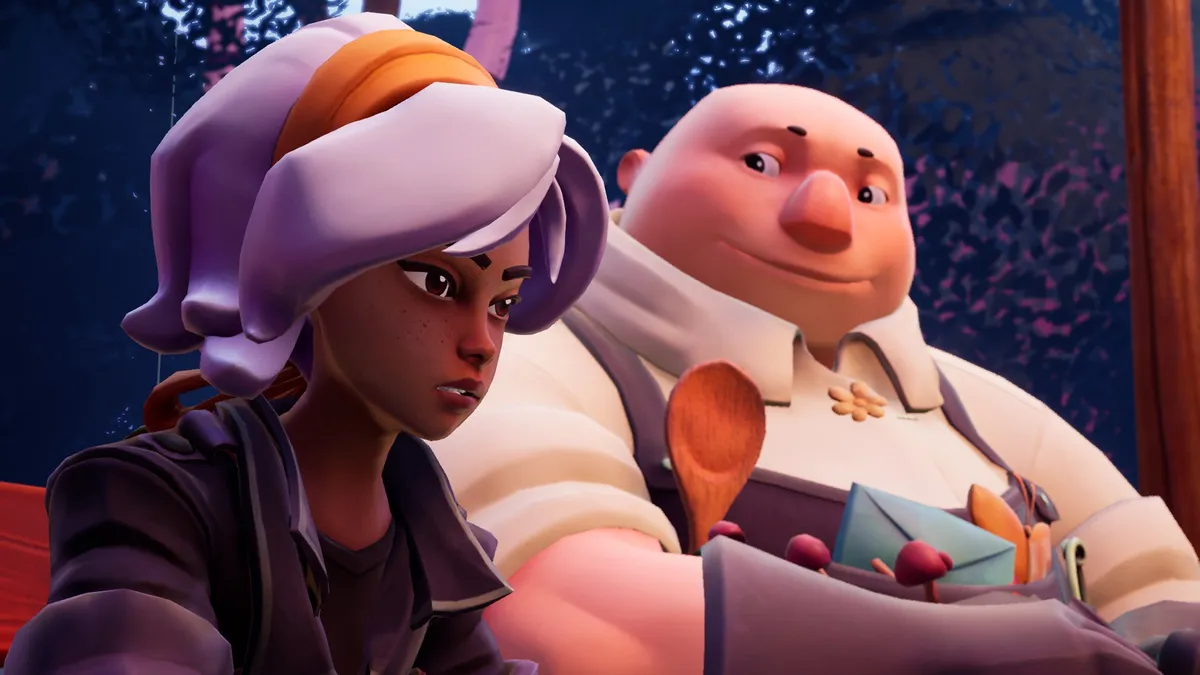
At a surface level, the idea of doing nothing is what Alta is trying to come to terms with. When we first meet her in a forest, it's evident that she's suffering from burnout, and the sword she's always wielded as a fighter has now become too heavy for her to even lift. Once so in-tune with the weapon to the point it felt like an extension of her, this change makes her feel like a failure. Angry and confused, she pushes herself until she can't go on, only to awaken beside Boro; a big, warm, welcoming figure who owns a tea shop in the forest clearing known as Wanderstop.

Since "the making of tea is good for the soul and body", Boro encourages Alta to put down her sword for a while and rest by helping out at the tea shop. Whether it be growing ingredients, gathering tea leaves, or brewing different blends in a giant beaker-like device, I love the soothing ritual of making tea in-game. Boro was initially just going to run a shop, but Wreden explains that ultimately the meditative nature of tea "gave us so much opportunity for gameplay and narrative stuff that would have been very difficult otherwise."
The tea itself gives Alta the space to reflect throughout the story, with different blends evoking different feelings that conjure memories. As the player, we get more insight into her past and her thoughts and feelings, but the tea also helps to connect us with the other colorful characters we meet in the forest clearing. Each and every one requests a different kind of tea we have to set about making, but they all have their own stories to tell, and through them, Alta learns more about herself.
Having worked on the game for over eight years, Wreden says "a significant amount of it was just finding those characters". Boro, though, was "fully formed right at the start" of the project. The big loveable tea shop owner is hands down the most comforting presence I've encountered in a video game, offering encouragement and support to Alta with so many kind words and lines of dialogue that I think about often.
To me, Boro is the personification of a warm hug. Learning that Wreden channeled Studio Ghibi's Totoro as the "sort of grounded, rooted in the Earth, reassuring creature that will always be there, and has this kind of calming presence about him", it's no wonder I grew so attached to his presence as a kind of mentor, friend, and confidant.
Not an easy fix

Wanderstop review: "Exalting the transformative power of tea"
Boro came to be "the voice of reassurance that I wish occurred to me more naturally for myself," Wreden explains, and after expressing how comforted I was by the character, Wreden adds that he's "really grateful to try and be that voice for other people.".
"I think where that was coming from was just like, 'What's the dream version here?," Wreden says of Boro's encouragement. "What's everyone's ideal fantasy of like, the most, 'I am here for you. I promise you everything is going to be okay. I am definitely, definitely here to assure you that you're going to be fine.' And I don't know maybe it's a little bit of a fantasy, but that was kind of what happened. I was like, 'Oh, I wish I felt this way'."

While there's a very hopeful message at the heart of Wanderstop, Wreden and the team wanted to make sure that it wasn't "overly saccharin", and more importantly, that it's made clear that Alta isn't going to be magically okay because of her experience in the clearing with Boro.
"She is not just all better now because she went through this," Wreden says. "To me, that was the thing I needed in order to be like, okay, if I'm going to have the game be so overwhelmingly supportive and on your side and reassuring you that it's gonna be okay, then I had to balance that out with the reality of: that doesn't just fix Alta and make her all better, there's still a lot of work to go from here."
Moving on

"The dark thing in me hasn't gone away just because I'm working in a more colorful palette."
Davey Wreden
It's clear Wreden put so much of himself into the game. Alta reflects his own feelings, and all of the characters speak to some part of him. And just as Alta isn't fixed by her time making tea, "working on a cozy project doesn't make you feel good, intrinsically", either.
"The dark thing in me hasn't gone away just because I'm working in a more colorful palette," Wreden says. "As that started to become apparent, and I started to realize that I wasn't going to be satisfied with this game until I found something more sort of incisive to use it to talk about, I essentially just said, 'Oh, okay, well, then I'm going to talk about the fact that just making a cozy game isn't enough to heal a person', right? And that's kind of where Alta's story came in".
"This is me talking about my feeling of, not just not to burn out – burnout is certainly the symptom – but what does it mean to have a relationship with yourself, that's like, 'I wish I was a different person other than who I am'," Wreden says. "And seeing burnout as kind of the several steps down the line is a manifestation of that. And so certainly, as far as Alta is concerned, there was not much thought as to, 'how will I get people to understand this who aren't already a little bit like this?'. It was kind of like, no, I'm just going to tell it the way that it feels to me, and if you get it, then you get it."

As Boro says, "seeing is a wonderful first step" when it comes to Alta's introspective journey. The road to recovery is often a long one, and Alta recognizing her own struggle is that first step. I certainly resonated with the narrative, but upon reflection, I also appreciate the way Wanderstop lets you set your own pace.
You're free to enjoy the space the game presents you with for as long as you want, and then decide when to move on – whether that be in the forest clearing when you want to progress to the next part of the story, or at the closing part of the game, when Boro lets you choose when you're ready for it to end.
"To me, I want a game that not only feels like it's moving toward an ending, but people accepting the finality of it is an intrinsic part of it," Wreden says. "Especially in the cozy game genre where things are more expected to be in plastic and forever, and you know, it's supposed to go on infinitely so you can spend your whole life doing it. And I was like, no, I want something that's in contrast to that, that it feels like the point of it is that it stops."
While Wreden didn't set out to make a game that will resonate with everyone, he ultimately hopes that "if you see this thing in you, then maybe it'll mean something", later adding that, "I'm very grateful when people have these really meaningful experiences with it."
And for me, Wanderstop meant so much that I don't think I'll ever completely move on from it. It's the kind of experience I'll always carry with me.
You must confirm your public display name before commenting
Please logout and then login again, you will then be prompted to enter your display name.