It's 2026 and I'm about to finish Divinity Original Sin 2 for the first time. If you've managed to keep up with my journey so far, from killing all my friends in Fort Joy to fully appreciating the game's non-D&D systems by the time I reached Arx, you'll know it's been a wild ride.
But it's also been an illuminating one. I've compared and contrasted Divinity and Baldur's Gate 3 a hell of a lot lately, remarking on all the things each game does differently, many of which I did not expect. But putting the RPG systems themselves aside (this isn't a Larian vs D&D argument), it's incredibly impressive to note how every last one of my bones to pick with Divinity Original Sin 2 is rectified in BG3.
Home improvements

Once I stopped treating Baldur's Gate 3 like a video game, I finally got good at it
These two games chart Larian's analytical process, identifying key areas of improvement in DOS2 and making good on the promise to tackle them next time. Baldur's Gate 3 is that proverbial "next time" – and it's probably why the game is considered the best RPG of all-time, let alone a perfected Larian game.
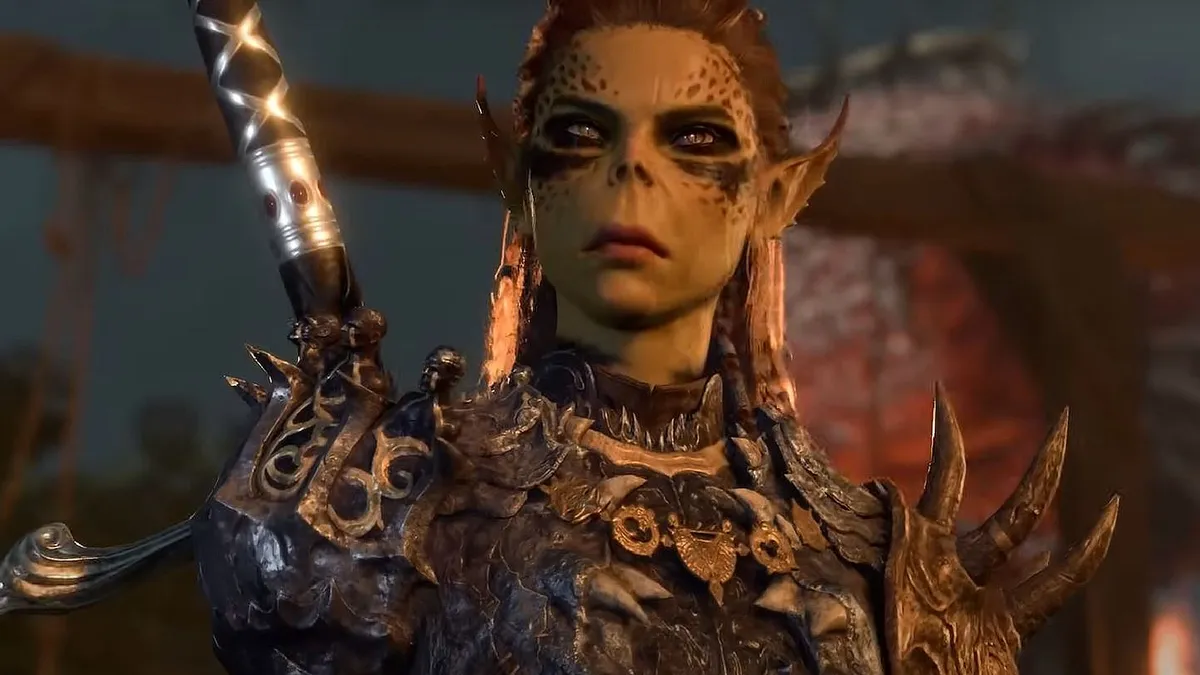
One of the most glaring improvements made in Larian's latest is immersion, especially with regards to companions. I still adored getting to know Fane, Sebille, and The Red Prince in DOS2, but the third-person closeup cutscenes and dialogue of Baldur's Gate 3 make it much easier to empathize with my party members. Each facial expression and quirk of physicality firms up the image of them in my mind, making it all the easier to get wrapped up in their side quests.
Meanwhile, Divinity Original Sin 2 leans on its narrator to detail a character's micro-expressions and other actions in-dialogue. It might emphasize the TTRPG elements of the game, but it does make it hard for me to judge a character's true intentions when almost the whole game takes place from a top-down perspective.

But it's not just the camera angles and animation Larian improves upon. Side characters and companion stories feel far more meaningful in Baldur's Gate 3, building on the already solid foundation of DOS2 and pushing it further still. Small choices made in the game's earliest moments – like what to do with the tieflings at Emerald Grove – have consequences throughout, as do your decisions in response to your companions' own requests and storylines.
Faerûn feels dense and alive, a web of intersecting moments and tales that cross paths with your own. I couldn't help but notice that, while Divinity Original Sin 2 still feels just as purposeful and well articulated, the absence of certain party members is painfully pronounced. A small child asks if I ever knew someone called Ifan, and I know he's one of the companions I accidentally left for dead after leaving Fort Joy. Whenever an Eternal is mentioned, I think how fortunate I am to have Fane recruited to my party. The coldness of the dwarves toward my elven Godwoken are a reminder that Beast would have probably been useful for dealing with Lohar in Driftwood.
All of these are poignant moments in their own right and serve to remind you of the choice you made, but the bittersweet nature of them stands; you can't see all companion storylines to the end in a single playthrough, and that is something Baldur's Gate 3 rectifies.
Keeping up

Baldur's Gate's Lower City is what Arx was supposed to have felt like
Moving away from character and format, BG3 also manages to smooth out some of DOS2's pacing issues.
I mentioned in one of my recent op-eds how hard it is to gain experience and levels in those early Fort Joy hours, which only feels more pronounced when I note the 10 levels I gained in mammoth-sized Act 2 next to the two or three I squeeze out of Act 3's Nameless Isle. Act 4 also feels incredibly short so far, with only a handful of main and side quests to run through before heading toward what I assume is the big finale against Dallis.
With four acts of varying lengths, Divinity Original Sin 2 can feel unpredictable. Baldur's Gate 3, on the other hand, feels more evenly weighted; acts one and three seem to occupy most of my time when I play, with Act 2 being a very thematically rich yet comparatively short experience to add a little breather in between. Some might argue that Act 3 is overly long and full of content, but I'd argue that Baldur's Gate's Lower City is what Arx was supposed to have felt like: thriving, chaotic, teeming with adventure.

I even see the improvements in the most minute of places. Take the dye bottles in DOS2, for example, which were initially only for dyeing the color of potions. I still haven't worked out how to use them to dye my armor; supposedly this function was added post-launch, but unless you need to use some sort of machinery to help, it doesn't seem to work at all for me. Baldur's Gate 3 makes armor dyeing simple and highly enjoyable. Simply combine the item and dye in your inventory menu, and hey presto.
I also appreciate the unique appearances of each armor and equipment piece and how they actually match their icons in-game. I've been let down far too many times by a supposedly cool-looking new helmet or chest plate only to have it turn into another generic piece of tree bark-like elven garb once equipped to my Godwoken.
I could go on about all the ways Baldur's Gate 3 enhances and elevates Larian's core RPG experience, from more complex mission design with clearer signposting, fewer throwaway battles, and less of a push toward going full murderhobo if you want to grind XP. But like I said, this is not meant to be me complaining about Divinity Original Sin 2. Far from it.
This is me showing sincere appreciation for all of Larian's hard work in fine-tuning its formula. It only fixes that which is broken – or at least, that which needs a little refinement – while hanging on to the core of what makes its games identifiably theirs. As we learn more about the new Divinity game, I can't wait to see how the studio ups its own ante once more. Yeah, I don't know if that's possible, either … but something tells me we haven't seen anything yet.
Divinity is one of many upcoming RPGs on the way if you're keen for more Larian

You must confirm your public display name before commenting
Please logout and then login again, you will then be prompted to enter your display name.