You are now subscribed
Your newsletter sign-up was successful
Want to add more newsletters?

Every Friday
GamesRadar+
Your weekly update on everything you could ever want to know about the games you already love, games we know you're going to love in the near future, and tales from the communities that surround them.

Every Thursday
GTA 6 O'clock
Our special GTA 6 newsletter, with breaking news, insider info, and rumor analysis from the award-winning GTA 6 O'clock experts.

Every Friday
Knowledge
From the creators of Edge: A weekly videogame industry newsletter with analysis from expert writers, guidance from professionals, and insight into what's on the horizon.

Every Thursday
The Setup
Hardware nerds unite, sign up to our free tech newsletter for a weekly digest of the hottest new tech, the latest gadgets on the test bench, and much more.

Every Wednesday
Switch 2 Spotlight
Sign up to our new Switch 2 newsletter, where we bring you the latest talking points on Nintendo's new console each week, bring you up to date on the news, and recommend what games to play.

Every Saturday
The Watchlist
Subscribe for a weekly digest of the movie and TV news that matters, direct to your inbox. From first-look trailers, interviews, reviews and explainers, we've got you covered.

Once a month
SFX
Get sneak previews, exclusive competitions and details of special events each month!
Elden Ring Nightreign was a brave experiment, but not a wholly successful one. It's a swing, and while it's not a miss, it's also not exactly a home run. It's such a significant twist on a formula so well-defined and so beloved that it was always going to struggle to find its core audience, an attempt to fit the niche into the mass-appeal.
But while that might make Nightreign a strange victor on our best multiplayer games of 2025 list, the very fact that FromSoftware was prepared to give a project like this a chance will see it stand as one of this year’s most important titles — and I don’t think this is the last time we see an experiment like it.
Adapt or die


GamesRadar+ presents Year in Review: The Best of 2025, our coverage of all the unforgettable games, movies, TV, hardware, and comics released during the last 12 months. Throughout December, we’re looking back at the very best of 2025, so be sure to check in across the month for new lists, interviews, features, and retrospectives as we guide you through the best the past year had to offer.
In many ways Nightreign is just more Elden Ring, and in the relative FromSoftware drought we find ourselves in after Shadow of the Erdtree and ahead of The Duskbloods, that was clearly welcome.
It's more casual than anything the solo Lands Between experience offered, but there was a zen-like quality in whaling on an unfortunate boss that I enjoyed, safe in the knowledge that even if I did get whacked, I wasn't going to get combo'd to pieces without one of my allies repaying our foe in kind.
And over time, as we learned the intricacies of the ways Nightreign's maps work — the speedy routes from place to place, the bosses that might be lurking around certain corners — it became less of a game of individual skill and more of optimization. It was still the Elden Ring we know, but with its own unique qualities. It's a game where as long as you're lucky enough to have friends to play with, playing as a team is far more important than defying overwhelming odds on your own.

That twist, away from raw ability and towards team-based efficiency, where picking the wrong fight at the wrong time could spell doom even if you won, was a fascinating adjustment to the Elden Ring format.
With the genre expertise that FromSoftware has spent decades refining, Nightreign was unlikely to be anything but a success from a technical standpoint. But restructuring the Soulslike format remained a gamble, an experiment around the studio's core ideas that wasn't a guaranteed success.
And while Nightreign's moment-to-moment gameplay is as clean as Elden Ring's ever was, that experiment still wasn't wholly successful. But in the years to come, it could prove crucial.
Good Night
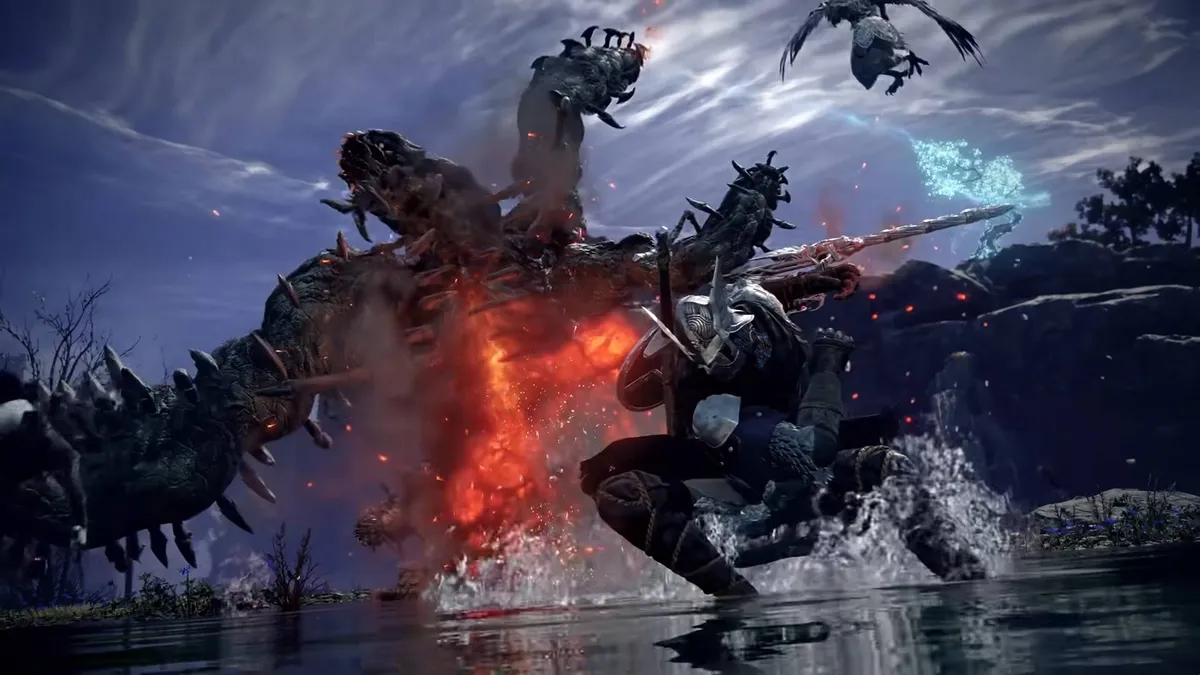
It's an adaptation that feels like it truly understands both parts of itself - the Soulslike and the roguelike
Depending a little on your Soulslike skills, your mileage may vary, but I think there's 40-50 hours of gameplay where Nightreign is as good a twist on the original formula as I could have hoped for.
While you're getting your head around the best way to use the map to your advantage – contending with Shifting Earth, finding the best Relics, and remembering which version of Bell-Bearing Hunter you should flee from in abject terror – the roguelike structure is an excellent addition. It's repetitive enough to ensure you can actually develop the skills needed to progress, with enough random chance that runs feel meaningfully different from one another. It maintains the threat inherent to an hours-long Soulslike game, while granting enough resources to the player that it never feels trivial. It's an adaptation that feels like it truly understands both parts of itself - the Soulslike and the roguelike - in which no one genre feels totally dominant over the other.
As you gradually gain mastery over Nightreign, streamlining each run until you're maxing out your levels and finding time to actually think about your build rather than grabbing any weapon you see, the roguelike structure starts to wane.
Know the game, and you know your limitations. Know those, and the threat of Limveld starts to dissipate. You're not likely to die mid-run once you're familiar with Nightreign's tricks, which usually means hitting the roadblock of the Nightlords instead.

In standard FromSoft fashion, some of these final bosses are excellent pieces of design, and some of them are…not that. The less said about my experience fighting Augur, the better. But eventually you start ticking off each Nightlord too, and then Heolstor falls, and the world of challenging Everdark bosses and Deep of the Night beckons. And it's here for me that the Nightreign experiment faltered.
By the point at which you're ticking off Everdark bosses, you're about as intimately familiar with Nightreign's core experience as you're ever going to be. Often, I found that meant running the same route around the same map to look for the same gear, only to reach a final boss and get whacked by a moveset designed to be far more punishing than the original.
Both sides of Nightreign's late-game avenues are designed to give dedicated players enough to do that this spin-off can match-up to the original, and that means applying a lot of friction in a way that doesn't really match the roguelike feel of the rest of the game. In the end, I think my trio eventually decided we'd had enough collective beatdowns, and wordlessly decided to move on.
Onto the next?

Nightreign will stand as a message about how useful it can be to continue serving your audiences
If I sound peculiarly negative for a 'Best Of' retrospective right now, that's because my intention is to explain why the Nightreign experiment was only mostly successful, rather than a runaway triumph.
FromSoftware nailed the new, streamlined Elden Ring format, but didn't totally stick the landing on creating a roguelike endgame that could last dozens of extra hours. And that's fine – I got dozens of hours in before I hit my personal wall, and I had a great time. But even if Nightreign didn't totally excel from a design standpoint, it deserves recognition for a different reason.
As the amount of time between major AAA franchise releases swells into decades at some studios, projects like Nightreign will become an increasingly important part of the games landscape. Sure, you could be like Bethesda and re-release Skyrim 117 times in-between Elder Scrolls releases, or like Rockstar with a 13-year gap from GTA 5 to GTA 6, but I'm much more interested in what else could fill those spaces.
My mind turns to games like The Blood of Dawnwalker or Exodus, more modest projects attempting to occupy the space left open by the cadences of series like The Witcher and Mass Effect. Ironically, FromSoftware's intense workrate means that it's one of the bigger names that could get away without launching interim projects like this, but I hope that the success of Nightreign will stand as a message about how useful it can be to continue serving your audiences, even away from your biggest releases.
Look back on the year with our GamesRadar+ GOTY: The 25 Best Games of 2025 list.

You must confirm your public display name before commenting
Please logout and then login again, you will then be prompted to enter your display name.