


Unless you’ve been living under a Geodude for the last five years, you’ll have probably noticed that Pokémon cards are everywhere. Yet while fans are scrambling to collect full arts and crypto bros are inexplicably treating new sets like lucrative investments, many seem to have forgotten that these beloved bits of paper were actually made to be played with. The question is, then, how do you begin to build a deck?
While you may have memories of being humiliated by a chocolate-coated Charizard back in the school playground, Pokémon TCG has come a long way since the '00s. Boasting over 1 million dollar prize pools and attracting millions of viewers today, Pokémon cards have slowly become one of the deepest and most popular and best card games on the planet.
Yet, despite Pokémon’s cute and cuddly exterior, taking your first steps into the world of competitive 'mon can be surprisingly intimidating. So, to help you make the jump from crazed card collector to Pokémon master, we picked the brains of the greatest minds in competitive Pokémon TCG. Seeking advice from pro player Drew Stephenson (who finished second place in the 2026 Pokémon Europe International Championships) to esteemed Pokémon World Championship TCG commentators, Joe Bernard and Ross Gilbert, here’s a guide on how to build a super effective battle-ready deck that will set your local TCG night ablaze, getting your IRL Ash Ketchum journey fully underway.
1. Build your engine first
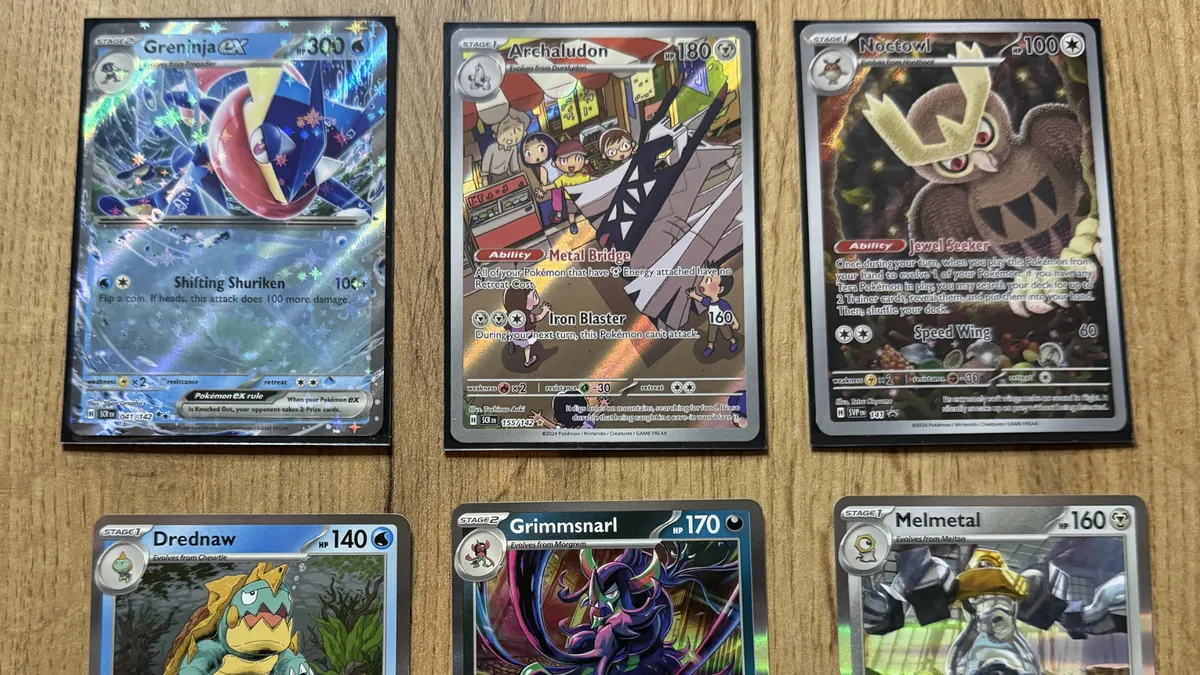
All trainers want to be the very best, and in order to get this TCG train rolling you’ll need a good engine powering your deck. An engine in Pokemon TCG is a set of cards that work together to rapidly draw, search for, or cycle through cards in your deck. So, in other words, before picking your main ‘mon attackers, you need to establish how your deck draws cards and sets up.
Ross Gilbert: "Think about your engine first. Don't pick your deck; pick your engine. Once you've picked the engine you're playing, then you can think about what kind of Pokémon to play along with it. The vast majority of the time, the best decks all have a really good engine to draw cards and get rolling."
If you want to build a deck using the most recent cards, Delta Reign just launched. Walmart has the most readily available stock right now, but be aware that artificial inflation and resellers have increased the cost. Meanwhile, UK fans should head straight to Amazon thanks to its 'invite by request' system keeping costs down.
Drew Stephenson: "You've got to think of your deck as an engine... The best thing to look at when you're trying to build a deck is synergy. If I have a card, I want it to also work with another card in my deck. I wouldn't put an Item card in my deck that only searches for one specific Pokémon if it's unlikely I'm going to be able to find it to then get another one. You want it to run well, link in with each other, and function smoothly. If you can make it so your deck always functions smoothly in the games you're playing - whether online or with your friends - that's where you want to be."
2. Don't Undervalue Trainer Cards

We all know that putting together a deck filled with badass Pokémon is the most fun part of deck building, but without trainer cards, you may never even draw the killer ‘mon you’ve built your deck around.
Drew Stephenson: "New players always undervalue Trainer cards. You have limits on what you can do on each of your turns: you can attach one Energy, and you can evolve a Pokémon once each turn. With an Item card, you can play as many as you want during your turn. They're the power cards that dictate the game."
Joe Bernard: "The fundamentals of deck building really are: you always want your deck to be functioning in the first place, so you need to have a healthy amount of searching cards, drawing cards, and Trainer cards that just get you into games."
3. Master the three essential trainer pillars

Every competitive deck relies on three core types of Trainer cards to stay consistent and interact properly with your opponent. Which specific cards have proven essential throughout recent tournaments? You’ll have to hear it from the pros…
Ross Gilbert: "There are three types of cards to think about:
- Search Items: You need an Item that searches Pokémon, like Buddy-Buddy Poffin or Ultra Ball.
- Draw Supporters: A lot of the time, the format will be defined by the draw Supporters that we have available… cards like Lillie's Determination that refuel your hand.
- Gusting Effects: Cards like Boss's Orders that target benched Pokémon. Gusting has been fundamental since Base Set - you've kind of got to run it."
Joe Bernard: "From a raw consistency standpoint, Ultra Ball is so versatile because it can get any type of Pokémon. Lillie's Determination is by far the best Supporter card... and gusting effects like Boss's Orders give you a turn-faster win condition by targeting Pokémon trying to power up."
Drew Stephenson: "The effect of Lillie's Determination is that you play it, shuffle your hand into your deck, and draw eight cards, so you can think of that as being able to get more pieces to build your engine. Having that and Buddy-Buddy Poffin, which searches out your Pokémon, means you can develop your board and really get into playing the game."
4. Prioritize consistency over "Tech" cards

Thanks to the prevalence of deck-building websites, many players simply opt to copy common meta decks, or build their decks around countering prevalent meta decks at competitions. These pros argue that instead, you should focus around making a strong and versatile deck that plays well on its own, rather than worrying about a deck that only works against one incredibly specific matchup.
Joe Bernard: "Consider covering the weaknesses of your own deck and being aware of what else is being played. There's no point in having a strategy that's really good at beating some decks if those are the decks you're not going to face in a tournament. You need to have your finger on the pulse of what's popular.
Simplicity is key. A common trap is to be so focused on one matchup, rather than making your own strategy the problem for someone else to overcome. Whenever you can see clean lists with four counts of the cards you're trying to play, it means you can replicate that strategy much more consistently. Execute your strategy as often as possible."
5. Don’t be afraid to innovate

Learning the basics of a 30 card deck in TCG Pocket is a great place to master the basics, but once you are ready for the full fat physical experience, websites like Limitless TCG let players easily find and build the best decks. Yet where the prevalence of easy to access information should in theory provide a world of deck-building possibilities, instead it has largely driven people to replicate the same proven current meta decks. The pros tips? Be brave, innovate!
Drew Stephenson: "With the increase in popularity of the game, and with technology, everyone wants easy access to decks, knowledge, and information. You see a lot of stuff online with winning deck lists - one tournament will happen, and then everyone will be playing against it or playing with it. So there's actually a bit of a lull in creativity in the game right now.
But because of that, since everyone is so used to certain things, having a spark of creativity yourself gives you quite a big advantage. That's why you see a lot of creative decks and spicy strategies doing well right now, and that's personally my favourite part of the game. I've always done well by introducing a bit of creativity into my deck lists."
Ross Gilbert: "I recommend everyone go to Limitless TCG. You can look at individual decks and see how common certain cards are. Net decking is fantastic - grab a list online, copy it, play a bunch, and as you play you can slowly adapt proven decks to your personal playstyle."
Want another trading card game with a slightly different pace? Here's how to play Magic: The Gathering.
- See the latest offers on Pokemon cards at Amazon

