
This interview was conducted before Swen Vincke's comments about the use of generative AI in Divinity were made public. In his full comments, Vincke insists he is not "pushing hard" to use AI, and is yet to see significant workflow improvements related to the technology.
No matter how you divide the series up, it's been a long time since the last Divinity game. Original Sin 2 came out in 2017, RTS spin-off Dragon Commander is 12 years old, and you have to go back more than a decade and a half to reach the last numbered Divinity title. The series' history stretches back almost another decade beyond that, and its DNA can be traced to 1992's Ultima 7. It's a meandering lineage, and according to Larian boss Swen Vincke, that's something the studio hopes to change with Divinity.
Down by the river
The shadow of Baldur's Gate 3 stretches over Divinity. This is the game that Larian opted to make instead of sticking with the D&D ruleset, its beloved cast, and the millions of sales that came with it. For Vincke, it's all part of the same journey.. "Divinity: Original Sin 2 was the blueprint for Baldur's Gate 3," he says. "BG3 and D:OS2 are the blueprint for Divinity. You take those games together and you get an idea of what we're going to be doing in this Divinity."
D&D outlined to Larian how powerful "having a solid universe behind you" can be - an idea it could easily build on thanks to the depth of Divinity's world. With Baldur's Gate 3 offering the chance to "go cinematic," and Original Sin 2 teaching the studio a huge amount about how to craft a detailed, pen and paper experience within the confines of a video game, Divinity is an attempt to bring all of those ideas together, something that's largely possible because the team's recent successes mean it finally has the resource to do that.

"The gameplay we did in our previous Divinity games is the type of gameplay we really like," Vincke explains. "It's a mix between systems and agency-driven narrative." With the cinematics Larian can now place on top of that combination, the team already has "a very powerful cocktail" on its hands. But it's striving to push that arrangement further: "We're trying to maximize everything; the agency you have in expressing your identity and the world's reaction to that; the agency you have in your character development; the agency you have in combat, the agency you get in exploration, and then obviously the agency that you get into the narrative."
"If you take Divinity: Original Sin 2, and you make it cinematic, that's exactly what [Divinity] looks like"
Baldur's Gate 3 means that Larian can now bring those ideas together with the "very high production values" it's spent years working on, but Divinity itself also allows the studio to push beyond that RPG juggernaut. "BG3 was a fine game," Vincke says, "but the problem with BG3 was that we had to port an existing tabletop ruleset into a video game, which came with limitations." Now that it's working in its own world, Larian can "do it the way we think it should be done." Freed from the problems it had with some aspects of the D&D ruleset, it can now "push the limits" of its own universe a little further than it could before.
Vincke is keeping Divinity's exact inspirations close to his chest, but the structure is clear: "if you take Divinity: Original Sin 2, and you make it cinematic, that's exactly what [Divinity] looks like."
Game's got hands
It becomes increasingly apparent how intrinsic the dual pillars of player agency and cinematic production values will be. "It's a game about power and how to use it," Vincke explains when I ask him what exactly Divinity is. "It's going to be a game about hope, about bringing light into the darkness, or snuffing out the last remaining lights." The Game Awards trailer, with its Wicker Man-esque conflagration, is the perfect example. "You could stop all of this. You could step in and say 'no, this is not going to pass'. Or you could be the guy that was responsible for setting that guy on fire. It's a game that's going to give you lots of choice, where you're going to have to decide how you use power."
That's no small mission statement, and Baldur's Gate 3 has shown the lengths that Larian will go to give players as much freedom as possible. But even with the iterative success of D:OS2 and BG3 shaping Divinity, there are challenges for the studio to overcome in realizing its next game. Now at the helm of a far larger company than before, Vincke acknowledges that keeping the team aligned is a lot of work. But greater difficulty lies in bringing this project to heel. "One of your colleagues wrote a piece about how games refuse to be made," he tells me, "and we had that."
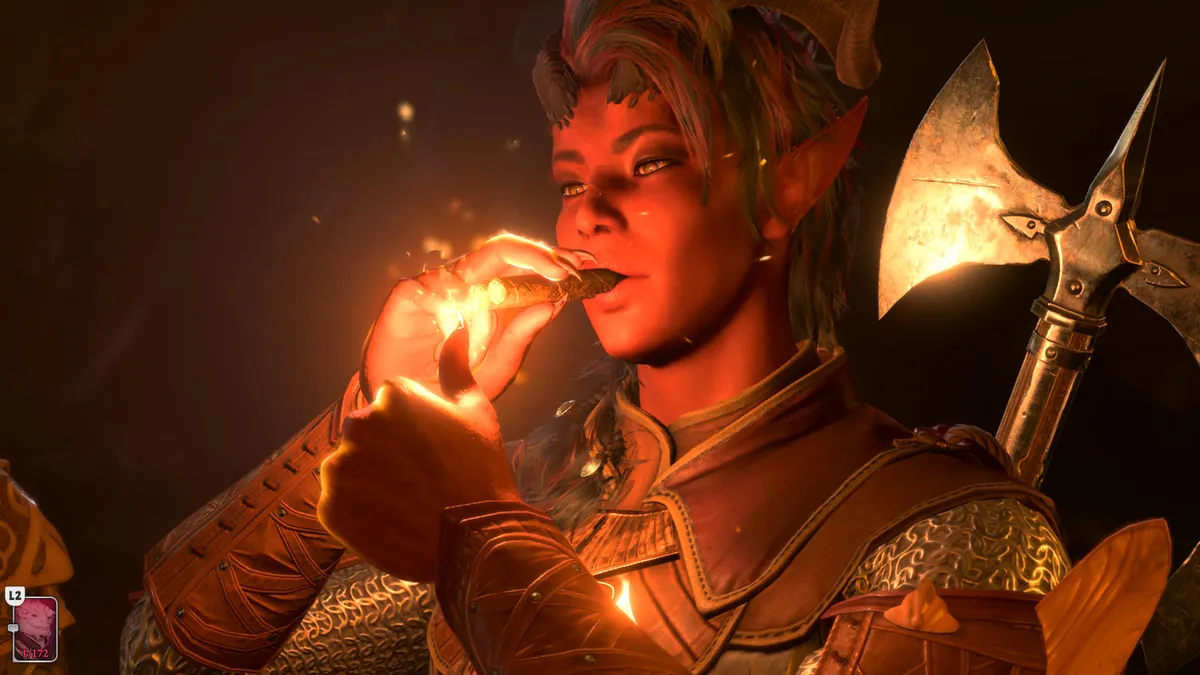
Divinity has been fighting against Larian "for a couple of years now," but the studio has finally won. "I think it gave up its resistance. We're in production. But it was really interesting to see that that still goes even if we have all these resources. It's really annoying, because every game has its own identity and its own language that you have to talk to. So it took us some time to figure it out, but I think we've got it, more or less, now."
A desire to innovate, high levels of ambition, and sky-high expectations haven't always helped Larian in that fight, and Vincke already knows that "something is gonna have to compromise." But a level of excitement – one that wasn't present when the team was considering sticking with D&D after Baldur's Gate 3 – certainly helps.
Work with us
While the days of Kickstarter funding are probably over for Larian, the team definitely wants to do early access. "It's been the blueprint," Vincke says, "especially the community participation, which is what interests us."
"D:OS, D:OS2, BG3, [players] were a large part of how we developed the games. The games improved massively through early access. Players being invested in it increases the pressure and their participation in it, so you get something really cool out of that process, even if it's painful for the developer. We have to swallow our pride and say 'ok, you guys are right, we're wrong, you've made your point'. And it causes extra development efforts, but it leads to a better game, which is ultimately the goal of the entire exercise."
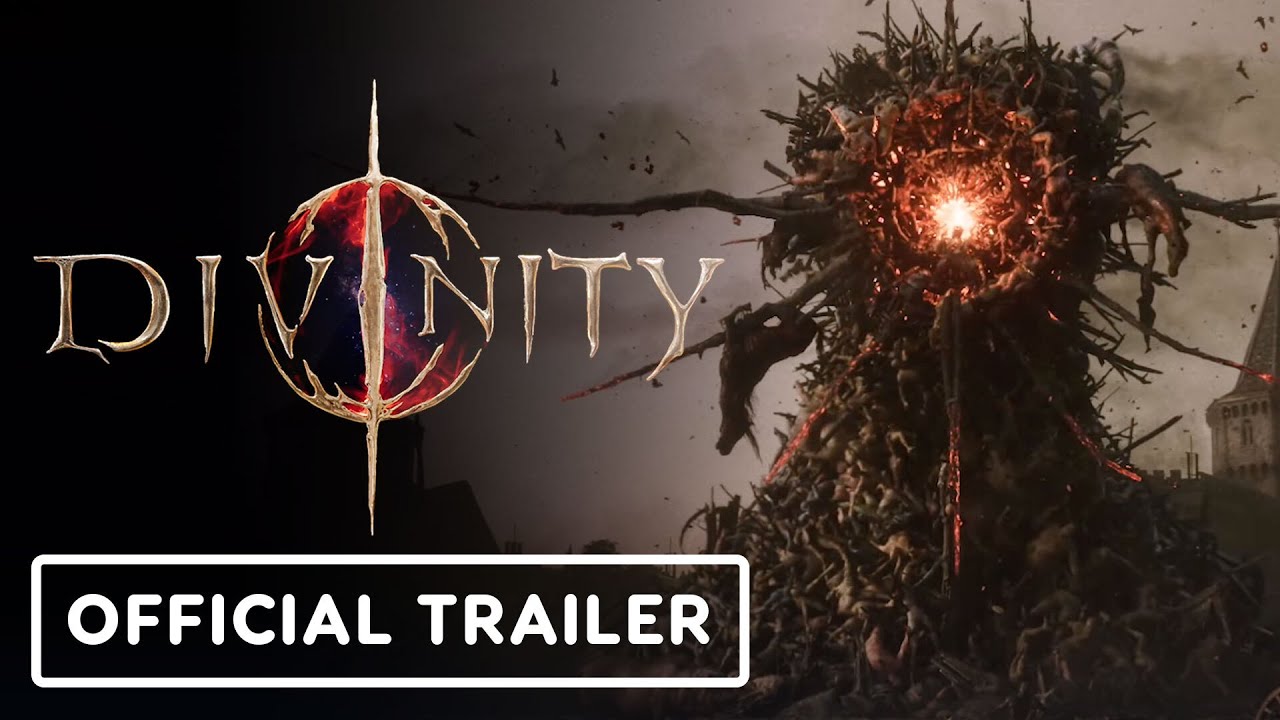
Whatever shape that desired early access might take, it's clear that Divinity is the natural next step for Larian, especially in the wake of Baldur's Gate 3's cinematic push. Vincke won't be drawn on all of Divinity's secrets, but hints that it will feature a complex, mechanical change that "has always been part of where we wanted to do." It's been hard work, but he says that "it's starting to work out, with gameplay that really excites us when we see it."
The idea that this is a natural next-step might just be the most interesting aspect of Divinity. Amid the series' complex, varied past is a through-line that Larian has been refining for more than 20 years and is finally coming into full view. Baldur's Gate 3 felt like the zenith of that process, but now Divinity wants to climb even further. "We're trying to give you high-quality production values for something where you messing around with systems that the game offers affects the narrative, and vice-versa. That goes all the way back to our beginning, when we tried to make a game that was inspired by Ultima 7, because that's literally what Ultima 7 did, except with the means of back in the day. We're basically continuing on that journey."

You must confirm your public display name before commenting
Please logout and then login again, you will then be prompted to enter your display name.


