


One of the Lord of the Rings' immutable truths is that Elves are, for all intents and purposes, immortal. They can still die in battle, but only rarely. Which makes the case of Elros all the more perplexing.
Elrond's twin brother Elros is shown for the first time in The Rings of Power season 3 and with his appearance comes questions: can Elves die of old age? And how can they turn mortal in the first place? With the fate of Numenor hanging over much of the fifth episode, and Elrond following in his brother's footsteps, we feel it's time to delve into one of The Lord of the Rings' most unexplored and unexplained figures. It's time to learn all about Elros.
For more, we have The Rings of Power season 3 timeline and everything you need to know about The Dark Wizard's identity.
What happened to Elros in The Rings of Power season 3?

The first time viewers encounter Elros (also played by Elrond actor Robert Aramayo) in The Rings of Power season 3 is in the opening 10 minutes of the fifth episode, during a First Age flashback.
There, Elrond is shown sketching his mother. Elros reminisces fondly about the emergence of Numenor from the sea and of the Valar allowing elves to choose to become immortal.
Elros questions the decision to become immortal and reveals a gray hair. He has decided to become mortal and to become the first king of Numenor.
"You traded immortality for a crown?" Elrond asks. For Elros, though, is it a matter of honor and to serve the Men who he fought alongside against Morgoth. It is a chance for him to be a "beacon of hope" in the west and to set the tone for a new age.
As the episode then establishes, Elros does become king and is revered for his stewardship of Numenor. So much so, in fact, that his identical twin is treated with the same sort of respect when he lands ashore.
How did Elros turn mortal?
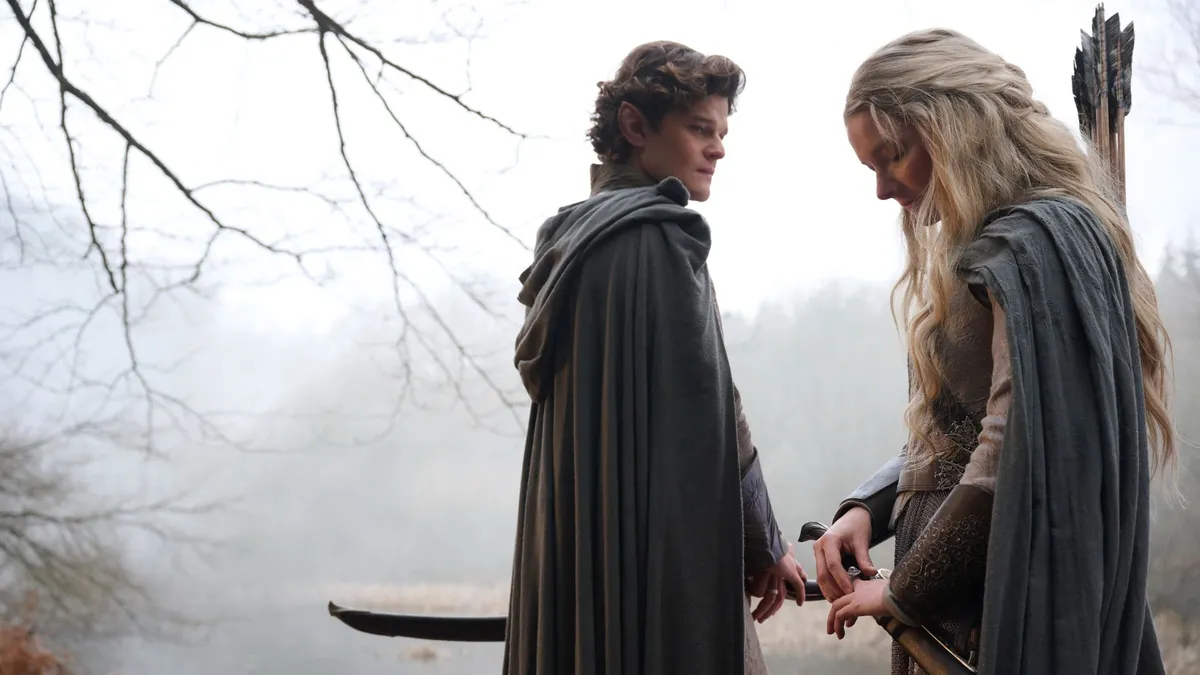
The first point of order is that Elves can die, but not as we know it. In Tolkien's works, if an Elf is killed by more conventional means then its spirit heads to the Undying Lands and the Valar (essentially agents of Middle-earth's god) can bring them back to life. As shown in Lord of the Rings, Elves can also head there willingly as their bodies begin to wear out – particularly in times of great change in Middle-earth.
But then there's Elros. Being a half-Elf and the only remainder of the lineage of Men in the First Age alongside his twin Elrond, he was given a choice by the Valar. As shown in Tolkien's works, Elrond chose immortality, and Elros chose a reduced lifespan in order to guide the island of Numenor to prosperity. He ruled over the Men for over 400 years, eventually dying at age 500.
In The Rings of Power, the actual how of it is a little muddled – perhaps to reduce the presence of the otherworldly and all-powerful Valar over a story that is more concerned with Sauron. But the facts remain the same: Elros decided to become mortal to aid and lead Numenor, and was gifted with that ability by the Valar. Elrond, however, decides to stay immortal – and go down a path that would lead him through several conflicts with Sauron before eventually heading to the Undying Lands in the Third Age.
The Rings of Power season 3 is now streaming.
For more, we have information on early screenings for the next episode, as well as The Rings of Power season 3 release schedule.

