


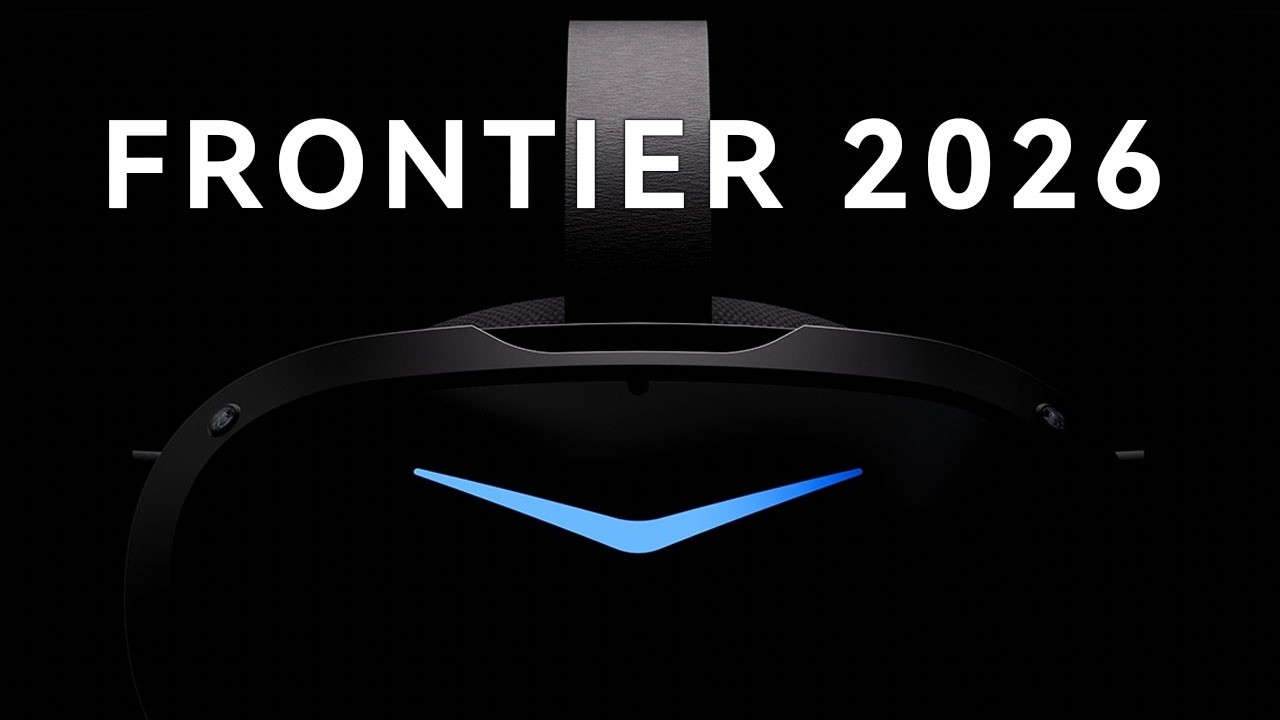
High-end VR brand Pimax is making big strides to combat Valve's re-entry into the XR market. The creator of the classic Crystal and more recent Dream Air headsets has announced new hardware, including the Pimax Crystal Pro, a new VR headset that targets a lot of the appeal of Valve's Steam Frame. Alongside it are controllers that magnetically snap into a full gamepad, a mini PC that looks just like the Steam Machine, and to top it all off, the brand has swapped its green and black color scheme for a Valve-reminiscent black and blue.
The Pimax Crystal Pro is a standalone VR headset running on Snapdragon's XR2 Gen 2 processor, but it also has a DisplayPort connection for true, lossless PCVR gaming. That said, its wireless mode is where the focus clearly is, because Pimax is dead set on solving the wireless VR image compression problem.
"Every single wireless headset in the world compresses the image," says Japp Grolleman, brand and communications manager at Pimax.
"Each frame gets squished through a codec to fit through wireless connection, and you pay for that squeeze... that's not a flaw of any one product; it's just how wireless VR has always worked. So we asked, what if it didn't have to?
"That question is the reason this headset exists."
The Crystal Pro, like the Steam Frame, will come with a dedicated Wi-Fi 6E dongle for a unique channel connection to a PC you want to stream games from. The difference is that it'll utilize a 60G AirLink, which is a bandwidth that "nothing else" utilizes. The trade-off with this type of connection, which Pimax has experimented with before, is that it won't pass through walls, so Pimax is offering a $599 AirLink kit that sports two USB-C antennas that attach to the back of the headset. Both of these send and receive a signal to ensure blockages don't disrupt the flow of data.
Using Pimax Play, the brand's dedicated software home for its devices, you can tilt and position them for the best connection in your gaming room or house.


For even further reassurance that the connection is uncompressed and not disrupted, Pimax is utilizing beam aiming using infrared signals in the antennas and USB dongle to ensure the signal is being sent directly to the headset.
The Crystal Pro will also feature what Pimax is calling "native foveated streaming" - a concept which Valve has coined with the Steam Frame but has since been adopted by Virtual Desktop. By narrowing down the focus area of the user using 10 infrared emitters per eye polling at 120Hz, the Crystal Pro can sharpen the image quality even more where it counts.
The rest of the headset's specs only bolster all of this innovation. It uses aspheric lenses as opposed to the pancake lenses that have proven popular after the Quest 3's arrival. Pimax says they give more accurate tracking, a cleaner view of your eye, and better viewing angles.


To save weight but add comfort, the Crystal Pro will give you a separate battery puck that you can keep in your pocket, like the Apple Vision Pro. Unlike the Steam Frame, it'll have a fixed headband to distribute weight. It'll also sport a magnetic, snapping facial interface.
Tracking is done via Pimax's SLAM software, which has now been improved to work better in dark surroundings, but different faceplates can provide different functions like full-color passthrough and base station tracking. There are three microphones on the headset, two for your voice, and one for noise cancellation. Valve Index-like audio speakers are available separately, but the integrated ones will likely do the trick for most gamers.


In a departure from Pimax's previous Mini-OLED devices, the Crystal Pro will feature 2880 x 2880 QLED panels per eye with a 110° FOV and refresh rates up to 120Hz. The ringless VR controllers are very reminiscent of Valve's Steam Frame controllers in that they're a full gamepad split in half. Conveniently, they can snap together with a magnetic centrepiece that turns them into a traditional gamepad for flat-screen gaming.
At the same time, Pimax is launching Spation, a desktop-class mini-PC specifically built around VR play, supporting Windows and SteamOS. There hasn't been a price announced for the Spation, but the Crystal Pro will set you back $1,399 (or $1,899 with the 60G AirLink kit bundled in).
In reference to Valve, which got a lot of mentions in Pimax's full-length announcement video, Jaap Grolleman said, "We admire what Valve has built in the same way we admire what the Quest 3 delivers at its price. These two share real common ground."
For more on VR, take a look at the best Meta Quest accessories.

