Playing NES classics like Super Mario Bros has always irritated the retro console purist within me. While I've tried just about every version of the Koopa stomping plumber's rescue mission on everything from the first Ninty to crusty clone systems and the official Game & Watch retro handheld remake, I've always felt like the true colors aren't actually reaching my eyeballs. However, it turns out that there isn't actually a set way Nintendo Entertainment System graphics are meant to look, and that implies every version is technically correct.
I can already hear the retro gatekeepers picking up pixellated pitchforks, but you'll want to hear me out before forming an angry mob. In a new explainer titled "Why do NES colors look so different in emulators?" YouTuber MattKC breaks down exactly why your version of Mario doesn't look the same as others. In a nutshell, it all ties back to the original hardware and its use of NTSC TV broadcast color standards.
MattKC explains that due to the extremely wide tolerances of the broadcast standard that were originally designed to mitigate varying results caused by transmission interference or different CRT TV circuitry, there is no consensus on how the console should look. Again, unlike a set RGB signal, NTSC uses luminance and chrominance values to encode color and brightness, and results can vary massively depending on your setup.
This serves as an explanation as to why the version of Mario you potentially played on an emulator, or even the official Wii Virtual Console port, looks different from an actual NES or more modern editions. Hilariously, it seems that even Nintendo isn't quite sure how the game is meant to look since tributes in the likes of Mario Maker look nothing like the OG console.
I should be clear that there are ways to force RGB out of your OG NES, but the console's PPU won't do it natively. Effectively, you have to catch the color palette data before it's converted into a composite signal and translate the values into RGB using a mod board. The thing that might upset enthusiasts is that even if you do fork out for a board based on the highly regarded Tim Worthington design, the visuals still aren't technically "right", as even the developers would have been creating their vision using specific setups and composite video.
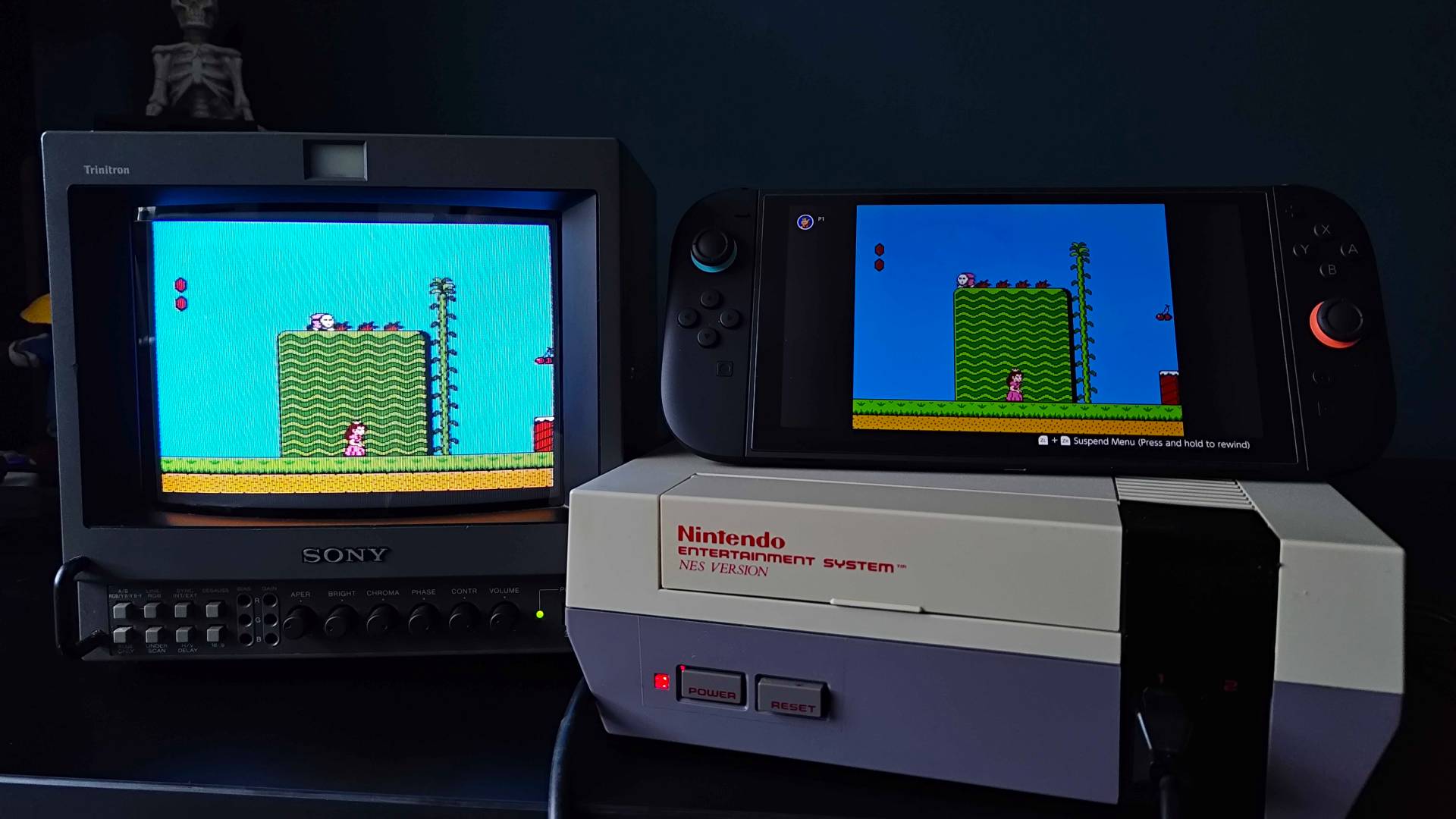
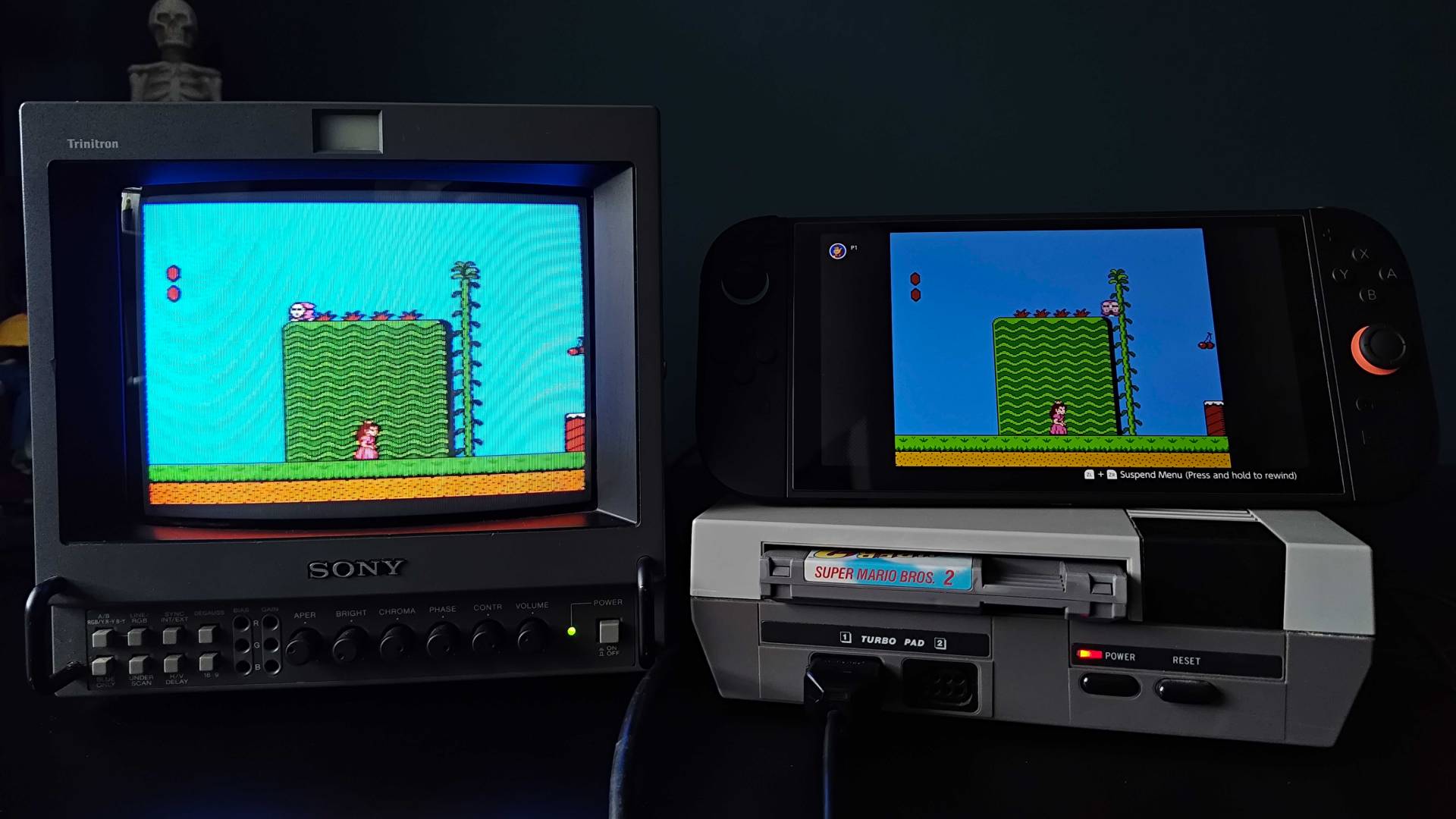
The very thing that both MattKC's explainer and I are getting at is that even if you can get a scientifically accurate RGB signal from an NES, it doesn't mean it's authentic. It'll look crisp, yes, but it might be extremely hard to make Mario look like it did when you were a rugrat parked in front of an '80s tube TV. I'll admit that you can apply that to every signal retro console since cables and signal types can change visuals, but Nintendo's first console does it in perhaps a more noticeable way.
For me, the takeaway is that I'm going to beat myself up less about using my unmodded NES or even my janky NASA clone system when it comes to colors. There are certainly other accuracy caveats tied to using different hardware and emulators, as SoCs (System on a Chip) and emulation can cause speed issues with music and gameplay. But, when it comes to how that ominous Mushroom Kingdom sky looks, I'm going to care less about whether it should be off-purple or baby blue.
Retron 1 HD | $39.99 at Amazon
Retro-bit Duo | $59.99 at Amazon
Classic N HD | $39.99 at Amazon
This PSA has actually arrived just in time for MAR10 Day, and I reckon it's worth looking at how you want to play the legendary NES game. Being free from the voices telling you that OG modded hardware is the most authentic way to play should make diving in a little easier, and I'm not going to judge you for picking up something like the Hyperkin Retron 1 emulation-based box for $39 versus vastly more expensive RGB modded systems or kits that will transform a Famicom at Aliexpress (effectively a version of the latter mod in a complete package).
If it helps, I'll actually be using the Mario Game and Watch ($47.99 at Amazon, FYI) to celebrate MAR10 Day since my original NES is actually on loan to someone. Yes, I only just noticed this, and I'm now sending some awkward messages to friends as part of a retrieval mission.
Already using Valve's handheld for the classics? Swing by the best Steam Deck docks to use your portable as a big-screen console hybrid.

You must confirm your public display name before commenting
Please logout and then login again, you will then be prompted to enter your display name.