 Join The Community





Before testing the Marseille mClassic, I was skeptical about the Nintendo Switch accessory. Simply put, I wasn’t convinced it could improve the console’s graphics using just HDMI, as it felt like a big ask for a relatively small dongle. Yet, here I am six months later with the device permanently wired into my setup, and I don’t think I could play the latest Ninty releases without it.
The mClassic normally goes for around $99.99, and that’s understandably a premium price to pay. However, if you mosey on over to Amazon, you’ll be able to grab the dongle for $84.99. This is the lowest price we’ve spotted for the dongle for this year, and if previous price trends are anything to go by, you might have to wait for the majority of 2024 to see similar or lower discounts pop back up. Typically, the dongle stays at full price, then dips to this sort of level or slightly lower during big events like Black Friday, but no guarantee it will happen in six months time.
The $15 discount should make your wallet a bit happier, but I genuinely think this device is one of the best Nintendo Switch accessories for anyone using a 4K gaming TV. Is it an investment? Absolutely, but it’s going to give some of the greatest outings on the gaming handheld a glow-up. I’ve been slowly making my way through Super Mario Odyssey with my partner (yes, I know, we should have completed it months ago), and we immediately noticed the difference one night when I’d accidentally switched the upscaler off.
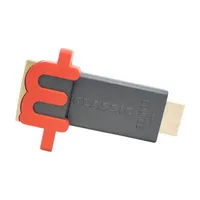
As for how the mClassic actually works, it’s effectively an upscaler that’ll bump Nintendo Switch visuals up to 1440p and throw anti-aliasing into the mix. That latter feature is something most players associate with their gaming PC, but in this instance, it helps to smooth out jaggy edges and artifacts caused by scaling low-resolution graphics. It’s easy to forget that the Switch launched back in 2016, so both its aging hardware and 1080p output really benefit from some external processing magic.
Should you buy the Marseille mClassic?

The mClassic won’t be for everyone, and even with a discount applied, Marseille’s device is on the pricey side. Players who are using a big gaming monitor or TV are probably going to benefit from this dongle the most, as Switch visuals can look a bit ragged sprawled across a large screen at 4K. More often than not, external solutions are much better at upscaling to UDH than a display’s built-in hardware, not to mention the company’s anti-aliasing algorithm goes a step further to smooth things out.
It’s also worth noting that the mClassic isn’t just a Nintendo Switch accessory, and you’ll be able to plug in almost anything that uses an HDMI cable. It even has a dedicated mode for retro consoles that will preserve things like aspect ratio while scaling things up, which will come in handy if you like firing up the PS2 or OG Xbox from time to time. That said, I personally wouldn’t use this device for older 2D games with an 8-bit or 16-bit aesthetic, as the anti-aliasing will mess with the whole blocky vibe from that era.
Ultimately, the Marseille mClassic won’t save Nintendo’s handheld from being inevitably sent to the retirement home. However, it will keep visuals looking that bit nicer until the Switch 2 arrives armed with modern hardware. At least that’s if it provides native 4K graphics, as I might still end up using this dongle if that doesn’t pan out.
Looking for more accessories? Swing by the best Nintendo Switch controller and best Nintendo Switch case for nifty add-ons. Alternatively, take a peek at the best Steam Deck docks if you’ve upgraded to Valve’s handheld.

