





The Antec Core HS just officially launched, and I’m pretty on board with the best gaming handheld contender’s current price. While it’s technically not the PC component maker’s own device, as it’s actually a rebranded Ayaneo Slide, the portable PC starts at $499.99. That’s low enough for me to consider it a true Steam Deck and ROG Ally rival in terms of cost, and future devices should follow suit.
Available for $499.99 direct from the Antec store, the Core HS is effectively another way to buy the Ayaneo Slide. Many of you might be wondering why you wouldn’t just buy the original version since they’re the same device, but the OG starts at $799 for a 512GB SSD and 16GB RAM. If you’re in the UK, you can grab the 2TB/32GB handheld at eBuyer for $549.99, which is naturally cheaper than importing Ayaneo’s version.
Simply put, opting for a different badge will help you save a chunk of change on an AMD Ryzen 7 7840U handheld gaming PC that can pump out the same frame rates as the Asus ROG Ally and similar portables. In testing, I found that both managed to hit around 63fps in Cyberpunk 2077 (low settings, 800p) and largely provided the same levels of stability across numerous games.
Of course, there’s more to the Core HS than its snappy APU, as it uses Ayaneo’s slidey QWERTY keyboard design, pivoting 1080p screen, and hall-effect thumbsticks. These are all the qualities I’d usually expect to see in premium portables on the market, so it’s safe to say $499.99 feels like a mighty fine price.
Should you buy the Antec Core HS?

I’ve tested my fair share of handhelds, and I normally get a bit nervous about laptop and component companies joining the fold. Thankfully, those same concerns shouldn’t apply to the Antec Core HS as, since it’s actually an Ayaneo device, it should boast the same levels of quality I’ve experienced from the rest of the portable PC maker’s lineup.
While I haven’t put the Slide to the test yet, I recently shared my Ayaneo Flip DS review. Both models use the same Ryzen 7 7840U chip, essentially a variant of the Ryzen Z1 Extreme found inthe ROG Ally and Lenovo Legion Go. In terms of comparative performance, you’ll be able to hit similar frame rates at 1080p, and opting for the higher spec 32GB/2TB SKU will help you surpass the Asus ROG Ally X.
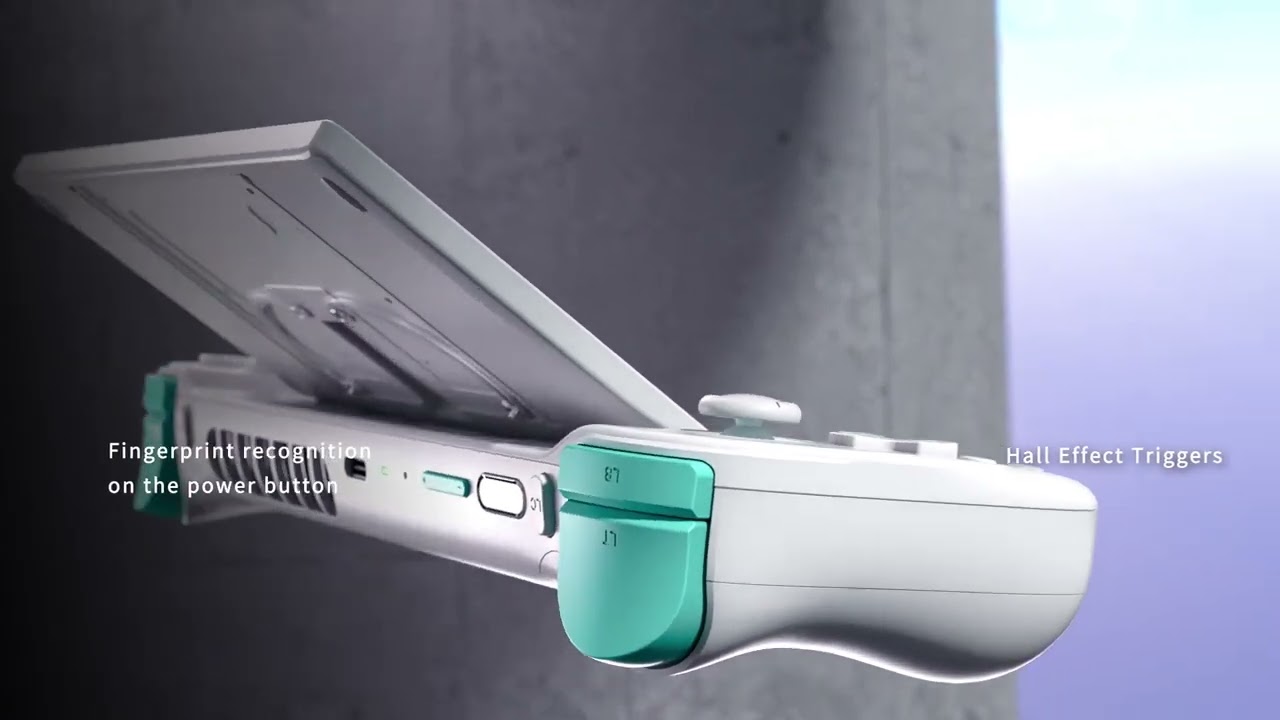
That said, this handheld’s nostalgic sliding keyboard design isn’t going to be everyone’s jam, and that might be reason alone to stick with something like the Ally. I personally loved that brief stint in the 2000s when every phone had a slidey mechanism. However, our very own Tabitha Baker felt a bit grossed out after seeing the handheld for the first time, which I can weirdly get with since it does look a bit like a blob with a moving screen. It’s the same vibe as all the controls on the Nautiloid ship in Baldur’s Gate 3 in that it looks like it’d be weird to touch.
Basically, if you’d rather hold something shaped like the Steam Deck OLED rather than a more bulbous device, you might want to stick with a more conventional model. As for the rest of you odd tech lovers, I’d seriously consider picking up the Antec Core HS. For under $500, you’re getting a high-spec handheld that can keep up with the ROG Ally and provides luxuries like hall-effect sticks. If you happen to hate virtual keyboards, then it also makes a lot of sense to buy a system with physical keys included, as it’ll save you from having to either plug in other peripherals or wrestle with the touchscreen.
In a scene where most new portable PCs cost around $800, I’m hoping future releases take a leaf out of Antec’s book with this lower launch price.
Already got Valve’s handheld? Check out the best Steam Deck accessories and best Steam Deck dock. Alternatively, swing by the best gaming laptops for powerful mobile rigs.

