





When I heard Owlcat Games turned 10 in June, I was surprised. Not because of its age, but lack of. Within a decade the developer has already become a household name for CRPG fans, thanks to its sprawling isometric games set in the Pathfinder universe and 2023's excellent Warhammer 40K: Rogue Trader.
Looking further afield, Owlcat is set to launch its debut third-person RPG, The Expanse: Osiris Reborn, in 2027; while upcoming CRPG Warhammer 40,000: Dark Heresy already looks promising. That's on top of getting into publishing. "We're kind of speedrunning this," jokes Andrey Tsvetkov, head of publishing at Owlcat. "We managed to ship three games in 10 years, while some studios worked on a single project in that time."
Joining me to reflect on Owlcat's first decade and the future ahead, Tsvetkov says the studio owes a great deal to its fans. He's being surprisingly literal: the longer we chat, the more it becomes clear that Owlcat Games' relationship with players, and authenticity to its craft, are the studio's greatest assets.
Taking initiative


Our best CRPGs roundup has a familiar face or two
Through the 2000s and early 2010s, the RPG genre seemed to be moving in one direction. Increasingly dominated by third-person action RPGs, from Fallout and The Elder Scrolls at Bethesda to BioWare's Dragon Age and Mass Effect, it seemed CRPGs had settled away from the spotlight. Then veteran developer Obsidian Entertainment crowdfunded RPG Pillars of Eternity in 2015, saving itself from dire finances with a return to '90s-style isometric RPGs.
"It showed us that the market didn't move away from these kinds of products," says Tsvetkov. "Everyone was talking about multiplayer back then, and suddenly Pillars of Eternity became a great hit [...] The core team of ours always dreamed of making this kind of game, and that was a good opportunity to do so. So it inspired us to start working on the concept of a game like this – and it turned out to be Pathfinder: Kingmaker."
Pathfinder: Kingmaker was made through crowd-funding, with 18,351 backers raising $909K – far more than the original $500K target. Raising funds for a sequel, 2021's Pathfinder: Wrath of the Righteous, more than 35,000 backers pledged two million dollars. Having found an audience Owlcat funded its last titles internally, but continues to work with fans from early stages, with pre-release builds for Warhammer 40,000: Rogue Trader and its follow-up Dark Heresy helping to shape their vision.

"They start burning with this idea"
Andrey Tsvetkov
Tsvetkov points to the inception of Warhammer 40K: Rogue Trader as an example. "We were thinking of what kind of story we wanted to tell, what might be the next studio we'd work on, and more than half of the studio explicitly told us [they] want it to be Warhammer. 'We just want to work with Warhammer!'
So we approached Games Workshop and found common ground really fast, and started working on an RPG based on the Warhammer universe. It wasn't to achieve some target, or to expand the community, or whatever. We just wanted to make a Warhammer game."
That passion, says Tsvetkov, is a large part of why Owlcat has been able to release games so quickly.
"There is a list of things that the creative team would like to do, and we try to chase them [...] We're not working on a single game for five or six years. One of the key reasons is because the creative team behind our games wants to try different things before we get too old, before we retire and live somewhere peacefully and quietly. We want to try different things, so for us, it's an opportunity. We built the studio in a way that we can work on several projects at once. Some of them are in the full production schedule stage right now. Some are in early pre-production, just concepts we've been doing, but it allows us to bring more creative ideas to life – and that really drives people in the studio."

Developers at the studio are ambitious, yes, but Tsvetkov argues that the team's sincerity is its greatest strength. "Most of the team who are working on the Warhammer games collect miniatures themselves. They know the lore at the level as the best lore masters. I don't want to say anything bad about Games Workshop, but at some of those meetings, we were on the same level of knowledge for Warhammer lore as those guys. That's a compliment!
"We tend not to work with things we don't actually love," he adds. "We don't enjoy ourselves."
Other worlds than these

Owlcat's RPGs have an old-school level of depth, but Tsvetkov doesn't feel the studio is beholden to its ancestors. The team holds quarterly meetings to assess whether "old design ideas" are still relevant, can be improved, or hold them back in any way. "We shouldn't, as we say, become like a bronze statue," he explains. "A studio is a living, breathing organism. We have to make sure there's room for new ideas to grow."
"We don't want to repeat ourselves, right? We know that players already know, like the original Baldur's Gate one or two. They played Icewind Dale, they played Pillars of Eternity, Wasteland, etc. They played through all of these games, and they have all this experience with them. They [don't want] repetition. They want something new."
With veteran studios – think Obsidian, Larian – still around and making games, Tsetkov believes striving to be original is crucial to standing out in a crowded genre. He again points to community as a "core" strength. "They act as game ambassadors who spread the word [...] The further we go with this kind of competition, the bigger the community's role. If you have a community supporting you, you can be sure that you [can] survive the harsh reality of game development."
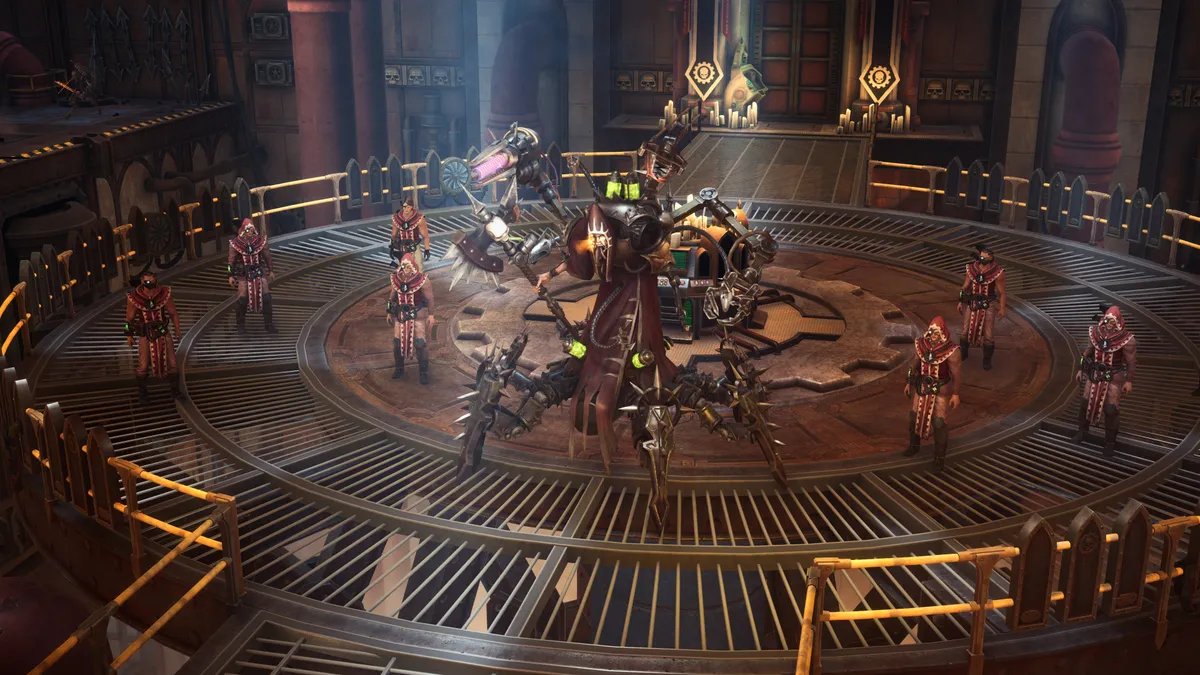
Owlcat is already a mainstay in the CRPG space, but it's seemingly on the cusp of breaking through to the mainstream. Think of how The Witcher 3, Kingdom Come: Deliverance 2, and Baldur's Gate 3 put their respective developers on the map for broader audiences. With a now-sizable audience backing Owlcat, Warhammer 40,000: Dark Heresy could blow the floodgates open. As could The Expanse: Osiris Reborn, which is Owlcat's third-person debut and likely to strike a chord with starved Mass Effect fans. Tsvetkov is modest about the possibility, but admits there's a lot the team would still like to push forwards.
"We're working on a new project that is unannounced, and it will be quite different from what we've done in the CRPG genre before," he says. "We still have room for experiments."
As Owlcat looks ahead, it remains open to tackling other familiar worlds – not just Pathfinder and Warhammer. "There are still a lot of things that we would like to do with some universe that we love," Tsetkov says, adding there are "ongoing conversations with various IP owners that might result in something interesting."
While the studio will continue to make RPGs set in familiar worlds, its "top creative leaders" also want to make a wholly original setting – eventually. The idea sounds distant, but some things are more certain. "We like to do the things that we love to do," Tsetkov says. "So we won't be quitting the CRPG genre."
Still drinking your coffee? Last week's Saturday Read was on the future of MMOs

