



In the beginning, there was N. Not that the minimalist platformer was the world's first indie game or anything, but its history mirrors that of the entire scene – first a browser game in 2004, thrust into a wider spotlight thanks to burgeoning digital distribution on consoles, and now it's got a small but dedicated following on Steam, constantly working to improve their scores and work their way up the leaderboards.
That most recent version, N++, was meant to be the last. But for creators Mare Sheppard and Raigan Burns – the dev duo who have been working together under the name Metanet Software for well over 20 years – the idea of becoming perfect describes more than the joy of guiding the game's little ninjas through the infinite deathtraps that the levels present.
"One aspect of the game is about perfectionism – not on purpose," Burns tells me. "That is maybe an aspect of both of our personalities. The whole idea of 'just one more try' that permeates the gameplay does seem [like it's] fractal. The development of the game is kind of like that. When we put out N++, we really didn't think we would ever come back to it, and the thing is, we still don't think we could really improve on it."
"When we made N++," Sheppard adds, "we thought, 'This is the last one. We're not doing this again. We don't need to. We've done it. Good job. Great.' But then this one surprised us."
To the Nth degree


The sheer volume of releases means our list of upcoming indie games has something for everyone
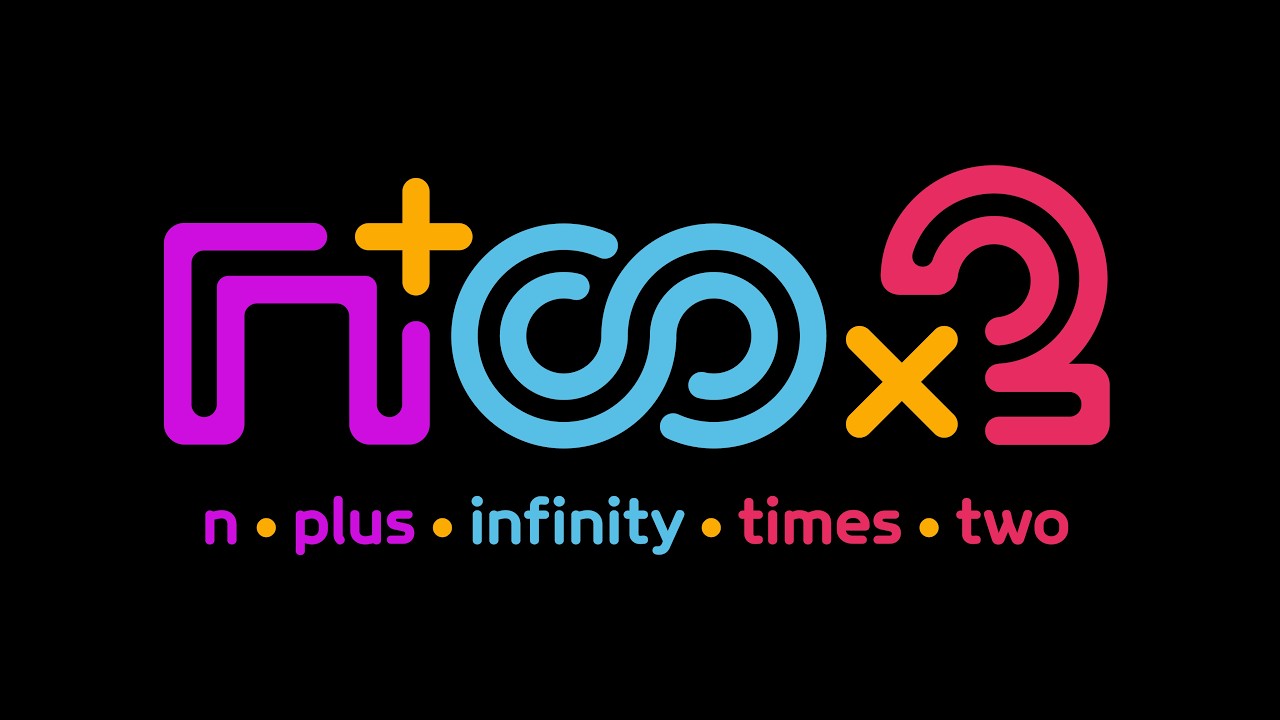
"This one" is N Plus Infinity Times Two, which takes the vestigial multiplayer elements designed for the previous games and expands them out into a party-first platformer. I played several rounds back at Summer Game Fest in June, and it's an absolute blast, but there's something beyond the game itself that fascinated me.
If you haven't played N, it may be best described as a sort of Super Mario Bros. for self-professed sickos. It's a minimalist 2D platformer that's all about momentum and air control, where you have to build up speed to launch yourself over gaps and then carefully control your fall, sliding down walls to slow your speed before you explode against the floor. This kind of nuance is what makes the game such a compelling single-player challenge. It's also, as it turns out, a perfect vessel for multiplayer, and that pivot has been gestating for a very long time.
Sheppard and Burns have been working on indie games since before there was a realistic way to make money from them. Alongside N itself, they've been through the Xbox Live Arcade boom, the rise of Steam, and the ongoing threat of "indiepocalypse," where so many games are being released every day that even the most voracious gamers are struggling to keep up. I've been watching this all happen through the years as a player and a writer. But what does it look like to developers going through it all?
"From a certain perspective, nothing has changed," Burns argues. "Video games have always been about a small team of sickos doing something. From the day of the MIT model railroad club who made Spacewar, arguably the first video game, to id Software, to all the 8-bit bedroom programmers in the '80s. Even the first Super Mario Bros. was made by four people." In that sense, he adds, indie development is about approaching making games "the way that a band approaches making music," with "a tiny little group in a room, all kind of riffing off of each other."
"It's the best of times, it's the worst of times for indie games"
Raigan Burns
N in particular is "such a minimal game," Sheppard says. "It's quite simple, really. There aren't that many buttons, but there's so much possibility in the gameplay itself. If you expand that concept to the series as a whole, we keep finding things that make us think about how the game works or how it plays in different ways that are still exciting. Especially after 20 years of doing this, it's very surprising and delightful to us that that keeps happening."
"It's just like picking up a guitar and jamming," as Burns describes it.
You can see the benefits of that sort of experimentation in N Plus Infinity Times Two's race mode, where you rush to the end of a level alongside other players. You can try to be the first to the end, gathering points for a fast clear and taking the opportunity to transform into a rocket and interfere with the other players still competing. Or you can try to gather gold for bonus points, simultaneously denying your competitors the opportunity to do the same.
Team tag really puts your control to the test, as you and a partner avoid getting stomped by the opposing team of invincible hunters, equipped with that rocket transformation power to hunt you down. You survive as long as you can, then swap sides and try to stop them from beating your time. It's playful, experimental, and fun – and both modes are great examples of the kinds of ideas developers can build after working on a singular foundation for so many years.
"Playtesting lately has been a joy, and it hasn't always been that way throughout development," Sheppard says. "Our guts are telling us, 'okay, we've arrived at a place that we're happy with'. We think this is fun, and we think because of that it's likely that other people will like it too. That's how it's worked in the past."
For the sickos

But while indie's glorious "sickos" are still doing their thing, Burns admits that "every other aspect" of the scene has "radically transformed".
Burns and Sheppard developed an interest in the burgeoning indie development scene thanks to websites like Home of the Underdogs and Game Hippo, where small games – and "abandonware" titles – were offered for free. And, helpfully, these games would actually run on the aging computers they were using at the time. The pair would also stay in touch with other indie developers thanks to sites like TIGSource.
These sorts of small, dedicated communities slowly evaporated alongside the rise of social media, which has been a double-edged sword for the indie scene. "We definitely are more in touch with our fan base now than any other time, except for maybe the late '00s when we had an N community message board," Burns says. "Discord is really great, but it's insular. It's like everything else, a bunch of walled gardens, and it doesn't help. That's good for the community of hardcore and enthusiasts, but for indie game developers in general, we really miss that sense of a shared mission, the sense of camaraderie and support and learning from each other that existed in the mid '00s."
Meanwhile, the number of games being released on Steam every year has increased exponentially. I'll readily say that many of those releases are bottom-of-the-barrel nonsense, but this explosion has also dramatically increased the number of great games coming out, too.
"Every year there are games being made that are unbelievable – just the best stuff ever, right? So, in that sense, the culture is alive and well," says Burns. "[But] now it's very hard to make money, and it's turned into a winner-take-all. [...] It's like the top 10 games make all the money, and then everyone else goes broke."
The best of times

Metanet Software has managed to endure in part because of alternate methods of funding. "Our company absolutely would not exist without socialized venture capital programs that Canada has," Burns explains. N Plus Infinity Times Two is funded in part by the Canada Media Fund, and governmental support has helped Metanet going all the way back to the release of N+ on Xbox Live Arcade.
Burns describes the Canada Media Fund as "a federal thing that gives loans in exchange for a bit of [revenue] share to film, game, and TV projects." The studio has also benefited from provincial funding programs like Ontario Creates, and Burns says these sorts of efforts are part of "why Canada punches way above its weight" in the indie scene. These media funds have also helped build local events to help unite and galvanize indie devs – just as the old forums and online resources once did. "I'm definitely super proud of our country," Burns says.
But what about those developers around the world who don't have access to this sort of government support for their projects? Discussing the challenges facing indie devs on Steam, Burns offers a radical thought experiment: a world where Valve took 5% of the revenue of every game sold and redistributed it to every other developer on the platform. In essence, big moneymakers like Marvel Rivals and Apex Legends would be helping to fuel the smaller, more creative projects.
Of course, Burns isn't blind to the "social and political realities and problems with North American culture" that would render this kind of idea difficult to implement. "But basically," he argues, "the way things are is a choice that a few people who have immense power have chosen for things to be the way they are, presumably because it benefits them."

Or, as Burns puts it in more simple terms: "It's the best of times, it's the worst of times for indie games."
For now, Metanet has seemingly found its niche, though not without some soul searching. "We had a little bit of anxiety – or angst, maybe – about 'we've never released anything but the N series,'" Sheppard says. "That's changed, too. Now I think we're more comfortable with the fact that we actually really like this space. We like that we keep discovering things, exploring it, and finding new ways to express ourselves."
So while dreams of something entirely separate from N are still dancing in the minds of Sheppard and Burns, if N Plus Infinity Times Two finds its audience, the devs aren't opposed to continuing to update it with new content and further follow-ups. After all, there's already "a second game's worth of stuff that we've had to cut," Burns says, seemingly half-joking.
"Maybe by the time this one is shipped, we will truly be so sick of it [that] we won't ever have any desire" to continue with N, Burns says. After all, they felt that way when N++ launched in 2015. "We absolutely, with every fiber of our being, knew we would never, ever, ever want to deal with this series again, But then, 10 years later, we felt differently. Having gone through that once, we now understand, 'Okay, that is always a possibility.' Who knows what the world's going to be like in 10 years?"
Need more words to fill your weekend? Last week's Saturday Read was on Pathfinder and Warhammer 40K RPG developer Owlcat Games "speedrunning" its first 10 years

