
If you were hoping the arrival of the PS6 and next-generation Xbox would be anytime soon, I have bad news for you. We're currently caught in a pricing apocalypse for the best RAM for gaming. Unless you were trying to buy memory for a new gaming PC, you might not have noticed it thus far, but knock-on effects are going to start infecting a lot of technology markets, including consoles.
Rumors and speculation from the last year have been hinting that the next generation of games consoles may be closer than we all think. Xbox never did release their leaked Xbox Series X, Condenamed Brookyin refresh, and a lot of rumors are pointing to the next Microsoft console essentially just being a PC. Meanwhile, PlayStation has said that we're "more than halfway through the PS5's life - and that was two years ago.

For the next Xbox to essentially be a gaming PC, it'd need to use 16GB or more of the latest standard of DDR5 RAM - exactly the type of memory that we're currently seeing a shortage of thanks to AI production. Seriously, where 32GB of DDR5 desktop memory would set you back circa $100 before, you're now looking at a minimum of $350 for most kits, and that's if you can actually find a supply of it. That doesn't bode too well for the cost of PCs, laptops, and consoles that all use DDR5 RAM, so if the next Xbox were to be manufactured and released today, consumers would bear the brunt of the costs.
If the PS6 were to arrive today, the cost would likely be a lot more than console gamers would be willing to stomach. Just think about the cost of the PS5 Pro when it was revealed.
On the PlayStation side of things, I'm afraid the news is just as bleak. The PS5 uses 16GB of unified GDDR6 RAM for all its computing needs (shared between the graphics and central processors), which is actually a super-efficient move from PlayStation architect Mark Cerny. But it's likely that to compete with current-gen gaming PCs in the next few years, the PS6 would need to either increase its store of memory or go for dedicated VRAM and DRAM for its CPU and GPU. Either way, a steady supply of memory to allow Sony to manufacture a new console (enough to allow markets all over the world to enjoy it) would be pricey indeed.
Again, if the PS6 were to arrive today, the cost would likely be a lot more than console gamers would be willing to stomach. Just think about the cost of the PS5 Pro when it was revealed. $699 was very pricey for a console, but still well under $1,000. With RAM inflation and even more spec improvements, Sony's going to have a hard time offering gamers a boost from the PS5 without encroaching on that $1,000 territory.

And that's not thinking about what AI-tilted specs and features these new consoles are almost certainly going to include. For AI-ready tech, a generous supply of RAM is vital, so if Sony and Microsoft want to "keep up with the times" in their latest platforms, they'll likely need beefier processors and dedicated RAM supplies.
So what are Sony and Microsoft to do? Either they continue as planned with a projected release of new consoles in the next few years, or they delay in the hopes that the world's supply of memory somehow increases. Personally, I know I'd rather get more time out of my PS5, and wait on a delayed PS6 rather than stomach massively inflated costs. It seems Sony might feel similarly, because a new report out of Japan may suggest that the PS6 will now be delayed due to RAM supply shortages.
But let's back up. Why is RAM so expensive right now in the first place? DDR5 has been around for years now; it's hardly new, and surely it should be getting cheaper, not more expensive, right? That was the case until recently, but sadly, due to a massive increase in AI infrastructure, the global manufactured supply of memory wafers (the vital bit needed to create consumer RAM) is all being used up in supply contracts with AI companies that want to build data centres.
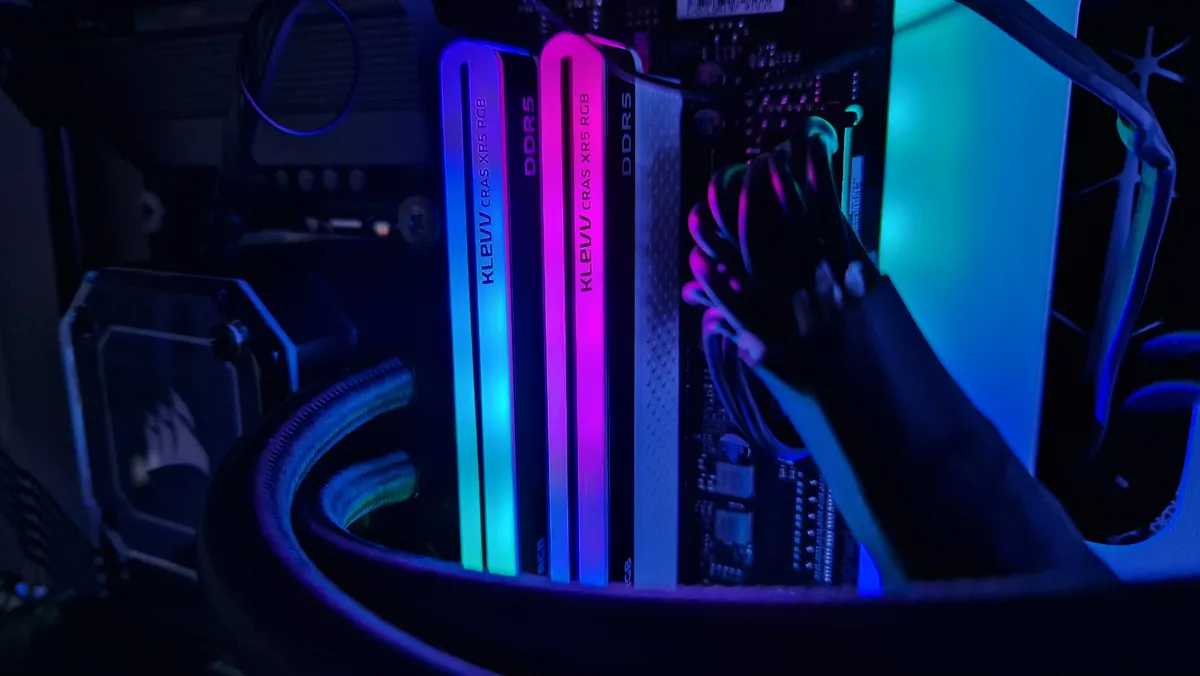
That means more money for manufacturers, less supply for consumers, and vastly inflated costs on the small pool of products we all have access to. Essentially, because of AI production and the construction of data centres over the next few years, buying any consumer technology with lots of RAM inside it is going to hit our wallets and purses a lot harder.
Companies like Sony and Microsoft will also have their own deals with the biggest RAM manufacturers like Micron, Samsung, SK Hynix, and more, but when Samsung is already bought into a deal with OpenAI to supply more than 900,000 DRAM chips per month, things are already spread a bit too thin. Moreover, when Micron is straight-up shutting down its Crucial consumer brand to better serve AI companies, things aren't looking good for the production of new consoles.

This is all already having an impact on gaming hardware. Some rumors suggest that the next time Nvidia launches a generation of graphics cards, it won't be supplying VRAM for them to board partners (Asus, PNY, Gigabyte, and other brands that sell these components on to consumers). That'll leave these smaller brands with the costs of actually putting the graphics cards together, and it'll mean that we'll be back to 2020 prices of graphics cards again.
We're already seeing the storage market get hit with these rising costs too. Since the fanciest SSDs for gaming use 3D Nand cache technology (which uses a form of DRAM to make your best SSD for PS5 more efficient), prices in that space are rising as well.
AI production is scaling up to monumental levels, with data centres that aren't projected to finish construction (let alone the data set training the RAM is actually needed for) until 2028. No matter what way Sony and Microsoft try to navigate things, the PS6 and next Xbox will undoubtedly be impacted.
For more on gaming PCs and components, take a look at the best CPU for gaming, the best graphics cards, and the best computer speakers.
You must confirm your public display name before commenting
Please logout and then login again, you will then be prompted to enter your display name.


