You are now subscribed
Your newsletter sign-up was successful
Want to add more newsletters?

Every Friday
GamesRadar+
Your weekly update on everything you could ever want to know about the games you already love, games we know you're going to love in the near future, and tales from the communities that surround them.

Every Thursday
GTA 6 O'clock
Our special GTA 6 newsletter, with breaking news, insider info, and rumor analysis from the award-winning GTA 6 O'clock experts.

Every Friday
Knowledge
From the creators of Edge: A weekly videogame industry newsletter with analysis from expert writers, guidance from professionals, and insight into what's on the horizon.

Every Thursday
The Setup
Hardware nerds unite, sign up to our free tech newsletter for a weekly digest of the hottest new tech, the latest gadgets on the test bench, and much more.

Every Wednesday
Switch 2 Spotlight
Sign up to our new Switch 2 newsletter, where we bring you the latest talking points on Nintendo's new console each week, bring you up to date on the news, and recommend what games to play.

Every Saturday
The Watchlist
Subscribe for a weekly digest of the movie and TV news that matters, direct to your inbox. From first-look trailers, interviews, reviews and explainers, we've got you covered.

Once a month
SFX
Get sneak previews, exclusive competitions and details of special events each month!
As a horror game veteran, I was fully aware that Resident Evil Requiem would rely on lighting. That's very much the case for the modern incarnation of the series as a whole, but as someone who still finds PS1 classics suitably atmospheric to this day, I figured I wouldn't be fussed with trying ray tracing. It's safe to say I now feel like a Jill sandwich, as after trying the ninth zombie romp with Nvidia DLSS Ray Reconstruction enabled, I'm still feeling pretty unsettled.
RTX 5060 | from $339.99 at Amazon
RTX 5070 | from $629.99 at Best Buy
I've certainly put DLSS and Ray Reconstruction under the lens before, and it's not even my first ray-tracing-enhancing horror rodeo since I examined Alan Wake 2 during the RTX 40-series. It's safe to say the tech has come a long way in adding elevated lighting effects, and Resident Evil Requiem takes full advantage of adding a wretched sense of realism.
Slick lighting in seemingly safe streets

Requiem's intro and setup are arguably the perfect stage for a Ray Reconstruction demo. Before Capcom gleefully throws you into the usual dingy Resi corridors, it places you in the "normal" grimy streets with plenty of safer light sources to appreciate. The hustle and bustle of cars, drenched pedestrians with their umbrellas, and wet concrete all provide a visual taster for what Nvidia's tech will do for the existing ray tracing techniques, and everything looks noticeably more believable with the option switched on.
Don't get me wrong, I'm not saying native ray tracing effects are bad in any way, but path tracing with ray reconstruction at its back really leaves an impression. Subtle details like the way light reflects off cars from the bridge rafters above, while the side windows catch the neon glow of restaurants and shops, all contribute to immersion, and the DLSS package helps improve beam accuracy, clarity, and simulation stability.
Sometimes it takes using Ray Reconstruction for a bit before fully appreciating what it adds. After walking through the streets as Grace, I decided to Groundhog Day myself in the usual benchmarking fashion and have a look around. I instantly noticed that lighting would bend, move, and jitter in a way I'd expect from a typical ray-traced game, whereas I'd previously been enjoying results that, in hindsight, felt more like an animated movie.
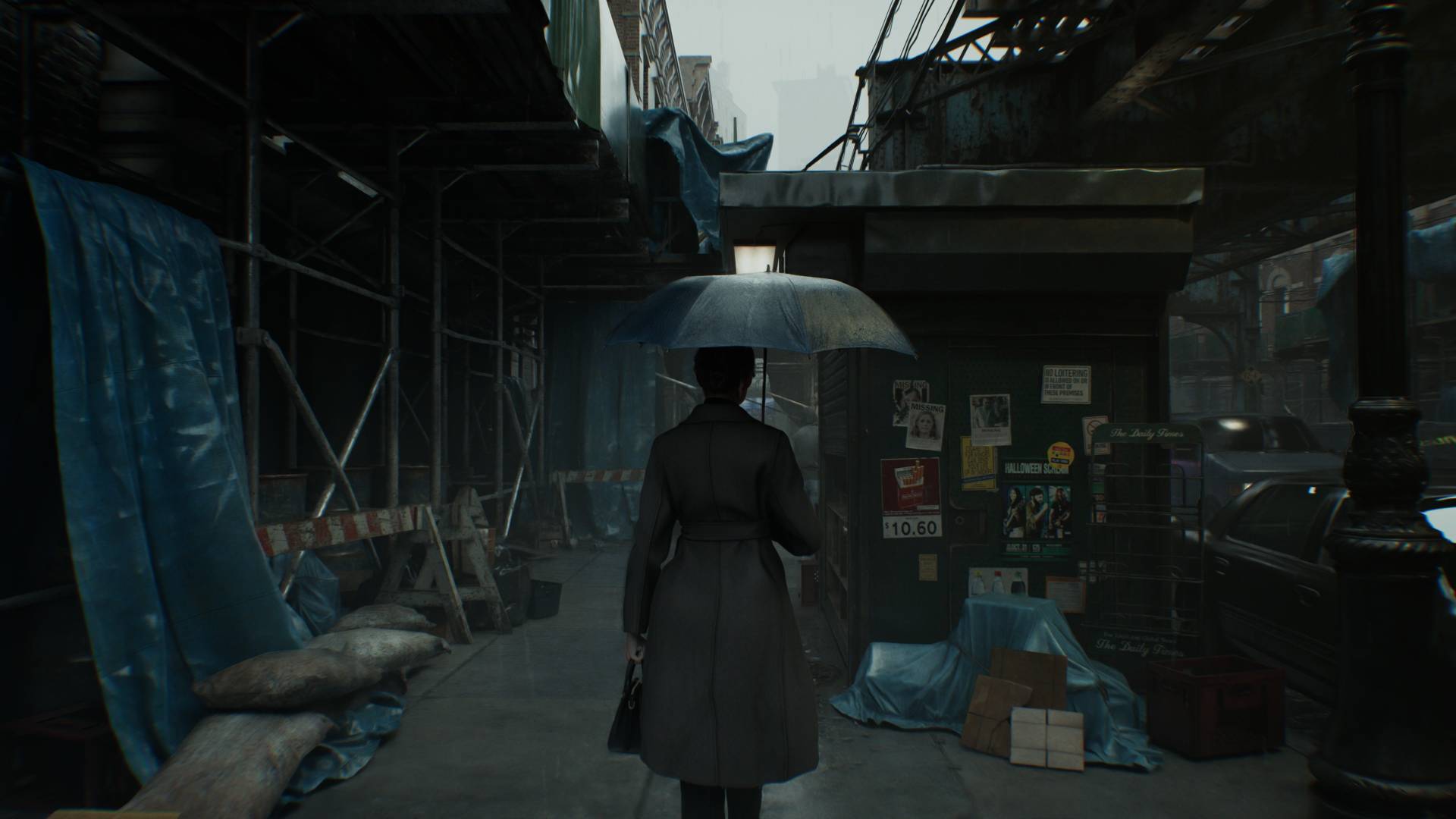
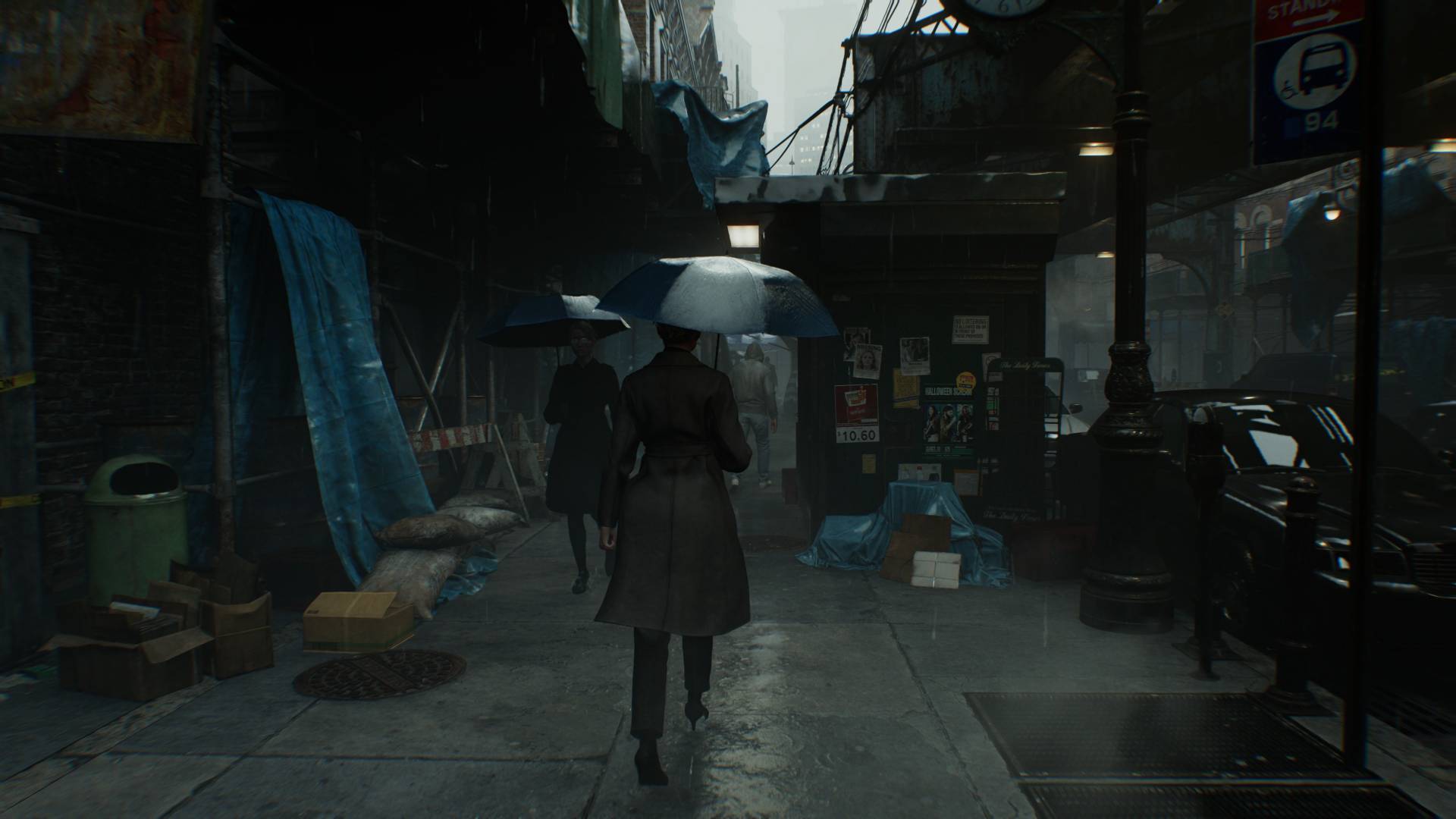
Do video games have to feel almost like cinema? There's a whole debate to be had there, but Path Tracing and Ray Reconstruction have a lot to prove in immersive horrors like Resident Evil Requiem. The more you can trick your brain into believing you're traversing what is about to become an absolute nightmare scenario, the better, and it's safe to say that tailing a lady and appreciating how realistic the reflections on her umbrella look is a neat way of doing that before reaching the presumably wretched Wrenwood Hotel.
Reflections and trepidation

It's easy to assume that effects like ray tracing and path tracing are only beneficial in well-lit scenarios. I've trekked around too many virtual haunted hovels and menacing mansions to know that's not remotely the case, and the way light bounces around Requiem's Wrenwood Hotel really completes the "oh no" vibe Capcom is naturally aiming for.
Ultimately, success boils down to how limited light sources are represented in dark scenarios. In Grace's unfortunate case, that means her flashlight and whatever cracks of light manage to creep in through dirty and boarded windows, and Path Tracing can completely change how both are represented.
Something I've found with traditional ray tracing is that light can move in a way that trains you to expect weird movement out of the corner of your eye. If a source reflects in a way that feels slightly unnatural, for example, you're more likely to assume there isn't something bitey secretly lurking behind that innocent kitchen unit, whereas when you become accustomed to accurate realism, danger feels imminent.
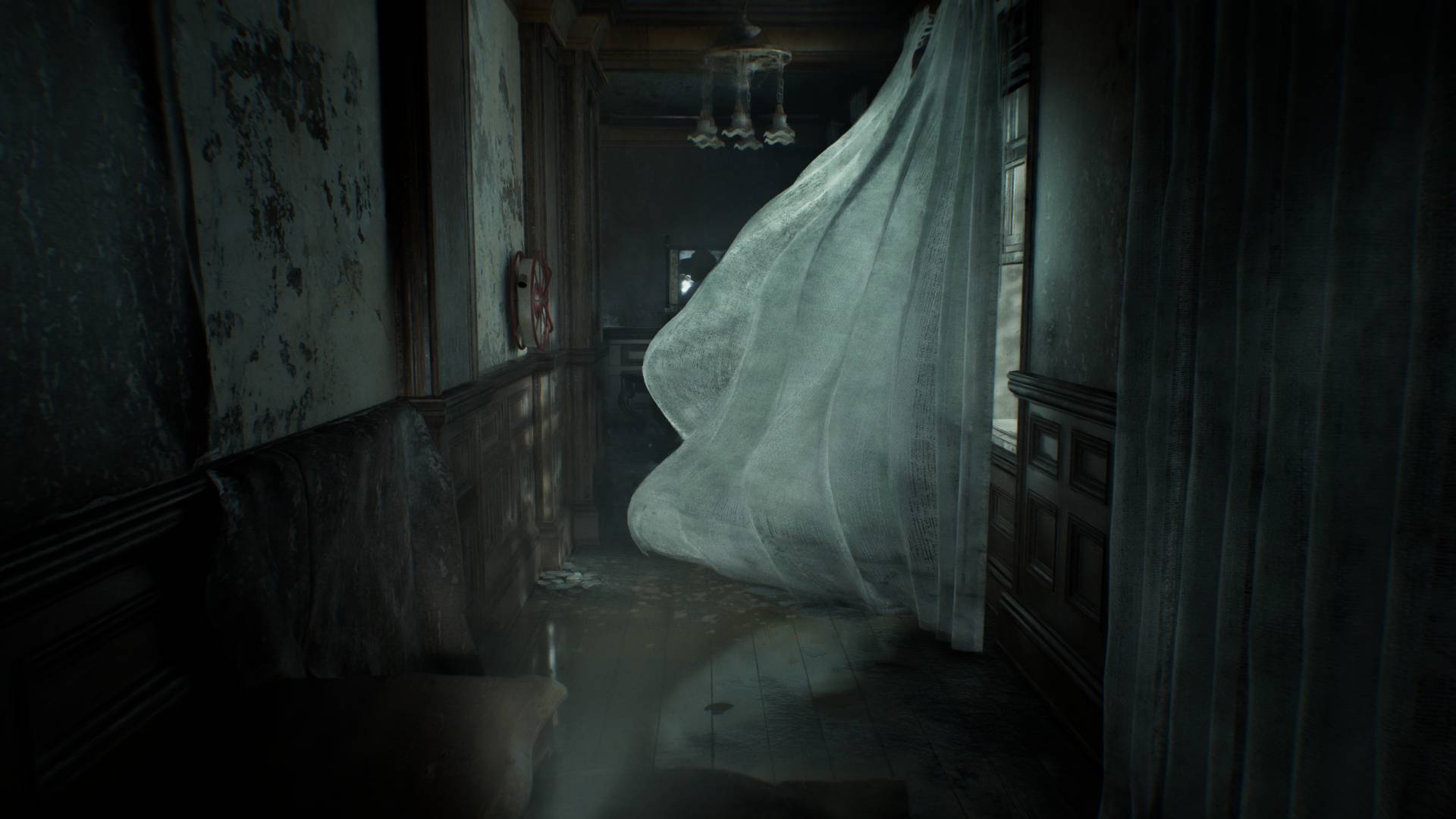
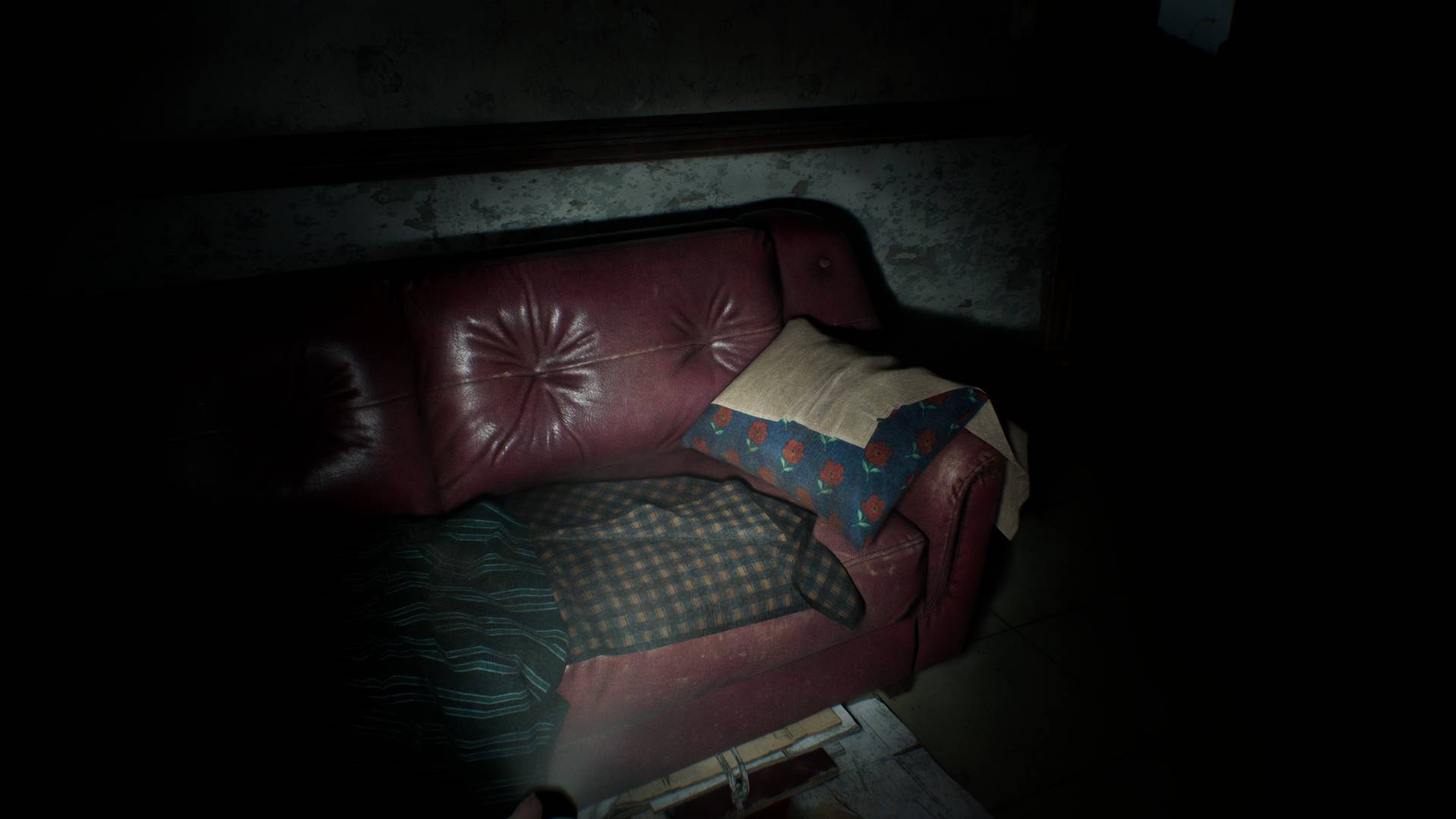
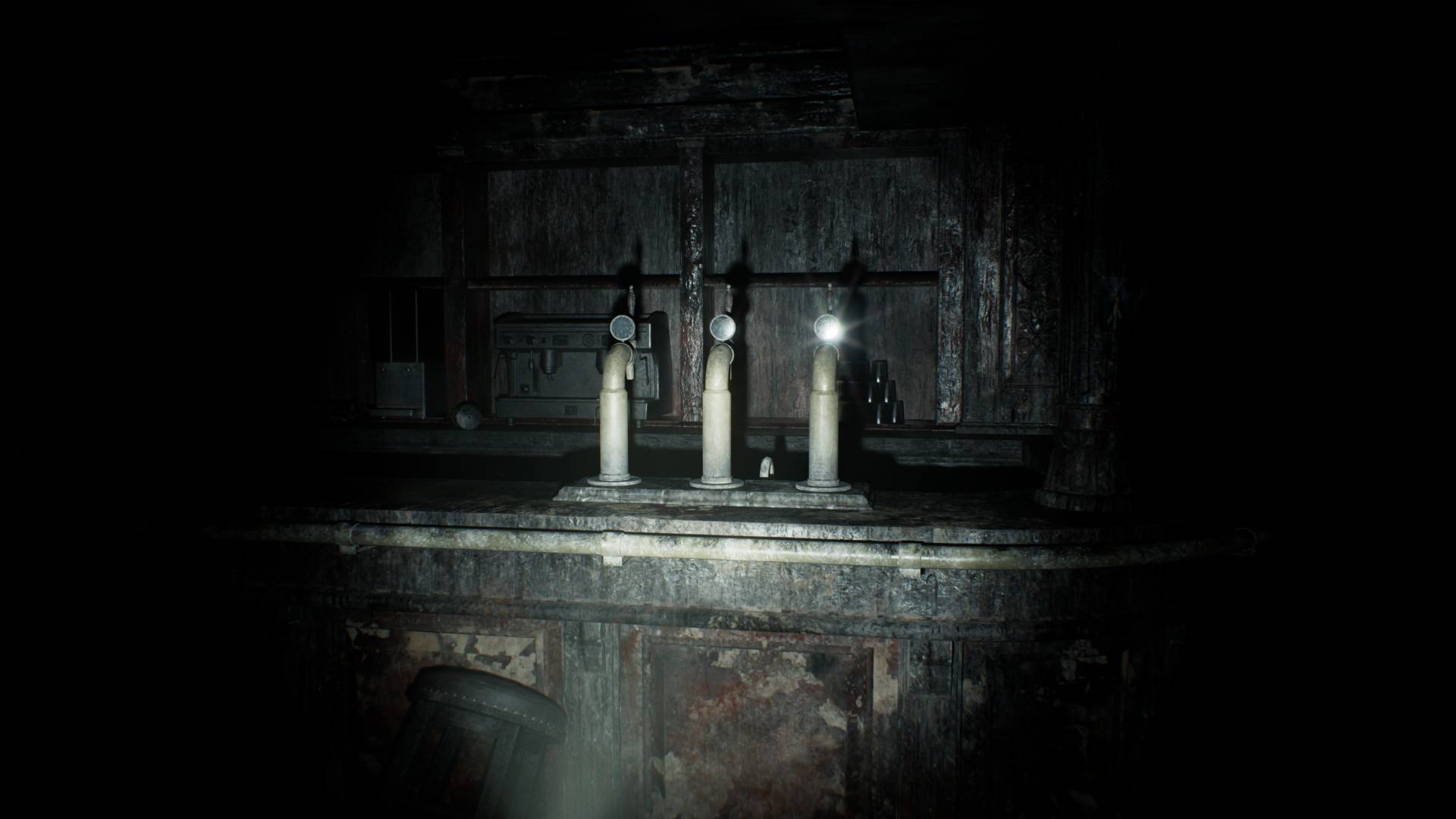
In this regard, Path Tracing aids with two things: maintaining the accurate structure and pattern of light and blending things in with clarity. Tiny details like the way your flashlight pierces off a chrome bar tap or daylight glowing through a sheer curtain with a ghoulie potentially waiting to pull a reverse Houdini will set fear levels, and Ray Reconstruction cements the right vibe.
Keep in mind I'm talking about the very beginnings of Requiem here, before the Wrenwood Hotel becomes anything but anything but hospitibale. I fully believe that what your eyes experience before the inevitable jump scares and chases matters completely, and nailing the accuracy of even the smallest beams of light and their resulting shadows is key.
Ray Reconstruction still matters during the action

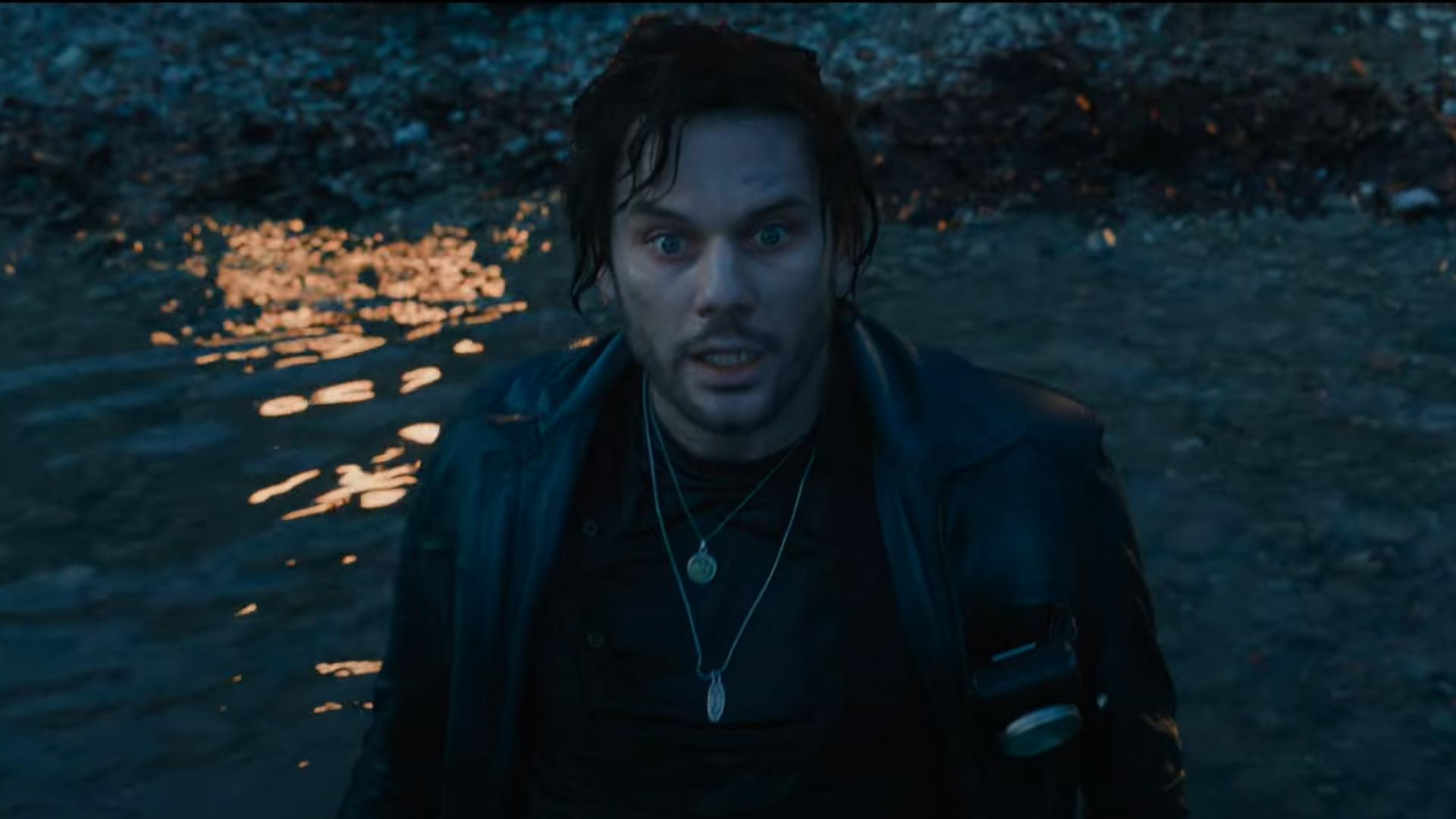
Let me hit pause on how Ray Reconstruction enhances Grace's nightmare, as Requiem plays with genres a little. When playing as Leon, you're plunged back into a Resident Evil 4 kind of romp, and I foolishly thought I'd have less time to appreciate clever lighting tricks.
Yet, it turns out that Path Tracing does help add horrible spice to Leon's third-person encounters. The character's debut does take place on the same urban streets as the intro, so those previous reflections and effects are still present. It's the context that then helps the feature contribute differently, with one of my favorite instances being the way aggressive, astigmatism-triggering, car headlights wrap around a freshly infected civilian, transforming them into a silhouette framed by eerie, accurate glow.

Traditional ray tracing, or even a lack thereof, could completely misrepresent what this very quick visual encounter is meant to look like. For me personally, I feel like the tech helps give the moment the same vibe as that iconic moment where we meet the iconic "turning around zombie" in the 1996 classic, even though it wasn't a scripted cut scene.
Light isn't always your friend

Okay, let's circle back to Grace's first-person nightmare, as Requiem continues to leverage lighting and Ray Construction after the hotel incident. It lends itself directly to 3D effects that help some of the game's gorgeous details pop, like the 3D cherub door motifs that are totally par for the course in a Resi romp, but there are so many other subtle enhancements that left me feeling unexpectedly unsettled after my play session.
Resident Evil is a game where you're absolutely going to be stalked at some point, and it's really just a question of when. Perhaps it's this knowledge that made me more susceptible to some of Capcom's background red hearings, and while I'm usually resistant to flinching, I reckon the Ray Reconstruction effects helped smash my usual unshakable horror resilience.
Largely, it was how props are portrayed that caused me to crumble slightly. It's potentially not supposed to be an actual jumpscare, but there's a specific instance with lighting help pull off one of those "the jacket on my chair is now a threat" scenarios you'd experience in your bedroom when you're ten. I'd usually dive headfirst into rooms like this just for the thrill, but the lighting felt so real that I really didn't fancy fooling around and finding out before finding my own handheld light source to replace my flashlight (because that's naturally missing now, duh).
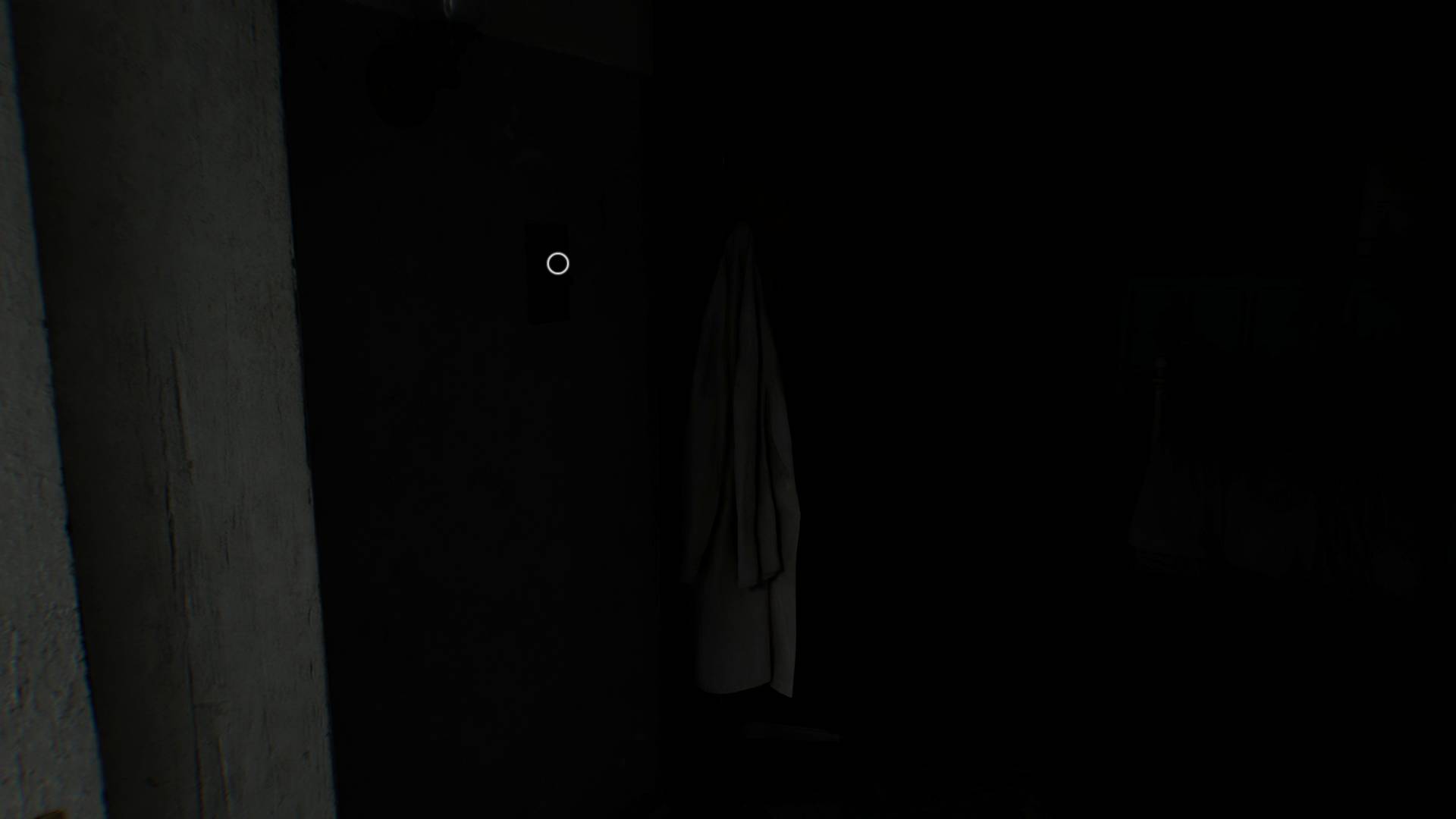
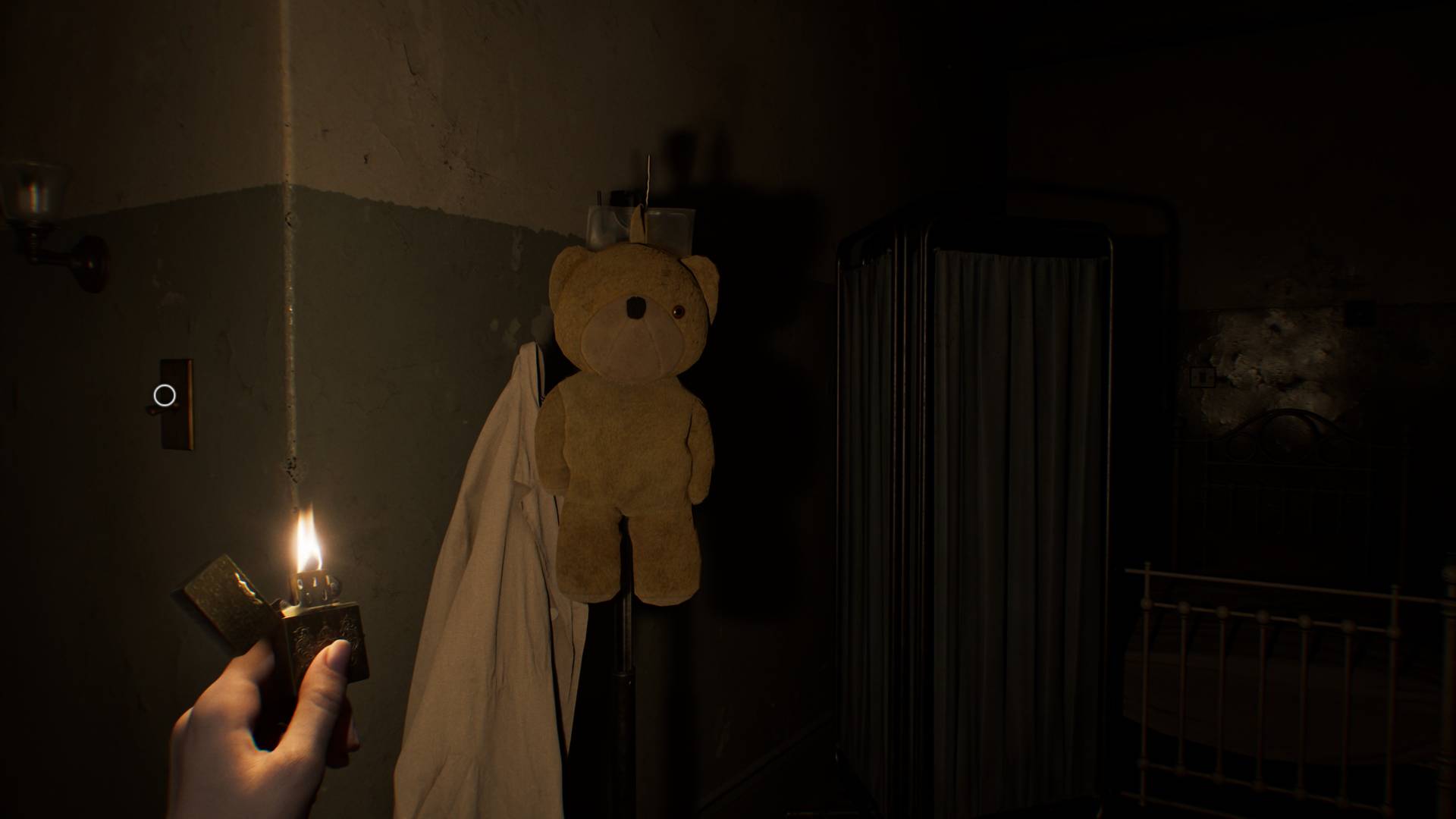
Upon finding a Zippo lighter stashed in another room, I returned to that dreaded room, only to find that the proverbial monster in the closet was a coatrack, lab coat, and teddy bear combo. You'd think this would calm my nerves, but the accurate flicker of the handheld flame made what I then could see was a child's playroom, all the more frightening, whereas I feel like the little hessian monkey hiding among the clutter wouldn't have been absolutely unnerving enveloped in a less realistic glow.
No, Path Tracing and Ray Reconstruction aren't directly responsible for Capcom's "corner of your eye" trickery, but it does help elevate it. Again, it comes down to training your psyche into seeing and believing, and it means that all the accurate reflections and shadows register as potential threats rather than just movement-based visual effects. The added depth, clarity, and representation all feed into the situational dread that will keep you on edge, and it's all a level of accuracy that helps justify opting to play on a PC and using DLSS.
Before I touch on some figures, I want to reflect on some potential cons. As far as DLSS 4.5 has come, the visuals still aren't completely immune to scaling artefacts. What I will say is that the very minor quirks I did come across, like slightly blurry text on police tape on approach, the drawbacks seemed to be tied more to the Super Sampling side of things, rather than Multi-Frame Generation. I also found that some slight jitters only appeared while testing without Ray Reconstruction, so the feature actually feels like a remedy.
Do you have to trade frame rate for frights?

I had a blast starting my Resident Evil Requiem playthrough using an Nvidia GeForce RTX 5080, and it's safe to say effects like Path Tracing need a GPU with oomph. Naturally, if you want to play Capcom's latest eerie escapade, you'll need to leverage fps boosting tools like DLSS 4.5 and Multi-Frame Generation, and the game does demonstrate why you'd want to crank the settings up
On average, I was hitting around 200fps at 4K ultra settings with Path Tracing on using Multi-Frame Generation x4. That figure is frankly bananas, and more than comfortable enough to satiate some of the best gaming monitors with higher refresh rates. Keep in mind that the lighting techniques are enough to make even the last-gen GeForce RTX 4090 sweat, so DLSS is more or less a gateway to an otherwise hard-to-pull-off ray tracing experience.
Naturally, you've got other tools like Nvidia Reflex working in conjunction to keep latency and other caveats to a minimum. I wasn't able to sniff out any notable lag, but if you would rather dial things down to vanilla x2 frame generation, that theoretically matches the abilities of cards like the AMD Radeon RX 9070, you're still looking at around 120fps with path tracing on. That's more than enough frames to satiate most players, and while I've yet to test different tiers of GPU, there's certainly room to boost using something like a GeForce RTX 5070 either by playing at 1440p or tweaking some other settings.
Now that our Resident Evil Requiem review is live, I'm going to be testing Resident Evil Requiem on everything from the best gaming handhelds to other GPUs. If my first few hours have taught me anything, though, it's that features like Ray Reconstruction are what will likely draw me to more horror games on PC in the future, especially if it continues to add a delightfully horrid layer of realism.
Looking to upgrade your rig for Resident Evil Requiem? Swing by the best RAM for gaming and best CPU for gaming for our top component picks. Alternatively, take a peek atb the best Alienware gaming PCs for pre-built options with sci-fi vibes.

You must confirm your public display name before commenting
Please logout and then login again, you will then be prompted to enter your display name.