


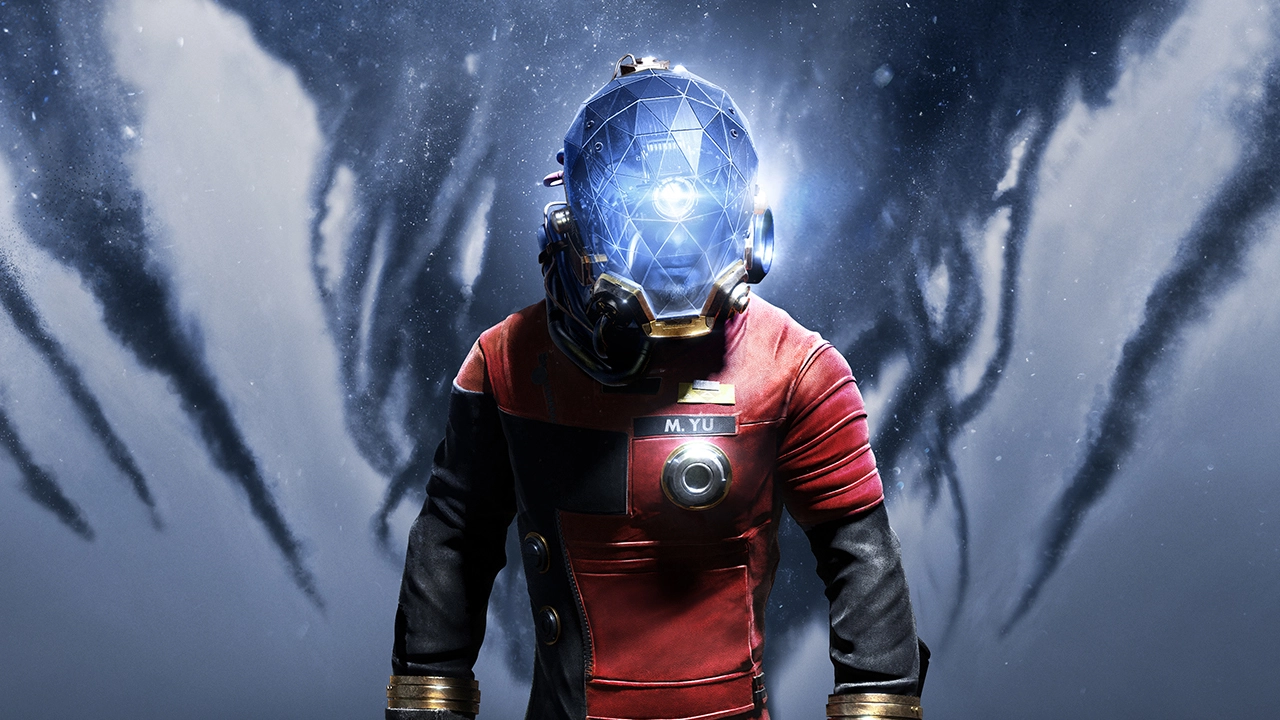
In Dishonored, the city of Dunwall was under siege by a plague of rats. In Dishonored 2, Karnaca was infested with bloodflies. Both species are terrifying to be sure, but in the end, they're just animals, based on real-world creatures. In Prey, the threat is more fantastical. They can shapeshift and reanimate the dead. So how does developer Arkane make them feel like a living ecology and not just cannon fodder?
"You can take models of nature and apply them to something fantastic," Prey lead system designer Seth Shain explained to me at PAX East. "So in the case of the Typhon ecology, what we wanted to make sure of was that there was a logical purpose for every sub-species of Typhon. They all have a role. They're not just there because gameplay. That's also true, but we construct it in a way that advances the narrative of the world, that fills out the details of the world, and is internally consistent."
Shain compared the Typhons (the proper name for Prey's alien menace) to a mix of plant and insect life. Their reproductive cycle begins with the most innocuous, the Mimic. "If you think about how certain plants spread, there's a plume of spores, and they go and find a niche. And a lot of them, there's no result from that spore, it's a waste," Shain said.
"But a small percentage of them, they find a niche and then they grow, and then they can release more spores. So the Mimic is sort of like that spore. It arrives at an ecology and if it perishes, that's obviously not an ecology where it can possibly take root. But if it thrives, now it has a foothold. If it thrives, and it can multiply, and if it can reach a critical biomass of Mimics, the next step happens."
"From Mimics, another creature comes out, called the Weaver. The Weaver has the ability to start dominating the space it's in. It starts building this mysterious structure that you learn in the game is called 'coral,' and it takes whatever the dominant lifeform of that area is and raises it up as what we call Phantoms."
Phantoms are the bipedal, vaguely humanoid enemies we've seen in several gameplay trailers. They stomp around on their smoky black tendrils and can fire blasts of kinetic energy. But were a Typhon infestation to reach a different planet, Shain said, one would imagine these Phantoms looking quite different. But regardless of where and how these creatures appear, they have to be consistent. Their existence has to make sense.
"Gameplay's always going to come first. Gameplay comes first until we start to lock in some key aspects of things. Once we build that ecology and a lot of thought and research goes into the roles of all the different things and we feel we have a decent bestiary of enemy types, making changes to that - even though we iterate a lot - making changes to that does become more difficult."
Shain compared Phantoms to the drones of an ant colony, while other Typhons might be described as akin to ants that guard a queen. Take one of those away and the whole thing can crumble apart. "We have to think about all the cascading consequences of that ecology. You know, if we change the role of this thing - like, if the Weavers lost the ability to create Phantoms, then what does that mean? What is the role of Phantoms then?"
It's an interesting problem to have - Arkane effectively governs the rules of this fictional universe, but even it is beholden to those rules. Everything has to be interconnected and cohesive. Even shapeshifting, psychic aliens.
Seen something newsworthy? Tell us!

