GamesRadar+ Verdict
Pokemon Pokopia is like a brilliantly bizarre blend of Pokemon, Animal Crossing, Dragon Quest Builders, and Viva Piñata, and despite its many influences, manages to be a unique spin-off for the Pokemon series that's also an accomplished life sim.
Pros
- +
Satisfying creative gameplay loop
- +
Lovely nods to Pokemon lore
- +
Intriguing storylines
Cons
- -
An overabundance of the word 'yo' in dialogue
- -
Slightly frustrating recipe unlock system
Why you can trust GamesRadar+ Our experts review games, movies and tech over countless hours, so you can choose the best for you. Find out more about our reviews policy.
I've just lost an hour to revitalizing a ruined road in Pokemon Pokopia. It wasn't something anyone was asking me to do, but the crumbling blocks and missing sections were really bringing down the vibe of my otherwise flourishing, albeit fledgling town. When you've already spent plenty of time planting flowers, sourcing shrubs, and sorting out the wobbly pond, you might as well just sort the road.
Release date: March 5, 2026
Platform(s): Nintendo Switch 2
Developer: Game Freak, Omega Force
Publisher: Nintendo
But that's how Pokemon Pokopia gets you. "I'll just…" and then suddenly you've lost an entire evening without ticking off a single request from your Poke pals. And absolutely soaked up every minute. With Animal Crossing-esque chill beats as accompaniment, it's deliciously easy to get caught up in its Pokemon-themed take on the slow life sim.

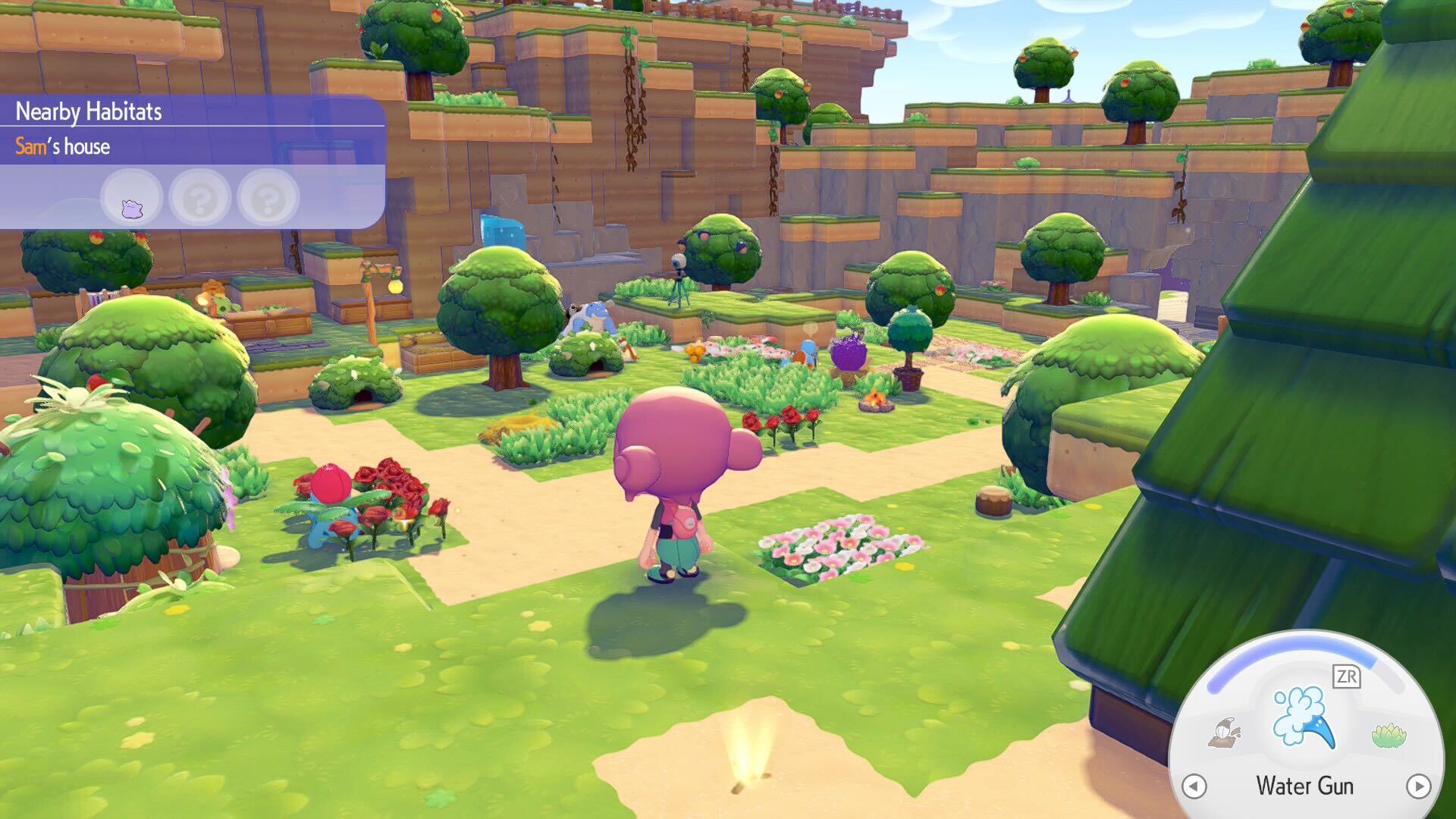
Pokopia sees you playing as a Ditto that's transformed itself into a human of sorts, complete with Ditto's iconic beady-eyed wide smile and a surprising aversion to wearing any shoe that isn't shaped like a Croc. You wake in a world where all the humans and Pokemon have gone missing. It's just you, a Tangrowth that acts as your Professor, a slightly battered Pokedex, and a dilapidated world. It's your mission to rebuild it, block by block, and coax every Pokemon you can back to your civilization by creating habitats specifically tailored to their needs.
Block-buster

And I do mean block by block. Created by the same Koei Tecmo Omega Force that brought us Dragon Quest Builders 2, the similarities between the two games are palpable. Building and repairing the environment uses blocks of various terrain types, and you work with a grid system to place furniture and other items, such as the flora and fauna you'll discover. It's sometimes a little clunky to get the placement you want, but holding down ZL does give you more precise movement controls when things get fiddly.
As awkward as it can sometimes be, there's an almost Powerwash Simulator meditative state that I go into with Pokopia when destroying unwanted blocks and restoring the environment that's hidden beneath. One area's been coated with layers of volcanic ash, and – using Ditto's Rock Smash ability – I carve away hundreds of ashy blocks until my pockets are filled with them and suddenly I've unearthed entire cave systems, a greenhouse, and other treasures that were previously buried. If you've played Dragon Quest Builders before, it works exactly as you remember.

Don't dismiss Pokopia as just a reskinned Builders with some Pokemon quirks, though. There's an amazing attention to detail here when combining the Builder's mechanics with the unique properties of a Pokemon spin-off. Ditto, for example, is the perfect hero for this sim. Able to transform into and effectively steal the powers of other Pokemon means that as you progress through the story, you arm yourself with various abilities that let you better interact with the terrain. Squirtle gives you a Water Gun that lets you rehydrate withered soil and flowers or water vegetables, while Bulbasaur's vine whip turns into a move called Leafage that allows you to yank grass, moss, and other foliage into existence from the ground beneath your feet like a kind of Pokemon God.
I quite like the fact that only some abilities actually make you take on the form of other Pokemon – like Lapras gifting you Surf and letting you take on its likeness with a Ditto twist. Most will just see your arms or other appendages change to mimic the Pokemon you've inherited the skill from.
Turning habits into habitats


Excellent multiplayer means four players can get together to get creative in a play space, without all having to even be online at once. Rather than having to go back to a menu, it's always available in the main game space to play with.
Pokopia and Ditto are nothing without the Pokemon that inhabit it. With a huge roster of cross-generational Pokemon making the cut for the Pokopia Pokedex, it's a refreshing twist on the series to not have to throw a single Pokeball or have a battle in order to add someone new to your friend list. Instead, Pokopia works on discovering and creating habitats that attract new Pokemon. For example, laying out four squares of grass in the opening area of Withered Wasteland creates a 'tall grass' habitat that's the perfect lure for Pokemon like the OG starter trio or others like Oddish. Putting those four grass squares next to a tree turns it into a tree-shaded tall grass' habitat that pulls in a Scyther, Bellsprout, or other familiar faces.
You'll learn about new habitats by experimenting or discovering sparkles around the world known as Pokemon traces. They'll give you a suggestion about a habitat you can put together, and the silhouette of maybe one or two Pokemon you could attract by creating it. They're usually simple enough to recreate; it's just finding the required items or a suitable spot to pull it all together.

And this is really where Pokopia shines. There's a complexity to layering habitats together to create not only the perfect space to fill out your Pokedex but also make something that looks aesthetically pleasing. The core story in the game might only last 20-40 hours, but I've already gotten more than that from the game just by trying to create all the different habitats and create a world you and your Pokemon will be happy to live in.
The maintenance doesn't stop there either as when you've got a Pokemon settled, you've then got to figure out what's going to make it really happy in its new home. That might be changing the temperature or humidity of its surroundings by adapting the terrain, or adding specific furniture or toys to make it happier or more comfortable. You can even build them their own little houses, from tiny huts to sprawling custom-built homes, and then the real Animal Crossing comparisons start to creep in.
Creative visions

There's a surprising range to the ways the Pokemon can help you interact with the environment.
You're effectively building a complex interconnected city where hundreds of Pokemon need to exist together. You're constantly busy, even without the core storyline and main quests, and most of that will be self-driven, as you attempt to create cute little living spaces and happy Pokemon. You'll also discover that each Pokemon possesses certain likes and dislikes, but also certain traits that you can use to help you mould the new world. That might be the ability to light fires or generate electricity, but also might include being able to turn clay into bricks or waste into paper. There's a surprising range to the ways the Pokemon can help you interact with the environment.
For someone as perfectionist as I am about creating in both Pokopia and Dragon Quest Builders, the only thing that I find slightly frustrating is the way recipes and items unlock. Some you'll get through specific quests, others are unlocked in the shop you'll get access to through the Pokemon Center computers in each area by completing challenges like planting a certain number of flowers or building different structures. Some are hidden away in glowing golden Pokeballs, and others are discovered by finding a different item or ingredient. That's not dissimilar to Animal Crossing or Dragon Quest Builders of course, but when you need a certain object to satisfy a Pokemon's (often timed) request or to complete your creative vision, it can be frustrating to not know where you might find the thing you need.

The only other thing that's irked me about Pokopia is a strange obsession with the use of 'yo' in dialogue. It starts as a greeting, which is fair enough, but suddenly Pokemon start using at the end of sentences all the time and it's just really jarring with the general quality of the dialogue, even just initially between Pokemon.
Verbal ticks aside, Pokemon Pokopia has got all the hallmarks of a great life sim game – the creativity, independence, customization, and optimization – just without the true blank slate that you'd usually get with games like this. Having a backstory is really interesting, and has such wonderful tie-ins to Pokemon lore and mechanics without it being a turn-based RPG that there's a lot to dig into, for fans of Pokemon and life sim games alike.
Pokemon Pokopia was reviewed on Nintendo Switch 2, with code provided by the publisher.
Want more creative options? Our games like Animal Crossing list has plenty of recommendations! Or, check out our best Pokemon games ranking for more monster catching.

You must confirm your public display name before commenting
Please logout and then login again, you will then be prompted to enter your display name.