


Every work of art begins with a sheet of blank paper, and every sheet of blank paper offers one fundamental choice: portrait or landscape? For the past few generations, videogame developers have often chosen landscape, setting their adventures across sprawling maps that you can navigate as you choose, concentrating on the narrative or scattering to the distant hills just to see what might be hiding there.
These are open-world games, and together we've spent millions of hours in places like this. We've collected Agility Orbs, stolen cars from strangers (and then backed over them), climbed towers to synchronise our viewpoints, and faced penalties for leaving the mission area – and really, could you judge us for that?
Open-world games have showcased design at its most luxurious, extravagant and intoxicating. They've given us the freedom so many videogames promise – and struggle with. Forget building missions; why not build entire neighbourhoods in games such as Crackdown and let the mission flow where it will? Forget building ski runs; why not opt for Steep's mountain range, individual slopes waiting to be chained together in new ways?
And yet 2025 sees open worlds themselves in a quandary. On one hand, the genre of choice is losing ground to newer, and perhaps less risky, options such as Soulslikes and roguelikes. On the other, the biggest game in the history of the form is due to land in 2026, and it promises to deliver an open world created with the kind of lavish attention to detail that no other studio could afford.

This feature originally appeared in Edge magazine #413. For more in-depth features and interviews on classic games delivered to your door or digital device, subscribe to Edge or buy an issue!
Many design teams are already scattering in the shadow of GTA 6, which won't only recreate a huge stretch of Florida but also the modern milieu of social media and unnerving politics that flows through it. How can you compete with that?
This series' impact is so great that, for many years, open worlds were synonymous with GTA, just as shooters were once known as Doomlikes. And yet GTA 6 will arrive in a world in which many other teams have left their mark on games that set their adventures loose across wide stretches of terrain. It's reached the point at which open worlds are no longer one genre, but a constellation of different, often overlapping subgenres.
So, with GTA 6 dominating the conversation, now's the time to look across this complex genre and ask what it is, how it works, and where it's going. The best aspect to focus on is variation. What sub-categories does the modern open-world game fall into, and what makes each variation work? Let's explore. And see those mountains in the distance? We'll definitely be able to climb them.
Open world category #1: Museums
You need to immerse players
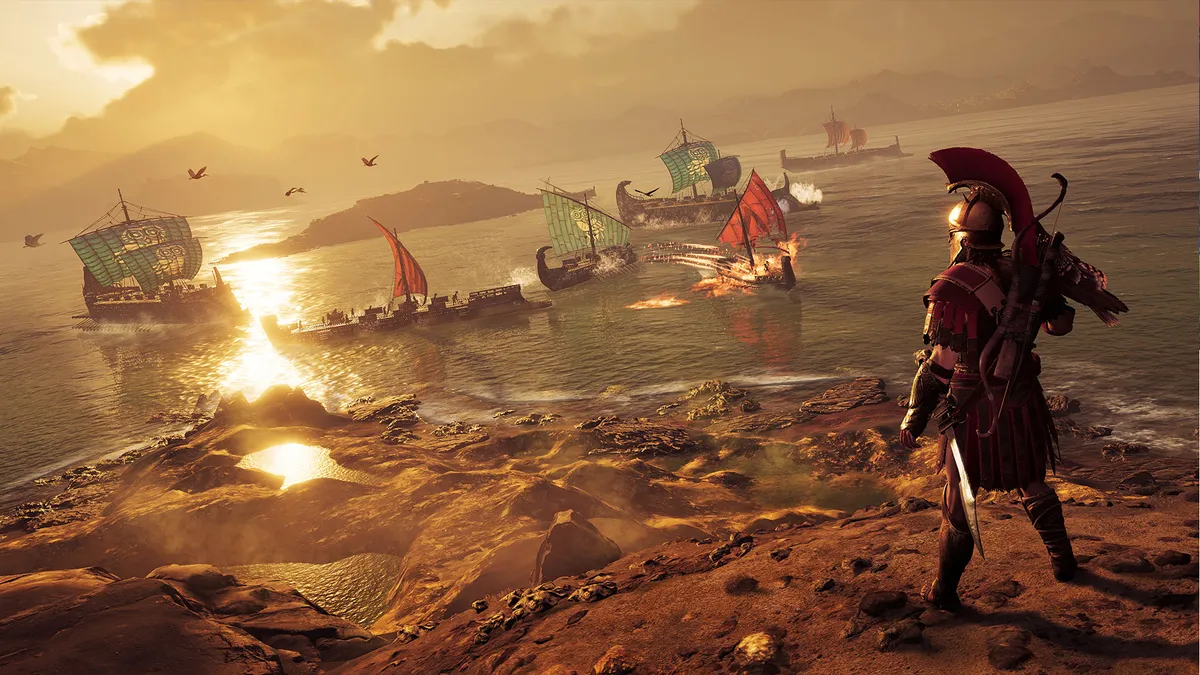
'Museums' might seem like a strange way to classify games as varied as GTA, the best Assassin's Creed games and Saints Row. But for all their differences – parkour across the pyramids, pull off a car-jacking in ersatz Bel-Air – they all have one thing in common: in each, the open world is a means of recreating the real one, regardless of whether that's the modern era with all its satirical possibilities or the ancient world with its cast of historical figures.
Ben Hall is a world director at Ubisoft, where he's worked on games such as Assassin's Creed Odyssey. "It's always a challenge," he says, when asked what it's like to try to build a world that's not only a recreation of aspects of this one but is also full of life and feels genuine. One of the first challenges is compression. Or, to put it another way: "When we first started looking at Ancient Greece for Odyssey, we knew we weren't going to be able to build all of it."
This holds true whether you're recreating a 2,000-year-old archipelago or a fictionalized version of LA. It becomes a process of focusing on what's important and building what Hall calls "anchor points".
"For example, Athens becomes the big anchor point," he says of Odyssey. "OK, that's going to be our biggest city. Then we start with sketches. We start with whiteboards, we start in Photoshop, then draw lines between things in terms of the locations that pop out as being places that we want to use."
From there, Hall and his team turn to the landscape, and for Odyssey the guiding principle was akin to a honeycomb. The team created individual cells that were interesting and delivered on the promise of this ancient world by themselves, and then surrounded them with different cells that did the same things but in other ways. The end result? Scale but also variation. "We wanted to create an odyssey for the player," Hall says. "But one of my tasks was to make sure we didn't create a world that was just fatiguing to travel through."
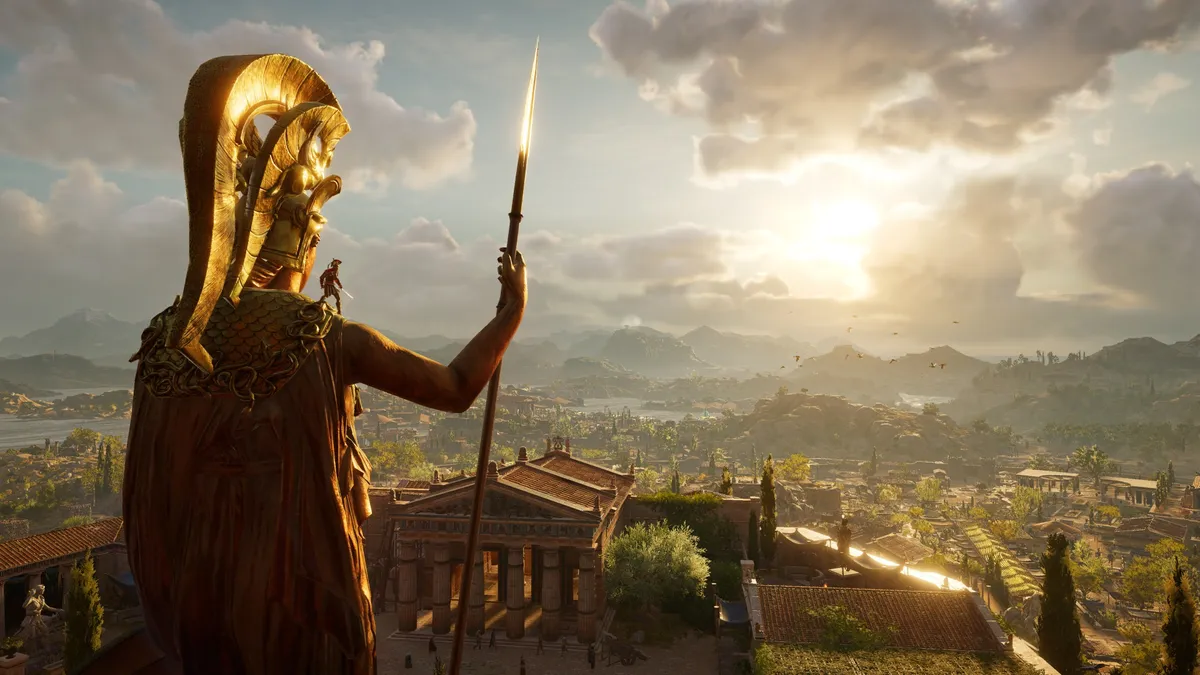
Despite the contraction, it was important to Hall's team that, when players looked at the map, they still saw something that looked like a footprint of Ancient Greece, and you see this tension in almost all games that try to recreate the real world.
Driver: San Francisco's version of its home city is tiny in comparison to the real thing, but all the famous parts you look for are there and largely in the right place. Los Santos may not quite be LA, but its renamed districts cleave to the original: Pillbox Hill is where you'd find Bunker Hill; Chumash is right where you'd go searching for Malibu.
And those swapped-out names are a reminder that open-world games often satirise the places they're recreating, whether broadly, as in Saints Row, or with the kind of smirking aside Assassin's Creed likes to pull off. Alex Hutchinson worked on Assassin's Creed 3 before making the Savage Planet games, which blend open worlds with slapstick, and he feels the genre is an ideal vehicle for humour. To him, it's all about letting go of that thing most comedians will cling to: control of the timing.
"I think in open-world games, specifically," he says, "once you give up the idea that there's authorial timing, and you say that, no, the player is in charge of timing – and it's like slapstick, and you're just setting up the opportunity for jokes or scenarios that are funny – then suddenly it becomes the interactive comedy, and then that's funny again." Why does this work so well with open worlds?
"Because you need to put the player in deep. You need to immerse players in a satirical world and let them stumble across the bizarre situations and the excessive consequences." It's not solely about the freedom, then. It's about the density of systems and elements open worlds offer.
Open world category #2: Nature parks

I need a mountain
Nothing captures the deep strangeness of video games quite like those that are concerned with nature. Here's a world of painstaking design, but it's all in the service of making something that doesn't look man-made at all.
When it goes well, you have a mountain from Breath Of The Wild: inhumanly vast, and yet also a teasing, playful puzzle to climb in the moment. And when it goes wrong, the illusion can be ruined instantly.
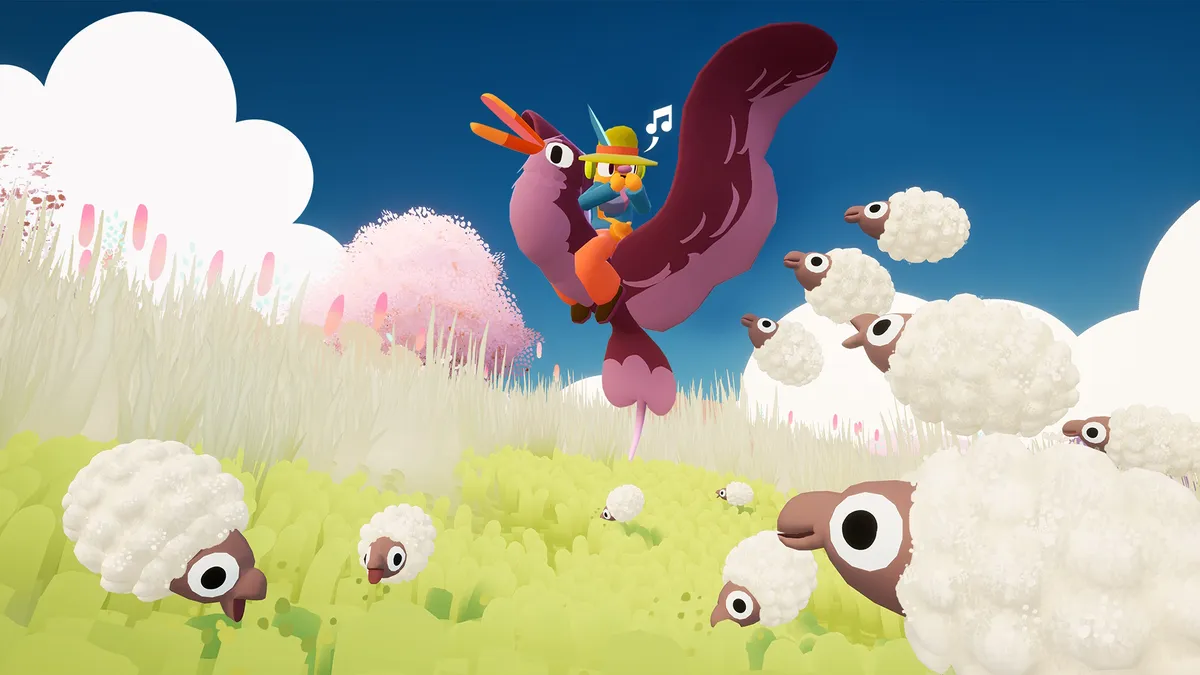
Richard Hogg is an artist and game designer, and one of the small team behind Flock, an open-world bird-collecting game. "A problem I have with a lot of nature games is that they don't feel natural," he says. "Specifically in the way that different environments have way more contrast between them and very little overlap compared to the real world, right?" He laughs.
"That's the thing that I notice a lot: when you're walking around and one minute you're in a particular area, and then you've moved into another area and everything is suddenly different." You might call this the Just Cause 2 phenomenon. The fictional Panau is a thrillingly varied open world, but there's a line separating snow from forest and forest from desert. How do you avoid that?
"There's a term that ecologists use that I really like," Hogg says. "It's ‘mosaic habitats'." He gives the example of Britain before humans. What do you see? A blend of woodland and meadow, without a strong delineation between them.
"There were pockets where maybe a tree had fallen down, and a bunch of creatures had come and grazed the area. You end up with a clearing where there's grass growing, and over time you get patches and pockets of different biomes." This was the approach the team aimed for with Flock.
You need to immerse players in a satirical world and let them stumble across the bizarre
Alex Hutchinson
That attempt to capture reality helped with Flock's puzzles, which revolve around how and where you find certain birds. "We tried to be as true as we could, which was to make it like real life as much as possible," Hogg says.
This meant thinking about what actually happens with birdwatching. How do birds camouflage themselves? How do they give themselves away? "Some make too much noise," he says. "Maybe some of them are in a flock, and you see that from a distance. And then you go and follow them for a bit, and then you find them. We're just trying to come at it from thinking about how the real world works." Nature, then, is an approach to the environment as well as a set of visual ideals.
One of video gaming's most immersive trips into nature over the past decade has been A Short Hike, made by solo developer Adam Robinson-Yu. He started with a process he says is akin to sculpting. "I didn't really think too hard about it [at first]," he says.
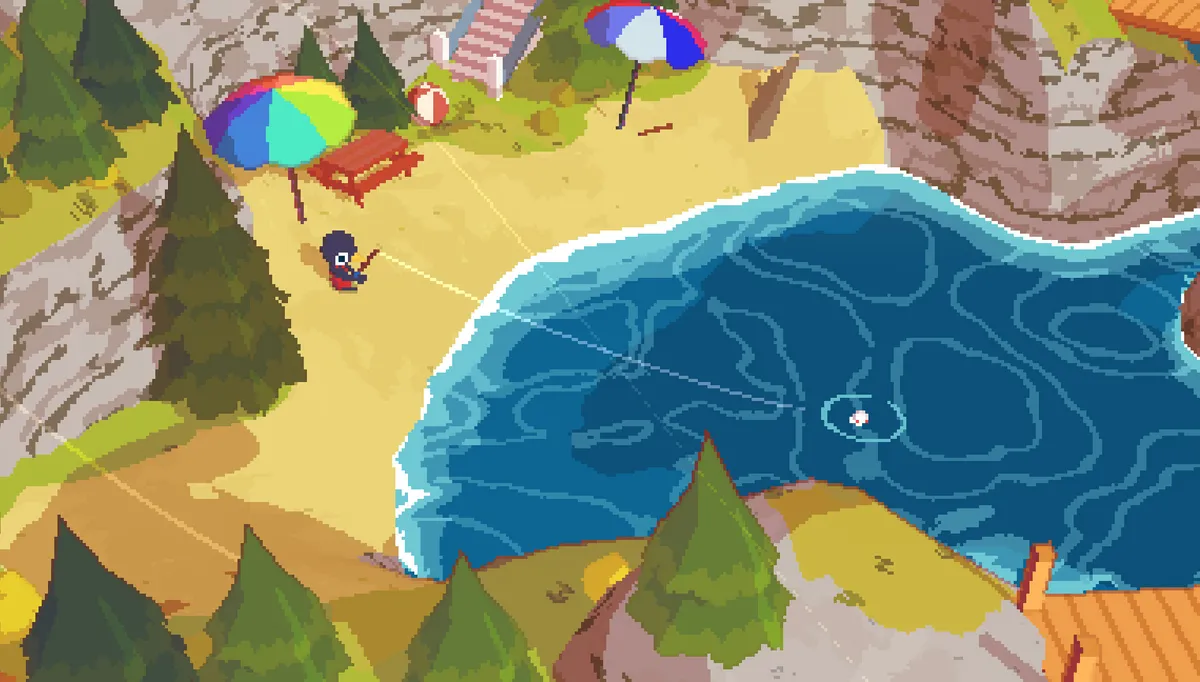
"I was like: ‘I need a mountain'. The tools in Unity that I use for this are very much just like you're drawing in MS Paint. So you're building the height map of the world, and I just sculpted a mountain, sculpted some hills and valleys and stuff, completely on a whim. And [then] I would press play, and I'd have Claire running around those little hills and mountains, and I'd be like, ‘Oh, this hill feels fun'." From there, he would often add details that were inspired by his own memories of hiking.
For Hutchinson, nature is tricky for practical reasons. "I think the reason why buildings were the sort of launchpad for Assassin's Creed, especially, is that they're very structured," he says. "Games are built on metrics, and level design is often built on metrics. So you jump a certain height and a certain distance, and in a city you can grid it out and make it understandable.
The challenge with doing nature is that there's no straight line in nature." But nature offered something the Assassin's Creed 3 team needed: scale. "We quickly realised that the biggest building [in America at that time] was two storeys tall – so, if we wanted to give you that feeling of free running and free climbing, nature needed to be a big part of it." In response to this, the game's cities got smaller and, as the team got used to a world without straight lines, nature opened up everywhere.
Open world category #3: Speedways

It was always about making sure there was that fluidity
Is there an open world more beautiful or audacious than Burnout Paradise's? This collection of streets seems chaotic at first, only to reveal itself over time to be a thing of beauty and precision.
Ultimately, it's something of a particle accelerator, in which you are flung around and around, the most unlikely connections between one path and the next only becoming possible at high speed.
Paradise is not alone in providing open worlds for vehicles – that looming behemoth is called Grand Theft Auto for a reason. Paradise isn't even alone in being a game exclusively about vehicles rather than people. The Forza Horizon team at Playground Games have turned everywhere from the Outback to East Anglia into an automotive playground, while Ubisoft's The Crew allows you to drive all the way across the US. But if open-world design is already tricky, how is the scale of the world being built impacted by this brand-new variable, speed?
According to Hogg, who's worked with speedy characters on Flock, it's easy to get this issue back to front. "You can't keep changing the scale of the world to feel right with the speed of the bird," he laughs. "The question really is, how does the scale of the world impact the speed that you can travel around it?
Because it would have been impossible to keep adding and removing bits of the world to make it feel the right size in Flock. But we could keep making the bird go faster and slower." And so Flock's open world features ways to speed you up and slow you down, depending on whether the environment is filled with detail or a place that should be enjoyed in a rush of wind and a blur of surroundings.

It's not just distraction, but agency-driven distraction
Ben Hall
Before working on games such as Assassin's Creed and Far Cry, Hall started his career with the Burnout series and had to think about open worlds in which you would often be moving at over 100 miles per hour.
The secret? Two opposing forces, which Hall refers to as flow and distraction. "It was always about making sure there was that fluidity," he says of his time on Paradise. "It was something that the team was keen on – that there were ribbons of flow throughout the world. And that's something where I learned a lot about world design, world creation, and the flow and the movement of the players through spaces."
Flow is Burnout in microcosm: you start moving, and the road seems to become a collaborator, arcing you across vast distances. But what about distraction? "It's not just distraction, but agency-driven distraction," Hall explains. "That was one thing Burnout Paradise did incredibly well. It was offering so many various different things that you could do while you were doing something else, but it was up to you if you took the risk to do it."
One of the interesting things about open-world games is that designs are often porous: lessons learned in one kind of game can crop up in another very different one, just as open-world games can belong to a handful of different subgenres at the same time. As an example, Hall eventually found that the flow he'd learned about with Paradise was useful for making sense of the on-foot world of Assassin's Creed.
"Jumping from a racing game to Assassin's Creed: Syndicate was a big change in philosophy and mindset, but the great thing was that I was building things for an Assassin's Creed game. I wanted to step back and learn about and understand what it takes to make these locations. And then, when you start looking at the parkour system and the movement of the parkour, that's where I could start to think about using some of those learnings of fluidity and movement."
Open world category #4: Climbing frames

We always try to merge the desire with the distraction
While it's exciting to walk around a version of New York City that's been painstakingly crafted to mimic the real thing (even if it's now called Liberty City), there's something to be said for skyscraper cities where you aren't stuck in traffic at the bottom of the canyons the whole time.
Enter the climbing frame, a kind of open world that has volume, and where player powers – superpowers in Crackdown and Prototype, parkour prowess in Assassin's Creed, Mirror's Edge Catalyst and Dying Light: The Beast – open the entire world out for you to play. Depending on these powers, the games have very different textures, but they all share one commonality: you aren't only racing to the horizon any more. You're climbing, gliding, grasping and jumping.
"Verticality is really important," Hall says, "especially in the Assassin's games. It really is a climbing-frame game, and it's about moving the players through those spaces and going up and down things as much as anything else." But not all climbing frames are alike – even before you get to the different traversal options you're given.
"There's a big difference between the buildings you're creating in a city like London and how you actually interact with them and how you play with those spaces," Hall says. "It's about creating those desire lines for players to take, to make sure they want to get to certain things in certain places. How do you attract the players who want to spend their time elsewhere to climb this particular monument you need them to climb?"
Change the Assassin's game, though, and the climbing frame changes too. "Something like Ancient Greece, that was a different challenge," Hall explains, "because a lot of the buildings and the points of interest we were building were much smaller. There are some pretty big elements within ancient Greece, and certainly the temples and things were epic and large, but not like St Paul's Cathedral."

It's about creating those desire lines for players to take
Ben Hall
These shortcomings can shape everything about a climbing-frame game. "And that's kind of where some of the ideation came from when it came to building some of the big statues that we put around Greece," Hall explains.
"They were always based on mythological or historical fact, always based on working with the research team, working with a historian. But what we did is we took a fantastical approach to the giant statue that then gave us something epic to climb. It gave the player that distraction. So you could be on your main quest, going across to a different town, but like: ‘Oh, there's that – I'm going to go check that out'. Then you get that climbing, you get that verticality."
Hutchinson, meanwhile, worked on the first Assassin's game to allow you to climb through interiors, Assassin's Creed 3, a shift he says made the game world feel less like a "carpet" that you were moving over. Suddenly you were dipping in and out of a place that had different surfaces and complex structures. In Revenge Of The Savage Planet, he and his team have taken things further: they're deconstructing the climbing frame itself.
"So for the Savage Planet games, we tried to imagine the world as three layers," he says. "It's a Metroidvania, so you start by walking around on the ground, and then you get the ability to swim down underneath those areas and spelunk into buried places. And then later you get the ability to jump and go up above all that." He pauses for a second.
"So I think, when it's most successful, you can explore the same environment two or three times, in terms of physical space." He notes that this is the same approach taken by the most recent Zelda, Tears Of The Kingdom: Hyrule all around, sky islands above and the Depths below. And all you need to do is find out how to get there.
Open world category #5: Hunting grounds

Give players space to build a cognitive map
Most open worlds will include some kind of combat, but a special handful elevate it to the main event.
These are the hunting grounds, open spaces that set you free to stalk foes and even toy with them before taking them down. They offer landscapes built for planning and execution – and for that wonderful moment when everything goes wrong and you're left to improvise.
Hall has worked on exploration games including Assassin's Creed Odyssey and hunting grounds such as Far Cry 6, and although all Ubisoft open worlds share a certain design vocabulary, he says that the places often have little else in common. "The landscapes are very different," he says. "And that was one of the big learning curves for me, moving throughout these different types of genres. You've got to learn the core gameplay loop of what you're making, and with a Far Cry game, typically speaking, we try to have these big, open environments."
These open environments are there to offer you as much agency as possible, while also encouraging you to use your agency. And agency means different things to different people.
To put it another way, Hall says that, "when you come up to a point of interest that's going to be full of enemies that you're going to spend the next 30 minutes trying to figure out the best way to eliminate, we want to make sure that we've got a space that offers different opportunities to different players and different play styles as well." As a result, Hall and his team build their hunting grounds while thinking of different categories of players: runners, stealth players, and tactical players who like to scan everything they see and shoot from a distance.
"These people use all the gadgets and plan everything perfectly, until things go sideways and then everything starts exploding, which is how it tends to play out," he says. "Or at least for me."
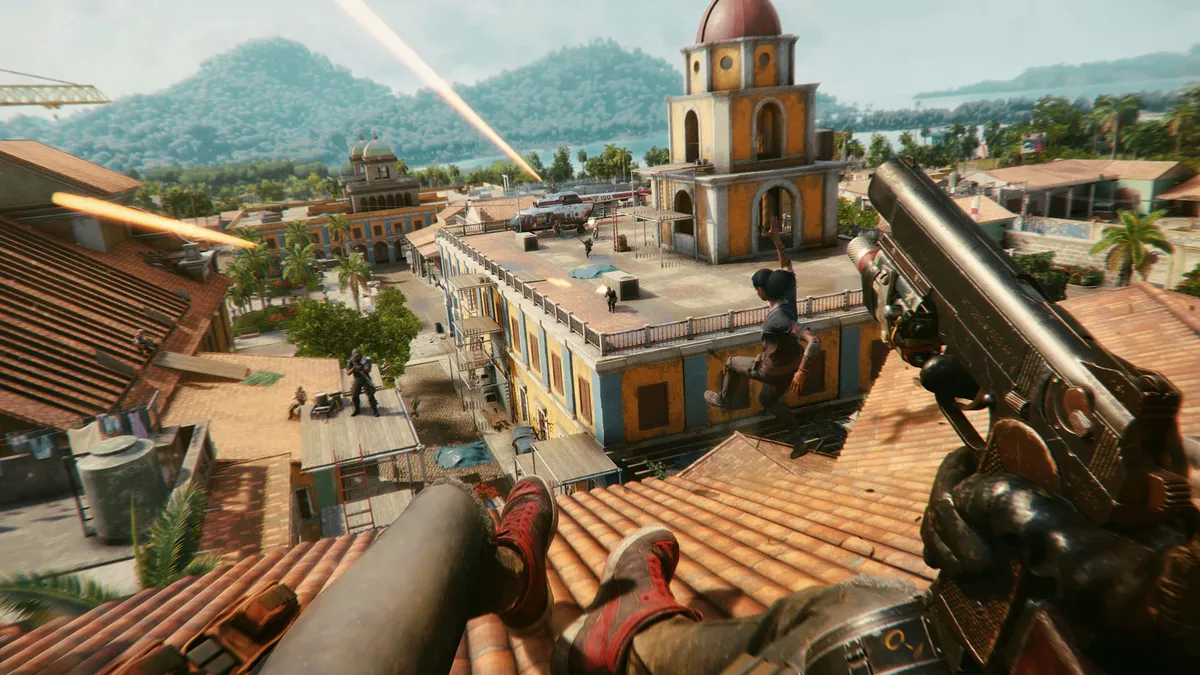
We've got a space that offers different opportunities to different players and different play styles
Ben Hall
Often, considering the needs of these players involves focusing not only on a specific area of a map but also the area around it.
"We'll always be thinking about the landscape directly surrounding a point of interest, and then how the landscape surrounding that landscape informs that landscape inside of it." He pauses for a moment to find the right analogy. "It becomes like an onion skin, where we think outwards. For Far Cry 6, the vast majority of the terrain was sculpted with purpose, because we've got so many different systems laying on top of each other, and so many different purposes for that landscape and how it connects to other landscapes."
A crucial aspect of the design brings all kinds of players together, though. "Take vantage points," Hall says. "Having vantage points on an enemy stronghold is super-important, and that's about having the ability to give players time and space to be able to build a cognitive map of where they are."
Whatever your approach, then, if you're hunting enemies, you want an internal idea of the landscape you're moving through. This allows the designers to signpost the kind of uses the current landscape might offer, and it also means you don't have to look at the map as much, ruining the flow.
"Because we give players these big worlds to explore, we work on them for three or however many years the production takes," Hall laughs. "So we've learned them intricately, and inside and out. We know exactly where to go. We need to get the players up to speed with that. So it's about giving them opportunities to [see a space] and not get overwhelmed by the amount of everything that's around them."
Open world category #6: Pocket worlds

We're making games for old people
Large open worlds offer players hours of freeform fun as they explore the landscape and engage with overlapping systems, often to chaotic effect.
But large open worlds, as designers such as Hall will often point out, are also overwhelming. They require fast-travel systems to cut down on backtracking, and their maps can quickly fill up with icons and side distractions so that they don't feel empty. At its worst, this can feel like clutter. It can suggest that, because there's so much in the world, very little of it is actually important.
It's no wonder, then, that over the past few years there has been a trend towards smaller, more compact open worlds. Games such as Flock, Sludge Life and Proteus reveal an indie community that's often inspired by the ideas developed in big-budget games from large teams, but wants to explore those ideas with a little more focus. And sometimes the worlds are compact for more personal reasons.
A Short Hike is about a very modest mountain chain and a bird named Claire with a mission to get to the top of it. "I sometimes have this tendency to get a little bit hung up over details and thinking too hard about things," Robinson-Yu says on the topic of his game's small footprint and simple agenda.
A Short Hike actually started as a distraction from a game he was already working on. "I was like, ‘Oh, this will be a way for me to motivate myself and get something done'," he laughs. "I was seeing this as a small project that didn't need to be perfect." From the start, then, its scale was a comfort. "I was [thinking]: am I going to be able to fill this with enough stuff? And then I'm like, ‘If I can't, the game will be mid and that's OK. This game initially wasn't even going to be sold. It doesn't need to be perfect'."

Can I make gameplay out of the player noticing something?
Adam Robinson-Yu
In terms of what to put in the game, though, it seems that compact worlds benefit from a similarly compact approach to design, which leads to what Robinson-Yu refers to as "micro puzzles".
Inspired by Breath Of The Wild's Korok seeds, there are "mini Where's Waldo moments for when you're just walking down a path, and things that will draw your attention and create interest in your mind," he says. "[It's] to stop you getting too bored, or to pose a question: what's around that corner? Or: oh, I've noticed a circle of rocks – that could be something."
"I was thinking, can I make gameplay out of the player noticing something?" Robinson-Yu asks. "Out of them paying attention, and then feeling acknowledged for noticing something interesting – like they see a weird-looking rock. I just want to have that kind of relationship with the players."
Having worked on AC3 and Far Cry 4, Hutchinson has been involved in some huge open worlds, but his latest game, Revenge Of The Savage Planet, keeps things smaller, with four relatively modest planets for you to move through, each with its own relatively modest open worlds.
"The joke became that we're making games for old people," he laughs. "We have a life, you know. I want to see my kids. I have friends. I don't want a thousand hours of game. And every time someone told me that this or that open world is 400 kilometres square or 1,000 hours long, I'm just like, ‘I will never play that'."
Hutchinson says that now he is older and has money but limited time, he wants to spend that time wisely. For a compact open world, that means one thing. "We went for density, and we kept with that," he says. "The idea was that you find something interesting to interact with everywhere. If you finish that and you look around, you should at least see two other options for interaction. It's no better or worse, but we don't want the feeling Kojima's going for in Death Stranding, of these enormous, empty spaces. We want dense, joy-filled nuggets."
Open worlds after GTA 6

We're just there to respond to the player"
You can feel, among many designers working in open-world games in all their forms, the sense of a breath being held.
Next year, GTA 6 will arrive and most likely transform the landscape these games inhabit, just as GTA 5 did over a decade ago. And while Rockstar has the kind of budgets and creative freedom that don't exist elsewhere, it's clear that everyone who has ever made an open world has a sense of what they'd like to see more or less of, and where they hope the future may lead.
So what does an ideal open-world game of the future look like? According to Hollow Ponds' Ricky Haggett, who most recently created Flock, it doesn't have an overwhelming amount of clutter.
"The thing I don't like about open-world games is when you end up with a million icons all over the map," he says. "You just get this increasing two-dimensional list of chores that go in all directions." His hope? For games that "figure out ways to not feel like a gradually expanding chore list".
He admits this stuff creeps up on players and designers alike. "You start and you have this little radius around you to find things in," he says. "Then, as you start exploring farther from that place, the radius increases, and the number of things you can find to do increases. And then that just means that the number of things you can possibly do exponentially increases. And so it can feel overwhelming."
Haggett's not convinced that designers always have the solution, though. Sometimes it's down to the player. He's just restarted Tears Of The Kingdom, having bounced off it originally. This time, he's going to be pickier.
"I've decided all the things I'm not going to do. Oh, you're a guy with a big sign that doesn't want it to fall over? Tough shit. Let's just leave them alone. That sort of thing. It's just deliberately deciding all the things I'm not going to do, in order to artificially limit the scope of how many tasks I can add to my list." And instead? "I'll be finding the little villages and doing the chores for the people and bringing the musicians to the Fairy Fountains. Just the things that I can be bothered to engage with."
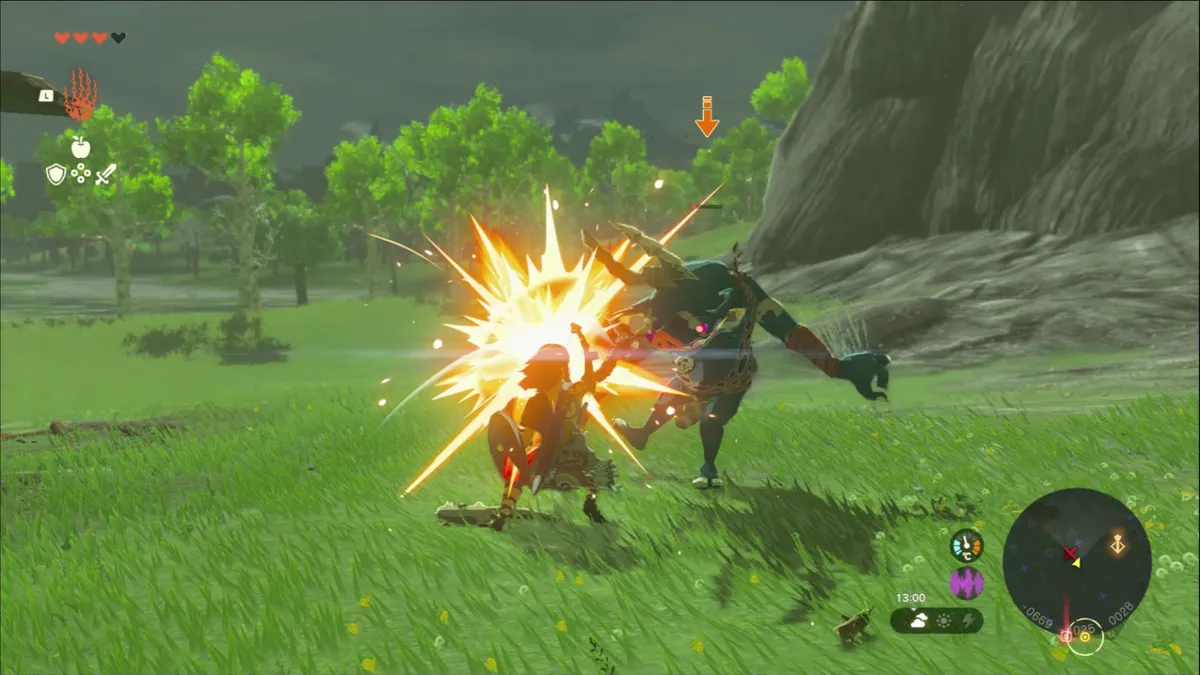
The number of things you can possibly do exponentially increases
Ricky Haggett
When it comes to feeling overwhelmed, Haggett is not alone. "When I think of an open-world game, I don't inherently think that's a good thing, right?" Robinson-Yu says.
"I remember Breath Of The Wild was a big inspiration for A Short Hike, but before it came out, I was a little bit sceptical. You know, open-world games stretch out objectives over long periods of space." What he found in Link's adventure, though, was something inspiring: a sense of exploration. "Exploration is the key thing I think about during times when I've been hiking or when I was a kid exploring the wilderness. You just want to explore, and you want to see cool things. And I feel like some open-world games can make it feel like you're not really exploring, you're just traveling."
A sense of exploration is difficult to create in games. "Real life is so rich and interesting," Robinson-Yu says. "You can find a cool-looking rock on the beach, and that's a neat thing in real life. In your videogame, you pass over a thousand prefab rocks. There's only so much that you can do." And rewards themselves can be tricky. "I want to reward players for exploring," he says. "But does that make [exploring] less meaningful if I'm trying to reward them? And so the rewards that I like to think of are things that are just something to do, something to see – something unique, like a vibe. So it's about finding stuff like that to put in your world."
As an example of this being done well, Robinson-Yu moves outside open worlds. "[Dark Souls] felt like it had depth and had richness, because there were always secret corridors to find and there are always places to go. And for me, the feeling of exploration in Dark Souls really got it, because there was also a struggle to get to these places. It's very easy for an RPG to give you rewards. [But] it was rewarding to explore Dark Souls because you're poking around corners, and you'll find a corridor, and that leads you to a whole new area."
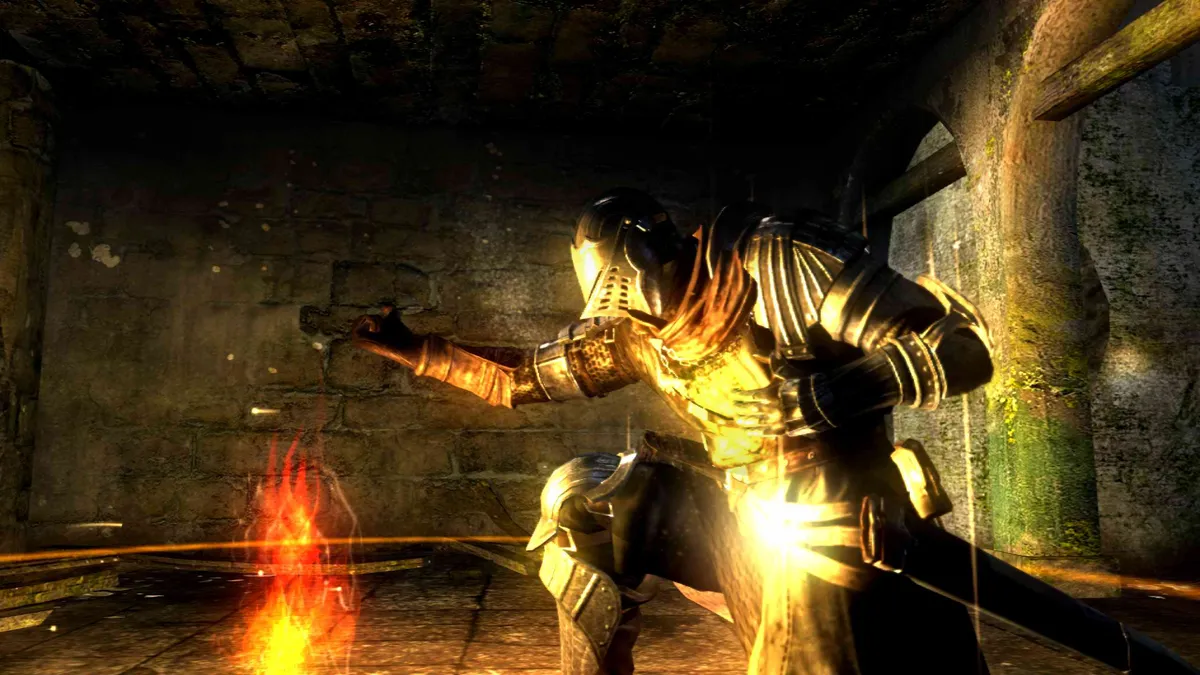
Some open-world games can make it feel like you're not really exploring, you're just traveling
Adam Robinson-Yu
These moments are magical, he says, because they are stumbled across, existing beyond objective markers.
"For me, when you miss things in games, or you've heard about things that you've missed, I have this feeling that it's OK to have content in the game that people will never see, because some people will and some people won't. And you'll either read about it or you will stumble upon something yourself that feels rare. You'll be like, ‘Oh, I could have missed this! The game designer could have easily drawn more attention to this. But they didn't, and that made finding it for me feel special'."
Hutchinson, meanwhile, thinks it's all about understanding that a map that offers freedom is very different from a map that just offers range and scale.

"We definitely prioritised the openness of the map," he says of Revenge Of The Savage Planet. "And I think more and more games are realising that the fun is in the openness of the experience – giving the player the tools and opportunity to muck around."
How much opportunity? More is always better. "It sometimes drives some of our team crazy," Hutchinson says, "but the way I see narrative in the context of a game is that we're just there to respond to the player. We're there to ask a bunch of questions and then pay off whatever they choose to do.
"And I think that's the width in the genre that we haven't explored as much. Like, do I have to kill all those guys in Crackdown?" He cites an idea for Far Cry 4 that was ultimately discarded: the player explores the world, taking over outposts, and the designers toyed with then making it possible to give any recaptured outposts to Pagan Min, the game's villain. "Like, if you empathise with the villain – if you think, ‘Actually, I don't think he was as bad as they said, and I don't like these people I've got into bed with'?"
He laughs at the concept. "That sort of freedom of expression, of going back and changing your mind, I thought could be really, really interesting." And that focus on expressiveness, even at the expense of almost everything else? "I think that's where the fun of the whole genre might lie."
Explore the best open world games of all-time while you await Rockstar's next action-adventure.
