


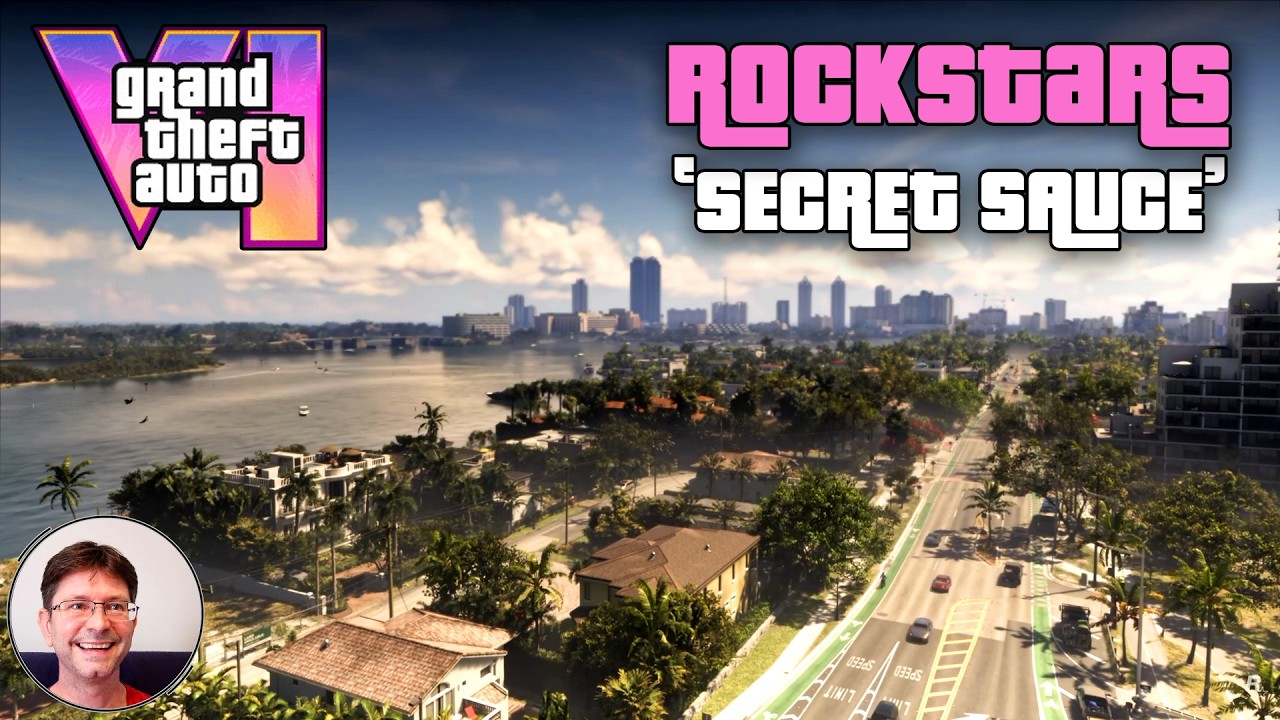
Rockstar's ability to create world-beating titles like GTA 6 stems from a core practice - not succumbing to the 'fire and rehire' cycle that has ravaged publishers like Microsoft and Sony.
That's according to David O'Reilly, a 12-year veteran of Rockstar whose credits as an environment artist cover GTA 6, Red Dead Redemption 2, GTA 5. He claims that "Rockstar doesn't do the whole thing that the games industry has been madly scrambling to do" over the past few years - namely, laying off vast swathes of staff to cut costs, before scaling back up when production needs require doing so.
"How does Rockstar do it?" he asks. "How are they performing these magical feats of game development? It's pretty simple really: They've not engaged in that fire/rehire cycle." The result, O'Reilly claims, is that "Rockstar has kept nearly all of its institutional knowledge," and that in his time at the studio he worked alongside people who had been at Rockstar North when it was still known as DMA Design, a rebrand that took place in early 2002.
That heritage, he says, "is a big deal in today's gaming industry," and the associated "knowledge bank" that comes with keeping your long-serving staff around is invaluable. It's also something that "Sony, Microsoft, all these big publishers [...] don't understand, because they're focused on the money. They don't give a crap about making games. Make no mistake - they do not care about making game products."
That apathy is something O'Reilly believes even Take-Two, Rockstar's long-standing publisher, shares. The difference is that the company recognises "that Rockstar is a Golden Goose," and remains very hands-off with the development studio "because they're terrified of breaking something in that winning formula. [...] They let Rockstar cook their good stuff, and it's worked for a long time and it's continuing to work."
O'Reilly's position - that a short-term approach of firing and rehiring does nothing to actually help a studio - is certainly one that's beginning to be vindicated. After thousands of layoffs and dozens of studio closures across the industry over recent years, the idea we're getting better games as a result is laughable. In fact, the opposite is true - in the past, plenty of classics were made because the teams that made the first game all stuck around to improve the sequel. And just this week, Zelda producer Eiji Aonuma pointed out that the Ocarina of Time remake owes some of its success to the fact Nintendo doesn't engage in mass layoffs.
Perhaps his claim - that "noone is competing with Rockstar" - is not entirely fair. For one thing, there are studios out there that are widely retaining talent and are continuing to push out acclaimed games. For another, Rockstar's resource - fuelled by billions in GTA 5 revenue - is literally world-beating. But maybe you can't really put a figure on it - as O'Reilly says: At Rockstar, you have a lot of people who have been there 20 years or more, [...] and that sort of knowledge is absolutely priceless.

