





Hasbro CEO Chris Cocks has big plans for Dungeons & Dragons. Considering the attention that adaptations such as Baldur's Gate 3 have brought to the setting, and bearing his position as former president at developer Wizards of the Coast in mind, I doubt anyone will be surprised to hear it. But when we catch up over a video call while he visits Hasbro's UK HQ, one thing does catch me off guard. For Cocks, D&D isn't business. It's personal.
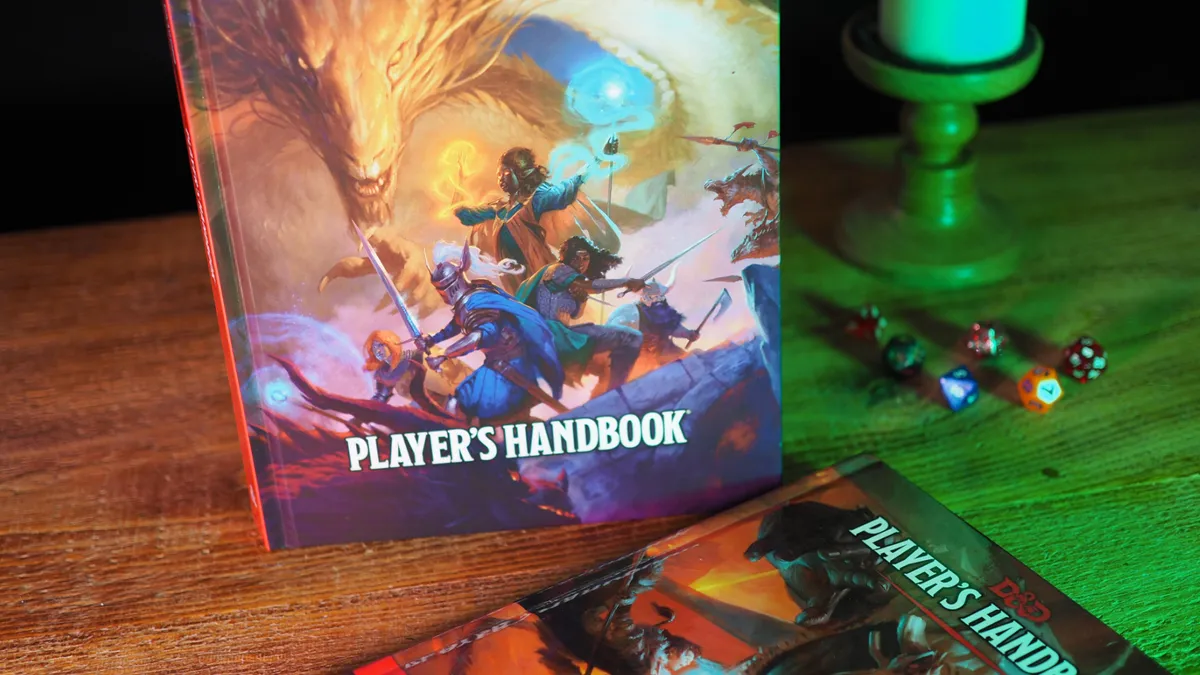
Cocks has been an avid fan of Dungeons & Dragons since he was 10 years old, has three to four tables on the go at once, and brought 3D-printed miniatures with him on his trip to London to paint in his hotel room. When we aren't discussing the future of Hasbro, we spend a lot of time chatting about his D&D setup (he's fitted a TV into the middle of his gaming table to display interactive maps for the best tabletop RPGs, if you were interested). This is reflective of his approach to Hasbro's many IPs. In our interview; he notes "the best part of the job is either when you get to personally experience the fandom as like a first look, and you see it before anyone else, or when you see other people kind of geeking out and nerding over it."
Nostalgia and the new
No matter whether it's dealing with the best board games or action figures, Hasbro's strategy under Cocks is simple: 'Playing to Win.' Rather than being a snappy pun that just looks good on advertising, this mirrors how the company sees itself. According to Cocks, Hasbro tends to thrive when leaning into innovative play experiences or delighting the audience through its products, and this slogan demonstrates how it's refocusing on that concept.
But what does this mean for brands like Dungeons & Dragons or Hasbro's litany of action figures based on Star Wars, Marvel, Transformers, and beyond?
"It really means we're doubling down on them, because one of the core pillars of playing to win is this concept we call 'aging up,'" Cocks says. "Today, the dominant audience for play and for collection is really people in their 20s, 30s, 40s, or even old timers like myself in their 50s. We're the people who are going out there and buying a lot of things, engaging in a lot of things, wanting to go back and experience brands that we grew up with in a whole new, more mature way, and that's directly down the fairway of brands like Magic, of brands like D&D, of our partnership brands like we have with Star Wars and Marvel and then, soon, Harry Potter."

Cocks became Hasbro's CEO in 2022, but before that he'd served as president of Wizards of the Coast (which runs both D&D and Magic: The Gathering) since 2016. He also spent many years working at Microsoft, including a stint as group project manager at Xbox Games.
Hasbro's focus going forward isn't just nostalgia, however. A significant chunk of the company's focus is now on digital games, and Cocks – who previously ran Hasbro's Digital Gaming segment, as well as marketing strategies for Xbox games including Halo – is keen to venture further into that realm following the success of titles like Baldur's Gate 3.
Key to this is hiring developers who are fans themselves and understand the core of the product, but are willing to experiment. He cites Baldur's Gate 3 as a good example of that, stating that it's "probably one of the best implementations of D&D I've ever seen" but makes changes to the core Dungeons & Dragons system nonetheless. Indeed, he says that Hasbo wasn't "slavish about how things had to manifest. We gave them [developer Larian Studios] a huge amount of liberty to tell a story and create lore inside of this world."

"I could say we're a toy company, and I think people would broadly understand that, but I think we're much more than a toy company," says Cocks, touching on Hasbro's adaptation strategy. "I think we're a collectible company. I think we're a games company. I think, increasingly, we're going to become a digital company [...] As we make that transition, we're going to have to become increasingly comfortable with co-creation, with our end users, like giving them tools to be able to express themselves, trusting more partners and more creators with our brands and how to express them. We have a good track record of that. And based on what I've been able to play of our upcoming portfolio, I feel pretty confident our players are going to be pretty psyched."
In terms of what's on the way, Cocks is hesitant to say too much (yes, I asked about Baldur's Gate 4, and no, there's nothing he was able to tell me). The focus right now is on D&D game Warlock and sci-fi RPG Exodus. Regarding the latter project, Cocks says that "we just had this great team of people who are a bunch of former BioWare folks, some of the people responsible for my favorite games of all time. And they had a fantastic idea for basically, D&D in space. And I was in."
"They're a great team," Cocks adds. "They have a great idea. And then to top it off, there was a clear market need, because it's been a long time since we had a great Mass Effect game. And so I think they're going to hopefully deliver that. Certainly, based on my playthroughs, they're scratching my itch [...] I think people are going to like it, particularly if they're Mass Effect fans."
Finding a balance

Our attention then turned to D&D – and the lengthy gap in releases it's had over the past year. Rather than an internal reshuffle or a refocus due to legendary designers leaving for Critical Role, Cocks says the reason was more mundane; production schedules, or, as he puts it, the "vagaries of development timelines."
The pen-and-paper RPG certainly seems to be going full steam ahead. Following the announcement of its release schedule at GAMA 2026, another release schedule – seemingly modelled after live service video games – was shown off. These would see tentpole books released every few months, with accompanying 'Seasons' of content based on them. Case in point: the upcoming Ravenloft book is joined by the 'Season of Horror.' Between this and the reveal of a Game Pass-style system for D&D, some fans may worry that we're moving away from a traditional model for something more piecemeal.

According to Cocks, we can look forward to some new toys for D&D's Maps virtual tabletop going forward; he says that it'll become "a simplified, streamlined version of what we wanted to do for Sigil."
"Books will always be an important part of D&D," Cocks explains in response. "It will always be kind of like a special totem that you can collect. I have a big bookshelf of D&D books myself. But we see what's happening – almost everyone who plays D&D uses D&D Beyond, like a super high percentage uses it. A very high percentage use Foundry VTT or Roll20, and so it just makes sense that you should start to migrate your thinking about the way you play to more of a live service where you don't have to wait 18 months for us to build a book. We can start to release components or aspects of that book over time, and you don't have to buy everything all at once. You can buy chapters or segments of it over time. That makes a ton of sense to me. That said we will still have big moments. We will still have like, 'hey, ta da, here's a huge campaign.' You can expect there'll be more around that, both from us and from all the creators in the world that can leverage a platform like D&D Beyond to share their content as well."
Naturally, this is going to cause some concern – and it's something that Hasbro is already having to battle with via Magic: The Gathering's attempt to balance first-party IP and crossovers. However, for Cocks, it's like the John Lydgate quote: you can please some of the people all of the time, you can please all of the people some of the time, but you can’t please all of the people all of the time.

"Certainly we care about Magic first and party IP. Certainly we care about building the characters, building lore, delivering to the fans what they want," he says. "And you know, I think we've done some great stuff, [Secrets of Strixhaven] being one of the most recent, telling some really cool stories inside of that universe. And Universes Beyond, I think, has been fantastic for the game, especially bringing in new people, different collector kind of energy, and changing up the game. So I think you'll continue to see a balance between those. I think the magic team is learning, like, Okay, how many should be first party IP, how many should be partners? And we'll kind of optimize that mix over time."
Are these growing pains, then? Potentially – and it feels as though the route isn't set in stone, even if the rough destination might be. While it'd be easy to look at this cynically and question how good certain moves really will be for fans, my gut says that the passion is genuine on his part. I keep coming back to something he said at the top of our meeting. When I ask what it was like running a company with IP he's been a fan of since childhood, he says that his favorite part of the job is the reaction of fellow nerds, "whether it's two fans geeking out with each other at MagicCon, or, you know, a little boy or a little girl with their parent in the toy aisle, talking about what they're wishing for for Christmas. Those are the moments that get you through the boring budget meetings or some of the tough business calls you might have to make now and then."
All this talk of games making you want to play something new? Don't miss the best card games.

