





We're currently waiting for news on Final Fantasy 7 Remake Part 3, the last part of the complete re-do of Square Enix's genre-defining JRPG. While turning a single PS1 game into three whole current-generation releases may seem slightly obscene, overseer Naoki Hamaguchi reveals there wasn't any other way to do it.
Serving as co-director on the first installment, Hamaguchi was promoted to project leader of the entire trilogy for the second, Final Fantasy 7 Rebirth. Talking to ntower, he reveals the decision was already made by the time he came on board, but on reflection, it was the only way.
"It wasn't so much about 'wanting' to make it a trilogy – the accurate assessment is that, upon objectively evaluating the sheer volume of the story and the content that needed to be depicted, no option other than a trilogy was realistic," he tells the outlet.
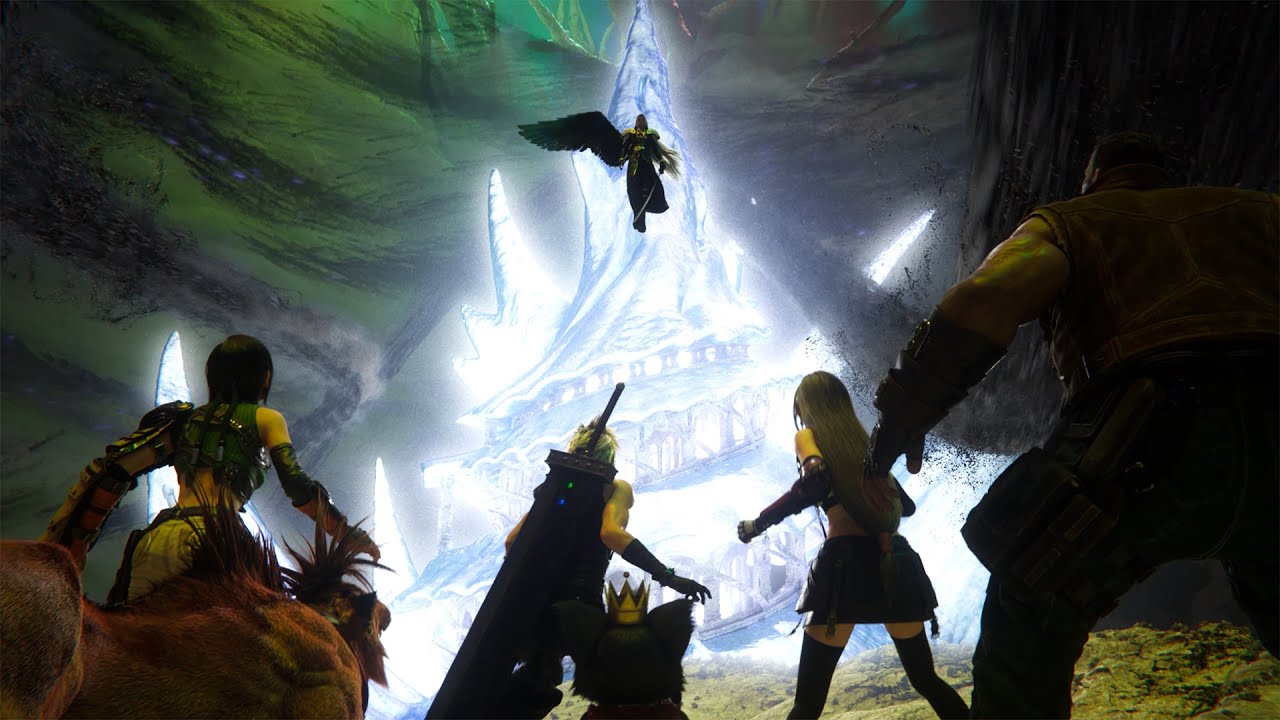
"The Midgar segment of Final Fantasy 7 is a relatively short part of the original game, but it is incredibly dense with information regarding the game's world, characters, and story," he continues. "It became clear early on that if we were to faithfully recreate this using modern techniques, we would need a substantial amount of content just to make it work as a standalone title."
Setting the whole first game in the metallic city was an intriguing choice, for exactly the reason Hamaguchi specifies: you don't spend much time there, but you learn a huge amount about the world, themes and characters during this section. The first part of the remake gives you a lot more room to breathe, explore, and learn about the communities there and the class divide that underpins the struggle against Shinra.
One challenge of re-approaching the game this way was finding where to end each part. Although three discs becoming three games makes sense on paper, the plot needed some examination for where to leave off. It was the most famous twist in the whole journey that provided the catalyst for how to divvy it all up.
"In the original plan, the story didn't clearly break at the forgotten capital and Aerith's fate," Hamaguchi says. "At that time, I suggested to producer [Yoshinori] Kitase-san, 'Considering the narrative focus, wouldn't it be better to treat Aerith's fate as a natural break to this section?'"
Apparently fellow co-director Tetsuya Nomura had the same notion. "From there, the overall framework for the entire trilogy came together very smoothly," he finishes.

