

There's a lot of pressure to making toys, and a whole bunch more when those are Star Wars toys. As one of the most beloved franchises in the world, its action figures (not to mention collectibles) come under more scrutiny than Rebel scum being interrogated by Darth Vader. It's also the series that kickstarted merchandise as we know it today, so there are standards to uphold. This is something you must get right, or millions of fans will let you know about it. As an example, social media is awash with opinions on the new Grogu animatronic right now; fans are going nuts for its features, but less so the cost.
How do you make sure things are up to a standard the Empire would be proud of, then? And how are these collectibles made in the first place? That task falls to a crack team at Hasbro Pulse, so I tracked down their leader Chris Reiff (manager of product design for Star Wars action figures, replicas, and beyond) to pick his brain about everything that goes into making merch for a galaxy far, far away. As it turns out, forging some of the best toys in the Outer Rim is... well, it's a lot more complicated than you might think.
GamesRadar+: I'd love to hear about how the action figure development process works. Can you tell me what goes into making one from start to finish?
Chis Reiff: There is SOOOOO much that goes into it. I’ll give you a high level run through of the bigger steps in the process but if you want all the fun details we’ll have to sit down for a day to talk through it all. From a high level:
- Planning: First we have to decide on which figures to do. That involves a lot of decisions about themes, overall budgets, cost, fan desires and involves a full cross-functional team of engineers, designers, marketers, and conversations with our partners at Lucasfilm.
- Development: I’ll break this down a little more since it's where the heart of the fun happens.
- Concept and Input: We’ll put together a plan for what we want the figure to be including articulation, plan accessories, and all the reference for the particular version we want to do.
- Sculpting: Our sculpting team then takes that input and executes a fully realized 3D sculpt of the figure that we review and refine throughout the process to make sure it matches the reference and the plan as best as possible.
- Production Engineering: That sculpt gets turned over to be taken from an articulated solid figure to something fully engineered internally for production. (Lots of back and forth and refinement all through this process).
- Deco Planning: Our team will take a look at the reference and plan out in Photoshop and then in 3D painting software exactly how we want the figure to look (sometimes we’ll do physical models as well depending on the need).
- Packaging: The packaging team creates the artwork for each package, usually creating custom art for each figure and making sure we get good renders or photos of the figures based off of our deco plans.
- Production: I have massively simplified this list and this section is no exception… To make the figures we need to cut steel molds, fine tune them, create paint masks and silk screens and printer files for deco. We work day to day with amazing factories and production partners reviewing samples and tweaking things all the way up to sign-off for full production.

There are a LOT more steps and many other people involved all along the way. From the copywriters, quality assurance, sales teams, Logistic Partners, warehousing, Customer Care, etc. that all come into actually making and delivering an action figure. I can’t even list everyone but that gives an idea of the breadth of what is needed and we do that for each and every item we make.
Can you tell me about any design challenges of the Vintage Collection versus the Black Series figures, and vice versa?
Reiff: They’re both unique segments and do have some unique challenges but largely the process is the same for both scales. With the modern figures they’re essentially getting the same articulation and same deco. But, with The Vintage Collection being so much smaller, the minimum requirements for things like plastic thickness and just the ability for someone to physically put the parts together reliably becomes more difficult. For example, how small a wrist joint can be doesn’t change and what might be perfectly fine for a 6inch tall figure might make a figure at 3.75 inches look like they are wearing a coat where we want a bare arm. In cases like that we have to find different ways to handle those concerns to be sure we are still delivering a high quality item.

The most recent wave of Star Wars toys includes a Force FX Elite Lightsaber I've waited years for based on Darth Maul. These replicas combine high-quality hilts with feature-rich blades sporting a host of special effects, from "wall-cutting" to "blaster deflection."
I've got to ask, because I adore them: how much fun is it to cut loose and make wild Halloween/Christmas figures? Seeing a Stormtrooper decked out in a reindeer costume is great.
Reiff: I’m glad you like them. I do as well. Those sorts of things are always a lot of fun for a designer since so much of what we do for the normal figures is focused on replicating and accuracy to what is in a show. On those Black Series figures you mentioned, Eric has done an amazing job pushing those designs. We’re all a little jealous of how much fun he gets to have creating those.
Is there something you're particularly looking forward to seeing fans get their hands on?
Reiff: There is but I can’t tell you about it yet. LOL. For what we can talk about…. I think I’m most looking forward to getting the HasLab Gunship into people’s hands [...] Seeing that through to a fully finished product that people unbox and set their own scenes around will be fantastic!
Let's switch gears to another Black Series product: roleplay items like lightsabers and helmets. We've come a long way from the early Black Series Lightsabers. What would you say has been the greatest leap?
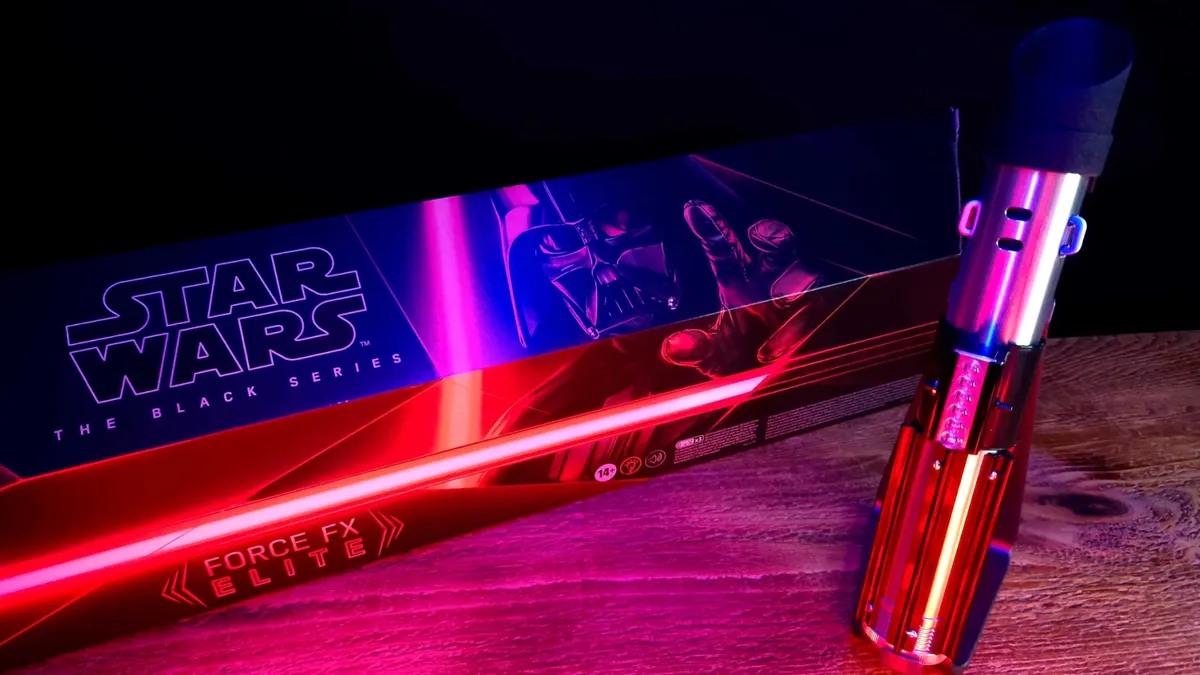
Reiff: For me, that’s pretty straight forward. The transition to the FX Elite versions from the initial FX versions of the Black Series Premium Role Play Lightsabers kept all the amazing metal and fully detailed hilts but brought more LEDs and it brought addressable LEDs so we could add smooth effects and localized features in the removeable blades. We’re always looking for more ways to enhance those and I’m excited for where they might evolve in the future.
The weathering on your roleplay products is always spot on, but I have to say, the helmets really are very impressive. What goes into making sure the paintwork on these is just right?
Reiff: We usually go through a few iterations on each one making sure we get just the right amount to be subtle but not too over the top. That process starts with pouring over lots of great references then doing a digital paint-over of our 3D Sculpts to plan out where we are headed. From there we’ll make a physical painted sample that we’ll rework to be just right. Then that is photographed and sent off to the factory as final reference (a paint master) for them to follow for the production version.
To finish, are there any recent projects from the Star Wars line that you have a soft spot for? Personally speaking, I'm a huge fan of the new Clone Captain Rex.
Reiff: My soft spot is definitely the RETRO Collection. I really enjoy the expansion of classic characters that I’ve been able to do and how that extends the collection of figures Kenner originally did.
- See the latest Star Wars figures at Hasbro Pulse
For more cool collectibles, don't miss the best Lego sets or the best Nerf blasters.

