You are now subscribed
Your newsletter sign-up was successful
Want to add more newsletters?

Every Friday
GamesRadar+
Your weekly update on everything you could ever want to know about the games you already love, games we know you're going to love in the near future, and tales from the communities that surround them.

Every Thursday
GTA 6 O'clock
Our special GTA 6 newsletter, with breaking news, insider info, and rumor analysis from the award-winning GTA 6 O'clock experts.

Every Friday
Knowledge
From the creators of Edge: A weekly videogame industry newsletter with analysis from expert writers, guidance from professionals, and insight into what's on the horizon.

Every Thursday
The Setup
Hardware nerds unite, sign up to our free tech newsletter for a weekly digest of the hottest new tech, the latest gadgets on the test bench, and much more.

Every Wednesday
Switch 2 Spotlight
Sign up to our new Switch 2 newsletter, where we bring you the latest talking points on Nintendo's new console each week, bring you up to date on the news, and recommend what games to play.

Every Saturday
The Watchlist
Subscribe for a weekly digest of the movie and TV news that matters, direct to your inbox. From first-look trailers, interviews, reviews and explainers, we've got you covered.

Once a month
SFX
Get sneak previews, exclusive competitions and details of special events each month!
If you've been shopping for any sort of new technology lately, chances are you'll have come across ludicrous memory prices, fewer choices, or, like in the case of the Steam Deck, limited availability. Shortages of the best RAM for gaming are having knock-on effects everywhere nowadays, but why? And hold on, what's causing this to begin with?
Long story short, the development of AI data centers, combined with an increase in memory-hungry devices (again, thanks to AI-readiness), is eating up the world's supply of RAM wafers so there's a tiny pool of stock for consumers. Seeing as supplying these data centres is more lucrative, memory manufacturers are prioritising AI, and in such vast quantities that there isn't enough memory being produced globally to service the consumer market. That's causing massive price hikes, stock shortages, an increase in demand, and even changes to the next-gen strategies for Sony, Microsoft, and Valve's next-gen gaming hardware.
Data Center Production: Why is there such a shortage in the first place?

Unless you've been living in a remote location off the grid for the last few years, you'll know that AI has been getting smarter, quicker, and more integrated into everyday technology. Like the idea of "the cloud", it's easy to think that this invisible, online entity comes free of cost and isn't tethered to physical locations or resources. Unfortunately, that's not the case.
For it to compute all that data so quickly, and for it to be constantly trained on more and more datasets, AI needs data centers. Data centers run on processors, water, and a lot of memory and storage.
These centers are currently being built at speed all over the world to help AI developers to continue building, improving, and offering "more" to their customers. The more memory available, the more data can be immediately crawled and processed by the AI. The more storage available, the more of this data can be stored, and unique data can be saved for users.

As AI continues to grow and investments keep coming, it's using a larger supply of resources. That's true of water to keep all of these data centres cooled adequately, but it's also true of the infrastructure companies like OpenAI, Google, Nvidia, Meta, and more are building.
To give you an example, late last year, Samsung signed a deal with OpenAI to supply the company with 900,000 DRAM wafers per month. For reference, that's equates to about the equivalent of 40% of the global manufacturing output of RAM wafers every month. That gargantuan supply contract is going to cost OpenAI (and line the pockets of Samsung) to the estimated tune of $71 billion, and will continue to run through the next four years.

Zooming out to put that into context, that means that just one AI company's use of RAM wafers over the next four years will continue to drain the world's entire supply of RAM wafers by about 40% every single month. That's supplying one AI company in the global arms race, but companies like Meta, Google, Nvidia, xAI, Anthropic, and Nebius are all building at pace too, and need their own supply of memory. So, no wonder we're all seeing shortages.
I'd love to tell you that memory manufacturers are also staying loyal to consumers, but that's a whole other chapter of this epic poem.
RAM manufacturers: Who are the biggest players, and what are they doing to help?
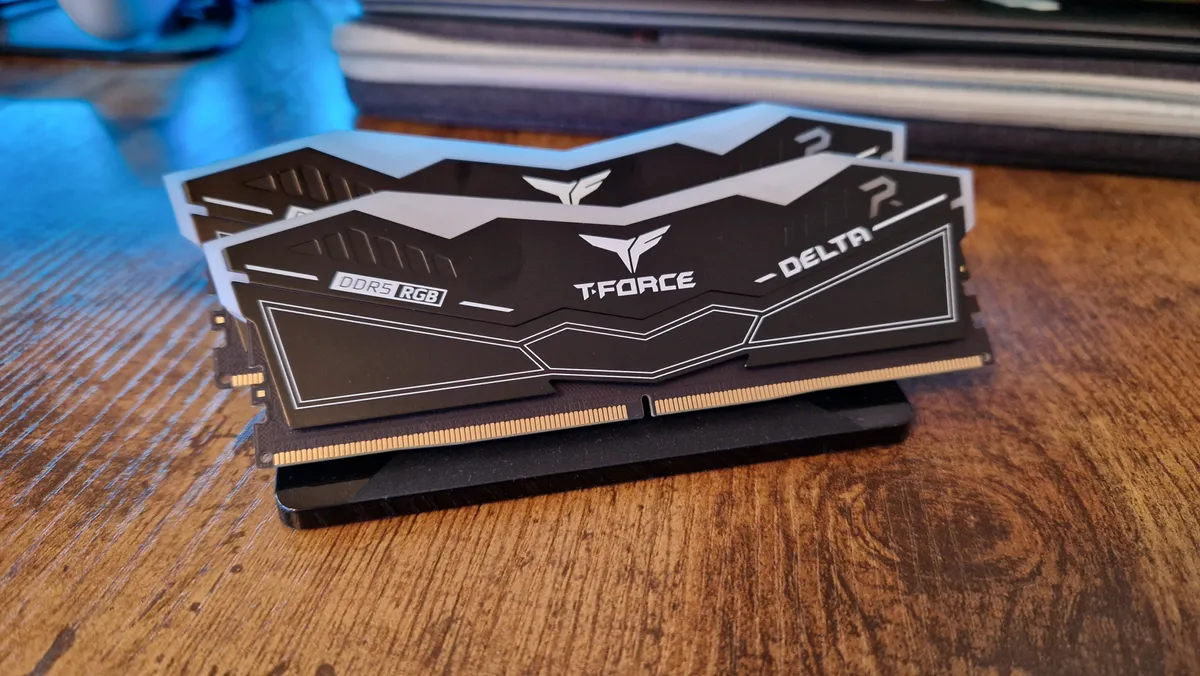
There are three big manufacturers when it comes to memory chips on planet Earth. They may not be the brands that immediately come to mind, because even if TeamGroup's T-Force brand and Corsair are popular sources of RAM for gamers, neither actually manufactures computing memory. Samsung, SK Hynix, and Micron are the biggest suppliers of DRAM wafers and NAND, so you'll often find their tech powering other consumer products in the market. There are other manufacturers, but they all have a smaller market share compared to these three.
Samsung, as you know, makes all sorts of tech, servicing consumers with its own products, but also services other, smaller consumer brands in the market to make their RAM.
SK Hynix has a smaller claim to the consumer market and mainly focuses on supplying bigger consumer brand names with their manufacturing needs.

Micron, until recently, serviced consumers with its Crucial brand. I say until recently, because when the AI slop started hitting the fan in late 2025, Micron announced it'd be closing the Crucial brand, laying off lots of jobs, and otherwise cutting off one of the most reliable consumer sources of memory and storage tech there's been for the last 30 years.
You may be thinking, don't these companies have any loyalty to the consumers that put them where they are today? Well, that's a great question. Before I give you a snarky answer, I'll tell you that SK Hynix is set to spend $13 billion on what will be the world's largest HBM memory assembly plant - so there are definitely moves being made to up the world's total output of RAM.
But as for loyalty? It definitely seems like it's for sale, because RAM makers are apparently going to pull in as much as $551 billion from the AI boom, and that's totally due to data center demand, not consumers buying their products.
When will the RAMpocalypse end?

So, at least for now, the memory shortage and inflation issues are pretty set in stone, but surely there's light at the end of the tunnel, right?
You may be asking, when will things return to normal? Well, if we go by Samsung's deal with OpenAI, the current RAM shortages will be projected to last for about four years at the very least - unless there are big changes, or we as a species start to find ways of producing more DRAM wafers, somehow.
That doesn't mean prices will continue to increase for four years - they'll likely begin to level out as the market adjusts to the new supply it has access to. But that is a rough estimate of how long memory will be a hot ticket item that's harder to get your hands on.

If you want my two cents, the good news is that before the next four years is through, companies like OpenAI run the risk of running out of money. The AI bubble could very well have burst by then, even if it is a slim possibility right now. It's obviously very difficult to know for sure, but AI has yet to turn a profit, so far, being subsidised by governments and taxpayers. If AI companies don't find ways of monetizing it more effectively, it's very possible that the global AI boom will slow down, or the bubble will pop, before these vast manufacturing plans are completed.
If you want the really good news, one harrowing paper from some of the leading minds on AI predicts that it'll have outgrown and destroyed humanity by 2028 anyway - that is, if the world can supply data centers with enough memory for that prediction to come true.
How will RAM shortages impact new gaming hardware?

As it happens, we're already seeing knock-on effects of RAMageddon in the gaming hardware world. Valve's Steam Frame VR headset and Steam Machine were initially billed for an "early 2026" launch, but Valve has issued updates on both bits of hardware that give a very open-ended answer to when those might arrive, and how much they'll cost. Spoilers, it'll probably be later than "early" 2026, and more expensive than people will be comfortable with.
Not only has Valve cited memory shortages as an issue, but it's becoming more and more likely that the PS6 and next Xbox are being delayed as a result too. One report from Japan hinted at this weeks ago, and a more recent report shows that it's very likely Sony is pushing back its plans for a PS5 successor.
In more immediate ways, it's becoming very difficult to buy RAM for gaming PCs. While DDR5 kits were finally getting cheaper, you can now pay around $300 for 32GB, where it might have cost around $100 up until mid-2025. You might think, hey, I'll just stick with a DDR4 machine, but that's actually more expensive than going for DDR5.
For more, take a look at the best gaming PCs in the UK, the best CPUs for gaming, and the best graphics cards.

You must confirm your public display name before commenting
Please logout and then login again, you will then be prompted to enter your display name.