GamesRadar+ Verdict
Monster Hunter Stories 3: Twisted Reflection may not supersede the thrills of an action-packed hunt, while other JRPGs have made more significant evolutions in comparison. Nonetheless, it's still an improvement for this sub-series with production values, mechanical depth, and challenge that makes it a worthy companion piece to its mainline apex.
Pros
- +
Terrific anime presentation while faithfully retaining monster designs
- +
Improved and streamlined rider actions when traversing
- +
Plenty of depth and complexity across battles, upgrades, and ecosystem restoration
Cons
- -
Battle mechanics not as dynamic as other JRPGs
- -
Egg collecting and side quests are still pretty tedious
Why you can trust GamesRadar+ Our experts review games, movies and tech over countless hours, so you can choose the best for you. Find out more about our reviews policy.
As the Monster Hunter series has gotten more popular alongside a more realistic presentation of its headline wildlife, you might not be alone in feeling conflicted about felling these fearsome yet majestic creations as you get sucked into its compelling loop of carving their parts to fashion into cool-looking and powerful gear so that you can continue working your way up the food chain. In contrast, Monster Hunter Stories 3: Twisted Reflection, as with the rest of this JRPG spin-off series, takes a more concerted effort to address this imbalance, at least compared to the superficial platitudes served up in Monster Hunter Wilds.
That's arguably been true since the first Monster Hunter Stories spin-off released for the 3DS in 2017. Taking a leaf from Pokemon, instead of playing as a hunter slaying hostile beasts, you're a rider who forms bonds with them so that they fight alongside you as Monsties (a cringe portmanteau of monster and bestie that reminds you that this spin-off was definitely aimed at kids). Monster Hunter Stories 3: Twisted Reflection goes further, where you play as a ranger who's not just surveying the land and investigating abnormalities in the ecosystem but also a conservationist restoring endangered wildlife.

If that sounds like a more involved and grown-up approach, then it's fair to say that this entry is also doing the most to feel more grown-up in both its storytelling and systems. Yet, while a clear improvement from its predecessors, this time releasing for all the current platforms instead of being constrained by handheld hardware, it still sticks to a turn-based combat formula that can feel relatively traditional when even the latest Pokemon games, like Pokemon Legends: Z-A, have opted for real-time action.
Monster royale

Release date: March 13, 2026
Platform(s): PC, PS5, Xbox Series X/S, Nintendo Switch 2
Developer: In-house
Publisher: Capcom
The most immediate difference from past Stories games is the presentation. Compared to the shonen anime and Saturday morning cartoon flavor of the original (though that also included some CG cutscenes), there's a more serious tone to Monster Hunter Stories 3's narrative, which has a similar vibe to Fire Emblem. Besides a phenomenon called Crystal Encroachment that's causing turmoil in the land, tension brews between the neighboring kingdoms of Azuria and Vermeil about how to deal with the crystalline threat, which could lead to war.
There's a personal stake since your protagonist happens to be the prince or princess of Azuria, whose mother and queen Amara has been missing for 10 years after fleeing with the Rathalos twin that had been sentenced to death to avert an omen of disaster (the other Rathalos, or Ratha for short, is your starting Monstie). Much like the mainline Monster Hunter Wilds, your customizable protagonist also speaks, but it's more effective here for keeping a consistent dramatic tone where they have their own personality instead of being a silent cypher for the player. Because they're already an experienced ranger once you begin, there's even a nice twist to the game's tutorials where they're the ones showing the ropes to a newcomer of the rangers.

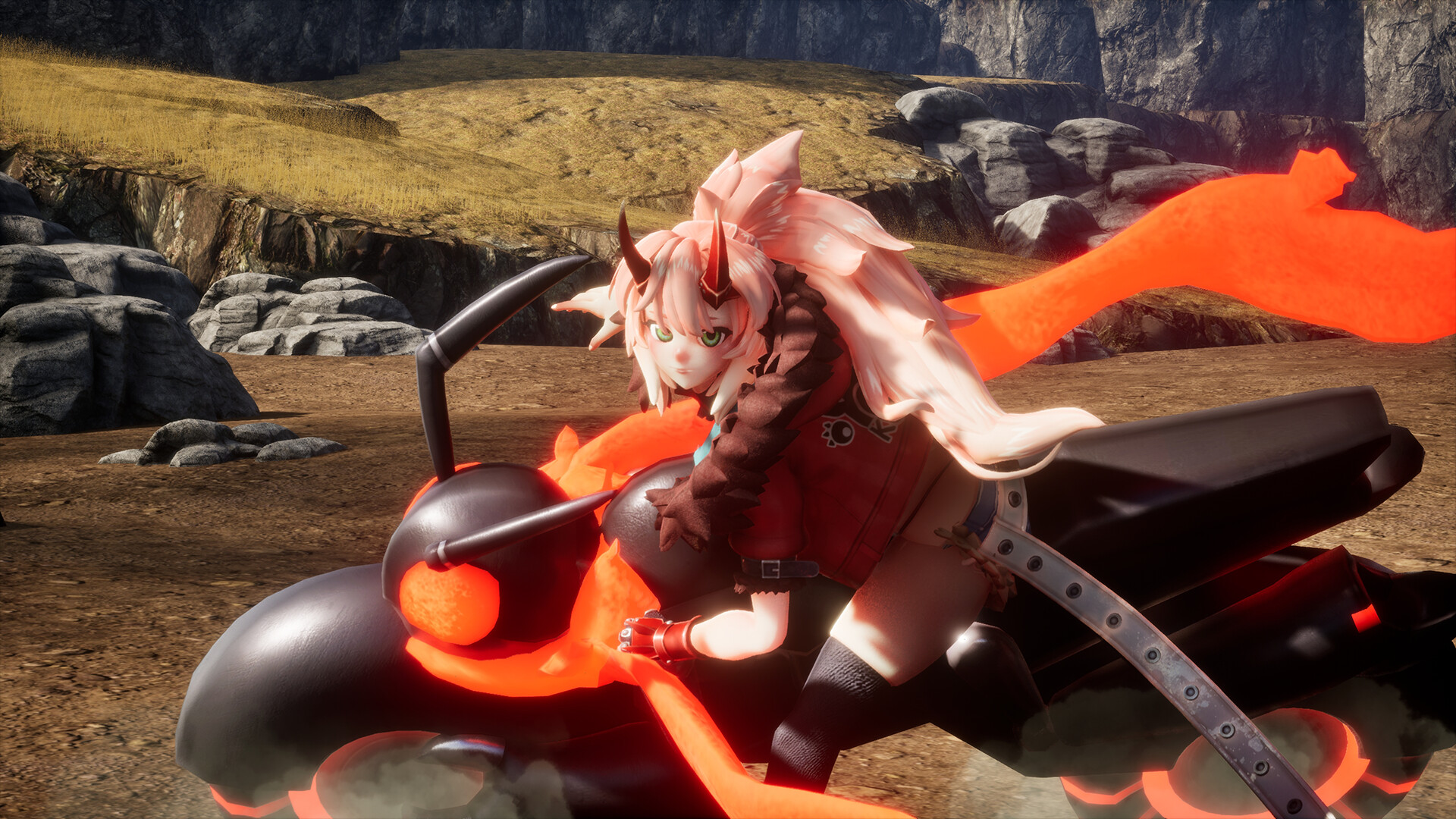
While Ratha is always in your party, you can have up to six to switch between as you explore the world, and it's also here where Monster Hunter Stories 3: Twisted Reflection takes a step up by making riding Monsties a lot more intuitive than before. Rider Actions were introduced in Monster Hunter Stories 2, but were clunky to use as you often had to wait for an input prompt just to be able jump up a platform or climb up a wall. Now, you can just do it as you might in an action-adventure game, seamlessly swapping in Monsties if you need one to climb, or another to swim. It's perhaps tempting to stick with Ratha though since it can take to the skies, which is one of the first things you get to do.
It's bold to give you a previously endgame rider action from the outset, though in practice it's not the same since you're actually only gliding and require using updrafts to raise or maintain altitude. Nonetheless, with more available actions for each Monstie, it feels more fun traversing the map, while you can easily smash through rocks to find materials or take down weak monsters in one hit. You can even stun field monsters with a roar or aim breath attacks that knock flying ones to the ground.
One turn after another

Better yet, if you can break a body part, it will stun a monster.
Of course, once you actually engage a monster for real, the battles themselves are the opposite of a mainline Monster Hunter, relying instead on turn-based commands. Having ditched the button-mashing QTE gimmicks from previous entries, these battles feel even more traditional. On the whole, it sticks to the core fundamental system where despite usually just facing one monster, there are multiple parts to target, which you can use weapons with slash, blunt, or piercing attacks to deal the most effective damage. Better yet, if you can break a body part, it will stun a monster as well as stop them from using certain attacks on you. If a monster is targeting you, there's also a rock, paper, scissors approach where by selecting the right attack type, you can win in a head-to-head and deal more damage while taking less.
It's a system that works well enough, as you learn a monster's attack pattern and when they're going to change their behavior and use another attack, which is your cue to swap in another Monstie with abilities to match. On the other hand, you might also be tempted to keep the Monstie you have in the fight as successful actions will continue raising their Kinship gauge. When this is full, you can ride them, giving you access to more powerful actions, as well as a larger unified health bar that helps to withstand tougher attacks. And boy, do some of the monsters you encounter fight dirty, from the feral types affected by crystallization to ones that have been altered through other means.

One welcome improvement is that your choices of companions and their Monsties, from Vermeil's princess Eleanor to Azurian lieutenant Gaul and his band of Felyne ninjas, are a lot more reliable than before, capable of picking the right attack types when needed. More crucially, they don't share your pool of hearts, so if they and their Monstie loses all their health, it's not an instant fail and you can still hold out for a couple more turns before they recover and jump back in. But, when it comes to surviving the meaner fights, it's also vital to engage with all the other systems around building the perfect Monstie, which is going to necessitate grind.
The grind loop of course has always been very compelling in mainline Monster Hunter (indeed, Wilds suffered from this lack by streamlining its campaign a bit too much) but in Stories it's also made up of less interesting elements. As exciting as it is to gain new Monsties, which includes bestiary entries from the most recent games – the Canyne from Monster Hunter Rise being a particular highlight for dashing and climbing around places – the process of poaching their eggs from randomly generated dens is a lot more tedious. When you can only have space for six active Monsties, and you naturally have to grind any hatchling from Level 1, it's a shame that most will end up just sitting in the wings, unless they have unique abilities, or genes, that you can transfer to one of your current roster.
Wild at heart


The more interesting side quests involve your party allies, each with their own arcs that unfold as you progress in the story. While all your pals level up alongside you, it's worth completing their side quests to unlock new perks and skills, while completing their arc will give them a new Monstie that they can use.
A more meaningful way to engage with your spare Monsties is however to just release them back to the world. Habitat restoration is one of your ranger's duties, where you can check different areas of the map to identify what species are endangered that you can repopulate. While I did feel conflicted over releasing a rare Monstie (but which I didn't have space or time to level up anyway), the benefit is that this act of conservation also means a better chance of finding even more of the same monster's eggs with potentially rarer properties, and when more are repopulated, you can even get variants appearing in that area.
Then, of course, there is your own personal progression with forging better gear, even if I can't help but find that seeking marginally better weapons often feels insignificant when your Monstie is always going to be able to hit harder. Gear is a little more streamlined since there are fewer weapon types than the mainline games, and you're crafting full armor sets instead of individual pieces – but it will still take time and commitment if you want to upgrade them. You'll often find that you won't know what parts you need, and it won't be revealed until you've managed to discover that material or fought that monster in question.

Even with options to quickly end fights with weaker monsters or speed up or skip animations, the combat can still feel slow and less exciting than the action-based mainline games, which makes many of the fetch quests or challenges to hunt a certain amount of monsters more of a chore. Perhaps a bigger hurdle for me was actually just trying to figure out where I was going. While I loathe unsubtle waypoints and objectives, the Monster Hunter Stories 3's UI could definitely be better, as I occasionally forgot where I was supposed to be going and couldn't see a marker on the mini-map, where objectives not nearby only appear as faint icons, while it took me a while to realize that the reason another objective wasn't visible was because the location was underground with a separate map.
Monster Hunter Stories 3: Twisted Reflection is an improvement in the sub-series, and given the number of times I was sent packing with my tails between my legs against the fearsome monsters in its endgame until I leveled up, upgraded my gear, and experimented some more with my Monsties' genes, it's arguably got more teeth than Monster Hunter Wilds' overly streamlined and frictionless campaign. Yet, compared to other similar JRPGs, the evolution still only feels light a small step rather than a generational leap.
Monster Hunter Stories 3: Twisted Reflection was reviewed on Nintendo Switch 2, with a code provided by the publisher.
Check out our best JRPGs ranking for your next adventure!

You must confirm your public display name before commenting
Please logout and then login again, you will then be prompted to enter your display name.