You are now subscribed
Your newsletter sign-up was successful
Want to add more newsletters?

Every Friday
GamesRadar+
Your weekly update on everything you could ever want to know about the games you already love, games we know you're going to love in the near future, and tales from the communities that surround them.

Every Thursday
GTA 6 O'clock
Our special GTA 6 newsletter, with breaking news, insider info, and rumor analysis from the award-winning GTA 6 O'clock experts.

Every Friday
Knowledge
From the creators of Edge: A weekly videogame industry newsletter with analysis from expert writers, guidance from professionals, and insight into what's on the horizon.

Every Thursday
The Setup
Hardware nerds unite, sign up to our free tech newsletter for a weekly digest of the hottest new tech, the latest gadgets on the test bench, and much more.

Every Wednesday
Switch 2 Spotlight
Sign up to our new Switch 2 newsletter, where we bring you the latest talking points on Nintendo's new console each week, bring you up to date on the news, and recommend what games to play.

Every Saturday
The Watchlist
Subscribe for a weekly digest of the movie and TV news that matters, direct to your inbox. From first-look trailers, interviews, reviews and explainers, we've got you covered.

Once a month
SFX
Get sneak previews, exclusive competitions and details of special events each month!
Capcom's legacy is built upon a spirit of experimentation, from the Devil May Cry series splintering off of Resident Evil 4 to this year's wildly experimental puzzle shooter Pragmata. As more of the industry chases trends, Capcom has continued to double down on its unique strengths and willingness to take chances – and there's not a single series more emblematic of that than Onimusah. If you've played one Onimusha game, you've only seen one facet of the ambitious series, as each entry is wildly different.
"Onimusha is one of the series at Capcom where we can experiment a lot, and that's related to the experimental nature of development we do," Onimusha: Way of the Sword director Satoru Nihei tells me. "For example, in the very first game we used a real actor for the main character, which hadn't been done very often and carried risks and challenges, but also drew a lot of attention. That was a pretty successful experiment."
Studying the blade


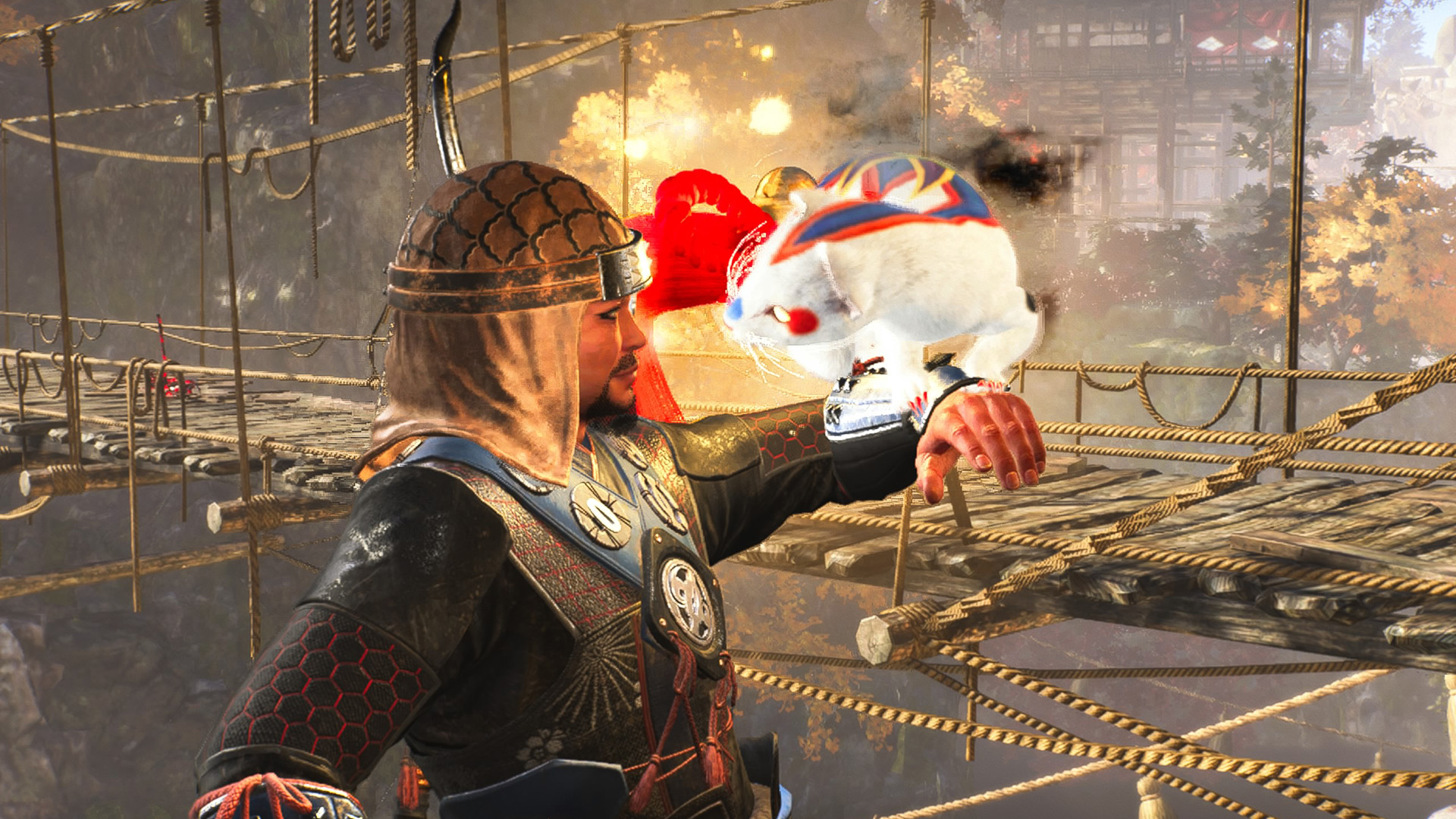
Onimusha is an action series mostly set in the Sengoku era of Japan, juxtaposing real events, people, and locations against fantastical supernatural demons known as Genma.
It was the definitive historical playground before Assassin's Creed entered the picture. And despite moderate success, Onimusha has been on a long hiatus, with the last game, Onimusha: Dawn of Dreams, releasing on PlayStation 2 in 2006. But after two decades, the series is hoping to make a grand return with Way of the Sword – once again deliberately breaking off from anything that's come before. And the reason it's taken so long wasn't that Capcom didn't believe in Onimusha.
"Since the previous title, Dawn of Dreams, we've been wanting to make a new Onimusha. The company has many people who've said they want to work on it, with basic ideas and whatnot. But obviously, staff are limited, and we've made many large titles," Nihei says, "It took a long time to get a team together, but we finally did and started on the current game in 2020. That was the time the RE Engine started coming into maturity, and had the tech we needed for the game."

Onimusha's defining secret sauce has always been a willingness to do things differently, not getting bogged down by a blueprint or sense of how things have to be. That’s been true even since the very first game 25 years ago, which looked at Resident Evil and said, 'what if we add samurais and magic to it?'
Onimusha 2: Samurai's Destiny, often regarded as the masterpiece of the series, split off in an entirely different direction with character relationships, gift giving, and using a real actor as the basis for the main character. Interestingly, Onimusha 2 entered development before the first game was even released.
"The reason we put those aspects in was that we wanted to make a game with different concepts than the first. One of the things that was really the focus was the human drama aspect of it. Yes, it's an action game, but we wanted to look at all these characters, how they interact, and the drama that's born from that," says Onimusha 2 director Motohide Eshiro. "We leveled up the difficulty because we used an actor who had already passed, Yusaku Masuda. So we didn't have anything to draw on in terms of industry experience. The artist had to work really hard to recreate his likeness from pictures and various materials. Then we actually had his widow, Miss Miyake, go over what we created and sign off that we'd done an acceptable job of creating someone who was no longer in this world."

Unpredictability has defined Onimusha as a series. Onimusha 3 hammered in wild time travel mechanics, casting acclaimed actor Jean Reno as a modern French revolutionary. After that, Dawn of Dreams doubled down on combo-based action and a wide array of characters. Now, Way of the Sword is looking to tackle something entirely different, again.
"We have this dynamic dismemberment system, where when you use an 'Issen' attack, it can cut enemies in half. Not with pre-rendered effects but where the sword goes, the enemy is cut," Nihei says, "Additionally, we're using a real actor again, Toshiro Mifune, but most of his source material is black-and-white, so we have to do a lot of extra work to bring it into modern day. I think what we're aiming to do with this series is to make sure the player always has something new to experience, something they've never experienced in a game."
Sengoku dreams

Way of the Sword isn't intended to be a reboot, reconstruction, or reimagining of the series... It's a game that stands on its own
Satoru Nihei
With each game being so drastically different, the question then becomes, how do you make sure it feels like Onimusha? What makes these games united? To both Nihei and Eshiro, that's a twofold answer – weaving real history into "human drama."
For Onimusha 2, Eshiro notes a big part of this was the art style of character designer Keita Amemiya, who uses a specific "East meets West" style, almost giving the game an aesthetic of a Hollywood samurai flick, different from anything Capcom, or even the Onimusha series at large, has ever done.
As technology has grown, that answer has gotten more complex for Way of the Sword.
"For how we approach the Sengoku period, especially the historical aspect of it, part of the reasons we get a good result is that rather than doing deep with the history and trying to make a historically accurate story, it serves as a touchstone or grounding point to sell the game world, make it seem likes something that exists, includes real characters, and so on," Nihei says. "Then we can bring in the dark fantasy elements, like how would the Genma be involved, and how a supernatural aspect can be applied. It feels more believable since there's a realistic basis."

The team decided to set Way of the Sword in Kyoto, Japan's capital, during the Sengoku period. On top of consulting experts and looking at real artifacts, the team would take "field trips" to the area they wanted to include in the game, to make sure there aren't any obviously jarring inconsistencies. The level of research depends on how much each single Onimusha game commits to its historical setting.
"Our big focus is on Kyoto as a setting. So that meant actually going around the area, doing very hands-on research, seeing what things are like, and making sure the way people lived at that time was well represented in the story and realistic," Nihei says, "Rather than looking at how other games are approaching history or making history fun, we took something that was close to us, and we're able to apply our own experience the way that we wanted."

What's most fascinating about the series, though, is how both of these directors view other games in the series. Nihei has spent copious amounts of time digging through past entries, and says the character bonding of Onimusha 2 wasn't directly transferable to Way of the Sword, but did inspire the game's allies to a degree, with the focus more so being on how they affect Miyamoto's growth in the story. And there's a similar moment drawn from the series' roots.
"I was actually very inspired by the first game. There's this battle against Osric, one of the Genma who speaks and says stuff like 'I'm hungry' while fighting," Nihei says, "That hadn't really been done before, it was very unique to Capcom, and something we wanted to bring over to Way of the Sword as well."
Meanwhile, Eshiro directed the beloved Onimusha 2 and its recent remaster, but is otherwise kept busy as producer for Ace Attorney. Even with newer titles, Eshiro says Onimusha 2 is still his personal favorite, but that doesn't mean he'd ever want to make another one.

I don't really feel like there's anything left undone.
Motohide Eshiro
"To be completely honest, when working on two, I really asked the impossible of the team and made many absurd requests, and they did them all for me," he says.
"We put everything we wanted into that game. I don't really feel like there's anything left undone," Eshiro says, "For me, [Onimusha 2] was the game we wanted to make, and we made it. I don't think I'd want to make a new game as a director. I'd much rather work as a producer and leave the direction to the next generation."
Really, that's the essence of what's made Onimusha so enduring throughout major gaps in new releases and wild shifts in both story and gameplay. It's a series that Capcom has committed to wholly, and the fact that there's no baggage that has to be carried over between entries is almost freeing, in a way.
That's an ideology that the team behind Way of the Sword has completely taken to heart, and why Nihei is confident this new game can carve out its own identity. But looking even further beyond that, it's seemingly the guiding star of whatever the future holds for Onimusha.
"Way of the Sword isn't intended to be a reboot, reconstruction, or reimagining of the series. And it's also not meant to be a homage. It's a game that stands on its own," Nihei says. "But we have those aspects in the series that have always come through, like the human drama and dark fantasy. And for future games, those would still be core to what Onimusha is, regardless of where we go from here."
Onimusha: Way of the Sword is one of many upcoming PS5 games coming soon to PlayStation, Xbox Series X, and PC

You must confirm your public display name before commenting
Please logout and then login again, you will then be prompted to enter your display name.