





The great paradox at the heart of Gran Turismo 7 is that it's a racing game that wants you to slow down. "Let's go back to the cafe", the game politely suggests when you've completed a menu book (which is itself a rarity when so many modern games give instructions that often feel more like demands), and it's telling that you'll want to take up that offer. Rather than pinballing from one event to another, being bombarded by potential distractions, you're given the space to pause and reflect before moving on to whatever comes next.
It's a smart move in a number of ways, but particularly because it ensures those new to the series (or even to racing sims in general) are never made to feel overfaced. Where many games simply present a smörgåsbord of options and invite players to pick their way through them, Gran Turismo 7 leads players by the hand, gradually introducing modes and features. If you’re not in the mood for a lesson on the rivalry between the Mustang and the Camaro, Luca's informative takes are text-based rather than vocalised, and can be easily hurried along with a few taps of the Cross button. And, once a few more areas on the World Map have opened up and you're ready to wander off the critical path, a yellow compass icon lets you know where to go next when you're ready to return. It doesn't flash or make a noise; there are no intrusive pop-ups to suggest you should be doing something different somewhere else. Instead, this virtual bookmark simply sits there quietly.
Burning rubber
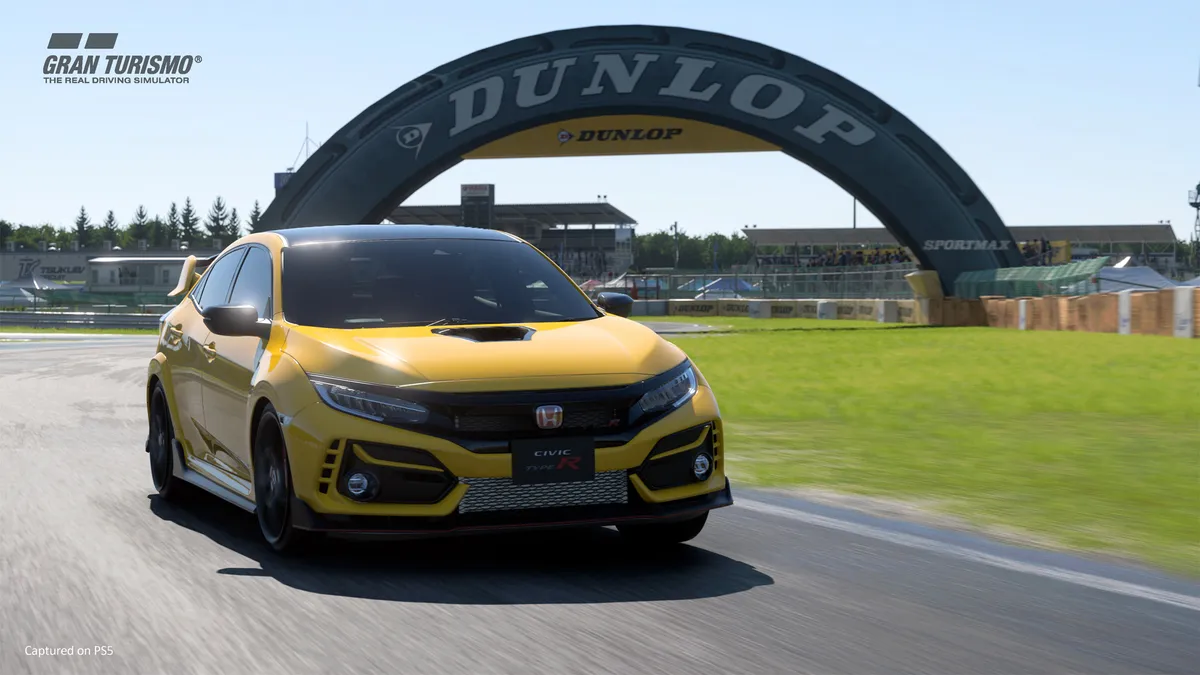

This article first featured in Edge Magazine – check out subscription options at Magazines Direct.
On the track, Gran Turismo 7 continues to fly in the face of modern design trends. Each race starts you at the back of the grid and asks you to work your way to the front; even in championship events, finishing first in the opening race doesn't nudge you to the head of the pack for the next. Braking indicators and a racing line are turned on by default on the standard difficulty setting, but rather than combine the two it keeps them entirely separate: thick red lines across the tarmac gradually fade when you've dropped to the right speed to navigate a corner, while the yellow line is a simple, unchanging fixture.
It's a useful way to encourage you to remove the stabilisers gradually rather than all at once, and indeed you will benefit from doing so. Both steering and braking assists are pronounced enough that they don't actually give you a competitive advantage so much as allow you to acclimatise to a new vehicle or track without spinning out or going off-road. During one of the Licence Tests you're gently discouraged from keeping auto-brake engaged, and removing it makes an immediate difference, allowing you to brake later and giving you a much better chance of beating those gold trophy times.
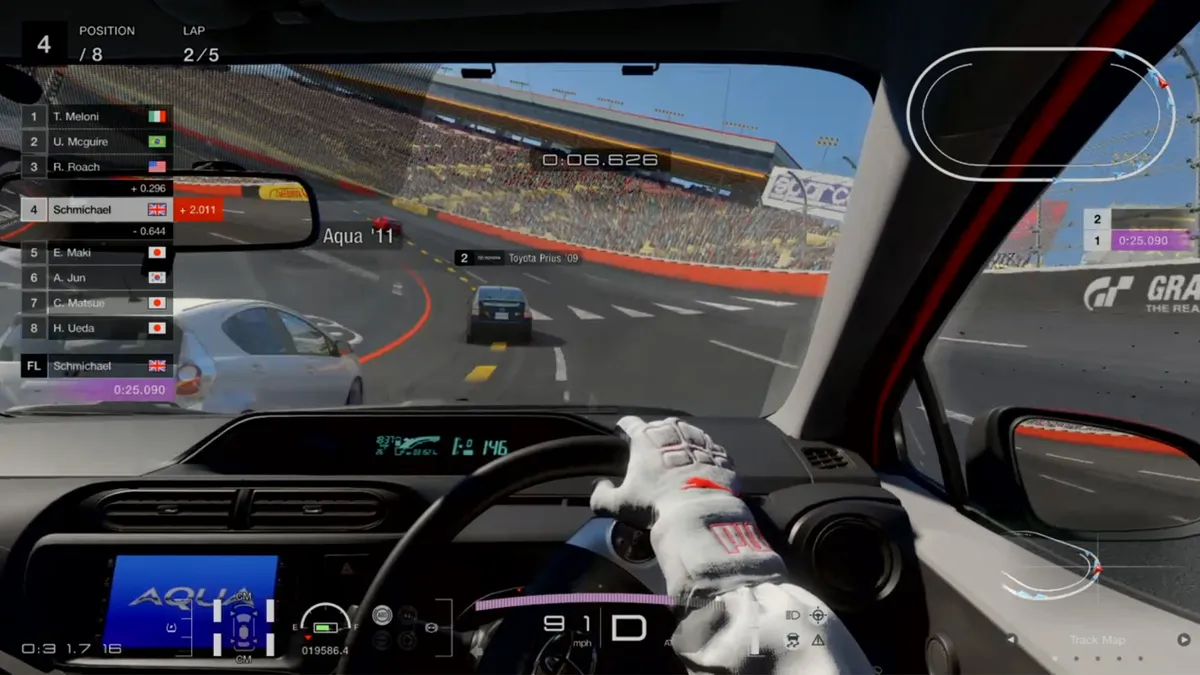
While it never explicitly says so, the aim is clearly to reduce your dependence on these features. In a similar fashion, the Licence Tests steadily help refine your racing technique through bite-sized exercises: a typical set might have you negotiating a shallow turn, then a sharper one, then two in short order, and finally a longer stretch of track combining several. Likewise, the pre-race Circuit Experience breaks a course up into individual sections, encouraging you to master each one before tackling a complete lap against the clock. It's worth mentioning, too, that PS5's SSD helps in this regard: the rapid restarts encourage you to replay tests and missions rather than moving on as soon as you get bronze.
All of which makes Gran Turismo 7's always-online requirement especially disappointing. In a sim that's approachable to its very core, it feels like a glaring misstep, a rare example of conformity in a game that otherwise seems keen to buck convention. And most egregiously of all, it ensures Luca's café is temporarily closed for business should the servers (or your Internet connection) fail – and that simply will not do at all.
This feature first appeared in issue #370 of Edge Magazine. For more great articles like this one, check out all of Edge's subscription offers at Magazines Direct.

