
You are now subscribed
Your newsletter sign-up was successful
Want to add more newsletters?

Every Friday
GamesRadar+
Your weekly update on everything you could ever want to know about the games you already love, games we know you're going to love in the near future, and tales from the communities that surround them.

Every Thursday
GTA 6 O'clock
Our special GTA 6 newsletter, with breaking news, insider info, and rumor analysis from the award-winning GTA 6 O'clock experts.

Every Friday
Knowledge
From the creators of Edge: A weekly videogame industry newsletter with analysis from expert writers, guidance from professionals, and insight into what's on the horizon.

Every Thursday
The Setup
Hardware nerds unite, sign up to our free tech newsletter for a weekly digest of the hottest new tech, the latest gadgets on the test bench, and much more.

Every Wednesday
Switch 2 Spotlight
Sign up to our new Switch 2 newsletter, where we bring you the latest talking points on Nintendo's new console each week, bring you up to date on the news, and recommend what games to play.

Every Saturday
The Watchlist
Subscribe for a weekly digest of the movie and TV news that matters, direct to your inbox. From first-look trailers, interviews, reviews and explainers, we've got you covered.

Once a month
SFX
Get sneak previews, exclusive competitions and details of special events each month!
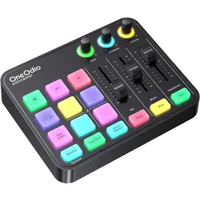
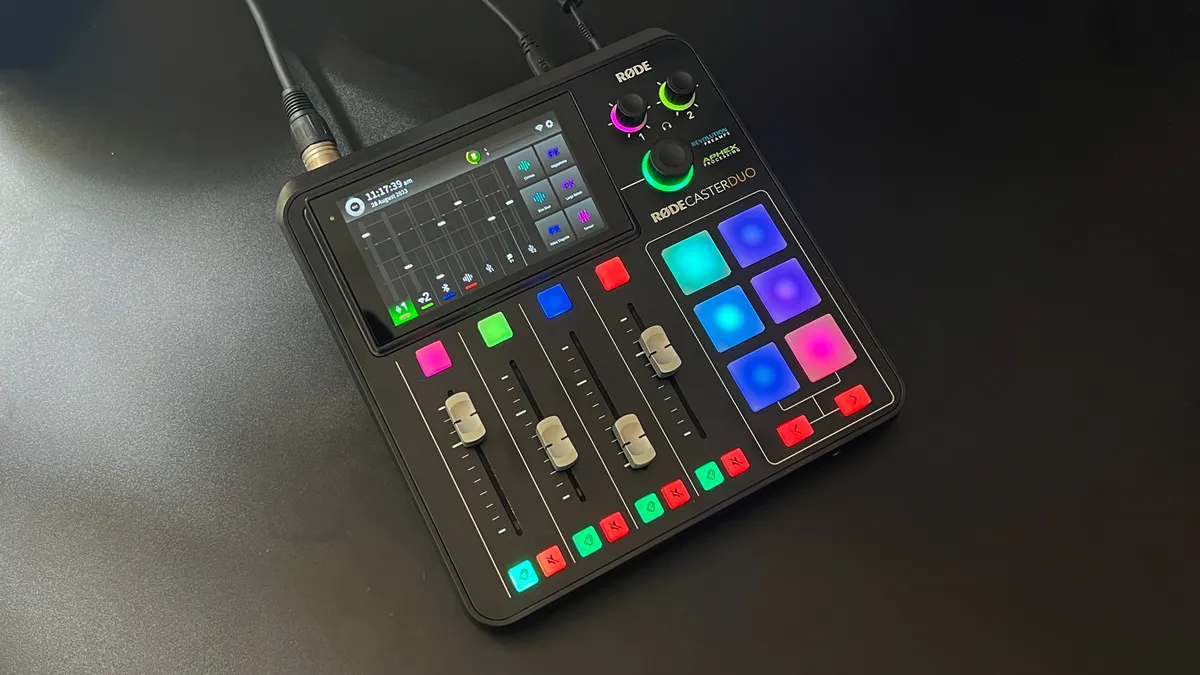
Audio brand OneOdio has piqued my interest today as it's launched a brand new audio interface geared at gaming live streamers and content creators. In my opinion, we don't see enough brands trying to streamline audio with devices like these, but the reason this one has caught my eye is that it looks eerily similar to one of the very best streaming mixers, the RodeCaster Duo.
Complete with colorful lighting, physical faders, and some multi-function FX pads, the new OneOdio Solocaster looks exactly like a wannabe RodeCaster. But being very familiar with that device and its premium $499 price, my jaw hit the floor when I saw how much OneOdio was charging for its version.
While the RodeCaster Duo might be one of my favorite bits of technology of all time, it's very hard to stomach its $499 price tag, which can make it tricky to recommend to anyone who isn't taking their content creation or audio control very seriously. But on the budget end of the audio interface scale, I'd still expect something with multiple inputs, physical faders, and the ability to level out audio sources to run you back at least $100-$200. A price of $49.99 is so good it's waving all sorts of amber and red flags in my brain.
I'll say right now that I'm yet to go hands-on with anything from this brand, so I have very little reference for its track record. But I know from reviewing all sorts of products that there's a difference between "budget" and "cheap", and I really hope this new Solocaster is the former.

I'd maybe understand the price of this mixer if it were a really basic product, but it actually seems like a really feature-rich device that goes well-beyond what more well-known brands have made, like the Yamaha ZG02. Beyond other brands just pricing their live streaming gear for gamers through the roof, I'm left asking, how? How can this be so affordable?
The Solocaster has three physical faders on it, with dedicated labels for your mic, music, and headphones. Alongside 4 customizable FX pads, you'll be able to map various audio sources and functions to a total of five audio channels.
In terms of connectivity, there's one XLR input with 48V Phantom power, two 3.5mm headphone jacks for live monitoring, a line out for speakers, a line in for slotting in a PC, phone, tablet, or other device, and a USB-C slot for a main input device like a PC. The marketing diagrams also seem to suggest that this USB-C port will be PS5-compatible, which could be huge for console streamers looking to take their content to the next level. That would also fly in the face of the RodeCaster Duo's biggest flaw. Capping it all off, the Solocaster even has Bluetooth connectivity.

In terms of effects, the Solocaster can help you with voice changes, autotune, loopback audio, ducking, and more. It even seems like the Solocaster can record on its own, which could be a boon for podcasters. With only one XLR input though, that might be a bit tricky. In a slightly suspicious turn, the Solocaster can also work with Karaoke software, and there's a Denoise (Karaoke) button that claims it will remove all vocal tracks to give you karaoke-ready backing tracks. I'm not even sure that's legal, but like I say, it's surprisingly feature-rich for its price.
So what's the catch? Well, any streaming mixer I can think of that does a good job of helping you fine-tune audio has dedicated software to help you manage it all, but that doesn't seem to be OneOdio's approach.
The press materials I've been sent about the Solocaster say that the brand is going for a driver-free, plug-and-play approach. For the most part, that might work fine since Windows does let you pick and choose what apps and programs go into what audio device by default, but I'm curious as to how this might impact the mixer on a wider level.
I'll be very keen to check out the OneOdio Solocaster to get a feel for how it compares to the much, much more expensive RodeCaster Duo. As I say, with no track record for this brand up to this point, it's hard for me to recommend it right away, but it certainly has the potential to be a dark horse in the streaming mixer market that can battle Elgato, Rode, BEACN, and more with a super accessible price.
Content creators should also take a look at the best capture cards, the best microphones for streaming and gaming, and the best ring lights for streaming.
You must confirm your public display name before commenting
Please logout and then login again, you will then be prompted to enter your display name.


