
When your family is frozen in cryo-pods at the start of Fallout 4, two centuries pass in the blink of an eye. Now, we've stepped out of time once more. Fallout 4, released in 2015, turned 10 this November – and if you're having trouble accounting for those years, join the back of the queue.
Fallout 4 wasn't a subservient follow-up to Fallout 3. Nor did it dictate ironclad design philosophies for Fallout 76 or Starfield, Bethesda's later RPGs. Fallout 4, as I've come to appreciate through countless replays, is too large in both intent and direction to be anyone's beast but its own. Fans have spent the last decade debating its perceived rights and wrongs – but 10 years down the line, I'm much more interested in hearing what Bethesda thinks.
End times, reborn
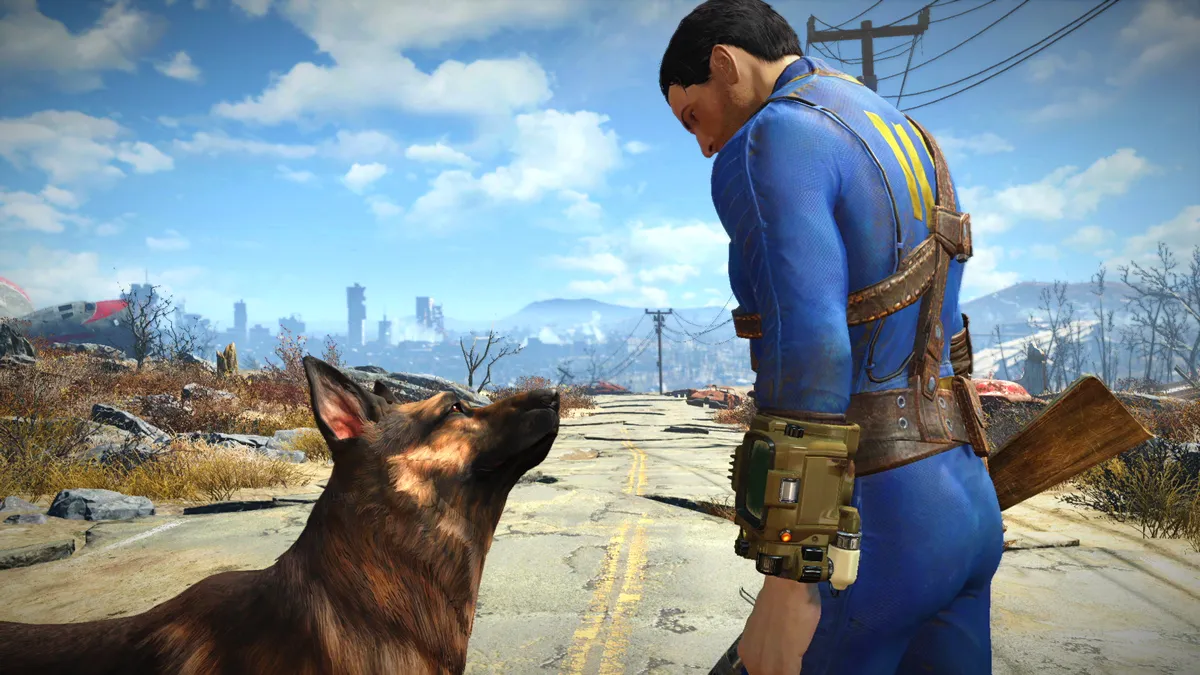
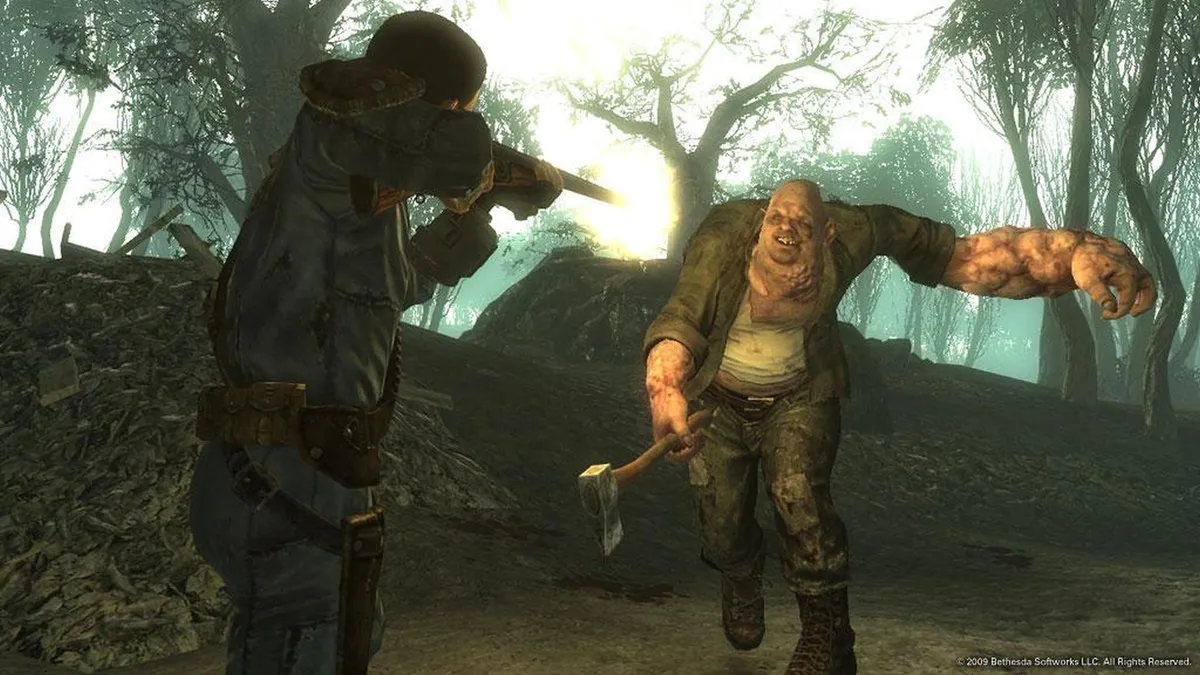
As part of our On the Radar series for Bethesda's Fallout, we're bringing you articles From the Vault as well as fresh takes on your favorite post-apocalyptic RPG. Like this Fallout 3 preview from 2007, for example!
Though Bethesda owned the rights to Fallout in 2004, the studio still considered itself a steward for the post-apocalyptic setting established by Black Isle Studios in the '90s. Fallout 3 was a "transitional" game in that regard, recalls Bethesda veteran Emil Pagliarulo. "Owning a franchise and an IP is different to feeling like you own it creatively," he explains.
Pagliarulo worked on Fallout 3 as a lead designer, then as a senior designer on The Elder Scrolls 4: Skyrim. When work on Fallout 4 began, Bethesda felt more comfortable expanding upon Fallout's world, with Pagliarulo as lead designer & writer. Still, finding that vision took time.
"Originally the game was not set in Boston," says Pagliarulo. "There was a design document I wrote that has the origins of [Fallout 4 companion] Nick Valentine, before he was even a synth. It was set in New York. We talked a lot and were like 'You know what? Nah, a lot of games are being set in New York, it doesn't feel right.'"
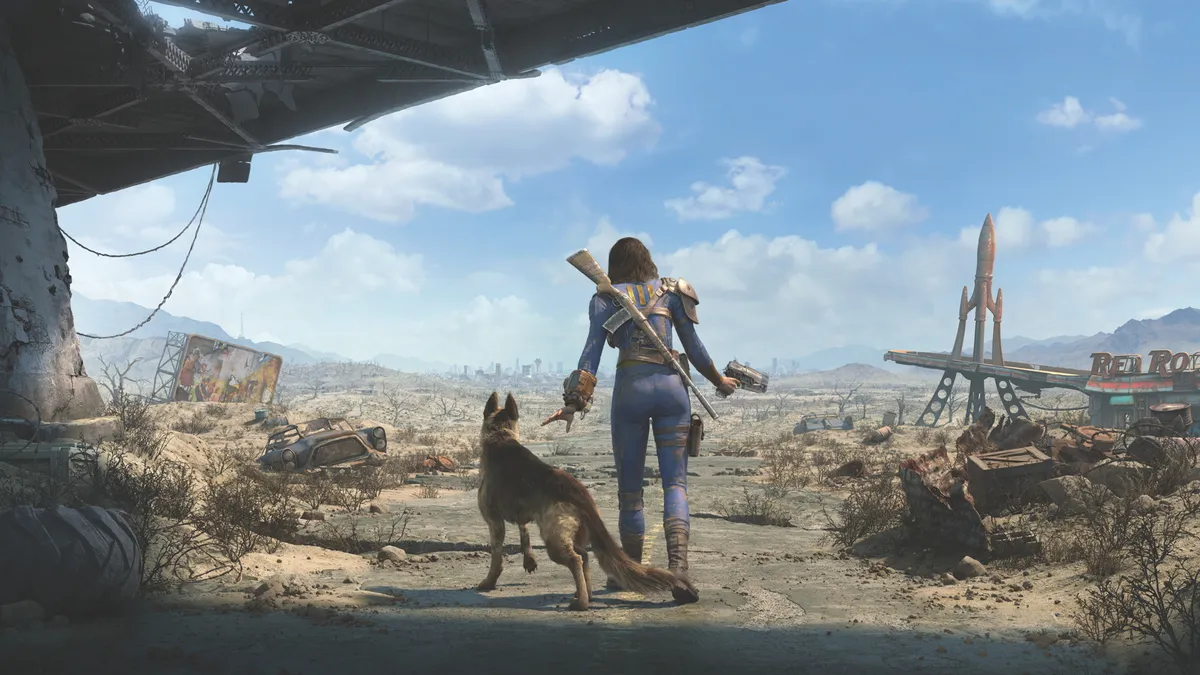
Over lunch, Bethesda director Todd Howard suggested setting Fallout 4 in Boston, where it now takes place. Pagliarulo, a Boston native, was thrilled. Meanwhile, Fallout 4's visual identity was coming to life. Fallout 3 was an exercise in bleakness; all twisted concrete, sickly green skies, and barren wastelands. Fallout 4, which utilizes far more color, had room for hope.
"[There were] two big elements: the tone of optimistic hope and injecting some life and color back into things, and giving it that retro pulp feel from Fallout 1 and 2," says Istvan Pely, Fallout 4's lead artist. Take a walk around Fallout 4 today, and you'll see what Pely means. Boston's architecture is bright and colorful, its retrofuturistic softness a window into what could have been. This world is dead; its people are not. Supermutants balance bags of guts on top of whimsically curvy cars, while the lights of Fenway Park – now Diamond City, a thriving settlement – can be seen from most corners of nuclear-scorched Massachusetts.

Fallout 3 was an exercise in bleakness; Fallout 4 had room for hope.
Hope runs through much of Fallout 4. The introduction of settlement building allows the player to seed life and color throughout the Commonwealth. The game's warring factions, from the militaristic Brotherhood of Steel to grassroots Minutemen, fight over their views on humanity's future – but all, without exception, believe something better can be achieved. Fallout 4's controversial first hours, which gives you a full suit of power armor to fight a deathclaw, immediately puts you in a far better position than Fallout 3's grueling opening salvo. A decade later, was that the right choice?
"That's something I think about a lot," says Pagliarulo, who points to Fallout 4's underlying hopefulness. "Part of the inverse of that is that it takes away, a little bit, from that struggling post-apocalyptic feel."
Though the tone of survivalism and desperation is diluted in the opening, Pagliarulo believes it's still preserved – albeit more existentially – within Fallout 4's story. Yes, there's hope, but look at how the game ends: with each faction destroying at least one other major power to clear the way for their own vision. "If things are still really terrible 250 to 300 years on, maybe that says something more about humanity," Pagliarulo suggests. "Maybe humanity has had its time. You know what I mean? Like, maybe we don't deserve to keep going if we're going to keep doing this to ourselves. It's 'war never changes'. That's the core of Fallout, right? Humans can't help themselves."
Re-constructive critique
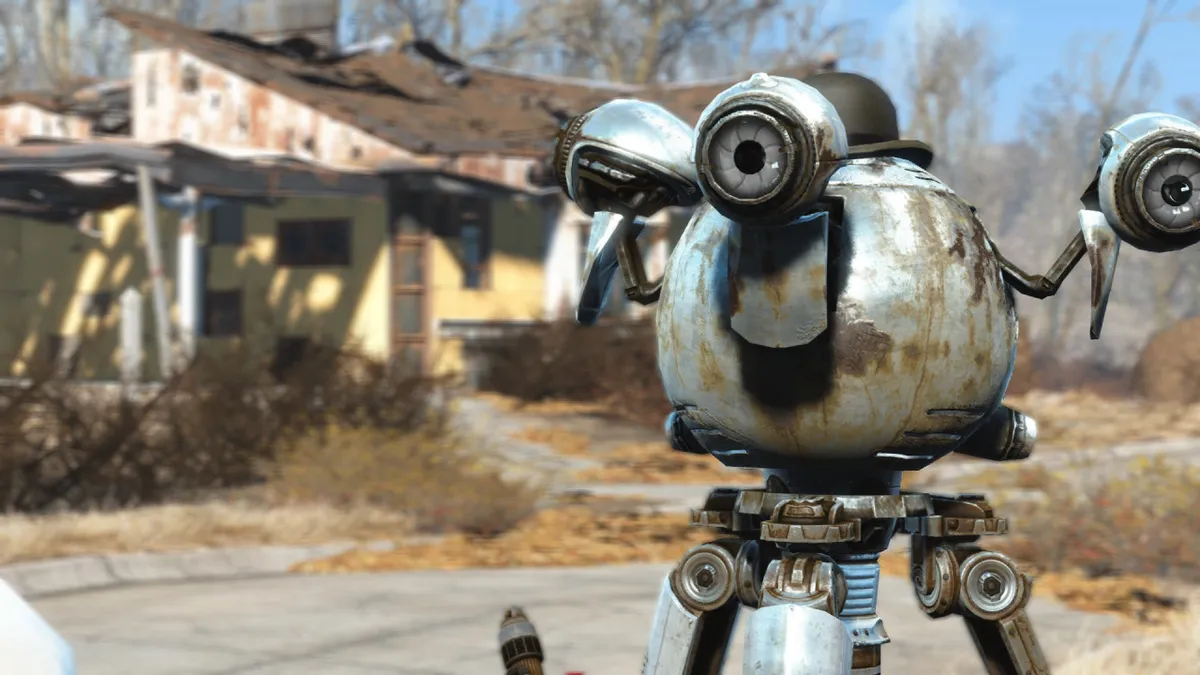
War never changes. That's the core of Fallout, right?
Emil Pagliarulo
Even now, fans still debate which faction is truly best for the Commonwealth. Are the Institute's experiments a necessary evil? Is the Railroad too idealistic? Can the Brotherhood of Steel justify its techno-fascism? There are no neat answers, and certainly no neat solutions. Fallout 4 often forces you to pick sides, with a main quest that shifts dramatically based on your own allegiances. It was an attempt at better integrating the style of faction seen in Skyrim – think the Dark Brotherhood, or Thieves Guild – into the main story, Pagliarulo explains.
"That was probably the most difficult thing I – or even the design team – has ever done," he says. "At one point I gave a talk about that, and the slide for that talk is just a big bowl of spaghetti. That's what it felt like: all these threads and strings that are a mess."
I've sided with every faction at least once, which I offer as an anecdotal metric of success. "I love that you say that," grins Pagliarulo, "because doing all of that work and having it stand the test of time? I think it makes Fallout 4 maybe the most replayable of all Fallout games."
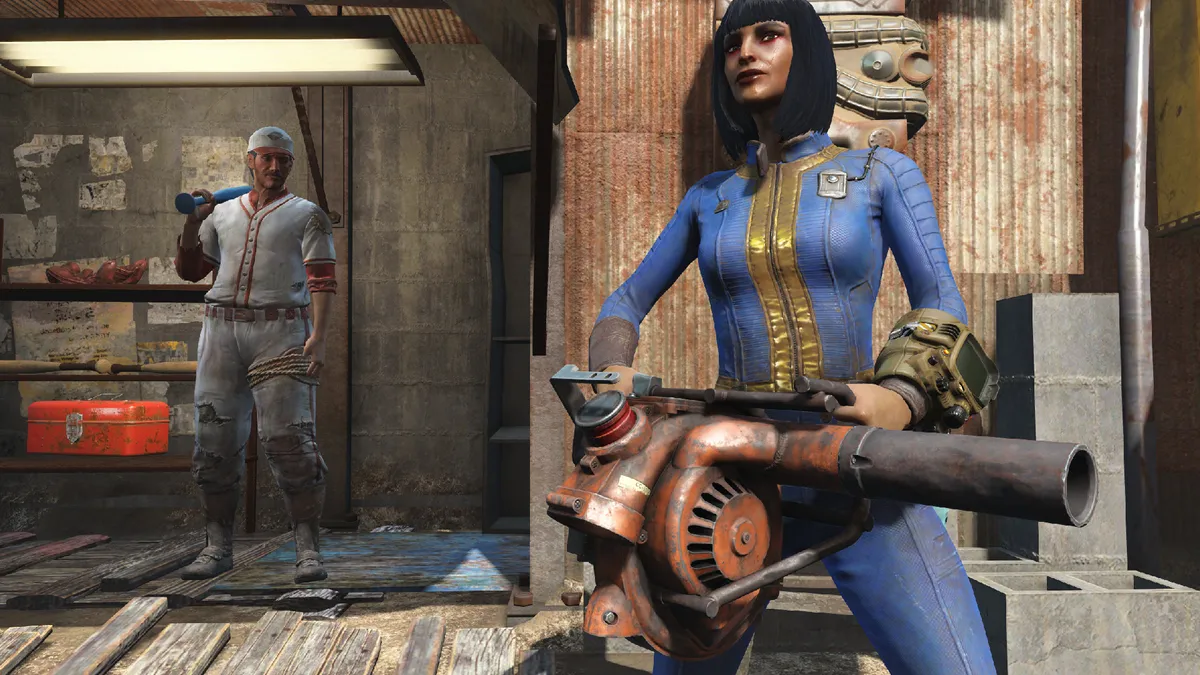
Not all of Fallout 4's changes were as well-received. Common complaints center around the game's role-playing experience. The conversation system, a four-button wheel with limited prompts, was deemed too shallow, while the decision to have a voice-acted protagonist made the game feel too rigid for some.
Speaking to the UI changes, Pely says the dialog wheel was a result of Bethesda "always toying with" streamlining elements. It's a complex balancing act: too much UI and players can't immerse themselves in the game beneath it. Too little UI, and they can be left flying blind. As an example, looting containers in Fallout 3 requires entering a paused inventory container, while in Fallout 4 you can view their contents (and nab the cigarettes within) at a glance.
When streamlining was applied to dialog, Pely explains that if you broke down "most dialog choices" in past Bethesda games, they'd often fall into four broad categories. "There were asshole responses, middle of the road responses, questions… You know, there were archetypes," he says. "So [in Fallout 4] we were like, let's simplify it and not even make you read the response before clicking on it. Maybe it's a surprise when you hear the character say it – what matters was the tone and intent, not the exact words – but the end result was the same.
Fallout 4 has just as rich dialog, options, and depth as our other games. It's just presented in a different way.
Istvan Pely
"That might technically be true, but in terms of player perception, they feel like they're missing something," Pely continues.
"They feel like it's a regression, or at least some folks did [...] As you can see in future games, we sort of backtracked a little bit because although our heart was in the right place in terms of trying to smooth over another hurdle and being immersive, maybe that went too far in one direction. It is a learning process, and we always listen to feedback and take that into account. If you go with the flow and accept it, Fallout 4 has just as rich dialog, options, and depth as our other games. It's just presented in a different way that may not have clicked with everybody, and that's OK. We evolve."
Similarly, Pagliarulo says making Nate and Nora voiced protagonists "didn't seem as controversial as it ended up becoming." Bethesda feared it would fall behind if it didn't voice its protagonists, which it saw as becoming the norm for other AAA games, and thought voiced lines offered a broader range of emotion. "It seemed, in one way, we were keeping up with the industry [...] But it's interesting because going on to Starfield, we have an unvoiced protagonist because we realized OK, that's what folks want – let's give the fans what they want."
Method and the madness
It's easy to see companies of Bethesda's size as omniscient. But when the studio's reasonings are laid out, you begin to see one of game development's nastiest traps: sometimes the right idea on paper isn't the right idea, and there's no way of knowing until it's out there.
Put into perspective, the idea of releasing a game that took millions of dollars and the unified creative efforts of hundreds of developers to make – and still not entirely knowing how it will be received – is terrifying. That doesn't even factor how nebulous the RPG space is, with everyone having their own opinion about what makes an RPG click.
There was no fear in the run-up to Fallout 4, says Pagliarulo, as the team was still "riding high" on the success of Fallout 3 and confident about its successor. Instead, he continues, Bethesda's biggest lesson was taught in the space between Fallout 4 and Starfield.
"The one thing we learned is that there is no one definition of an RPG," says Pagliarulo. "Cyberpunk 2077 is one of my favorite games. I love that game. There are some people who don't call that an RPG. I talk about the voiced protagonist: Baldur's Gate 3 had an unvoiced protagonist, but they still show camera angles and stuff. The concept of an RPG is always evolving, but what does it mean that your game has traits, has backgrounds, has dialog? Our game has dialog – does the dialog have to be in a list? It really is fascinating."
"[Here's] what we focus on," he continues. "We want to give players a good story, we want to give them fun gameplay, and we want to give them a lot of agency to just play the game that they want to play [...] We know we make action RPGs. We like the games we make. We have millions of people who love the games we make. So I think we're just looking at what our fans are telling us, and we're just going to keep doing that."

A decade later, both Pagliarulo and Pely look back on their time on Fallout 4 with fondness. It's certainly one to be proud of. I'm replaying Fallout 4 now, and across this playthrough's 30 hours I've realized how densely packed the Commonwealth is. If you only complete its quests, you'll only see a fraction of what Boston has to offer.
Still, there remains a sense of wanting to have done more. Pely says there was "at least one major underwater location" with a "pretty elaborate quest" that was cut due to production constraints. "Maybe someday some of those ideas will see the light of day," he suggests. "No idea ever dies – it just kind of goes into waiting for a while. So I'm hopeful we might see it someday."
Pagliarulo also has an idea that got away. "There is one thing I wish I included in Boston that I didn't, and it bugs me to this day," he says. "The oldest continuously operating hotel in Boston is called the Omni Parker House, and it's right there on that main street, on Tremont Street, in the game. It's also supposed to be one of the most haunted places in the country. Hindsight is 20/20, but if I could do it all over, I would add the haunted hotel [...] For some reason, it never occurred to me at the time."
For both developers, Fallout 4's legacy is monumental. To Pagliarulo, it is his "love letter to Boston" – an opportunity to put his childhood bedroom into one of the studio's largest creative efforts. "There's not much I would change," Pely says.
"Broad strokes – maybe we would have done the dialog differently – but at the end of the day, these things don't hurt the game. These are creative choices. You have to accept the creative choices you make on every game, even in retrospect. That was our creativity at that moment." You don't want to mess with that: that's where we were as a studio, our taste, our aesthetics, our priorities," Pely finishes. "[Fallout 4] is a time capsule of Bethesda at that time, and I look back at that period lovingly."
Check out how the best Fallout games rank against each other while we await Fallout 5 news.

You must confirm your public display name before commenting
Please logout and then login again, you will then be prompted to enter your display name.


