


✅ All reviews by experts
✅ 100+ board games reviewed
✅ Years of industry experience
With sweater weather closing in and everyone getting cozy indoors over Fall, it's time for the best board games to shine. This is tabletop season; there's nothing better than grabbing a hot mug of something and settling in for games night with friends or family.
Long gone are the days when Monopoly was the most interesting thing on the menu, though. This hobby has exploded in popularity, and now there's a treasure trove of ideas to suit every skill level or budget. Want an easy-going gateway to strategy gaming? Catan is the perfect choice thanks to accessible but gripping mechanics that changed the industry forever. Tracking down something spooky for Halloween, on the other hand? Look no further than Betrayal at House on the Hill, where one of you may be a secret traitor. No matter what you're in the mood for, the best board games have you covered. (And if you don't know what to try next, see my advice on how to choose board games below.)
That's why the GamesRadar+ experts and I have rustled up some must-haves across a variety of genres. These suggestions aren't picked just because they're popular; I've been reviewing tabletop games for the better part of a decade, and our team's built a career covering industry news while conducting in-depth designer interviews. That means we know what makes the best board games tick, so we won't ever recommend a product we don't truly believe in. (See the 'how we test' section for more.)

Benjamin has covered board games on GamesRadar+ since 2018, and has written professionally for over thirteen years. He began playing tabletop games as soon as he was able to roll dice; his early favorites included the pirate-themed Buccaneer along with Talisman. With Halloween on the horizon, he's starting to round up the best horror games for spooky season. (He recently reviewed the gothic Horrified: Ravenloft, for example.)
Best board games quick list

There's a reason why Catan is often called the perfect 'gateway' game; it's accessible, but still has enough bite to keep you invested no matter your skill-level or experience with board games. It deserves to be in every collection.
Read more below

It's rare to find a board game you don't mind losing at, but Ticket to Ride manages it. This is a phenomenally chilled-out experience that anyone can get their head around, making it the perfect option to play with your family.
Read more below

This award-winning game is already making waves thanks to nailing the 2-player experience; it forces you to bond as a team by offering challenges that can only be overcome as a pair. A must-have, if you ask me.
Read more below

This word game with a secret-agent twist took the world by storm a few years ago, and it's one I'd say deserves to be in every collection. It's a devious, endlessly replayable association game that's great fun… but also helps you learn more about the other players.
Read more below

If you'd prefer to work with rather than against each other, this co-op classic comes highly recommended thanks to an emphasis on teamwork and nail-biting gameplay. It's challenging enough that winning is extremely satisfying.
Read more below

It's a genuine struggle to find something that's better-rated by the community than Brass: Birmingham. This economy game is widely held as one of the best in the business, and its handling of trade is masterful.
Read more

This game has an incredible elevator pitch; the wildest kaiju you've ever seen are battling to decide who can squash Tokyo. Its gameplay is just as novel thanks to masterful push-your-luck mechanics where high risk means high reward.
Read more below

Thanks to a fully-realized world, branching storylines, and more depth than the average mine, Jaws of the Lion is a must-have for fantasy-lovers that want a new epic to explore. It eschews randomization too, so will appeal to those who love to strategize.
Read more below

How long do you think you'd last as a horror movie hero? You get a chance to find out here, with surprises around every corner and edge-of-your-seat gameplay. While it's not necessarily the scariest game, it's the best for most people.
Read more below

Azul's gameplay is mesmerizing; it'll keep you coming back because there's always something new to try, or you've thought of a different strategy. It's an incredibly satisfying experience that always leads to "just one more match."
Read more below

This sci-fi classic has been a go-to choice for fans of diplomacy and grand conquest since the 1990s, and you'd be hard-pressed to find a more epic board game. It takes a long time to play, but the effort is more than worthwhile.
Read more below

Do you like fun facts and amusing trivia? Articulate needs to be on your shelf yesterday. Besides being easy to understand so everyone can get involved (it's like charades, but faster-paced), its questions aren't going to go out of date.
Read more below
Best board game overall


"Catan sparked a revolution when it launched in the '90s, and gaming was changed for the better. It isn't a relic better left in the past; it still holds up. Its core loop remains as engaging now as it was decades ago, and a wealth of ways to win gives you an agency you don't always get with family-friendly games."
Catan is probably the most influential board game on this list, and I'd argue that it deserves a place on every shelf too. For one thing, it's the perfect 'gateway' into more sophisticated games. If you're ready to graduate from the likes of Clue, it eases you in whilst providing more of a challenge to sink your teeth into (particularly with the new, streamlined 2025 edition).
It also revolutionized the industry back when it was first published in 1995. Its unique ideas gained global recognition and spawned an entirely new genre – 'Eurogames' – which now dominates the industry. With this in mind, it's hard to argue that Catan doesn't deserve a spot here as one of the best board games overall.
Ever dreamt about creating your own slice of heaven? That's a reality here. Players are settling the uninhabited island of Catan and collecting resources to build their utopia, but space is limited. That means you'll have to be clever about where you go. Setting up shop next to the hottest goods doesn't guarantee success, for example; some resources are more likely to pay out than others, so you've got to weigh up your chances ahead of time (or trade with rivals if you can't get what you need). It's all about the bigger picture, and foresight is rewarded. There are multiple ways to win too, so you'll never feel hemmed in.
That's why Catan has endured for 30 years – it makes memories, and gives you the freedom to chart your own course.
Buy it if:
✅ You want a deep but accessible board game: Catan is treated as the entry-point to 'hobby' gaming for a reason.
✅ You want a stone-cold classic: This is a trendsetter that transformed the industry.
Don't buy if:
❌ Your table is prone to arguing: Rivalries could ensue.
❌ You're used to complex strategy games: Fans of modern strategy games may find it too lightweight.
- Read more: Catan review
Best board game for families


"A tense but incredibly rewarding experience that opens itself up to strategy and logic just as easily as it does creative thinking and social play."
Ticket to Ride is one of the most laid-back entries on this list, and that makes it the perfect choice if you're tracking down the best family board games; it won't start a civil war around the table. Thoughtful and relaxing, it's a delight for all ages that lets players tackle things at their own pace. (And a revamped 2025 version reduces the barrier to entry even more.)
Picture the scene; it's the early 1900s, top hats are in, and trains are still of the steam variety. In this quaint landscape of frilly frocks and tail-coats, you've got to plot railway routes from one city to another. Whoever completes the most lucrative lines will win.
Sounds easy, right? Not necessarily. Even though it's laid-back, there's an undercurrent of strategy holding everything together. You need sets of differently-colored train cards to lay down routes, and because these are taken from either a face-up market available to everyone or drawn blind, others might work out what you need and beat you to the punch by grabbing those cards first. Plus, there are limited routes available. If you're too slow, you may get cut off and forced to go the long way around. This adds a push-your-luck element to proceedings. What do you prioritize, and when?
However, it's not overly aggressive. There's less emphasis on screwing each other over (which is something I think we can all appreciate after Christmas sessions of Monopoly gone wrong), and while it's possible to ruin someone's day by building across their route, there's usually a way for them to salvage all that effort. As such, Ticket to Ride is something I'm more than happy to break out if things typically get heated at family gatherings.
Buy it if:
✅ You want something accessible but fun: Ticket to Ride is easy-going, but there's depth under the surface.
✅ The people you're playing with aren't board gamers: Even if your opponents never play anything more exotic than Scrabble, they can still get involved.
Don't buy if:
❌ You want something that'll challenge you: This is a fairly laid-back experience overall.
❌ You'll be playing it a lot: Ticket to Ride can get too familiar if you overdo it (you'll eventually learn all the routes).
- Read more: Ticket to Ride review
Best board game for 2 players

"You might think that playing in silence would make a board game for 2 players dull, but it's exactly the opposite. You'll become much more in tune with each other because you can't talk, and the tension of trying to second-guess what your partner will do next has you on the edge of your seat. There's nothing quite like it."
As the runaway success of 2024, Sky Team has taxiid its way onto more than a few wishlists. (That's the perk of winning a prestigious Spiel des Jahres award, I suppose.) It lives up to the hype; this is an engrossing exercise in teamwork that really makes you feel closer to one another because you're forced to overcome limited communication. That makes it great for date night.
It's also been designed specifically with two people in mind, and is small enough to take on the go. In other words? It's a textbook definition of what the best 2-player board games should look like. Rather than trying to please everyone with mechanics that scale for a crowd, it's laser-focused on providing the best experience for a pair.
Sky Team bundles you into the cockpit and asks you to land a plane without reducing it to a smear across the runway. In true jet-setting fashion, you and your co-pilot will fly across the world to airports which offer unique challenges. Because each player uses dice with numbers that control everything from speed to angle of approach, being on the same page is crucial. These numbers add or subtract from each other as you try to hit a target score, so if you aren't in sync, things will quickly go pear-shaped. This is why those dice are rolled in secret and you aren't allowed to tell each other what you've got – you'll need to think up a plan beforehand, or hope your partner catches your drift mid-game.
OK, I'll admit that this can be stressful. But if you want a challenge, you'll find one here. Plus, it doesn't throw you in at the deep end. Sky Team does a great job of easing you into harder objectives, not to mention drip-feeding new mechanics that shake things up. The result is a game that seizes you by the collar and refuses to let go.
Buy it if:
✅ You want a very replayable game: Thanks to multiple scenarios and new mechanics drip-fed over time, Sky Team should impress.
✅ You want a game you can learn together: As the name would suggest, Sky Team is all about teamwork.
Don't buy if:
❌ You don't like limited-communication games: You aren't able to talk with your co-pilot once dice are rolled, so chatter-boxes may struggle.
❌ You hate flying: A game where you have to land a plane may not be the best fit for aerophobes.
- Read more: Sky Team review
Best party board game


"Codenames is the ultimate pick-up-and-play party game. No complex mechanics to trip up new players — just a word association game with some structure around it, and a competitive edge to spice things up. Don't let that simplicity fool you, though. There is a ton of depth and strategy on offer here for experienced players to sink their teeth into. The key to Codenames' success as a party game is that it's all about communication and getting on the same wavelength as your teammates. This means you come away from a game knowing your teammates a little bit better, and isn't that the whole point of a party?"
Finding the right party game can be a job worthy of Mission Impossible; it's gotta be a crowd-pleaser, can't take too long to play, and should be easy to understand. That's why I grab Codenames whenever my friends get together.
This spy-themed game challenges you to track down secret agents before your rivals can. It has a really straightforward concept anyone can pick up, but the best thing is how it gets everyone talking. You may just learn a thing or two about each other along the way, and few party games are better at breaking the ice.
Your mission, should you choose to accept it, involves dividing into teams (red or blue) and laying out 25 randomly-drawn word cards. Spies or innocent bystanders are hidden under each of them, but only two players – "spymasters" – know where. Find all your secret agents to win.
To help their team pick the right card, spymasters take it in turns to give clues. This is a single word associated with one or more cards on the board. (As an example, you might say "war" so that your team picks 'battleship' and 'missile.') If players select the wrong card and hit an innocent bystander, the turn ends immediately.
Even though it's a simple concept, there's an iceberg's worth of nuance under the surface. Should spymasters play it safe by going through each card one by one, knowing that their opponents may pull ahead? Or is it better to connect multiple words as best you can, even if there's a risk players will choose the wrong card?
That's the devious brilliance of Codenames. Yes, the cards are randomly drawn. However, plenty of them can be lumped together in the same category – and you may not realize this until too late. I can't tell you the amount of times my team has gotten the right answer… before talking themselves out of it and choosing something completely tangential. It's hilarious, infuriating, and memorable in equal measure.
Buy it if:
✅ You're playing with a larger group: Codenames is a "more the merrier" kind of game.
✅ You want a great icebreaker: Picking the right card will hinge on clues from your spymaster, so it's a good way of getting into other players' heads.
Don't buy if:
❌ You aren't a fan of big-group games: Codenames is best when played with the full roster of eight.
❌ You crack under pressure: Coming up with word associations carries a degree of pressure, especially if your teammates aren't patient.
- Read more: Codenames review
Best co-op board game


"There's no real board game canon, but if there were, Pandemic would clearly be included. While the subject matter might sound particularly dark, the actual mechanics of where to place resources are straightforward and serve as a good shift from map-based games like Risk to more crunchy titles. It's a classic for a reason, but is maybe a second step rather than a gateway game."
The odds are against you from the start in Pandemic, but that's the beauty of it. This team-based epic is never less than thrilling, and it doesn't feel hopeless either. Despite being tasked with curing a clutch of super-diseases, good communication (not to mention the ability to think on your feet) will see you through. Want satisfying cooperative board games for your collection? This should be at the top of the pile.
Sure, its theme hits closer to home nowadays. But there's something cathartic about giving a pandemic the boot… even if it's only in this tabletop world of tokens and cards.
You're racing against the clock here; you've got to contain and cure four deadly diseases that are sweeping across the globe. Naturally, this is far from a walk in the park. For starters, new infections are placed on random cities each turn. If enough cases gather in one place, they'll spill into neighboring areas in a devastating domino effect. To make matters worse, the number of infections deployed each turn increases over the course of the game. Spin your wheels and you'll get overwhelmed.
This leaves you with a difficult choice: research a cure by collecting cards (at which point the game stops placing infections for that particular disease), or remove infections at a local level so you can keep things under control. Such a balance of risk and reward makes Pandemic one of the best board games overall. There's no 'right' approach, and this puts the power into your hands. Random chance dictates which cards get drawn from turn turn, of course, but everything else is all down to strategy.
More importantly, that question will keep you on the edge of your seat from start to finish. I've rarely seen our board group more invested than when they're playing Pandemic, and the need to constantly change your battleplan on the fly means that communication is vital - a must for co-op games.
Buy it if:
✅ You want a gripping team game: You win or lose together, and good communication is essential.
✅ You're looking for a challenge: This game doesn't take any prisoners, and that makes it all the more enthralling.
Don't buy if:
❌ You don't like pressure: Tensions run high in Pandemic, so anyone that doesn't like pressure won't enjoy it.
❌ You want something easy: Want to avoid raising your blood pressure? It's probably better to stay away from this one.
- Read more: Pandemic review
Best strategy board game


"Between mutual yet competitive interdependence, the limitations of your hand, and the impossibly circular demands of building, Brass offers a unique strategic challenge."
There aren't many strategy games with a better reputation than Brass: Birmingham. It's widely considered to be one of the best board games ever made on community forums, and reviews typically glow with praise. I can't help but agree. There's an incredibly clever push and pull between players here; it's a case of keeping your friends close, but your enemies closer.
Although it takes a hot minute to get your head around (this is definitely a heavy-weight game), the effort is more than worthwhile. It's an easy recommendation for anyone wanting a tactical board game.
Set in the smog and soot of industrial revolution Britain, Brass is all about forging a business empire. Your goal? Earn the most points by trading in everything from cotton to coal, capitalizing on a blossoming market. To do so, you'll have to build factories or mines, navigate supply and demand, create transport links to shuttle all this around, and work with rivals toward common goals.
The brilliance of Brass lies in how much you need your rivals to advance your own plans. There's a delicious, circular structure of dependencies at the heart of this game; you must outperform your foes to earn points that could win you the match, but will paradoxically need to utilize their resources in order to get what you want. Doing so may benefit you, but at the same time, it'll also give the other players an advantage.
While this level of complexity isn't going to suit everyone, there's no denying that Brass: Birmingham is very, very clever.
Buy it if:
✅ You want a satisfying strategy game with layers: As with all the best strategy board games, there are many different paths to victory here.
✅ You want a social game: While many strategy games feel like multiplayer solitaire, Brass involves everyone in the fun whether they want it or not.
Don't buy if:
❌ You want a lighter strategy game: This is an unapologetically dense, multi-layered, and complex strategy game.
❌ You can't commit to multiple playthroughs: Because Brass takes a little while to get your head around, it's probably not for you if you only intend to play it once in a blue moon.
- Read more: Brass: Birmingham review
Best board game for kids

"I fell in love with King of Tokyo years ago after it was recommended at a board game cafe, and it's been on my favorites list ever since. Those push-your-luck mechanics are compelling, and there's a sense of fun here you'll be hard-pressed to find anywhere else."
King of Tokyo is the ideal choice for both big and little monsters alike. Allowing you to command tongue-in-cheek kaiju (ranging from Space Penguins to classic Godzilla-wannabes), it's all about pushing your luck. You earn points by stomping across Japan's capital, but this opens you up to attack from other players. The trick is knowing when to stick it out or make a hasty retreat, and this will keep everyone around the table invested.
It's a great introduction to board game strategy, in other words. When combined with the amusingly silly concept, there's plenty for children to love here – it's one of the best board games for kids by a long way.
As you might expect from a game about wanton destruction, King of Tokyo isn't difficult to understand; your aim is to hit 20 points or be the last monster standing. Your actions (attacking, healing, etc) are dictated by rolling dice and deciding which results to keep, yet this isn't a simple slug-fest. You earn points by attacking the city, and the longer you stick around, the more you'll get… but anyone in Tokyo is open to attack from rivals. They can't heal while there, either. Basically, you're playing a game of chicken with your monster. It's tense balancing act that keeps everyone on the edge of their seat.
There's plenty to think about as a result, but not in a way that'll bog kids down. They shouldn't find it hard to understand the game's strategy, and newcomers will be able to dive in quickly as well.
Buy it if:
✅ You want something easy to understand, but compelling: This isn't a game they'll struggle to understand, but it won't leave them feeling bored either.
✅ You want something parents will enjoy too: Don't worry folks, you should enjoy this as much as your little ones.
Don't buy if:
❌ Your children take things very personally: Hitting Tokyo puts a target on your back, and your monster will be attacked a lot. Sensitive kids may feel picked on (even if they're not).
❌ You have young children: Although it's straightforward, this may be too complex for particularly young kids.
- Read more: King of Tokyo review
Best RPG board game


"Jaws of the Lion takes a dungeon-crawling experience that is expansive and epic, and makes it slightly less expansive… but no less epic. This hefty chunk of fantasy co-op goodness will take you through many a session of monster battling and exploration. Narrative does take a bit of a backseat here but I’d argue that looking cool and looting treasure is a sufficient backstory for any adventurer."
If you have a soft spot for swords 'n' sorcery and love nothing more than poring over fantasy maps while dreaming of adventure, Gloomhaven: Jaws of the Lion deserves to be on your radar. This dungeon-crawling epic taps into all that with branching storylines more commonly seen from the best tabletop RPGs. It also makes skilful use of 'Legacy' mechanics where the consequences of your actions carry across from one session to the next.
Seeing as it's more accessible than the original Gloomhaven (and much less expensive), this is a great place to start regardless of whether you intend to tackle other entries in the series or just want a taste. Yes, it's more complex than many of the best board games. But it's also a whole lot better, and the perfect on-ramp for Gloomhaven's 2025 update.
Jaws of the Lion casts you as a mercenary looking for work in the grungy metropolis of Gloomhaven. As is only right for a fantasy RPG, said 'work' involves monsters and dungeons aplenty. These jobs lead you through a grand narrative where your choices matter, so tread carefully. Decisions can, and will, have consequences.
While that sounds intense, the game has been designed with accessibility in mind. Unlike the full Gloomhaven or its sequel, Frosthaven, this one is smaller in scale and drip-feeds everything you need to know piece by piece. That includes a novel combat system which gets rid of random dice rolls. Rather than leaving success to luck, all of your movement or attack actions are divvied up onto cards instead. The challenge lies in deciding which ones to use - and when.
Few board games can match this sense of agency. Battles being so skill-based makes victory all the sweeter; your clever tactics saw you through, not luck of the dice. When combined with hero upgrades, personal goals, and unlockable characters, Jaws of the Lion really does put your choices center stage.
Buy it if:
✅ You want an epic adventure game: You'll be embarking on grand adventures and crawling through dungeons each session.
✅ You want your choices to matter: Because your decisions are carried over from session to session, what you do matters.
Don't buy if:
❌ You want something simple: Despite being a lot more accessible than standard Gloomhaven, Jaws of the Lion is still denser than most board games.
❌ You're expecting it to be as deep as standard Gloomhaven: The original Gloomhaven defines 'sprawling fantasy epic.' This isn't so grand.
- Read more: Gloomhaven: Jaws of the Lion review
Best horror board game

"If you're in the mood for a game you can truly sink your teeth into, Betrayal leads the pack. A randomized board and 50 unique scenarios (all with their own strategy) should keep you on edge for months, and it occupies a Goldilocks zone of gaming even if it isn't always the most balanced. Regardless of whether you're trying to find must-have horror board games or just want a bit of Halloween fun, this is a haunted house you'll want to revisit."
Ever wonder how long you'd last in a horror movie? Betrayal at House on the Hill lets you find out. Setting players loose in a haunted mansion that's quite literally out to get them, it's drenched with tension. It's also unpredictable enough that you're never sure what's going to happen next.
Your aim is simple – make it out of the house alive. That isn't to say it's predictable, though. Betrayal isn't set up like traditional board games, which is part of its appeal. Your character has been drawn here for mysterious reasons (they're following a friend who's gone missing or have received a strange invitation, for instance), and each room is selected at random when you enter it. The items or events encountered within are randomized as well. In short? There's no way of telling what lurks behind those doors.
The only thing you do know is that one of the game's scenarios will eventually begin, dictated by the rooms and items you've drawn. This mission turns your allies – or the mansion itself – against you. Seeing as both sides are given secret objectives to follow, the result is an anxious yet exhilarating head-to-head.
This deadly twist on guess-who will keep you coming back for more, and with several-dozen scenarios under its belt, the novelty won't wear off anytime soon. Actually, I've still not seen everything these dusty halls have to offer despite playing the game for years. That puts Betrayal one step ahead of more formulaic (though still excellent) rivals, and it ensures you'll have a blast even if you've already played an older version of the game.
Sure, not all of the scenarios are created equal. There are more complex horror games as well, like the atmospheric Nemesis. Nevertheless, I still think this is the best choice for most people due to its straightforward yet tactical gameplay.
Buy it if:
✅ You want an immersive experience: You'll quickly lose yourself in this haunted house.
✅ You love adventure games: If you're a fan of games that emphasize exploration, it doesn't get much better than this.
Don't buy if:
❌ You want something more in-depth: This won't hold up to more complex horror games.
❌ You don't like random elements: This game relies on randomly-drawn board tiles and cards that dictate what happens next.
- Read more: Betrayal at House on the Hill review
Best puzzle board game
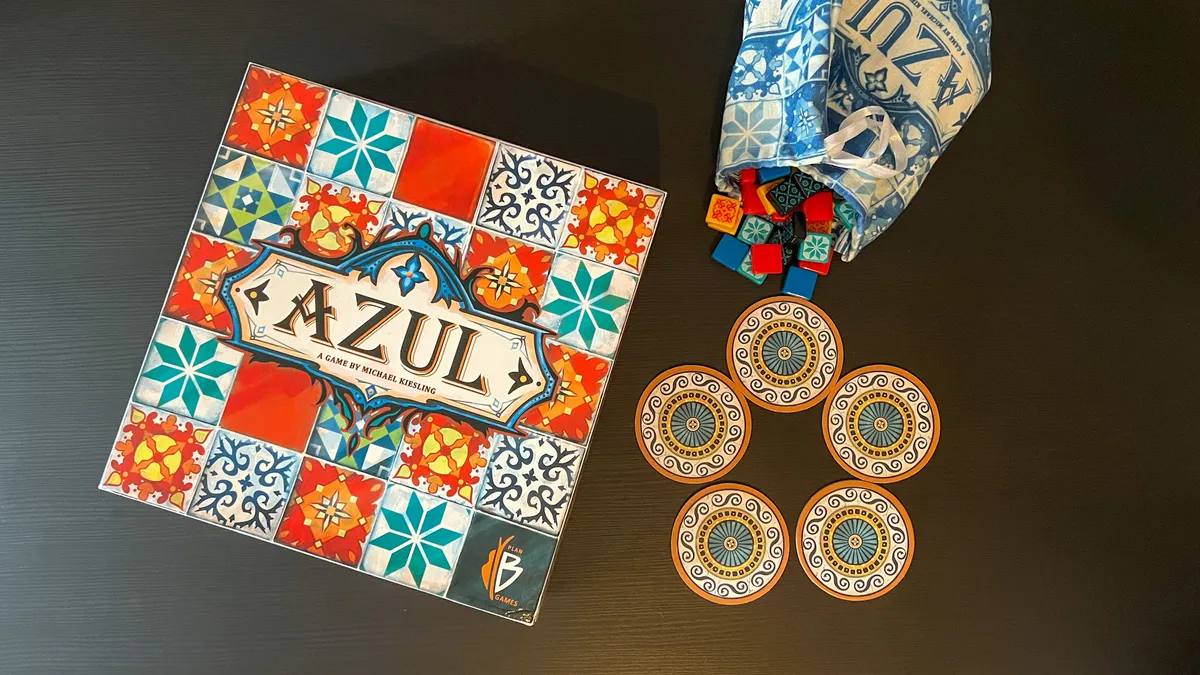
"The strategy to Azul sneaks up on you, to the point where I'm loathe to go into too much detail around specifics - it's just too much fun discovering each piece of the puzzle yourself."
Azul is downright beautiful, and its mechanics are just as enchanting. For those who prefer more cerebral tabletop experiences, I'd highly recommend this one - it's amongst the best puzzle board games and will keep you coming back for another bite of the apple.
The aim is easy to wrap your head around; place tiles on your board and score points. In fact, a good description would be "color-based crossword." You've still got to take care, though. While you'll get better results if you manage to complete sets in this chilled-out pastime, wasting tiles on random formations can lower your score.
This leads to good-natured competition in an effort to outdo your previous record... or that of your rivals. Azul can feel more like a personal puzzle game than a head-to-head challenge as a result, which makes it a great 2-player option. There's a joy in lining up tiles to make patterns or by completing the perfect set. You're competing for the highest score, but everyone's running their own race.
That's part of the reason you'll want to keep coming back; there's always something new to try, or another approach you can take. Azul encourages this by forcing you to play differently each time, and your strategy must shift depending on the combinations of colors available early on.
You see, Azul is more than a single grand riddle. Everything has a knock-on effect to the point that deciding on your next move becomes a satisfying decision tree, and there's a joy in trying to draft tiles with as much efficiency as possible. As noted in our review, "the result of this complex combination of systems and logic is an organic strategy experience that each player shapes for themselves. As in all good drafting experiences, everyone at the table's playing a slightly different game and is developing a greater understanding of exactly what's being asked of you with every round."
Buy it if:
✅ You want a challenging puzzle game: Even though it's easy to understand, Azul's depth sneaks up on you.
✅ You want something you can keep coming back to: You'll always find something new to try here.
Don't buy if:
❌ You don't want to think too much: You'll need your brain switched on for this one.
❌ You prefer narrative games: This is quite abstract, so those who prefer narrative puzzle games (like murder mysteries) may not get on with Azul.
- Read more: Azul review
Best classic board game

"Twilight Imperium is the ultimate big board game. It's expensive, takes ages to play, and has a ton of rules to learn, but the reward for your efforts is one of the best board games ever made. There is a ton of strategic depth here, as each player is required to balance diplomacy, trading, economics and good old fashioned space warfare. The size and mechanical depth means it’s not for everyone — I’ve always described Twilight Imperium as a mixture of Risk and a meeting of the U.N. Security council — but if that sounds like your jam then you need to get this game."
Few of the best board games can match Twilight Imperium's reputation; it's beloved and borderline-infamous in equal measure. "Grand strategy" comes close to describing the experience, but even that doesn't do the thing justice.
Having delighted armchair tacticians since it was first published in 1997, Twilight Imperium is a heady blend of negotiation and warfare. The result can eat up a full day if you let it, and few sessions last less than four hours. OK, it's a newer entry compared to other classic board games (1977's Cosmic Encounter, say). But none have lived up to its ambition before or since. This is exemplified by a brand-new expansion for 2025, Thunder's Edge, that adds a new lynchpin to galactic conflict alongside rules which allow you to create your own unique faction.
After setting up your galaxy of planets and stars on the table, players choose one of many factions with their own strengths or weaknesses. No matter who you select, your aim is simple: rule the universe. The cosmos' previous rulers have stepped aside, so now everyone's scrambling to park their butts on that throne. You achieve this by completing a variety of secret or public objectives, and the result is political intrigue on an incredible scale. When all is said and done, Twilight Imperium isn't a million miles away from Game of Thrones. Subterfuge, betrayal, and vast battles are commonplace.
While the rules powering these galaxy-shaking events aren't overly complex, they can have a big impact. As a case in point, attacks are rolled simultaneously. That means you can't ever guarantee how combat is going to pan out, so you must commit to a fight if you want to win. It's not just a case of rolling to see who gets a higher score, either; each ship has a specific attack value, and you'll roll a D10 for them all. Go over the threshold and you'll do damage.
Equally, players will vote for or against new laws that can change the game's mechanics. This leads to debates where you'll try and convince others to go your way, or an opportunity to spend your valuable 'influence' points.
Again, the downside is how long this all takes to run. (You can spend an entire day on Twilight Imperium without much trouble, so be warned.) However, the experience you'll have as a result is unlike anything else in the hobby.
Buy it if:
✅ You want truly epic sci-fi: You're managing an entire starfaring civilization in a galaxy full of them, so scale isn't a problem here.
✅ You want an unforgettable experience: For some, playing Twilight Imperium with friends across the weekend is a bucket-list dream.
Don't buy if:
❌ You don't want a really, really long game: Sessions of Twilight Imperium last anywhere upward of four hours, but the average is six.
❌ You can't think of anyone who'd be interested in playing: If there isn't anyone you think would want to join you in this epic undertaking, the high cost of entry isn't worthwhile.
- Read more: Twilight Imperium review
Best trivia board game

"It isn't hard to find trivia board games, but tracking down good ones is a different story. Articulate continues to impress years after it was first published, and I always suggest it to family if they want to play something at a get-together."
If you'll excuse me, I'm going to be controversial. Everyone knows about Trivial Pursuit, but I don't think it's the best board game for trivia fans. In my mind, that honor belongs to Articulate.
For starters, it doesn't go 'out of date' in the way its competition does. Secondly, anyone can get involved; it's something of a one-size-fits-all for get-togethers. What's more, it's ideal if you have family or friends descending en-masse. Up to 20 people can take part in Articulate so long as you've got even team numbers, and countless people have been enjoying the brain-teasers that follow since 1992.
Once you've split up into teams, one member from each group will draw a card. They've then got 30 seconds to describe something listed there without using those specific words (e.g. you might say "man who wears a crown" for king). Because you get to take another card if your teammates guess correctly, and you move that many spaces along the board once your turn is over, being succinct is key. The quicker you are, the further you'll go.
The rush to rattle through as many cards as you can on your turn is, in a word, electrifying. While some won't appreciate the pressure that comes along with the spotlight, it's surprisingly engaging.
I'll admit that the result isn't very tactical, or high-octane. Nevertheless, it is fun. The simplicity of Articulate means that anyone and everyone can get involved as well. You don't need to be a font of all knowledge, because the categories are refreshingly broad.
Finally, there are enough cards that you shouldn't get bored any time soon. I've been playing Articulate for well over a decade now and still haven't grown tired of it.
Buy it if:
✅ There are a lot of players: Articulate allows for 20 people or more.
✅ You want something anyone can play: Because it's like charades, anyone can get their teeth into Articulate.
Don't buy if:
❌ You want strategy: Because you're answering questions or giving out clues, there isn't much by way of strategy here.
❌ You don't like pressure: Whoever is offering clues has just 30 seconds to describe as many cards as they can, so it's pretty intense.
- Read more: Articulate review
How to choose the best board games
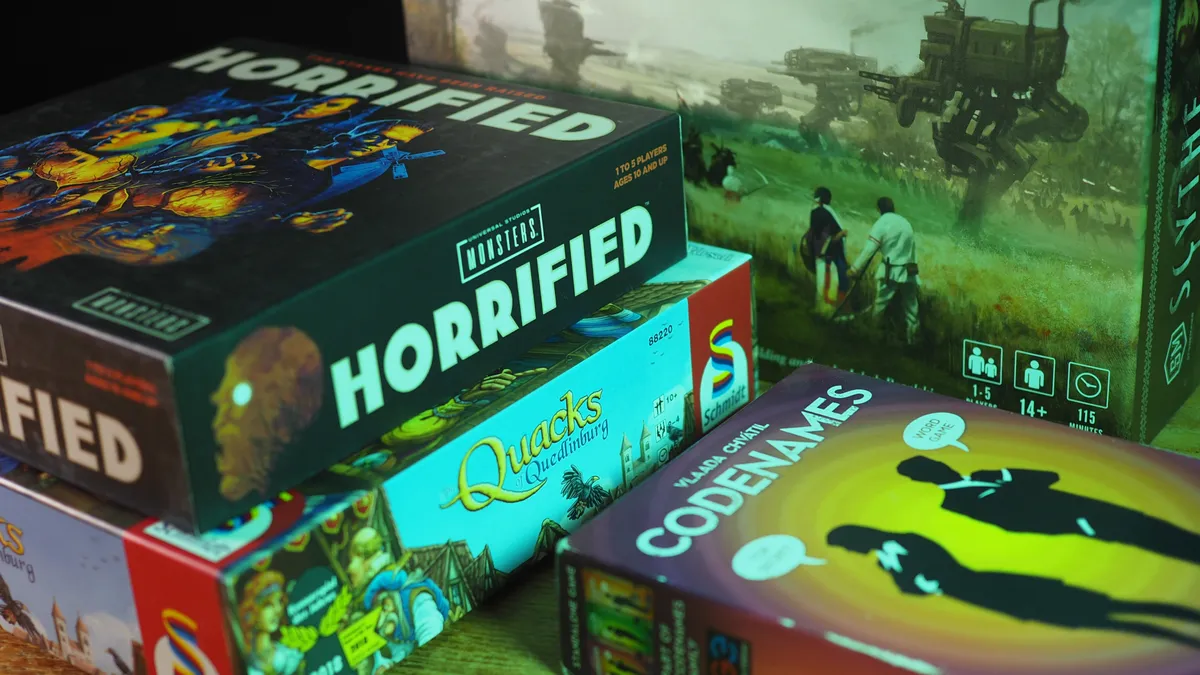
If you can't decide what you're in the mood for (you've got so many types of board games to pick from, after all), there are a few questions you can ask yourself to narrow things down. Whenever someone asks me about finding the best board games, I ask:
Longtime contributor and board game designer Katie Wickens has some very helpful advice as well: she says that "board gaming is all about delighting your inner child – to do that you'll need to learn its language. Start with a theme. Something that brings out that childlike wonder is really important, because it'll give you something familiar, even nostalgic, to latch onto and fuel your immersion. Then you'll need to decide if you're all about playing solo, working collaboratively with others, or crushing your enemies at every turn. Some games will deliver you solitude, while others feed the team player in you, and some will feed your will to dominate, with the latter often landing somewhere on a sliding scale of relationship-endangerment.
"Your gaming group's needs should factor in too. There's no point presenting Grandma with an intensely strategic Eurogame when a simple game of snakes and ladders will do. Most importantly, think about what makes your brain light up. That could be collecting and managing resources, thinking tactically to outmaneuver your opponent, or even building something beautiful – the mechanics we mention will give you an idea of whether a game will speak to you. Remember: everyone games differently, and there's something out there for everyone."
How we test the best board games
- Our team has written more than 100 tabletop game reviews
- We've spent years interviewing industry experts
- We've reported on board games for over six years
- We visit board game conventions & events each year
The way we test products is incredibly important to the GamesRadar+ team, and our experts (who have years of experience covering the industry) won't ever recommend anything unless they legitimately feel it's worth your time. If we don't think a product is one of the best board games, it doesn't get onto this page.
You can find more details in our dedicated 'how we test board games' feature, but the GamesRadar+ process involves our reviewers spending as much time playing and living with a game as possible, allowing us to go far beyond surface-level judgements. This helps them ascertain what it does well, what it fails at, and its overall longevity. We also run multiple sessions with different player counts, just to see how the experience differs.
For a more in-depth examination of our process sitewide, be sure to see the GamesRadar+ review policy.
Recently tested
Why you can trust GamesRadar+ Our experts review games, movies and tech over countless hours, so you can choose the best for you. Find out more about our reviews policy.

The GamesRadar+ team and I never stop reviewing board games new and old; it's our job, and one we take very seriously. Plenty of games have hit our testing table recently, and as always, we score them out of five stars. You can see our most recent 10 reviews below, complete with their ratings.


Best board games FAQ

What are the top board games of 2026?
The top board games of 2026 will vary depending on who you ask, but there's been a lot of buzz surrounding a few in particular.
Cozy Stickerville drew a lot of praise early this year thanks to its Stardew Valley-esque gameplay that saw you create and tend to your own village over the course of a decade, and your decisions carried weight because they were immortalized through stickers on the board.
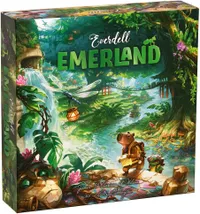
Another popular game of 2026 has been Emerland, the jungle-themed spin-off for worker-placement game Everdell. While it uses the same beloved mechanics as a foundation, it adds some compelling new twists to the formula.
The latest instalment in the Horrified series - Ravenloft - has caused a stir too, with it being one of the most popular preview games at UK Games Expo when I was there this summer. Although it uses the same ideas seen throughout the franchise, it drew a lot of attention for drawing on villains and storylines from the immensely popular Curse of Strahd D&D campaign.
What are the best-selling board games of 2026?
To find the best-selling board games of 2026, it's worth heading to a major retailer like Amazon and checking its bestsellers list. Family-favorites such as Candyland and Uno are at the top of the pile right now. While this roundup also includes modern classics Flip 7 or Wavelength, they're far outnumbered by classic titles.
This obviously isn't a definitive list, but Amazon's position as one of the biggest retailers in the world makes it a decent temperature check.
For more specialist, hobby-grade games, it's worth looking at a specialist retailer like Miniature Market. Flip 7 appears again there, joined by Fate of the Fellowship and Slay the Spire.
What is the #1 board game?
Finding the number 1 board game in the world depends on what you're judging it on. If you were looking for the best board games in terms of sales, it'd almost certainly be chess. This ancient pastime sells around three million units each and every year, making everything else on the market look pretty insignificant by comparison. Monopoly follows shortly afterward with more than 200 million copies sold across its 80-year lifespan, which isn't bad going by any stretch of the imagination.
If we were going by ratings, however, it'd be a very different story. Take a look at popular tabletop forums and you'll often find the likes of Brass: Birmingham or RPG epic Gloomhaven ranking very highly.
So, what do we think? In the opinion of the GamesRadar+ team, we believe it depends on the kind of game you're looking for - it's a very subjective question. However, if I had to choose just one based on the strength of mechanics and cultural impact, it'd have to be Catan. This revolutionized the industry when it first came out and influenced countless board games after it. It continues to be a sales juggernaut today, having sold over 45 million copies since it was first published in 1995.
Where can I buy cheap board games?
If you want to find cheap board games, I would recommend checking the following stores. I spend a lot of time browsing for tabletop discounts (especially during sales season), and these are the most reliable source of a bargain.
US
- Amazon: Best for variety
- Target: Gets exclusive products
- Walmart: For family classics
- Miniature Market: For hobby games
UK
- Amazon: Best for variety
- Magic Madhouse: Good offers
- Zatu: Deals on hobby games
- Argos: Good for family games
- Very: Family game deals
- John Lewis: Solid deals of all kinds
Eager for more recommendations? If you want something to play at your next game night, don't miss the best card games.
