


Presented by Edge, Game Changers is a new editorial series that dives deeper into pivotal moments from console war history, from the original PlayStation launch in 1994, to Xbox’s billion-dollar red ring of death rescue plan. Each episode recaps the industry at the time (The Background), replays key moments as Edge magazine reported them (The Moment), delivers present-day interviews with those involved (The Inside Story) and considers the event's historical impact (What Happened Next?). A new episode of Game Changers will debut at 5pm GMT / 1pm EDT every day this week.
Sony had trampled the opposition with its first two consoles, and surely the third wouldn't be any different. Would it? The trouble was, such early success had raised new expectations within the company. Such as: not only would PlayStation 3 dominate the next generation of game consoles, but the Cell Processor powering it would become the core of a range of other consumer electronics products.
Getting back to the videogame business, one of the great threats of Microsoft's Xbox was that it made things easy for third-party developers, which was an enormously attractive characteristic. After all, Activision is in the business of selling games – it doesn't care about whether a console's processor could potentially power a smart home. But Sony's unique PS3 architecture required developers to learn distinct peculiarities, putting obstacles in their way while Xbox 360 and Wii made the game-creation process comparatively painless.
PlayStation 3 faltered at launch. Badly. Even Sony's first-party studios had struggled to put together serviceable launch titles. With Xbox 360 established, and many developers demonstrating a distinct preference for Microsoft's console, Sony's console business found itself in an unfamiliar position: threatened. To recall the marketing line, where was the power of PlayStation now?
Here we look at how Edge reported on PlayStation 3's introduction, and how Sony turned its difficult third album into a substantial success. We look at the context, including what was said at the time, and hear from Phil Harrison, then head of Sony Worldwide Studios, about what PS3 got wrong – and eventually got right.
The background: How did Sony attempt to follow the PS2?
How do you follow PlayStation 2? Thankfully, Sony's console-naming strategy is a straightforward one, so the answer was always going to be 'with PlayStation 3', but no one in 2004 could foresee the kind of break with the past that PS3 would represent – nor the kind of continuity it would embody.
At the heart of the PS3 is the Cell Broadband Engine, a processor jointly developed by IBM, Sony and Toshiba. In a foreshadowing of the multi-core processor architectures in PS5 and Xbox Series X – as well as ARM's big.LITTLE configurations at the core of our mobile phones – a Cell takes a single IBM PowerPC chip (of the sort tripled-up in the Xbox 360) and surrounds it with specialised co-processors that hugely accelerate the kinds of maths associated with games and media playback.
The alliance of companies behind its design had ambitious plans for Cell, placing it in supercomputers, servers, and even HDTVs. In broader use, stories about Saddam Hussein combining 4,000 PS2s into a crude drone controller were eclipsed later by the US military connecting 1,760 PS3s to carry out image-recognition work, plus AI research. Despite such grand schemes, however, outside of the PS3 the Cell technology failed to achieve the adoption its creators had forecast, and in 2009 it reached the end of active development.
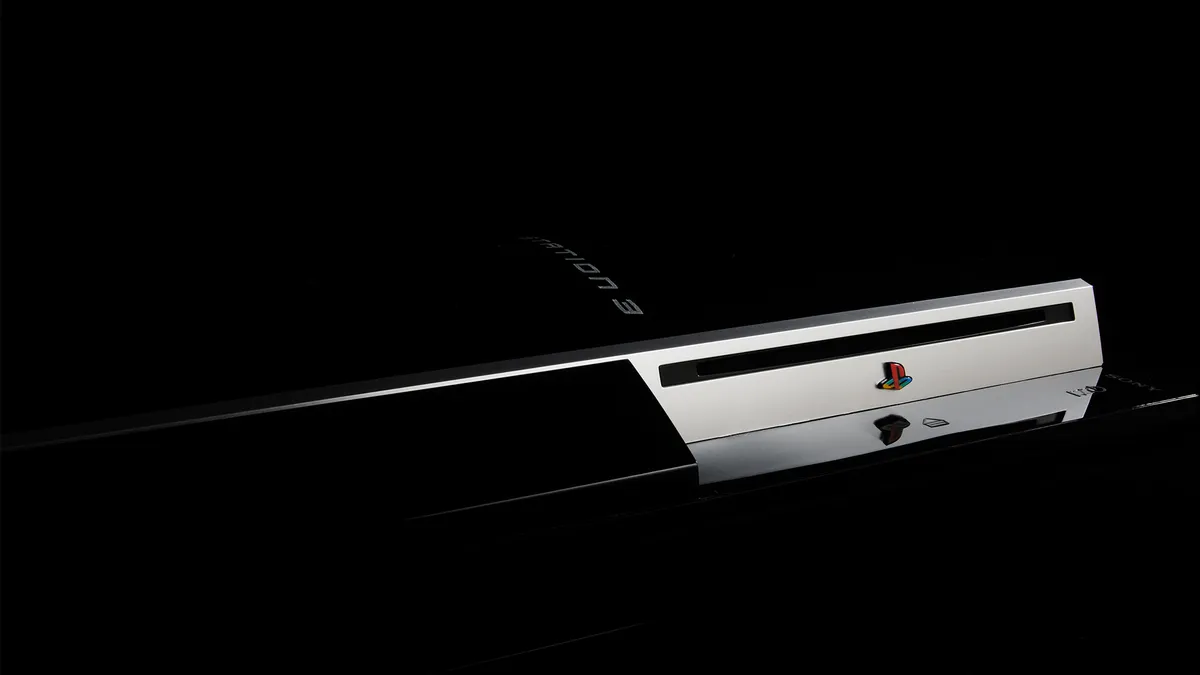
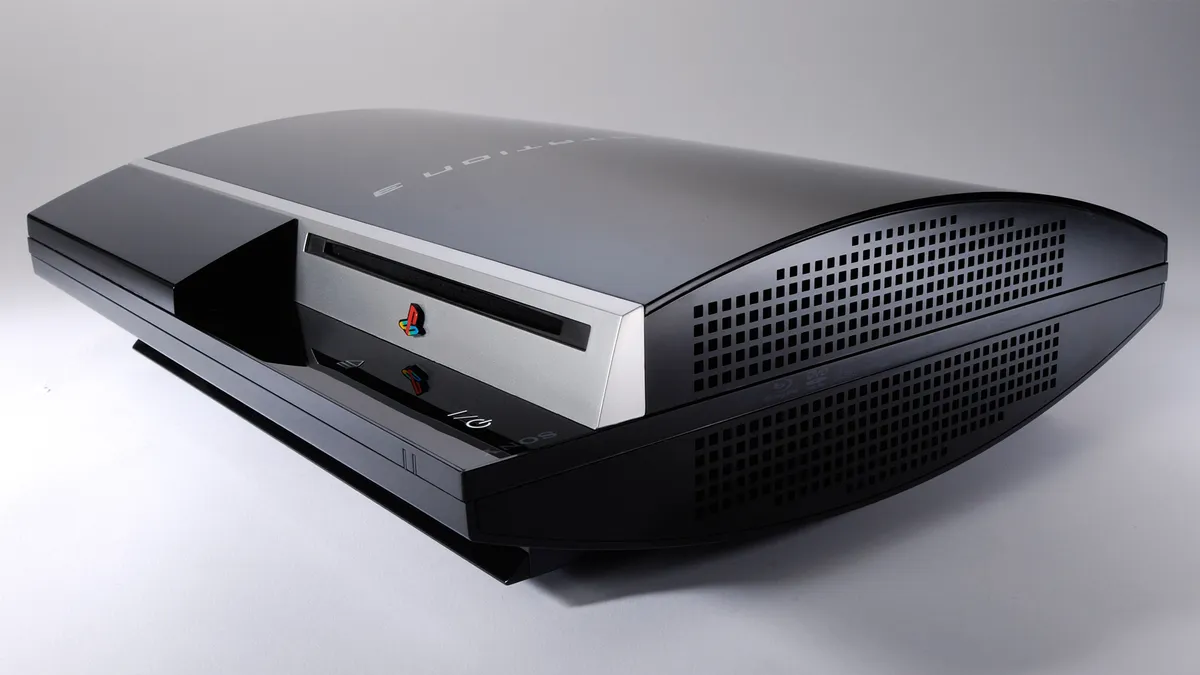
PlayStation 3 matched a Cell with Nvidia's Reality Synthesizer graphics chip and the promise of an HD future. It was a complex, expensive solution to the problem of following PS2. The original 2006 PS3 model now feels big and heavy (although it's not as big as a PS5), but at the time its unorthodox design felt appropriate for an entryway to a new generation of gaming.
The moment: What did Edge have to say about the reveal of the PS3?
Edge magazine went to E3 in the summer of 2005 to watch Sony launch the PlayStation 3. "Sony shows Microsoft how to launch a console" said the cover line, but it was Microsoft that had kicked off the new generation of consoles in 2005, with an MTV Xbox 360 special ("amateurishly overproduced," apparently) that aired before E3. "We're ready. Game on," said Xbox's J Allard. The crowds in LA were expectant, then, so Sony had a lot to prove. Fortunately, it had a lot to show off.
The PlayStation 3 of 2005 was slightly different to the one that launched at the end of 2006. The most obvious variation was in colour, with blue and silver exteriors the most commonly spotted. Then there's the controller. After two generations of DualShocks that looked broadly similar, Sony was in the mood for a change: what became unofficially known as the Banana Controller carried all of the expected PlayStation hallmarks but also looked as if it might come spinning back if you threw it hard enough. It wouldn't make it beyond the prototype stage.
The insides of the PS3 were different, too. Sony's ambition was for a console twice as powerful as the Xbox 360 (218 gigaflops against Microsoft's 115, to use the meaningless comparison metric du jour) and able to output to two HD displays simultaneously via twin HMDI ports. There was a media card reader, backwards compatibility with PlayStation and PS2, six USB ports, 50GB Blu-ray compatibility, support for seven wireless controllers connected at the same time, and a new, HD EyeToy. And while Microsoft was still using Apple Power Mac G5 devkits for Xbox 360, these machines actually existed in some form.
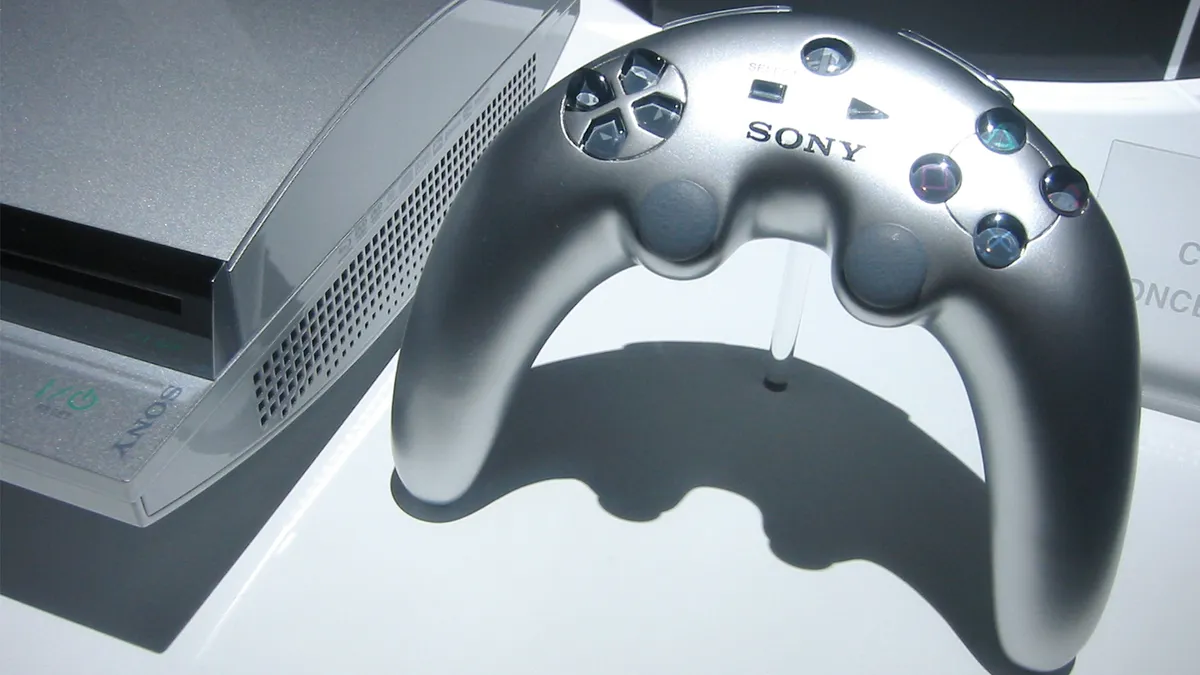
Phil Harrison, executive vice president of development at Sony Computer Entertainment Europe at the time, had one thing he wanted to make clear in Edge 151 (July 2005): "Before you ask, the PS3 controller you saw at the conference is not final."
With that out of the way, he was able to get down to enthusing about PS3: "The generation – and I hate to use this term – tipping point, when you go from whatever the current generation is to the next generation, is not actually when the machine is introduced at retail, it's when the machine is introduced to the development community."
So here we were, at a tipping point. With all demos running on actual PS3s ("We actually had multiple hardware units backstage because obviously we're talking about preproduction hardware and software, and it would be a brave man indeed who ran everything off one kit," said Harrison), it was easy to get swept along with Sony's bombast. Spider-Man 2's digital recreation of actor Alfred Molina was "almost indistinguishable from the real thing at a quick glance". A quick glance at the same image today reveals goldfish-like staring eyeballs and a distressing moistness, more in line with what Edge described as "a sinister kind of hyperrealism", but these were more innocent times.
While Epic's realtime Unreal Engine 3 demo featured Gears Of War-style hulks that would never grace PS3, Sony's most charming demonstration of its new console's power consisted of yellow ducks falling into a bath – the sort later seen in Super Rub A Dub. It emphasised Sony's playful side and contrasted well against Microsoft. "We've never been driven by what a competitor is doing... we're always going to be able to do our own thing," Harrison said.

"Edge would go on to describe Resistance: Fall Of Man as "the most credible PS3 launch title", a monster-blasting FPS with clever weapons showed that it could take Microsoft on at its own game"
Edge would go on to describe Resistance: Fall Of Man as "the most credible PS3 launch title", and while the dean of Manchester cathedral might disagree, a monster-blasting FPS with clever weapons showed that it could take Microsoft on at its own game and had its eye on the mass market for PS3 at a time when PS2 was still shifting units and PSP was about to launch.
The PlayStation 3 console design, compared to the black monolith of the PS2 and the svelte tininess of its Slim successor, also invited comment. "Not as immediately amenable to the eye as previous iterations," said Edge, whose correspondent might have been holding back somewhat. The machine's unique aesthetic proved divisive, but Harrison noted that to many users the console would be out of sight anyway: "By very nature of its Bluetooth connectivity, [PS3] can be a private device – it can be hidden away: you could even have it in the cupboard," he said. It's not like it's going to overheat, is it?
At the time of its unveiling we wouldn't know precisely how difficult PS3's unique internal architecture would make life for the game development community, resulting in an uphill early battle against Xbox 360, but there was certainty at least around the console's proposed price for the North American market: $499 for the 20GB "base" model, and $599 for the 60GB version. Stacked against Xbox 360's $399 price tag, Sony's launch pricing was very hard to swallow.
The inside story
"Honestly, I don't think Sony was concerned enough about Microsoft as a competitor. In Japan, nobody cared about the original Xbox and nobody cared about Xbox 360 either."
Phil Harrison
Phil Harrison, head of Sony Worldwide Studios at the time of PS3's launch:
"Honestly, I don't think Sony was concerned enough about Microsoft as a competitor. In the office in Tokyo, it was as if Microsoft didn't exist, whereas in the US and Europe, clearly they were going to be a vigorous competitor. But in Japan, nobody cared about the original Xbox and nobody cared about Xbox 360 either. And so there was a slightly distorted view of how important and vigorous a competitor Xbox was going to be.
"When we saw the Wii I didn't think of it as a games console, I thought of it as a different experience for the family in the home. Still unbelievably powerful, not powerful from a technical point of view, but powerful from a market point of view. And I thought what Nintendo did was really clever, to almost address a completely different market than PlayStation and Xbox. And I think Nintendo did exactly the right thing, and all credit to Nintendo for the success that it had.
"I'm not sure [Sixaxis and later Playstation Move] was a response [to Wii] so much as recognizing that developers would want that as part of the design and creative tool chest – being able to have motion control. It was a relatively low-cost addition to the PS3 controller, but it would be there for the duration of the generation for any developer who needed it to have access to it. So it was maybe a little bit of an insurance policy against the future.
"[The] point about the success of PlayStation 2 is a good one. You know, that generation went on pretty much a year longer and at a higher price point than any of us expected.

"Kaz Hirai had the unfortunate job of announcing [PS3's] price point [$499/$599] at E3, and I think the collective gasp from the audience nearly propelled him off the stage."
Phil Harrison
"Kaz Hirai had the unfortunate job of announcing [PS3's] price point [$499/$599] at E3, and I think the collective gasp from the audience nearly propelled him off the stage. It was an unprecedented price but it reflected, I think, two important things. One was the extraordinary cost of building the machine – it needed a higher price. And also at the time, although this got changed, there were some components, particularly relating to the Blu-ray player, which were so difficult to make and so scarce that if we had priced it more aggressively, we couldn't have kept up with demand.
"[Regarding early PS3 'demos',] when you're launching a new console, you're trying to excite the world with the future of what the content and games are going to be about on that particular platform. And while it's true that Killzone and MotorStorm were pre-rendered videos, they were all done at target spec. One of my colleagues mis-spoke and said that they were all real-time, and when those videos were shown, that was not the case. But when the games actually released, if you compare the games to that footage, they're pretty close.
"I think, from an engineering point of view in Japan, there was perhaps an element of belief that the success of PS1 and PS2 allowed Sony to go and invent a brand-new computing paradigm. And that was behind the formation of an organisation called STI, which was a joint venture between Sony, Toshiba and IBM. And they designed and built the Cell processor with a vision that it was going to be used in a wide range of computer and server and professional and home personal products. The vision never panned out as intended, but a lot of money and energy and resource was put together. There was a huge team that was built – predominantly in Austin, Texas, but also some in California – to really build out this idea of the Cell processor, ideally as a competitor to Intel's dominance of the processor market at the time. But it didn't pan out as planned, and I think that maybe it took people's eyes off the ball.
"We definitely made it very difficult for most developers and publishers to get the most out of the machine at the time. By this point I'm running Worldwide Studios, so I'm almost exclusively focused internally on building games and technology with our own studios and acquiring studios and starting studios, so I was less involved in the support externally of developers and publishers at that time, but we recognized that there was a mismatch between the tools and technology that we were building for ourselves and the kind of technology that developers had at their fingertips externally.
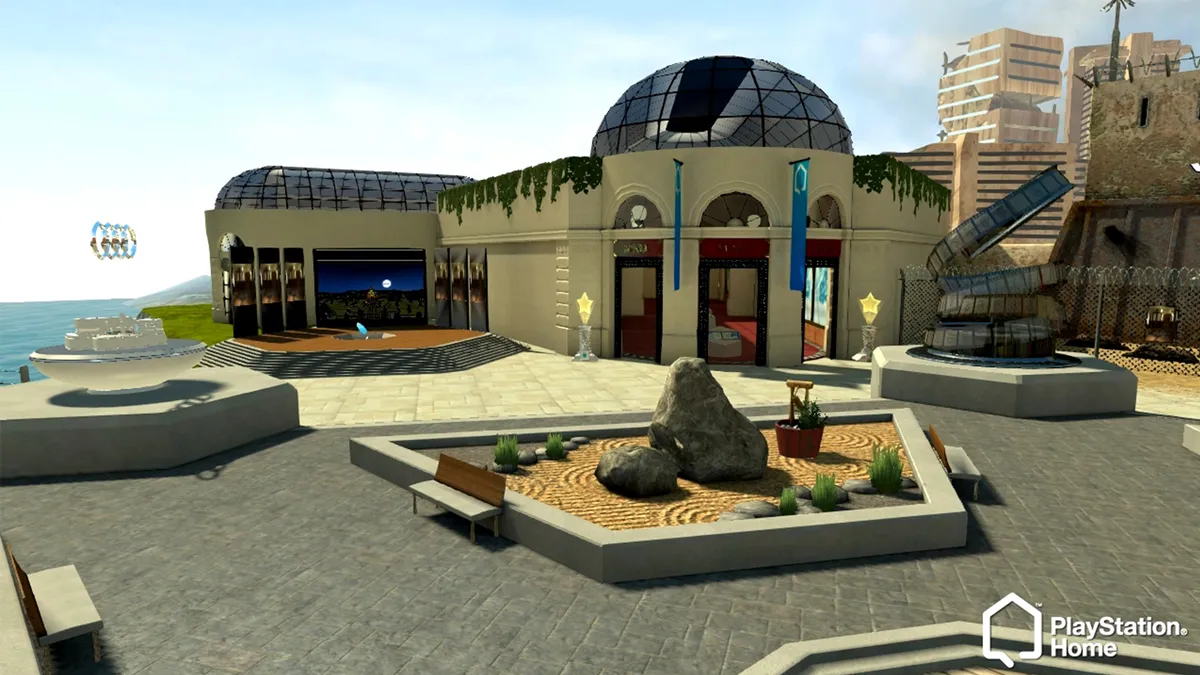
"I think that what the team did with PlayStation Home was foundational for a lot of things that we see in games today, where community and expression and communication are wrapped around the game experience."
Phil Harrison
"So we actually made available some of the key technical advances that we had invented internally to help support third-party studios, and that helped. But it didn't get around the fact that the Cell architecture was too complex, and that the toolchain just wasn't sophisticated enough to overcome the fact that it was very unique. I think that was one of the things that was corrected for the development of PlayStation 4, which was to make the voice of the developer have a much stronger and more prominent seat at the table as the new machine was being architected.
"[Turning PS3 around] was a combination of exclusive content and getting the manufacturing and challenges of the supply chain resolved on the machine itself, to produce a slimmed-down version at a much cheaper price. It also involved the investments that we had made a lot earlier in World Wide Studios starting to bear fruit. And, although I had nothing to do with it – I observed it from a distance – Sony also got themselves sorted out when it came to online, becoming more credible in the area of online technologies and services around PlayStation Network, and they really started to catch up with Microsoft in that regard.
"One of the great privileges of working in a first-party role is that you can create things that don't necessarily have to make sense economically or from a business point of view, but are great beacons and lighthouses for the future. And I think that what the team did with PlayStation Home was foundational for a lot of things that we see in games today, where community and expression and communication are wrapped around the game experience. I have two sons, and watching them play Fortnite, for example, I can see how some of the things in it – user-generated content, self-creation – are themes and ideas that we teased out. I'm not saying Home was Fortnite, I'm not making that statement, but there are points where you can draw a line from work that was done in Home and you can then see it show up in other games throughout the past five or ten years.
"I think that's exciting. It's always nice to be able to look back at seminal bits of work, whether it's something like EyeToy or SingStar, which created external interfaces for games, or whether it's high production values and things like Uncharted, or whether it's Home. But I don't disagree that [Home] was probably a little bit too early. And I also don't think it was followed through to its fullest extent. I think, unfortunately, when I left, it kind of lost its air cover a little bit."
What happened next?
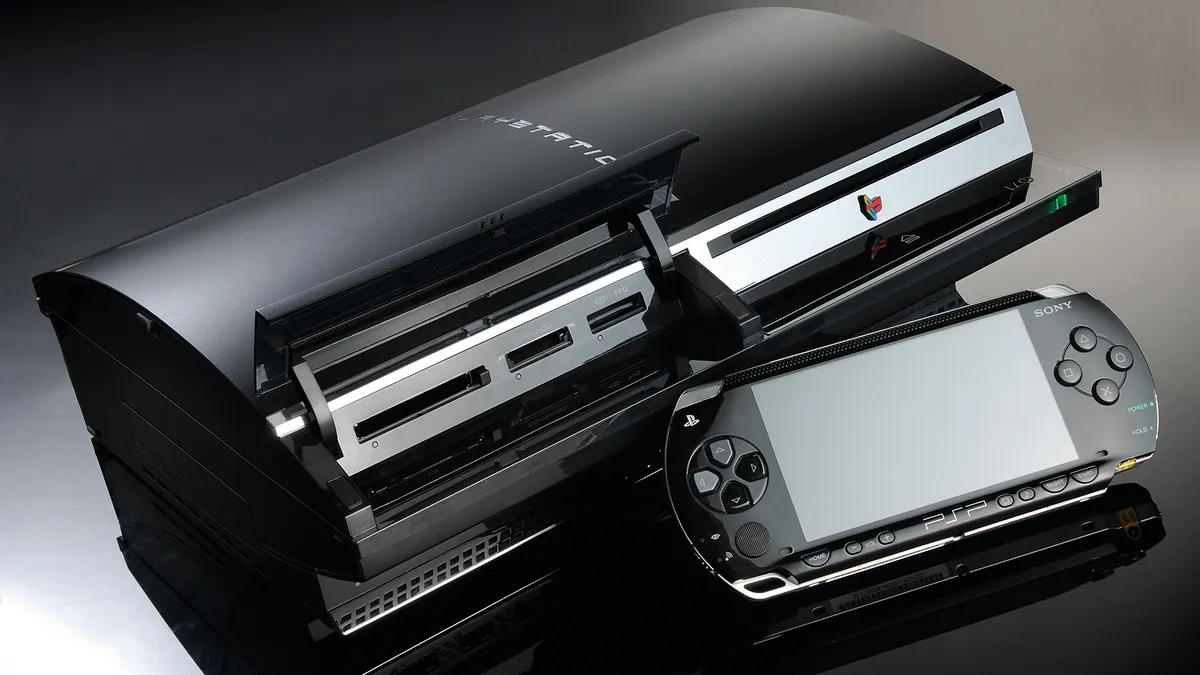
The first PlayStation upended the console wars, at one stroke sweeping aside the old guard of Nintendo and Sega, and broadening the audience for videogames. PlayStation 2 took it to an unprecedented level of success, and to this day remains the biggest-selling console in history. But Sony didn't have everything its own way: the PSP launched in 2004 and, though by most metrics a success, would eventually be outsold nearly two-to-one by Nintendo's DS line.
Nevertheless, Sony was the undisputed king of the home console market. This may have bred a little over-confidence within certain parts of the company, but the Playstation 3 story is not just about the decisions that Sony made either. It faced two genuinely great competing products, one of which blew the traditional next-gen paradigm of 'bigger, better, faster' out of the window.
Xbox 360 beat PlayStation 3 to market by almost a year, becoming the first HD console in the process, and launching with a slick, revised version of Xbox Live. Nintendo had re-focused itself on new kinds of gaming experiences and, rather than competing directly against Sony and Microsoft, was fomenting Revolution. Wii would launch within a few weeks of PlayStation 3, and its instant and ongoing success demonstrated consumer appetite for something genuinely different.
It's easy enough to criticise Sony's approach in that initial period. The launch PS3 was over-priced and over-engineered, and it was a hard sell to push its dedicated Cell architecture at a time when every third-party developer in the world wanted to work cross-platform as efficiently as possible. Activision boss Bobby Kotick went as far as to hint that his company might stop supporting the platform. In those early years, Sony was in the difficult position of having to defend third-party titles that ran at 30fps on PS3 but 60fps on Xbox 360. A certain part of the gaming audience has always been obsessed with tech comparisons, but the insatiable modern thirst for pixel-by-pixel teardowns has its origins here – not least because there were some gruesome comparisons to be made.

"Sony battened down the hatches, doubling down on the console's exclusives, while improving aspects such as PlayStation Network and the PS3 development environment"
In response, Sony battened down the hatches, doubling down on the console's exclusives, while improving aspects such as PlayStation Network and the PS3 development environment. In the year leading up to launch, even Sony's internal teams were scrambling to work out the console's unique architecture while also developing games, and support for third-party studios was limited. Getting over this initial hump took a long time, but it felt that PS3 had turned a corner by the time of the introduction of the so-called Slim model of the console in 2009.
The cheaper and more attractive hardware helped enormously, but what made the difference was that PlayStation itself was firing on all cylinders by this point. The PS3 launch lineup is arguably the weakest in PlayStation history, and Xbox 360 took full advantage of being first to market, but over time Sony's first-party studios produced quality exclusive after quality exclusive, as well as genuinely visionary titles such as LittleBigPlanet, along with the ahead-of-its-time online environment PlayStation Home. Sony execs such as Harrison were always keen to greenlight investments in unproven areas, reinforcing a long-standing philosophy that would later lead to the introduction of PlayStation VR and, today, PS5's DualSense controller.
By the generation's close, PlayStation 3 had – just about – outsold Xbox 360. The thin margins mean that it still counts as something of a win for Microsoft, which had become a competitor of equal stature at just the second time of trying. Nintendo, meanwhile, outsold both and would continue in its own direction. But PlayStation 3 had been saved – and, crucially, a lot of important lessons had been learned in the process.
Edge Presents Game Changers returns tomorrow at 5pm GMT / 1pm EDT and you can subscribe to Edge Magazine for only $2.77 an issue.

