 Join The Community





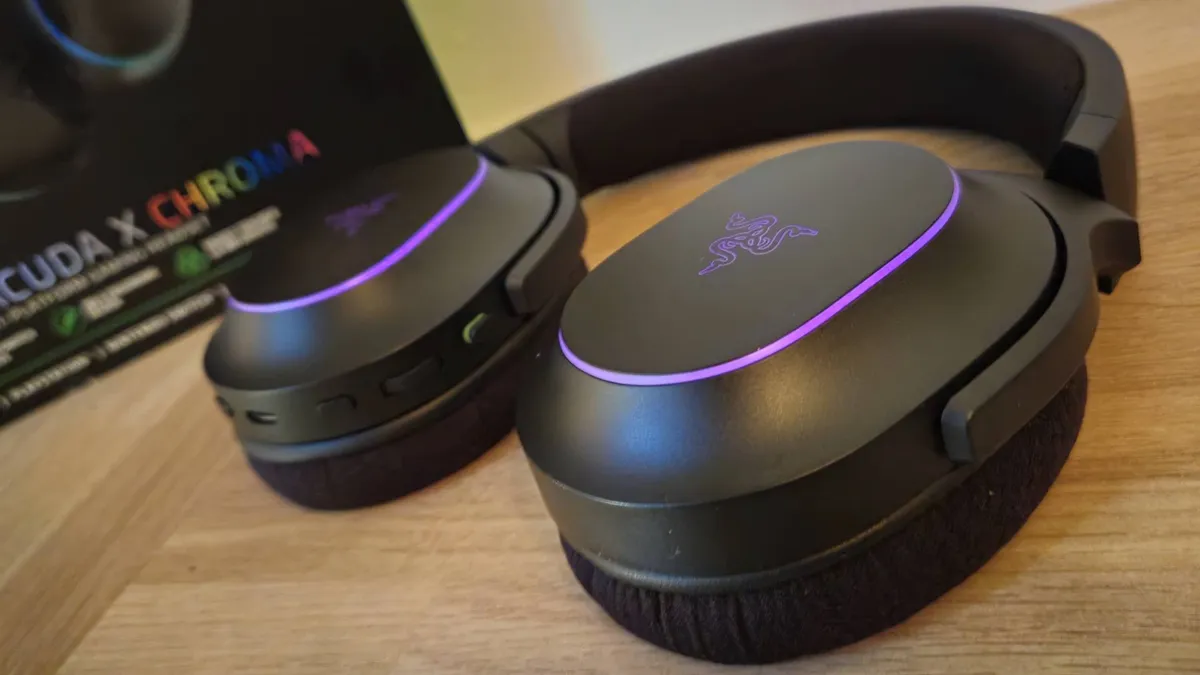
If you've ever found yourself window shopping online and deciding between which of the best gaming headsets you should be picking up, it's likely you've seen 7.1 surround sound listed as a feature once or twice on older cups. It's a pretty common sight to see if you're looking at budget-friendly Razer cups in particular, as everything from the Razer Barracuda X Chroma to the Razer Kraken V4 X includes the audio tech, which makes audio sound its literally surrounding you.
7.1 surround sound refers to the sound configuration that is made up of eight channels of audio. It's found not just in headsets, but also home sound systems, and can seriously up the immersion factor and sound quality of your favorite PC, PS5, Xbox Series X/S, and Nintendo Switch 2 games. To make your life easier, I'm here to explain how 7.1 surround sound works and what it means for your future gaming adventures, so you can be as informed as possible before picking up a brand new pair of cups.
What is 7.1 surround sound?

7.1 surround sound is a sound system that uses several channels to deliver audio that appears to be coming from various directions. The system uses eight channels in total, from a center channel, front left, front right, side left, side right, rear left, rear right, and a subwoofer aimed at supporting bassier low-end sound frequencies.
This contrasts with 5.1 surround sound, which utilizes 5 channels and a subwoofer, and 'stereo sound', which only utilizes left and right channels. In real life, sound doesn't just come from the left or right, and instead persists all around us, and so having the eight channels of sound means we can create an audio scenario that sounds more like reality. Transposing that to a gaming scenario means that approaching footsteps of enemy team members in games like Counter Strike 2, which are coming from the rear left, can and will actually sound like they're coming from the rear left.
There are two types of 7.1 surround sound: virtual and true. Virtual 7.1 surround is achieved by tech that simulates the eight-channel sound setup, and what you're typically going to find in a gaming headset. The site HeCate Gaming states that "advanced algorithms process the audio to mimic the perception of sounds coming from different directions" to emulate the 7.1 surround sound. Meanwhile, True 7.1 requires the use of more audio drivers to create a more authentic and truer version of the sound.
What are the benefits of 7.1 surround sound?
Having 7.1 surround sound at your disposal in a headset can be really helpful, especially where the best FPS games are concerned. Firstly, the sound system can increase the immersion of your games, as audio coming from different directions emulates what it's like to hear things in the real world.
The howling of the wind when you step outside can be heard spiraling all around you, and so having in-game wind sound almost as identical can bring PC, PS5, Xbox Series X/S, and even Nintendo Switch 2 titles to life and make it easier than ever to get lost in the stories of everything from FPS titles to RPGs. Not to mention that 7.1 can also give you a wider spatial awareness of what's going on around you and the character you're playing.
For example, Fortnite supports 5.1 and 7.1 surround sound, and being able to pinpoint the exact location of bullets whizzing by can indicate where other players are, or are about to be. I've relied on this in headsets like the Razer Barrada X Chroma, and it's allowed me to steer clear of fights I wasn't prepared for, and take down others to claim that satisfactory Victory Royale.
7.1 surround sound vs spatial audio - what's better in 2026?
The next step up from 7.1 surround sound is spatial audio, with Dolby Atmos being the most highly recognized type you'll come across. Dolby Atmos takes the 7.1 and 5.1 surround sound systems and adds heights and further channels to the mix to further develop and improve the immersion factor and audio quality.
You're more likely to find mid to high-range modern headsets equipped with some branded form of spatial audio, from the inclusion of Sony's Tempest 3D in the best PS5 headsets, including the SteelSeries Arctis Nova Pro Wireless, to THX Spatial Audio, which is used by the best Razer headsets like the Razer Kraken V4 Pro or the Razer BlackShark V3 Pro.
As the resident gaming headset reviewer of the GamesRadar+ Hardware team, I've spotted more modern headsets equipped with some form of spatial audio over the years. Like with all tech, the more years that pass, the more accessible it gets, and you're more likely to see it incorporated in brand new cups than 7.1 surround sound. Honestly, either is going to be beneficial for creating a more real and immersive gaming experience, but spatial audio is technically better. It enhances the eight channels of 7.1 and adds extra, precisely placed audio channels to create a 3D soundscape.
When it comes to choosing the best headset for your needs, spotting either 7.1 surround sound or spatial audio amongst its list of features is a green flag. In the end, what's accessible to you will depend on the console you're using, what games you play, and where your budget lies. If you pick up an older and more budget-friendly model, you're likely to have access to 7.1, but brand-new mid to high-range pairs are going to have spatial audio in their corner. Any extra immersion, 7.1 surround sound or otherwise, is worth the purchase.
I've rounded up the best Nintendo Switch headsets, the best PS5 headsets, and the best Xbox Series X headsets for great-sounding cups if you're after a more immersive sound experience.

You must confirm your public display name before commenting
Please logout and then login again, you will then be prompted to enter your display name.
