GamesRadar+ Verdict
The PDP Riffmaster guitar controller has reawakened Guitar Hero nostalgia in many a gamer in recent years. It's been over a decade since that franchise launched a new game, but with modern alternatives like Clone Hero and Fortnite Festival now in the mix, the Riffmaster has been one of few controllers to provide people with a way to play them. There are some excellent quality of life benefits present in PDP's axe that propel things forward from yesteryear, but with a lacklustre aesthetic versus new competition, a hollow build quality, and a parent brand that's made it more expensive since launch, the Riffmaster feels as though it's missing a rock god personality.
Pros
- +
Multiple QOL benefits from older Guitar controllers
- +
Foldable design
- +
Fret buttons feel excellent
- +
Plays great
Cons
- -
Hollow build quality for the money
- -
Strumming bar could be clickier
- -
Fairly plain design compared to the competition
- -
No official face plates (still)
Why you can trust GamesRadar+ Our experts review games, movies and tech over countless hours, so you can choose the best for you. Find out more about our reviews policy.
Having been born in the late 90s, I, like many a gamer, have a library of memories from the Guitar Hero days. In fact, I'd argue gaming franchises from my upbringing don't get much more iconic than Guitar Hero and Rock Band. These were household names that transcended the typical gaming audience. But while we'll remember the iconic soundtracks and high score challenges first, none of it would have been the same without the bespoke gaming controllers that we played them with.
It's now 2026, and although nostalgia has pulled pretty much identical rhythm games back from the dead (Fortnite Festival and Clone Hero), gaming peripherals have moved on a lot since the 2000s, and it wouldn't be right for modern Guitar controllers not move with the times. PDP understood this when it produced the Riffmaster Guitar Controller, because it uses clever quality-of-life upgrades to make the annoyances of these peripherals less grating.
Design & Features

I said it back when I previewed the Riffmaster in the months leading up to its launch, but for its price, I really do wish some higher-quality materials were used in forging it. The controller's fret board feels great, with a sturdy build that helps shredding your way through a guitar solo feel epic, but the body of the guitar is this plastic, hollow, and really unimpressive chassis for something so pricey. Combine that with a really plain black and grey design that hasn't been built on at all since launch, and you've got something that feels like it's missing the sort of badass rock god look this type of accessory needs.
The surface of the Riffmaster's body is glossy and reflective, which time is not kind to. As I'm sure you'll know, sessions in higher difficulties in games like Clone Hero can get pretty sweaty, so you'll find smudge marks all over your pricey controller after not too long playing with it. I've also found that keeping it clean from dust is particularly tricky. And again, because it's a glossy surface, if you leave it to sit for a few months, it'll become sort of sticky and in need of a deep clean - not ideal for such a trophy controller, you'll probably want to bring it out to show friends if they come over.
Thankfully, there are practicalities in the Riffmaster's design that save it. First of all, there's a foldable neck, so if you ever struggled to store away your Guitar Hero controllers in your elder days, you might be free of some clutter this time around.

There's a removable faceplate (which I have more to say about later), and underneath, a space for you to store your controller's wireless dongle. This is a massive win - I wouldn't like to imagine how many Guitar Hero controllers are still in working condition today, but their wireless receivers have been lost to the ether. Going back to that build quality though, the swappable face plate snaps off so jarringly you feel like you're breaking something - it's just not the sort of intuitive design you'd hope for in a premium peripheral.
It was always a challenge navigating menus with older Guitar controllers, so PDP put a handy thumbstick on the back of the fret board. You'll also be able to navigate menus with the D-pad on the guitar's main body.

To add a bit more style for rocking out during solos, there's a secondary row of fret buttons at the bottom of the Riffmaster's neck. These are smaller than the regular buttons up top, which might even make playing on higher difficulties a bit easier since your fingers have less distance to travel between the orange and green buttons. These aren't the touch pads from the later Guitar Hero controllers though, they're physical buttons which I think are so much better and a lot more useful.
In terms of connectivity, there's a version of the Riffmaster for PS5, Xbox, and Nintendo Switch / Switch 2. I've had no trouble using my PS5 version on PC to play Clone Hero, but I have heard that the Xbox version has some compatibility woes on PC, so maybe look into this further to ensure you get the right version for you and your setup. Where you'd usually plug an amplifier into an electric guitar, you'll find space for a 3.5mm headphone jack, which will give you the ability to rock out silently if need be. The Riffmaster charges for wireless play via USB-C.
The battle of the bands
Something to note before you make your buying decision is that the PDP Riffmaster was originally made by, go figure, PDP. PDP is the brand that made tonnes of great budget gaming peripherals, and spawned the Victrix brand you'll know and love if you've shopped around for one of the best PS5 controllers.
Since the Riffmaster launched, however, PDP was acquired by Turtle Beach, and I fear that's been slightly detrimental to the life of this guitar controller.
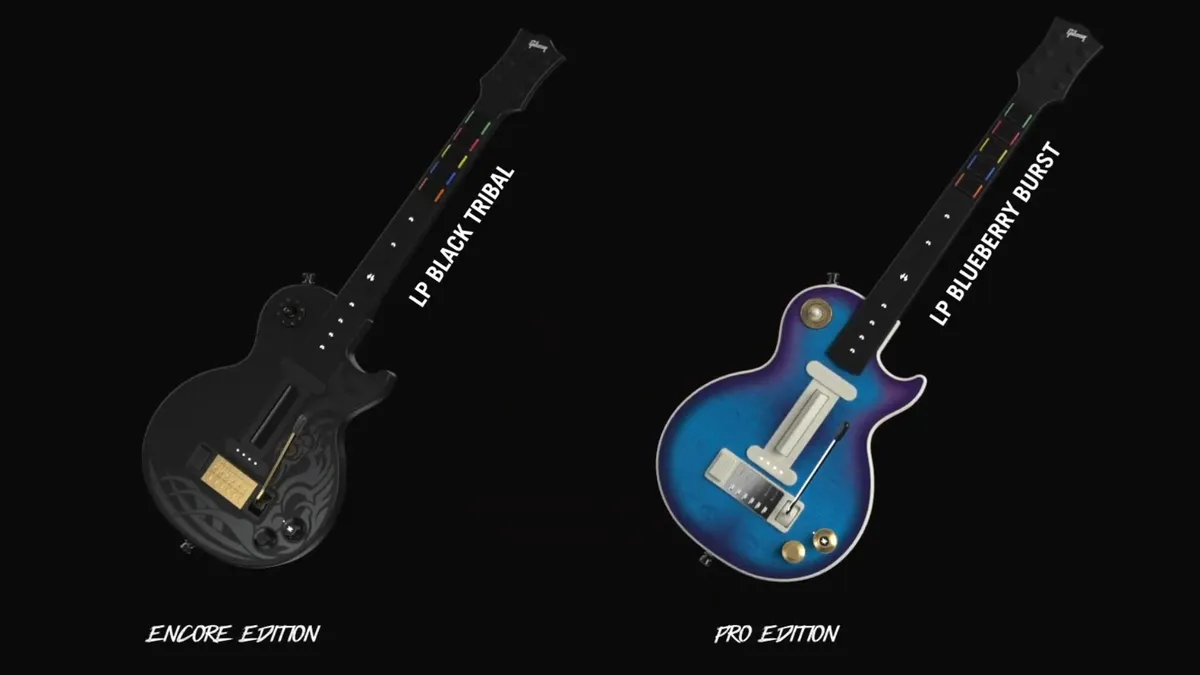
When the Riffmaster was revealed, a fairly big part of its appeal was its detachable faceplate. It definitely seemed like there were plans to launch an ongoing series of collectible aesthetic panels, and it seems like Turtle Beach has totally abandoned that idea. This is a real shame, because, versus the CRKD Gibson Les Paul, which has three different colorways and counting, the Riffmaster now seems like a total plain Jane, which is not what you want for a peripheral that's supposed to help you dip into your rock star fantasies.

The other thing that really irks me is that the Riffmaster's price has increased since PDP was acquired. This is not an unfamiliar narrative since Turtle Beach got hold of the wider catalogue of PDP's products. I noticed that the Victrix Pro BFG's price also increased after PDP was bought over, and with the new "Reloaded" model (which is entirely under the Turtle Beach name), it's sitting at a more expensive price point.
When I did my preview of the Riffmaster, PDP had told me the price was going to be $129.99 / £129.99, which it did launch to. But if you check Amazon now, you'll see a price of $149 / £149 with frequent discounts down - likely because even the original price felt too much to ask and people are probably opting for a cheaper alternative from CRKD.
All that to say, when the current Guitar controller market is hotly contested between only a couple of brands, it might be worth taking note of which of them you're really buying from.
Performance

For all my gripes with the Riffmaster and its new parent brand, it's kind of hard not to like it if you were a fan of these rhythm games in a past life. It turns out, something that's capable of channelling this much nostalgia is pretty good, really. The Riffmaster gets the job done, and feels pretty authentic if you aren't looking for nitty-gritty points of comparison like I am.
Something that's always bothered me slightly with the Riffmaster though, is that its strumming bar doesn't feel very tactile. Back in the day, these controllers had slight microswitch mechanisms in them, which meant when you moved the strumming bar up or down, you'd hear and feel a click that gave you immediate feedback. The Riffmaster doesn't have that, and it feels like that instant gratification from playing each note is missing.

As is, there's no functional problem using the strumming board - it's not like it's hard to tell whether or not you've played a note, but beyond all their personality, these controllers are for rhythm games; I think the lack of a click each time you play a note does present a bit of a drawback in the game feel department.
But as I mentioned earlier, the fret buttons have a really premium actuation to them. Every time I pick up the Riffmaster to play a song or two, it takes me right back to the days of playing Guitar Hero Live with that franchise's swan song controller. The frets on that guitar were horizontally level with the physical fret board, not raised buttons on top that had a different texture. This makes it feel more accurate to a real guitar, but also results in less pressure needed to push them down. If you know your Guitar Hero sessions ran long in the good old days, you'll thank PDP for this design, because you'll feel less of a strain in your hands and wrists from all those quick Dragon Force riffs. There's no sense that you have to press really hard with the Riffmaster to register each note, which is a great bonus.
Should you buy the PDP Riffmaster?

There are a lot of minor gripes I have with the Riffmaster. Turtle Beach doesn't seem too bothered about supporting it with new designs or faceplates. The price is higher than when it launched, and than the competition. And if I'm honest, I'm not sure the build quality overall really warrants that.
I feel like there's a lot of missing character and tactility in this controller that does sort of make it feel like an attempt to profit on nostalgia rather than offering people a really authentic timepiece to add to their gaming collection.
All of that said, the Riffmaster plays pretty well in the games it's designed for. If you can get it at a discount, you'll find lots to enjoy here. Similarly, if you know you'll get a lot of use out of it, this is an easy recommendation, but now that CRKD and a few other brands are tuning up their own bands, I'd maybe consider cheaper (and potentially better) alternatives first.
How I tested the PDP Riffmaster Guitar Controller
I've been using the PDP Riffmaster for all of my nostalgic rhythm gaming sessions since before the device launched in 2024. I've used it for longer sessions, I've covered its discounts, and watched its price fluctuate as its parent brand has changed. While I'm yet to go hands-on with its competition, I've covered the controller market and closely compared prices and features between models.
For this review, I mainly tested using Clone Hero on PC, but I have tested the Riffmaster using Fortnite Festival and Rock Band IV on PS5.
For more on how we test controllers, take a gander at the GamesRadar+ hardware policy.
Not done reading? Take a look at the best Xbox Series X controllers, the best Nintendo Switch 2 controllers, and the best mobile controllers.

You must confirm your public display name before commenting
Please logout and then login again, you will then be prompted to enter your display name.