





These days, The Wind Waker is remembered as one of the best Zelda games ever made, with gorgeously expressive cel-shaded graphics that are still impressive to this day. The vibes were very different ahead of the game's North American launch in 2003, when many fans of The Legend of Zelda were taking to forums to complain about this new "kiddie" visual treatment. It seems that's why Eiji Aonuma decided to transform The Wind Waker 2 into what eventually became Twilight Princess.
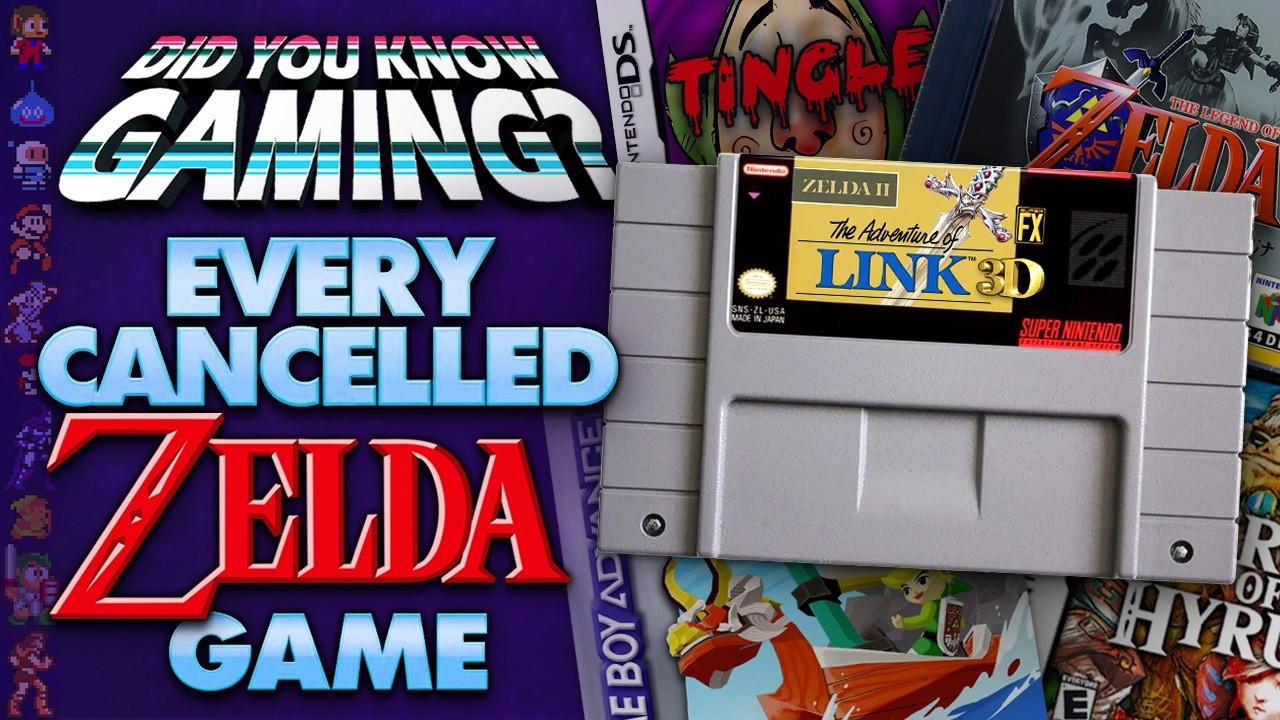
Aonuma discussed this during a Game Developers Conference talk way back in 2007, but I only became aware of the story thanks to a recent Did You Know Gaming video going over canceled Zelda projects. And hey – I figure if it's new to me, it might be new to you too, dear reader. Japanese players had begun to transition away from the hobby in the early '00s, Aonuma argues throughout the talk, calling this phenomenon "gamer drift."
"At one point, I had heard that even Wind Waker, which had reached the million mark in sales, was quickly losing steam, and that things were sluggish even in North America, where the market was much healthier than in Japan," Aonuma said. "I asked [Nintendo of America] why this was. What I was told was that the toon-shading technique was in fact giving the impression that this Zelda was for a younger audience, and that for this reason, it alienated the upper-teen audience that had represented the typical Zelda player."
The Wind Waker 2 was set to use "a similar presentation" to the previous game, and Aonuma worried whether it "was something that would actually sell" even outside of Japan. "That's when I decided that if we didn’t have an effective and immediate solution, the only thing that we could do was to give the healthier North American market the Zelda that they wanted."
This decision to specifically alter Zelda to appeal to the North American market might sound strange given the recent comments we've heard from Shigeru Miyamoto. In a recent Famitsu magazine interview (via VGC's machine translation), he argues that "if you try to base your work on things that only seem to have broad appeal, you end up with something generic – something where you can’t tell who actually made it – and that kind of thing actually lacks global strength."
It seems, however, that the decision to create a more grown-up visual style for this new game actually ended up solving problems for the developers. "The proposed setting for The Wind Waker 2 was not on sea, but on land," according to an interview with Twilight Princess art director Satoru Takizawa, printed in the book The Legend of Zelda: Art & Artifacts.
"The desire to depict Toon Link on a horse riding around the great plains was great; however, with his small stature and short arms and legs, it would have been difficult to make him look good on a horse," Takizawa continued. "It wasn't like we could create an adult version of Toon Link. And that was about the time we heard that people were waiting on a realistic-looking Zelda game again."
With all this in mind, Aonuma explained that, near the end of 2003, he "went to Miyamoto and said, 'I want to make a realistic Zelda.' Miyamoto was skeptical at first – I was so focused on changing the look of the game as being the solution we were looking for without coming up with a breakthrough in gameplay. And he advised me that, 'if you really want to make a realistic Zelda, then you should start by doing what you couldn’t in Ocarina of Time. Make it so Link can attack enemies while riding on his horse using the Wind Waker engine, and make your decision based on how that feels.'"
So yes, the decision to move Twilight Princess to a more adult visual style was a nod to the preferences of North American gamers at the time. Amusingly, Takizawa noted the popularity of an unnamed "epic fantasy movie" – obviously the Lord of the Rings – as an indicator of the global market's interests. But the switch in art styles also helped make one of Twilight Princess's key gameplay innovations, horseback combat, possible.
"Four months later, development had progressed to a point where Link could swing his sword in battle against enemies while riding on his horse in a realistic-looking world," Aonuma explained. "When it was announced with a surprise trailer at the 2004 E3, it received a standing ovation by the media audience. This was a very exciting moment for us, but we were still very much in the early stages of converting the game into something more realistic. We knew that we had to create a Zelda game that would live up to the expectations of fans in North America, and that if we didn't, it could mean the end of the franchise. But I also trusted the ability of the team, which was able to bring the game so far in just four short months."

