Join The Community





When the Fallout TV show landed on Amazon Prime, it felt like a celebration of all things wasteland. A lavish, often grotesque, adaptation that understood the tone, the music cues, the slow pan across irradiated America. It didn't look like a manifesto for the future of the series. It felt like closure for fans.
Still, spend a little time in the ruins and pay attention during Fallout season 2, and something else becomes clear: this isn't just an adaptation, it's a recalibration. The show doesn't simply revisit Fallout's past. It rearranges it. By narrowing down the chaos of branching game endings and decades of lore, the TV series has paved the way for something sturdier and more deliberate come Fallout 5... thanks to the return of The Enclave.
Retcon recon


There's many ways to wrap up the best Fallout games, each speaking to a different end result. In my New Vegas ending, the NCR is not in ascendancy. The Brotherhood isn't all powerful. The wasteland isn't stabilizing. Instead, quietly, almost politely, it hints at another force stepping back into frame while the other factions are squabbling.
The Enclave were supposed to be ghosts. In Fallout 2, they were the last gasp of the old United States government: oil-rig dwelling fascists clinging to purity and power. In Fallout 3, they returned as militarised remnants, technologically superior but ideologically fossilised, defeated again in spectacular fashion. Since then, they've lingered like background radiation.

Fallout season 2 puts them into a different role, reframing them not as a relic but as a patient faction waiting to claim the earth for themselves. While everyone else in Fallout is living in the rubble of civilization, the Enclave is biding its time in clean bunkers, while its pawns dress up in pre-war fashion and work menial roles. The Enclave, at least what we've seen from their facility near New Vegas in season 2 and the little tease of what looks like their headquarters, aren't surviving the wasteland but embedded in it.
They feel like a stable presence and that's important, because what the show also does, very deliberately, is destabilize everyone else. The NCR, once positioned as the closest thing the wasteland had to a functioning republic, is weakened. Not obliterated, but fractured. Its promise of democratic restoration feels brittle rather than inevitable, they have more weapons to wield than people to wield them.
The Brotherhood of Steel, meanwhile, is portrayed less as knightly stewards of technology and more as doctrinal hardliners with internal instability. They have power, mostly from their personal mechsuits, but not uncontested dominance. The Legion? They've got momentum now, unified by Macaulay Culkin and marching towards Vegas, but it's clear to see they'd fail to sustain anything even approaching real society.
Roads traveled

The Enclave's prominence isn't a wink to long-time fans. It's positioning.
Fallout season 3 is heading to Colorado, the setting of the canceled Fallout sequel Van Buren. It's not clear where Fallout 5 will be set, but it's easy to imagine power vacuums similar to those in New Vegas all across the mainland United States.
Historically, the Fallout games have thrived on power vacuums. Vault Dwellers and Couriers wander into regions mid-transition, where no single ideology has fully taken hold. Fallout (the TV show) is canon, so it's easy to imagine that the big bad waiting behind the curtain in Fallout 5 will be the Enclave, waiting to step out and seize things for themselves.
But they'll feel different. They won't be trying to exterminate humanity like they did in Fallout 2. No, expect it to be insidious instead. Not with a Liberty Prime analogue stomping across the skyline but with planning and the suggestion of a broader reach, extending far beyond just a single region.

Bethesda has always been careful with canon, particularly around player choice. The further the series moves from its isometric roots, the more it avoids explicitly validating one ending over another. The TV show doesn't have that luxury. It has to pick a direction. And in doing so, it has quietly consolidated the timeline. As it has tidied up, it's established a baseline canonical reality that a future mainline game can build from without wading into the swamp of every possible Courier decision.
That baseline is unstable, fragmented, and primed for a unifying antagonist behind the scenes, and it looks like the Enclave is primed to fit that role with unnerving precision. After all, when the bombs came down, the president of the United States was already in their pocket, so who can't they reach?
They are not raiders. Not scrappy wasteland warlords. Not even techno-monks like the Brotherhood. They are the ideological continuation of pre-war America – corporate, authoritarian, obsessed with purity and control. It's the perfect opportunity to hold up a mirror to how ridiculous America currently is, and the perfect continuation of Fallout's own satire of American exceptionalism.
Out of the bunker and into the frying pan
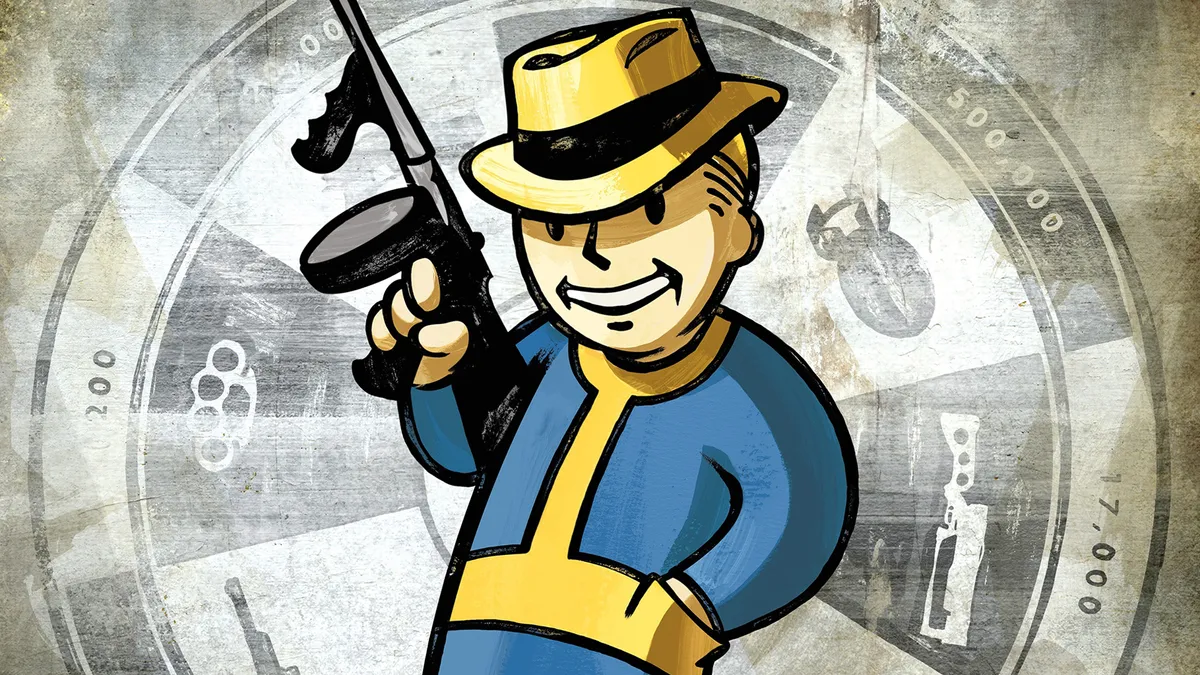
It's the perfect opportunity to hold up a mirror to how ridiculous America currently is
The TV show is already leaning into this: It foregrounds corporate complicity in the apocalypse. It pulls back the curtain on Vault-Tec. It makes clear that the rot wasn't accidental; it was systemic.
Reintroducing the Enclave in that context reframes them not as moustache-twirling villains, but as the logical endpoint of the world that caused the bombs to fall in the first place.
This doesn't feel accidental. Television adaptations rarely get to reshape core canon unless there's alignment at the top. The Enclave's prominence isn't a wink to long-time fans. It's positioning. It's Bethesda using a global audience to reset the chessboard before the next move.
Fallout 5 doesn't need to invent a new existential threat. It doesn't need to conjure a bigger bomb or a stranger vault experiment. It already has a villain. One that believes it is the rightful heir to America. One that has learned from its past defeats. One that thrives when democracies fracture and techno-orders turn inward. Better yet, they're power hungry fascists and the best thing about fascists is you don't have to feel bad when you whack them with a power fist.
The list of upcoming Bethesda games we know to be in production might be short, but it's certainly supercharged
You must confirm your public display name before commenting
Please logout and then login again, you will then be prompted to enter your display name.