





People haven’t been talking about level design enough over recent years. There have been bigger, sexier, more ‘current’ things to talk about. Things like cinematic presentation, deep, emotive storylines, and blisteringly sharp, 4K resolution that lets you see every pimple and acne scar on every single NPC in gross, intimate detail. Because what’s more immersive than pustulant facial atrocities rendered with nigh-pornographic detail?
Well actually, level design is. Whether you can afford to hire Jon Snow as your bad guy, or have nothing more to work with than pixels and gigantic, flat-shaded polygons, level design is – and always has been – your chief key to immersion. Ignore it at your peril. It is more important than story, and laughs in the face of texture quality. When it comes to really feeling part of a video game world, level design is king.
If you need evidence of that, you need only look at 2016. For 2016 has delivered a sledgehammer-heavy reminder of just how involving our virtual worlds can truly be, and it’s done so with several textbook examples of game design fundamentals.

I’ll get into all of that in a minute, but first let’s hit why level design is important. Because the fact is, it doesn’t matter how good your core gameplay systems are if the level design isn’t there to support them. However slick your shooting or ferociously balletic your jumping, if your physical environments don’t match up in cleverness, then you might as well be playing an electric guitar without an amp. You’ll know how technically clever you’re being, but no-one else is going to get much out of it at all. You’ve got a football without any goal posts. You’ve got – to make a nod to Id Software’s terminology for Doom 2016’s combat, which again, I’ll come to in a minute – a skateboard without a skate park.
Good level design isn’t about simply providing a space in which to shoot, drive, and jump. It’s about creating a lens through which to focus those mechanics in order to shape, demand, sculpt and rework the best possible Triforce of fun from the holy combination of setting, systems, and player creativity. It makes for interesting environments, sure, but when it also leads to a truly holistic relationship between game-place and gameplay, then you have the good shit. There’s a reason that Bungie refers to every element of Destiny’s core gameplay as ‘the sandbox’. The term doesn’t just indicate the game’s literal deserts and snowfields, but the way in which every element – from individual gun perks, to enemy AI behaviours, to the opportunities and challenges afforded by physical architecture – interacts with every other to create a greater, experiential whole.
So on to 2016. Because bloody hell, does 2016 give me reason to be most giddily optimistic about the kind and quality of game experiences we’ll be getting as this generation pushes forward. We’ve had a decadently fat slab of games this year that, with each exploring the relationship between level design, systems, and player agency in a different way, creating a really heartening overall look at where we’re hopefully going.

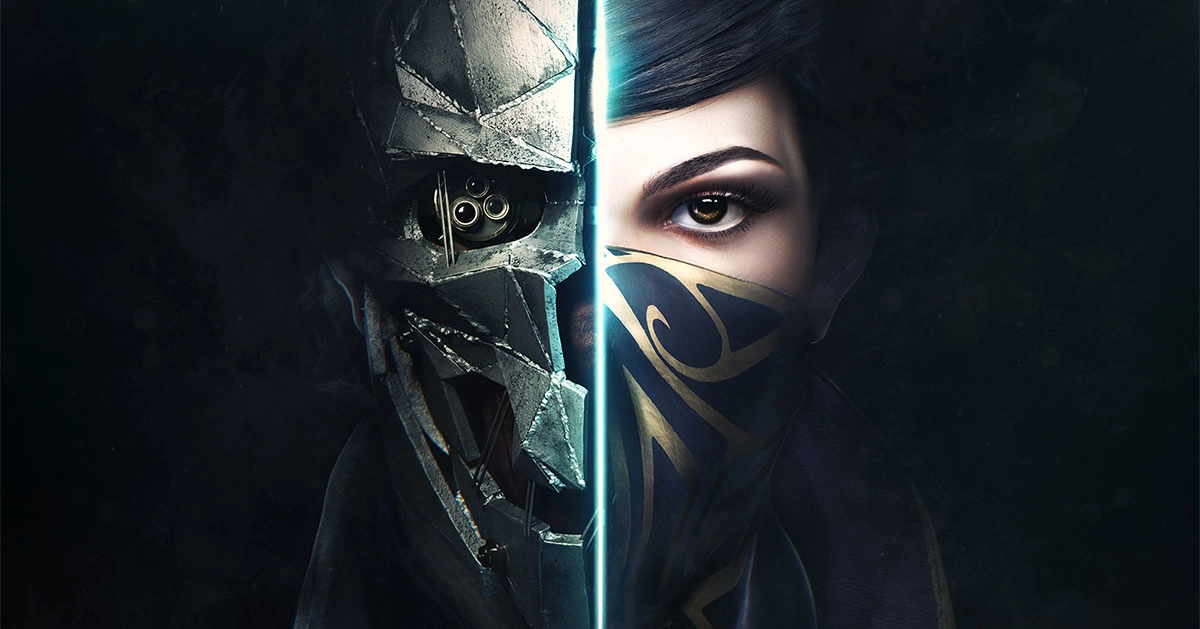
First and most obvious is Dishonored 2. While ostensibly similar to its predecessor – and later, ostensibly different due to the introduction of a new, optional protagonist with a new set of powers – in truth, it steps radically up and away from the first Dishonored due to the nature of its level design. Where the 2012 game’s missions were largely typified by a repeated structure of ‘Find the compound, enter the compound, wander a big, non-linear building to find the target’, Dishonored 2 is much more focused on creating a specific sense of purpose in each new mission.
Every one has, for want of a better word, a gimmick. A particular idea around which its gameplay, flow, and story are hung. This is important for two reasons. Firstly, it keeps things interesting, level to level, where the first game would occasionally flag with mansion corridor fatigue. Secondly, it creates a really interesting dynamic between the three core elements of gameplay I mentioned above.
The immediate focus – be it a narrative mystery element, such as in the Royal Conservatory, a new systemic trick, like the environmental malleability of the Clockwork Mansion, or just a clever design spin, like the repeating floor layout, tantalising secrets, and gratifying shortcuts of the Addemire Institute – makes the overall task comprehensible from the off, via an immediate sense of purpose, or at the very least a neat, unique element to zone in on. Your goal is obvious from the start, as are your tools, means, and the sort of fun you can look out for. There is no ‘What now?’ bewilderment. Both the mission’s story, and the secondary narrative of its gameplay journey, are clearly flagged from the start. But the knock-on effect is that this additional clarity also clears the player’s head-space for getting creative with how they interact with all of the above.

Of course, as each mission plays out, it becomes apparent that non-linearity, branching possibilities, freeform exploration, and the creative reworking - and even subverting - of goals are still Dishonored’s lifeblood, but the real cleverness of Dishonored 2’s level design comes in the way that the illusion of a set path dissolves at whatever speed the player is most comfortable with. Because it is the player’s perception that dictates how led, or not, the level’s flow is.
Once you’re comfortable enough with a mission’s concept and conceits, you’ll start to explore. And you’ll start to find things. You’ll find new routes in and out of buildings, and into inaccessible areas, and areas you didn’t even know existed. You’ll find new ways to avoid or assault enemies and objectives from entirely different directions, in entirely different orders than may at first seem logical. But because that exploration point will kick it at an entirely organic, player-specific stage, occurring whenever it simply feels right to go off-piste, every player’s journey through each mission – while entirely different – will feel like the one, canon path.
And as such, it effectively will be. Player-driven gameplay isn’t about simply removing direction and restrictions. It’s just as much about guiding the player with the comfort of perceived (but false) boundaries, in order to allow them to allow themselves the freedom to find their own path. It’s about psychology as much as it is architecture, and Dishonored 2 understands that better than any other game in recent memory.

In stark contrast, but just as clever, Doom focuses on using environmental design in order to fashion an instinctive, creatively rewarding understanding of its none-more-robust combat systems, in order to fuel relentless, constantly refreshed moment-to-moment action. Doom is playing with this from the very start. Think about that first room. A square chamber with just enough space to move freely, a simple object – Doomguy’s sarcophagus – in the centre, and a small herd of shambling but dedicated zombies to deal with before you’re allowed out. You might not realise it at the time, but Doom’s first room is a relaxed distillation of the skillset required by the entire game.
The room is just small enough to make the slow swarming of the zombies a constantly imminent threat, but it’s also big enough to allow free movement. The pistol is accurate and powerful enough to make the act of killing swift and efficient, but the shifting nature of the horde will ensure that you have to keep moving in order to make the right firing angles. With one small obstacle in the middle of the room, to use as both cover and a means of herding the AI into a beneficial position, the basics are all there. Move constantly. Kill fast. Use the former – while paying close attention to your environment - to facilitate the latter. Doom. All of Doom is right here.
Room two? The same deal, but with Imps, and a slightly more complex layout. It builds on the same themes very naturally, but also, quietly, teaches the all-important element of push-forward aggression that’s key to doing well throughout the game. The door opens and you meet a single Imp at the end of a corridor. You charge in, and the Imp exhibits its key behaviour. It will jump back or to the side to avoid your advance. It will make you give chase. You won’t realise it yet, but this is the purpose of the Imp. It’s the bait that pulls you into the centre of every fight.

Then you’ll find a bigger arena full of Imps. Around the outside is a raised platform. Using this area will teach you about mastering elevation for assault and evasion, but its narrower nature will also, by contrast, highlight the extra breathing room in the middle of the chamber. Which will in turn teach the value of charging into the middle of a fight, using all space available as a battle warps and shifts, rather than lingering on the outside. Then when you make it into the middle, Imps will pour in, teaching you about fighting through to the next usable space.
Within the first five minutes, Doom has – using nothing more than two guns, two, base-level enemy types, and some cleverly-shaped rooms - imparted its entire essence, without needing to mark a single moment as a tutorial. The rest of the game is effectively an expansion and evolution of this technique, as new demons and new weapon abilities deliver new combinations of interactions, with every new discovery and strategy subliminally encouraged by the demands and challenges sculpted by the game’s endlessly changing, increasingly complex arena design.
One enemy spawn in the right or wrong place, one platform or teleporter, one collectible power-up triggered at the right time, can utterly change the entire personality and outcome of a battle. That’s why Doom can be 20 hours long without getting boring. That’s why it can cram in a dozen or so specially themed challenge rooms, to further dissect and recontextualise its traversal, shooting, and movement, and have all of them feel as important as the main game. That’s why you’ll feel drunk on over-stimulation by the end, but still want more.

Doom is the classic example of a game that knows that its central mechanics are robust enough to bend without breaking, and so can dedicate itself to stretching them to their limit by simply asking you to use them in myriad, subtly different ways. Resident Evil 4 is also one of the greatest, historical examples of this feat, but in Doom’s more resolute focus on pure, environmentally-evolved combat, the fundamentals can be seen even more clearly.
And then there’s Titanfall 2, which uses smart level design to do something different again. Where Dishonored 2 and Doom, in their own ways, play with restriction to encourage player experimentation, Titanfall 2 hides genuine linearity underneath freeform mechanics, and then uses its own, well-disguised directorial control to create powerful narrative peaks and troughs.
Not that its moment-to-moment, action-supporting designs aren’t worth noting. In fact they’re incendiary in their invention. Let loose from the conventions of Call of Duty, the game represents Respawn’s developers blowing off a huge amount of creative steam, seemingly throwing years’ worth of ideas into an eclectic campaign that changes its focus on a level-by-level basis. One moment it’s long, flowing wall-run links, to teach the rule-breaking possibilities of parkour gunplay, the next it’s enclosed combat chambers invisibly designed to work like FPS adventure-playgrounds, in which every wall is a potential floor. Then a little later, both walls and floor are moving and reshaping around you, as rooms are pieced together on production lines, and familiar spaces grow and change, delivering new challenges and opportunities.
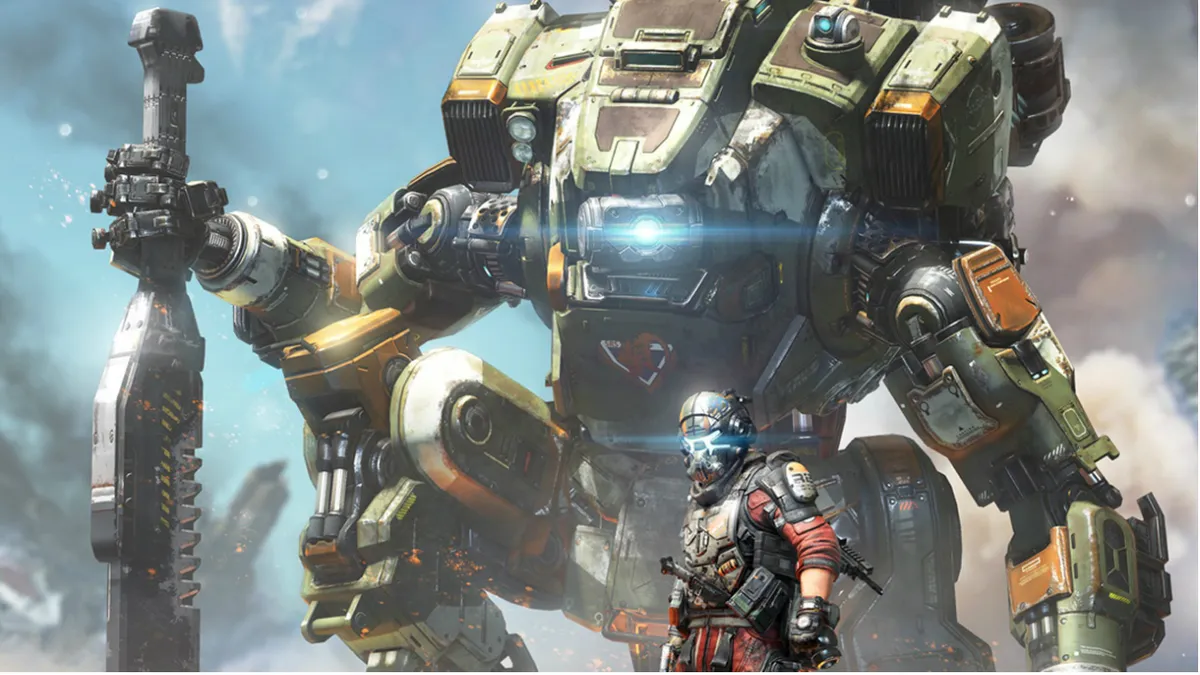
But amid all of this is the kind of dramatic pacing that made Respawn’s work on Call of Duty so striking during the Modern Warfare era. Only now, the studio has a two-protagonist unit to play with, and dear God, does it know how to manipulate that. Throughout, Titanfall 2 makes masterful use of differing mission demands in order to break up and reunite the team of Jack and BT, ensuring that the intervening action always instils enough tension or excitement to make every reunion is meaningful, either through relief or celebration. And that, in turn, always informs the tone of the next mech-fuelled set-piece. But then there are missions like Effect and Cause, which turn all of the game’s on-foot systems in their head, just as you’ve become used to their more ‘straightforward’ use in combat. And then later still, there are the moments that combine all of the above to devastating effect.
In particular, a pivotal scene around the start of act three is a killer moment of insightful pacing, using a clever gameplay decision to resonate with – and amplify – possibly the game’s most powerful moment of emotional catharsis. Jack is on the ropes. Everything is going wrong in the most horrific fashion. The whole world in the verge of exploding around him. As a player, you’re furious, and upset, and desperate. But just as all seems lost, Jack receives an emergency ration pack containing an auto-targeting Smart Pistol. And suddenly, through the ensuing level design, what could have been a tense, claustrophobic battle to safety becomes a furious, indignant rampage of vengeance.
The architecture from this point on is almost entirely made of lengthy wall-runs and unaware enemy soldiers. As you soar through the air above them, the pistol locks onto every target simultaneously, killing them all with a few, fire-and-forget trigger pumps. You’re outnumbered and (technically) outgunned, but the Smart Pistol’s power, combined with your own non-stop momentum, delivers a surging outlet for your rage, the necessary speed and ferocity of the run emphasising the desperation of the situation just as your maneuverability and lethal momentum turn you into a screaming angel of death.

Had Titanfall 2 taken a more traditional route at this point, delivering a series of standard battles on the way out to freedom, it would have been effective, but – as Zoe also notes in her article on the game’s relationship-building – to do that, to force the player to engage more thoughtfully in the nitty-gritty of open combat, would reduce the emotional impact of the sequence by returning the player’s mind to that of a more traditional, grounded combat state. As it is though, this sequence is a flawless example of level design to the end of player empathy and emotional catharsis. Not just a level depicting a dramatic event, but a level that uses its own form and action-flow as grammar and punctuation to that event.
So yes, 2016 has been very, very good for level design. These are just three stand-out examples, but between then they run the full gamut of what crafty design can deliver in terms of agency, connection, exploration, presence, and emotional resonance. But crucially, the one common thread linking all of these disparate concepts is a dialogue between the player and the game. A desire not just to entertain, but to include and to co-author. And that’s a wonderful thing. Because that’s what makes video games different. And that’s what’s going to make them an ever-more important and affecting medium in the future.
We haven’t been talking about level design enough recently, but we really, really should. And as for next year? Here’s an early pro-tip: Keep an eye on Prey.

