


The Witcher: Blood Origin’s main story revolves around the Conjunction of the Spheres and the first Witcher, but it’s in the Netflix spin-off’s epilogue where the juicy stuff lies. Ithlinne’s prophecy isn’t just foreboding and mysterious, it could very well act as a roadmap for The Witcher season 3 (and beyond).
How so? And how much should we read into the vision of the girl who speaks to a pregnant Eile during the Blood Origin finale? Join us as we dig into exactly why Ithlinne’s prophecy is so important – and what it could all mean for Geralt and the gang in over a thousand years’ time. Warning: spoilers ahead for The Witcher: Blood Origin – turn back now if you haven't watched the four-part series.
What is Ithlinne’s prophecy and what does it mean?
First things first, let’s lay out the prophecy. Then we’ll dissect what it all means, line by line. "The time of the Spheres is upon us, Aen Seidhe lost across the skies. Cast adrift in time, ever searching for love, lost and left behind. The lark’s seed shall carry forth the first note of a song that ends all time, and one of her blood shall sing the last," Ithlinne says in one of Blood Origin’s final scenes.
Prophecies, by their very nature, are vague and ambiguous. That’s no different here. Much, then, is open to interpretation, though the "time of the Spheres" has already happened by Blood Origin’s ending – it’s a reference to the Conjunction of the Spheres, the collision of worlds seen after tears in space and time are ripped open over Xin’trea. The Aen Seidhe, meanwhile, are a race of elves that populate the lands in Blood Origin but, by the time of The Witcher, will be ostracized and strangers in their own land.
The most important section, though, concerns The Lark’s seed. The seed, referring to her unborn child, suggests that one of Eile’s ancestors will "sing the last" – essentially fulfilling a prophecy to bring about the end of the world.
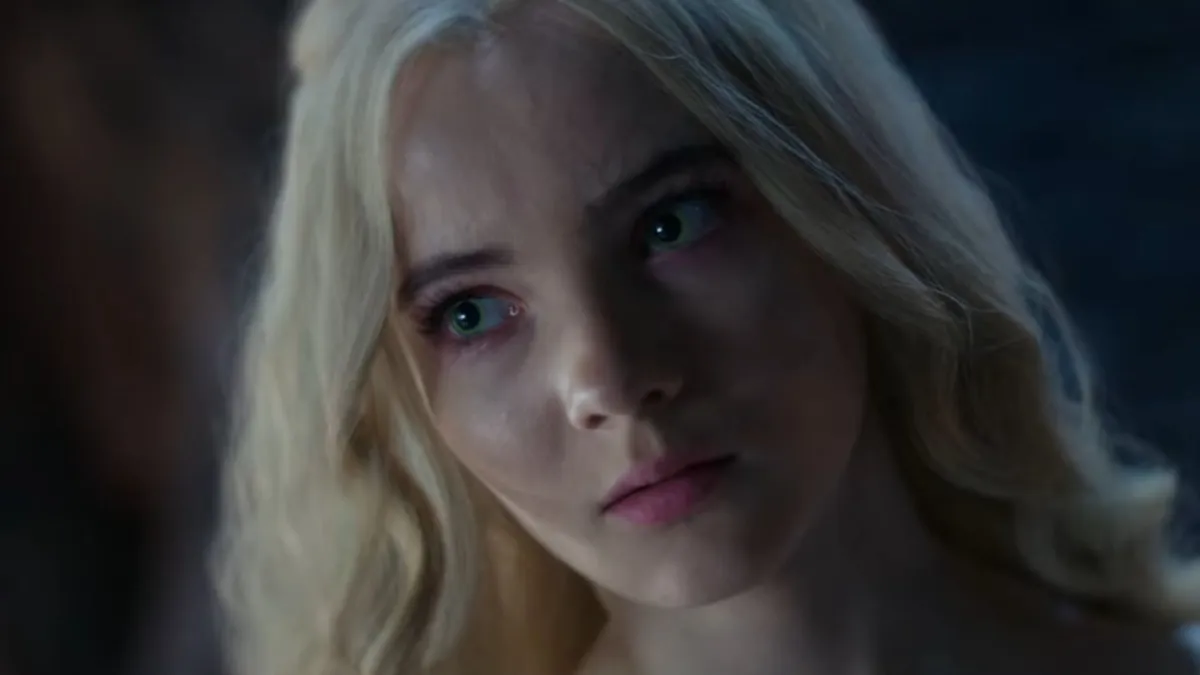
The prophecy likely ties into Ciri. She has Elder Blood – as shown by her incredible powers that have manifested throughout the series. That means she is, in all probability, a direct descendant of The Lark and the first Witcher.
The evidence continues to mount, too, in The Witcher season 2, with Lara Dorren saying Ciri will bring death to the world, a possible nod to Ithlinne’s prophecy. We already know, too, that Ithlinne has never been wrong about a vision, though the details are often cloudy. Ciri, if not the leading candidate to "sing the last", will surely be involved in stopping or sealing the prophecy.
In short, it’s not good news for Ciri – or The Continent. Ithlinne’s prophecy links her to a possible apocalyptic end to the planet, which makes Avallac’h’s presence in the Blood Origin’s post-credits scene (watching over Ciri in a remixed scene from The Witcher’s premiere) all the more concerning. Whichever monsters and men Geralt fights next, his story will soon pale in comparison next to Ciri’s. The one-time Cintran princess will have the fate of the world in her hands very soon.
For more on the series, check out our explainers on:

