You are now subscribed
Your newsletter sign-up was successful
Want to add more newsletters?

Every Friday
GamesRadar+
Your weekly update on everything you could ever want to know about the games you already love, games we know you're going to love in the near future, and tales from the communities that surround them.

Every Thursday
GTA 6 O'clock
Our special GTA 6 newsletter, with breaking news, insider info, and rumor analysis from the award-winning GTA 6 O'clock experts.

Every Friday
Knowledge
From the creators of Edge: A weekly videogame industry newsletter with analysis from expert writers, guidance from professionals, and insight into what's on the horizon.

Every Thursday
The Setup
Hardware nerds unite, sign up to our free tech newsletter for a weekly digest of the hottest new tech, the latest gadgets on the test bench, and much more.

Every Wednesday
Switch 2 Spotlight
Sign up to our new Switch 2 newsletter, where we bring you the latest talking points on Nintendo's new console each week, bring you up to date on the news, and recommend what games to play.

Every Saturday
The Watchlist
Subscribe for a weekly digest of the movie and TV news that matters, direct to your inbox. From first-look trailers, interviews, reviews and explainers, we've got you covered.

Once a month
SFX
Get sneak previews, exclusive competitions and details of special events each month!
As we've seen all too clearly of late, making a successful service game – one that can stick around for years, becoming part of the fabric of its players' lives in the process – is anything but easy. There have been many attempts, some of them with the backing of the very largest, wealthiest publishers and platform holders. A few have succeeded, but many, many more have failed.
And then there's Warframe. More than a decade on from its 2013 launch, Digital Extremes' free-to-play shooter still reliably hovers around Steam's top 20 most-played chart, having attracted 80 million players over the years, and continues to launch on new formats – an Android release is set for this year. If any service-game success is unlikely, then Warframe's is practically a miracle, given its origins. This was the last chance for a small studio, made as quickly as possible and self-published because its maker had no other option. A game that wouldn't even exist if it weren't for failure.
Working in progress
This feature originally appeared in Edge magazine #408. For more in-depth features and interviews on classic games delivered to your door or digital device, subscribe to Edge or buy an issue!
"We had a project with a publisher," CEO Steve Sinclair tells us. "And that publisher ran into financial difficulties and cancelled it." Working at the behest of a larger paymaster had long been the bread-and-butter of Ontario-based Digital Extremes.
The studio started out making pinball games with Epic, a partnership that continued into co-developing the Unreal games. After that series' end it took on a string of other work-for-hire projects, from BioShock 2's multiplayer mode to The Darkness 2, developing the sequel to a game made by another studio entirely.
"We didn't own our own games, right?" Sinclair says. "We made them for other people – that means they pay you the market rate, and you get a little back in royalty for them. Then you hope it sells like crazy, and you hope that it breaks even." Anything else would risk emptying the studio's coffers, necessary in case production overran the expected deadline – or worse. "It feels like you're always four, six months away from annihilation."
After nearly two decades of living project to project, in 2012 the cancellation of this latest assignment left Digital Extremes facing the worst-case scenario. Employees had to be laid off in order for the company to survive, and annihilation loomed. Warframe, Sinclair says, was the company's "Hail Mary", based on an idea he'd been toying with for a decade or so.
The idea was this: "sci-fi ninja". Or, a little more expansively: the game Digital Extremes' 2008 release Dark Sector was meant to be, its original concept having mutated in order to secure a publishing deal at the time. There was no risk of that happening here, since Digital Extremes would have ownership of the game – if only because no publisher was interested in signing a free-to-play sci-fi game. The idea wasn't much more popular internally at the studio. Sinclair remembers the wider team hating the idea of going free-to-play, a phrase Sinclair describes as being almost "like a cuss word" at the time.
Going to Extremes

You don't get a chance to find your footing
Steve Sinclair
However the team might have felt about the idea, it didn't stop them putting their shoulders to the wheel. Warframe's alpha was developed within just six months, with the official release following five months after that in March 2013. Unused assets from the original version of Dark Sector provided a small head start, but there was still a mountain to climb.
"Getting the first version of Warframe up and running and out to players was easily one of the most stressful, chaotic and uncertain periods for each and every dev involved in the project," says creative director Rebecca Ford. With Digital Extremes now acting as both developer and publisher, it had to take on all sorts of new responsibilities.
We all worked different roles and supported each other in any way we could," Ford says. At the time her main responsibilities were community management and PR, but Ford took "a first stab" at developing the game's website. "We had to figure out how to take credit-card transactions online but had zero resources."
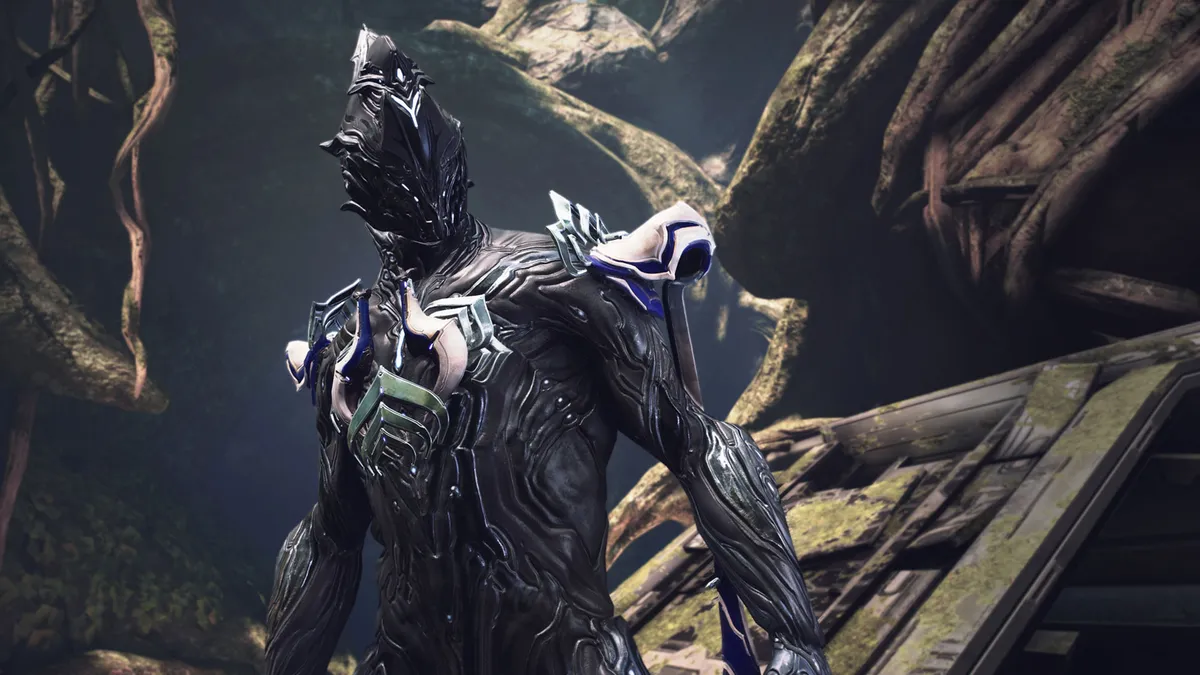
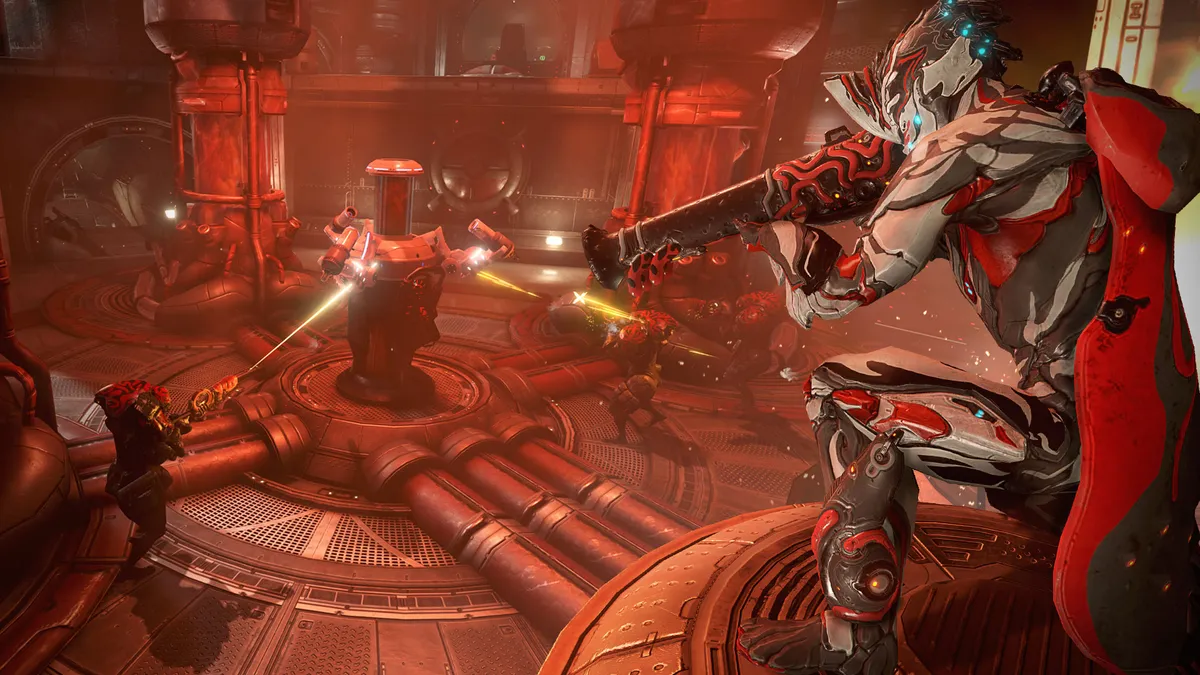
The game that emerged out of these frantic months of development offered a relatively slender selection of self-contained missions.
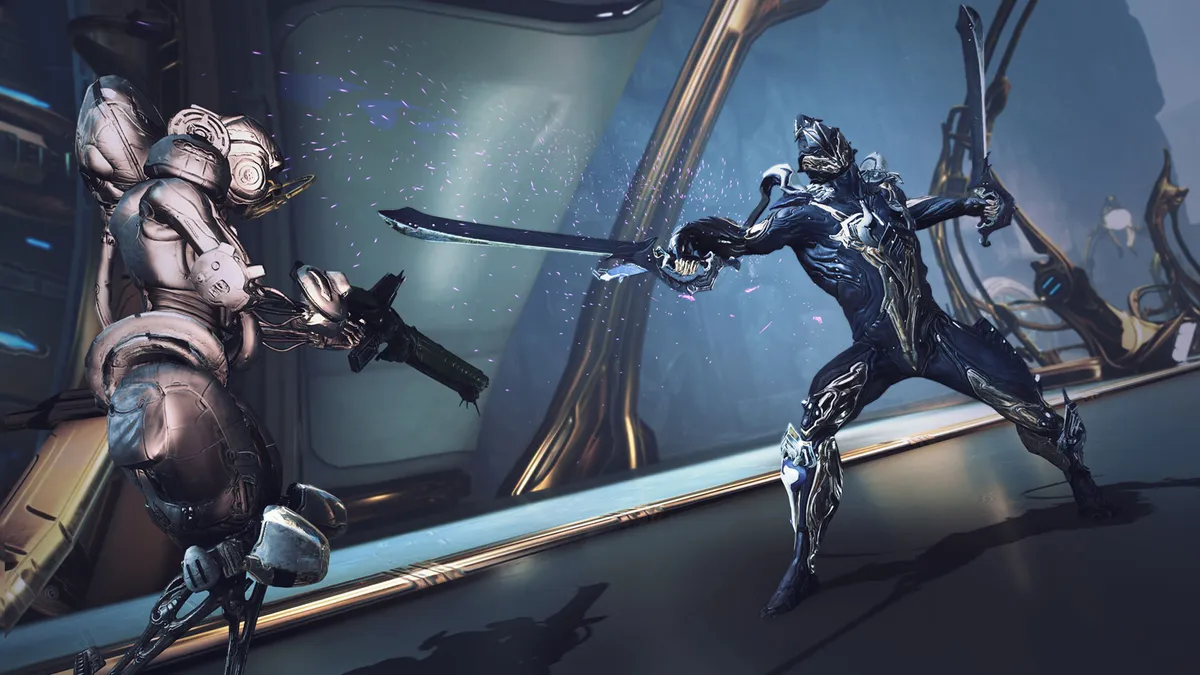
But important foundations were already in place: fast and acrobatic movement (made even more athletic in the 2015 'Parkour 2.0' update), and a combination of firearm and melee combat taking place in procedurally generated levels. And, perhaps the most important element of all, the Warframes themselves – the players' technorganic ninja avatars.
Each of these suits of biomechanical armour has its own set of unique abilities. The original 2012 roster included fairly conventional elemental characters (the electrically charged Volt, pyrokinetic Ember) but also vampiric combat medic Trinity, able to redirect damage inflicted on allies to the bodies of enemies, master swordsman Excalibur, and the stealthy, teleporting Ash.
Beyond these base abilities, every Warframe and weapon can be customised with a huge selection of upgradeable mods, turning the dials on everything from crit-chance to elemental damage and resistance, movement and attack speed – occasionally boosted at the expense of another stat. It's extremely unlikely that any two players will be using identical builds in a mission, especially as the depth and breadth of possibilities continues to grow. There are now literally hundreds of weapons, and 59 unique Warframes, not counting those with 'Prime' and (in the case of Excalibur) 'Umbra' variants.
Feedback loop

If we'd had a publisher for Warframe, they would have shut us down after the first few months
Steve Sinclair
This expansion was surely beyond the wildest dreams of Digital Extremes back in the days when it was being turned down by publishers. But, looking back at that time now, Sinclair believes it was a blessing in disguise that allowed Warframe the time and space to grow – something many service games with more backing haven't enjoyed.
"If you're not super-profitable out of the gate, you get destroyed," he says. "You don't get a chance to find your footing. You don't get a chance for the team to gel, understand each other and what the game is." He points to many of the service-game projects that have fizzled out in recent years. "You have a team come out and make something that is actually probably really cool and interesting, right? But they don't get a chance again, because the stakes are too high." Today, Sinclair says confidently: "If we'd had a publisher for Warframe, they would have shut us down after the first few months."
Once the money did start coming in – first from closed-beta players buying Founders Packs and then the game's Steam release – the studio was able to prioritise rehiring the people it had laid off. "If you did that under an agreement where someone is taking 70 per cent of the revenue," Sinclair says, "it just wouldn't have happened."
Is there anything else the team couldn't have done under an external publisher? Ford's answer is instant: "Drink beer on stream!" There's laughter, before Sinclair adds, "Yeah, I suppose there was a bit of chaos in the beginning."

It's a tongue-in-cheek response, but it speaks to one factor in Warframe's unlikely success: the largely informal relationship it has developed with its audience, which began right from the start, with regular developer-update streams.
Who appeared in those streams, and how they presented themselves, was key. "It was very Wayne's World," Ford says. "You want Wayne and Garth on the couch, and you don't want them after they've been put through a record label, right?"
As smart a move as this was in retrospect, looking back, Ford admits it was less a strategic decision than a practical one. "Because I was getting so frustrated answering the same questions and not reaching everyone." The game's 2013 launch predated Discord, leaving Digital Extremes to rely on forums and in-game messages.
"I thought that there had to be a better way to tell the community what's going on." With questions pulled straight from player conversations, rather than selected to hit marketing points, "it was very much an effort to do a broadcast that's live, that's raw, that's transparent," Ford says. "And they can circulate the answers amongst themselves, because they'll have it directly from the horse's mouth."
Work life imbalance

You read 50 positive things but there's one negative comment, and that's all you can think about
Steve Sinclair
Of course, such a casual, unfiltered relationship means a direct line not only for players' praise and suggestions but also for negativity. Digital Extremes accepts that, and allows it – to an extent.
"We want to let them throw some punches," Ford says, "but they can't mean it." She draws a clear line between "angry customers" – inevitable, when you're feeding such a large audience for so long – and "abuse and threats", on which the studio enforces "a zero-tolerance policy".
"You do get some people that can really say some awful things about what makes a person a person," Ford says. "We deal with that as quickly as we can to make sure that our team doesn't have to bear the brunt of continued personal attacks, and we try to protect ourselves by acting quickly, acting unified." Nevertheless, certain types of player feedback – delivered via more routes nowadays than has ever been the case in the past – can take a toll on the people behind the games, as Sinclair attests.
"Maybe I shouldn't share this," he says, staring at the floor, "but something broke in me around 2018 and I couldn't read direct customer feedback." It comes from being so creatively invested in his work, he says.
"I want to imagine there is a loving person who I'm serving. I'm making a meal for them [and] when they eat it, I want to see the look on their face and have the joy come into their eyes. And if all I see is someone who tells me I'm doomed and my game is dead and my design is stupid and broken and my code is shit…" He pauses. "Any human's like that, right? You read 50 positive things but there's one negative comment, and that's all you can think about. And so I kind of broke, and I was like, I can't do it any more."
It was still essential to take the feedback on board, so a solution was reached: direct feedback would be handled by Ford and other members of the team, the essentials then "sanitised" and passed on to Sinclair. "I've been lucky enough to have people with asbestos skin, able to go into the furnace and extract the truth of what they're saying without the hurtful rhetoric around it," he says.
Still, Digital Extremes hasn't withdrawn from its direct relationship with players – quite the opposite. In 2016 it launched Tennocon, an annual in-person convention dedicated to Warframe. Though the game had previously had a presence at the likes of PAX, E3 and Gamescom, it wasn't with much success. "I remember fighting for stage time at PAX," Ford says, clearly still frustrated at the memory. "Or at Gamescom, and being like, 'People want to hear about Warframe!' No one gave a shit, and they still kind of don't. So it was like, 'Let's just do it ourselves'."
Tennocon is a place for fan cosplay and charity fundraising (see 'Causes and effect') but also, of course, for announcements.
At that inaugural event Digital Extremes debuted a teaser for The War Within, one of the game's biggest updates at that point. Alongside the usual new characters, weapons, enemies and missions, it introduced the Lich System, Warframe's take on a Mordor-style Nemesis idea, allowing players to create a named enemy that they chase around the solar system, eventually defeating them in a battle that rewards them with a powerful weapon or ally, depending on whether they kill or convert their foe.
The following year brought Warframe's first open world, the Plains Of Eidolon (three more have been added since). While play had previously been locked into individual missions, here players could explore freely, speeding about using the Archwing – a jetpack module first introduced for space-combat missions in 2014 and repurposed here as a traversal tool – or else slowing down for a spot of fishing or mining, each of which came with new associated resources to earn.
For the developer itself, though, perhaps no update was more pivotal than The New War, a solo-only campaign that delivered an essential beat in the game's ongoing story, with a script that took years to refine. But vitally, it was released in December 2021, and thus made under remote working conditions. "Someone smarter than me said this," Sinclair says, "but in person, you build a bank account with an individual, and online, you withdraw."
Over many months of video calls and Slack chats, every "critical creative conflict" reduced that emotional bank balance, he says. "There were joyful moments working on it as well. But it definitely affected creative collaboration in a way that had negative consequences." Among them, the departure of some valued colleagues.
"Amazing, skilled, creative people," Sinclair says. "And they were done. Done, done, done. I feel personally responsible for pushing them too hard on that," he says. "Those people have gone and done great things lately, and I'm very proud of them, and happy, and their lives are doing great as far as I understand. But that was one of the big consequences that I'm not happy about."
Robot rock
We speak to Sinclair and Ford at the end of 2024, as a difficult year for the videogame industry draws to a close. In contrast, Ford tells us, this has been "the best year in the history of Warframe by every measurable thing except for signups."
In terms of new players, the best years remain 2013, after the open beta launched, and 2018, when the game came to Switch. But every other record, she says, has been broken.
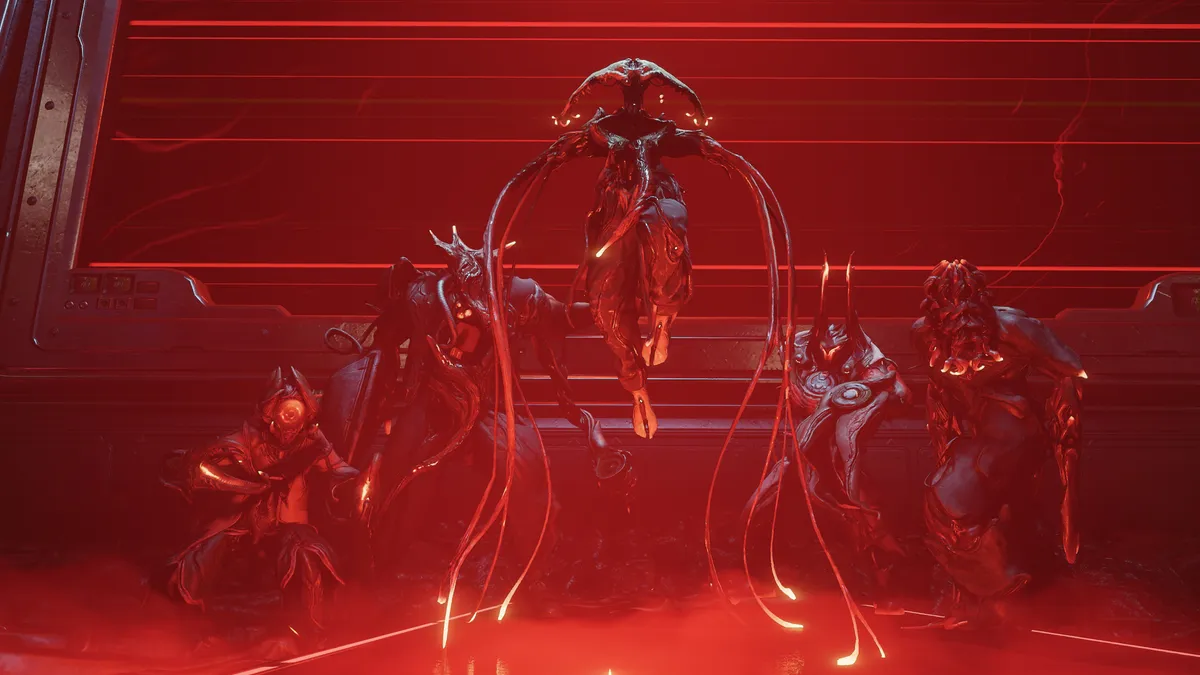
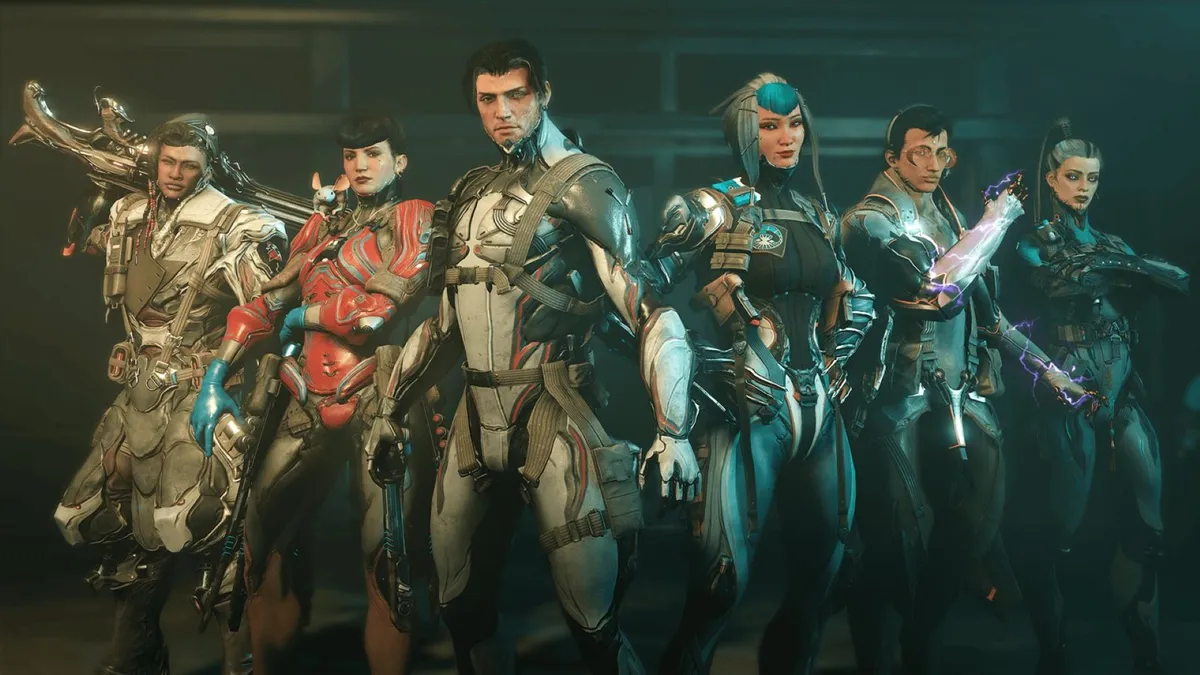
Digital Extremes capped off the year with something of a victory lap, with a teary Ford taking to the stage of The Game Awards to introduce a trailer for the latest expansion, 1999, ending with the announcement that it would be available later that day. It comes complete with a new means of traversal (the Atomicycle), an expanded original soundtrack drawing on '90s influences from grunge to boy bands – and a romance system.
Not what you might expect from a game about sci-fi ninjas, of course. But it seems Ford and team had been toying with this idea for a while, before she was finally convinced by playing Baldur's Gate 3. "We think – maybe we're wrong, maybe we're right – that there is a place for it in Warframe," Ford says.
1999 is when email relationships and online dating and all of these things that are so normal now really were starting
Rebecca Ford
"It's not shoehorned in." And this expansion, she argues, is the place for it. "It's of the time. You know, 1999 is when email relationships and online dating and all of these things that are so normal now really were starting." Unusual as it might be, the romance system has been well received, especially the fictionalised messaging system that is central to its delivery.
1999 is typical of the updates Warframe has seen over the years: unpredictable, inventive and deviating from what has come before in significant ways. There are more obvious routes it could have taken – by way of example, Sinclair reveals that a battle-royale mode has been pitched internally many times. "When a game comes out and it breaks big, there's a temptation to chase after that," he says. "We're a little more stubborn in trying to zig when others are zagging."
It's an approach that has served Digital Extremes well, at least within the confines of Warframe. A short-lived foray into publishing other studios' games ended in 2023, with Wayfinder, the final game it had signed, being handed back to developer Airship Syndicate. "It was awful for everyone involved," Ford says. "We made the wrong decisions for the right team, and it's exactly what you don't want to happen. It's a sin that, I think, we'll live with for a while."
Framing the shot
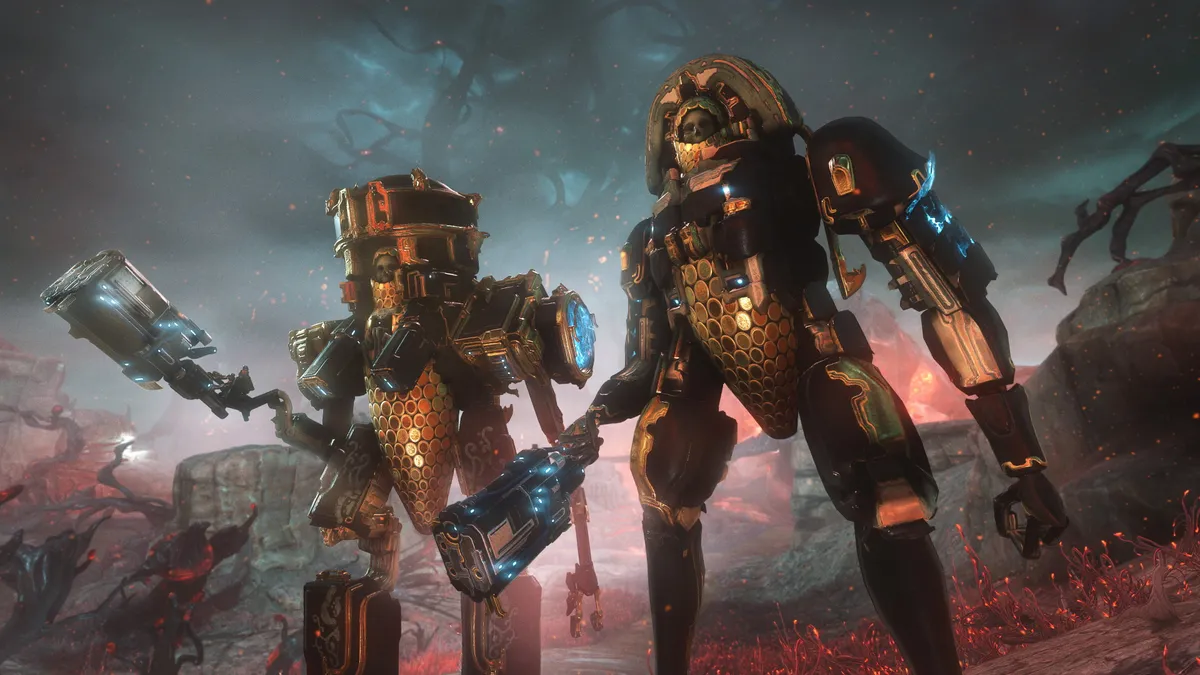
Today, the studio is preparing to take its next big step, with the forthcoming fantasy action RPG Soulframe.
However, rather than try to create something that can immediately stand up alongside Warframe, Sinclair says, "we are taking a kind of unorthodox approach with it, which is: pretend that it's 2015 again." That means starting small, with a pre-alpha 'prelude' that establishes the foundations to be built upon – "Oh my God, there's a skybox!" is how Sinclair refers to it. "Everyone is telling me you can't do that in the modern era – times have changed. And I'm just like, 'I can't hear you, lalalalalaaa!" But, as Ford points out, the way Valve is handling the slow rollout of Deadlock demonstrates that you still can.
Besides, Digital Extremes doesn't want to turn its back on the game that has kept the studio alive over the past decade. "Warframe is the lifeblood of the company, and it would be ridiculous to do damage or harm to it in any way," Sinclair says. "So we've been slowly building up a Soulframe team, and [it will stay that way] until Soulframe has its legs under it, and we can see people are engaging with it and are willing to throw a couple bucks our way. Then we can say, 'OK, let's hire a few more people. Let's scale it up'. But it is very cautious, how we're approaching this."

There's a sense that Digital Extremes – and Sinclair, who appropriately joined the company in 1999 – has been burned in the past. "We've tried to do this many times in the company, to go to two projects, or do another division of the company," he says. "Every single time it's created walls and silos, and created division and internal competition. My god, there's enough competition outside the walls."
The studio's attitude today speaks to something that runs through Warframe itself, counter to all the fantastical weaponry and the spectacular destruction of enemies it has to offer. You can find it in the romance system of 1999, and the affinity system that underpins the entire experience, encouraging players to stay close to one another for extra XP; in the ability to pet the traumatised and betrayed sentient creatures of the Cavia, and in the oppressed workers of Fortuna who, as the associated song has it, "lift together", and rebel against their oppressors rather than turning on one another. A few years ago, an in-game survey was added to Warframe to ask players how they first heard of the game. The most popular answer remains 'through friends'.
This community spirit alone may not explain how the game – and the studio behind it – has managed to thrive for 12 years and counting. But Warframe certainly wouldn't be Warframe without it.
Soulframe is one of many upcoming PC games to look forward to in 2026.

You must confirm your public display name before commenting
Please logout and then login again, you will then be prompted to enter your display name.