


He stands 13½ inches tall, weighs 8½ lbs, and costs just $400 (£225) to make. But the Academy Award of Merit – Oscar to his friends – has still become the most coveted object in the world of film and the focal point of an annual shindig broadcast in more than 150 countries.
“In the mythology of cinema the Oscar is the supreme prize,” said Federico Fellini, while Frank Capra called it “the most valuable item of worldwide public relations ever invented by any industry.” “What does an Oscar mean?” pondered Ellen Burstyn after Walter Matthau and Jack Lemmon presented her with the Best Actress gong in 1975, but stage commitments stopped her from collecting it in person. “Put it this way, Ellen,” answered Matthau. “When you die, the newspaper obituaries will say: ‘The Academy Award-winning actress Ellen Burstyn died today.’”
Solid-gold status

Back in 1927, though, the Oscars were little more than an afterthought, mentioned in passing in a statement of aims published by the newly formed Academy of Motion Picture Arts and Sciences. The body, it said, would seek to “encourage the improvement and advancement of the arts and sciences of the profession by the interchange of constructive ideas and by awards of merit for distinctive achievements.” But it would be two years before the Academy made good on that pledge with a low-key awards dinner, held in the Blossom Room of the Hollywood Roosevelt Hotel on May 16, 1929. The results had been announced three months earlier so there were few surprises and little press attention. In the words of Best Actress Janet Gaynor, the only female winner that night, it was “just a small group getting together for a pat on the back.”
The Oscar itself, a naked knight holding a sword atop a reel of film, was designed by Cedric Gibbons, head of MGM’s art department and one of the Academy’s 36 founder members. (The original bronze was cast by unemployed artist George Stanley, who was paid $500 (£285) for his trouble.) How the item came by its legendary moniker remains a mystery: Bette Davis claimed to have christened it after her first husband, Harmon Oscar Nelson, while columnist Sidney Skolsky said he’d borrowed the name from an old vaudeville routine. Most people, however, attribute it to Academy librarian Margaret Herrick, who remarked in 1931 that the award bore a striking resemblance to her uncle, Oscar Pierce. By 1934 the nickname was in common usage, though it was not officially adopted by the Academy until 1939.

From the beginning the Oscars were seen as little more than a mutual congratulation society, typified by the second awards dinner when gong after gong went to Academy founder members. (Gibbons himself was a recipient, winning the first of the 11 prizes he would take from a whopping 39 nominations.) “There is something embarrassing about all these wealthy people publicly congratulating each other,” said Cary Grant, who would have to wait until 1970 before receiving his own honorary statuette. Stung by such criticism, the Academy broadened its membership and selection rules, though rumours of favouritism persisted; in November 1930 the third Best Actress Oscar went to Norma Shearer, the then wife of MGM’s head of production Irving Thalberg. (“What do you expect?” bitched Joan Crawford. “She sleeps with the boss!”) The situation came to a head in 1935 when Bette Davis’ performance in Of Human Bondage was left off the official nominee line-up; bowing to pressure, the Academy allowed “write-in” votes on the final ballot. In the event Davis lost out to Claudette Colbert’s turn in It Happened One Night. (Only one “write-in” candidate, cinematographer Hal Mohr, ever won the award for which he was nominated during the two years that “write-in” votes were implemented.)
A more telling change was in the offing, however. Since 1931 the Academy had withheld announcement of the winners until the night of the Oscars banquet, releasing the results to the press prior to the presentation to accommodate paper deadlines. In 1940, however, The Los Angeles Times broke the embargo, prompting the Academy from 1941 onwards to keep the winners’ names a closely guarded secret until the iconic gold envelope was opened. The Oscars already had glamour on their side; now they had suspense as well. As host Billy Crystal said in 2003, “Our awards are the best-kept secret in America – with the possible exception of what George W Bush did in the ’70s.”
Winning numbers

Not that there was much tension in the ’30s. Bette Davis might have missed out in 1935, but she won the following year for Dangerous and in 1939 for Jezebel; the intervening years saw back-to-back triumphs for Luise Rainer in The Great Ziegfeld and The Good Earth. Spencer Tracy also won consecutive acting statuettes for Captains Courageous and Boys Town, while Walter Brennan – the first recipient of the Best Supporting Actor award, introduced in 1937 – won the same honour again in 1939 and 1941. Frank Capra, Best Director for It Happened One Night in 1935, won again for Mr Deeds Goes To Town in 1937 and You Can’t Take It With You in 1939. Walt Disney, meanwhile, was hardly off the podium, winning seven awards for Best Short Subject between 1932 and 1939 and a pair of honorary gongs for the character of Mickey Mouse and Snow White And The Seven Dwarfs respectively.
With so many familiar names being celebrated again and again, the Oscars were in danger of becoming an irrelevance. The ’40s, however, gave the Academy a chance to put its insular politics to one side and put its weight behind the war effort. The 1941 ceremony saw President Roosevelt deliver a six-minute radio address from the White House and Best Actor James Stewart pick up his honour for The Philadelphia Story in his Air Force uniform; the following year’s ceremony, held in the aftermath of Pearl Harbor, was a toned-down event with a ban on formal wear. (Gary Cooper’s win for playing a First World War hero in Sergeant York summed up the prevailing mood, though it was the snubbing of Citizen Kane and Joan Fontaine’s victory over her sister Olivia de Havilland in the Best Actress category, for Alfred Hitchcock’s Suspicion, that got tongues wagging.) The next year plaster Oscars replaced gold-plated ones as home-front drama Mrs Miniver took the top honours; eponymous star Greer Garson was so grateful her acceptance speech lasted seven minutes, an Oscar record. The 1944 ceremony, meanwhile, abandoned the usual banquet for the now-standard gala format, held at Grauman’s Chinese Theatre before an audience that included 200 servicemen and women. Patriotism was once again the order of the day, with awards for Casablanca, Watch on the Rhine and For Whom the Bell Tolls.
Blacklisted victors

As the war drew to a close, Hollywood was in the mood for some light relief – surely the only excuse for the seven Oscars awarded to the cloyingly sentimental Going My Way in 1945. (Bing Crosby took Best Actor, though it was co-star Barry Fitzgerald who made history, becoming the only performer to be nominated for Best Actor and Supporting Actor for the same role – the first and last time this was possible, after a change in the rules.) In the immediate post-war years, however, issue-led dramas like The Lost Weekend (alcoholism), Gentlemen’s Agreement (anti-Semitism), and The Best Years of our Lives (the problems faced by demobbed soldiers) began to take the Academy voters’ fancy. So did Laurence Olivier who, having picked up an honorary statuette for Henry V in 1947, returned two years later to sweep the board with his black-and-white Hamlet, the first non-American film to win Best Picture.
Shakespeare-spouting Brits, however, were no threat compared with the twin evils of television and Communism, Hollywood’s bête noirs in the ’50s. The studios responded to the former by producing a string of expensive, star-packed spectaculars, some of which (The Greatest Show on Earth, Around the World in Eighty Days) were successfully steered to Oscar glory. Communism was a less tangible menace than TV, and one the Academy dealt with badly. The hundreds of actors, writers, and directors labelled “undesirable” due to their perceived leftist sympathies needed a champion; instead they got a lapdog, the board of governors passing a “loyalty oath” that made anyone who had ever been a member of the Communist Party or refused to talk to a Congressional committee ineligible to receive an honour.
Inevitably, the organisation soon found itself awarding prizes to blacklisted scribes like Dalton Trumbo (Roman Holiday and The Brave One), and Carl Foreman and Michael Wilson (The Bridge on the River Kwai) through a web of beards, stand-ins, and pseudonymous nonentities. Though the body would eventually redeem itself by giving the hacks their due (in some cases posthumously), it was an ugly stain that would linger for years to come. Indeed, it was still visible in 1999 when director Elia Kazan, one of the many Hollywood figures to ‘name names’ (identify friends and colleagues as Communist Party members) before the House Un-American Activities Committee, was given a controversial honorary award to the visible disgust of several attendees.
Here come the Brits!

With the exception of The Bridge on the River Kwai, the ’50s were a lean decade for the Brits. However, they made up for it in the ’60s with a string of Best Picture winners (Lawrence of Arabia, Tom Jones, A Man for all Seasons) and actor gongs (Rex Harrison, My Fair Lady; Paul Scofield, A Man for all Seasons; Julie Andrews and Julie Christie, Mary Poppins and Darling respectively). It wasn’t just British talent that knocked on Oscar’s door, though. France’s Simone Signoret was crowned Best Actress in 1960 for Room at the Top, while 1962 saw gongs going to Austria’s Maximilian Schell for Judgment at Nuremberg and Italy’s Sophia Loren, whose award for Two Women marked the first time the Academy had ever recognised a performance not in the English language. Had she been able to carry a tune she might have been celebrated sooner: from West Side Story to Oliver!, the big-budget musical reigned supreme throughout the ’60s.
By the ’70s, however, a new breed of film – and filmmaker – had taken over Hollywood. Midnight Cowboy set the tone with its graphic study of hustlers and lowlifes on the mean streets of New York City; subsequent Best Picture winners would include gritty cop thriller The French Connection, anti-establishment parable One Flew Over the Cuckoo’s Nest and operatic crime saga The Godfather. (Its 1974 follow-up remains the only sequel to also be named Best Picture.) The movie brats had invaded Tinseltown and though Oscar voters would do their best to stem the tide – by denying Steven Spielberg a Best Director Award until 1994 for Schindler’s List, for example, or only giving Star Wars a handful of technical prizes – nothing would be the same again. Nor would the awards ceremony itself, with the likes of Jane Fonda and Vanessa Redgrave using the podium as a platform for their political views and some high-profile winners (Marlon Brando, Woody Allen) shunning the event altogether. (Allen’s no-shows are the stuff of Oscar legend, making his surprise appearance in 2002 all the more unexpected.)
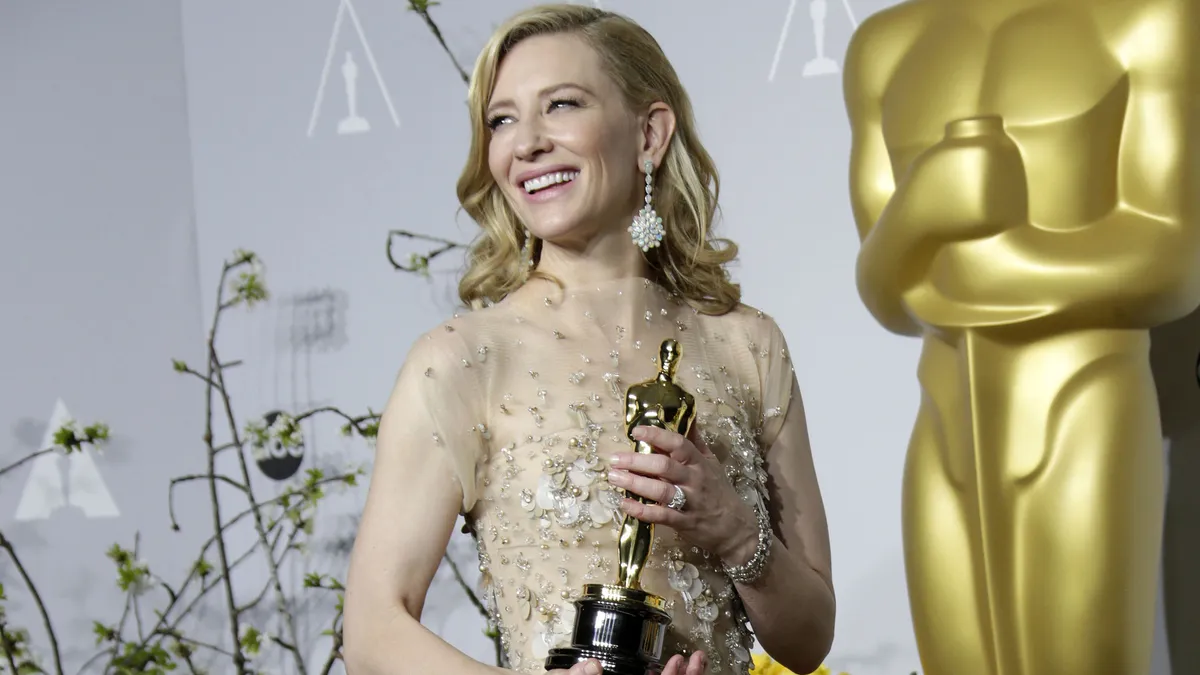
Though the ’80s saw a resurgence in Oscars for British moviemaking, with Hugh Hudson’s Chariots of Fire and Richard Attenborough’s Gandhi crowned Best Picture in consecutive years, the true Brit successes came in acting categories. Michael Caine and Sean Connery got long-overdue kudos for Hannah and Her Sisters and The Untouchables respectively; veteran actress Peggy Ashcroft was rewarded for A Passage to India, while Daniel Day-Lewis (My Left Foot), Jeremy Irons (Reversal of Fortune), and Anthony Hopkins (Silence of The Lambs) stopped the Yanks winning the Best Actor prize for three years in a row. “Apart from wheat and auto parts, America’s biggest export is now the Oscar,” quipped Billy Crystal. Luckily, Uncle Sam had a pair of gong-grabbing behemoths in his corner: Bob and Harvey Weinstein, whose Miramax outfit has been the pre-eminent award-scooper of the last 10 years. Since the mid-’90s the brothers have played Oscar like a fiddle, using Disney money and blitzkreig campaigning to garland such calculatedly middle-brow flicks as The English Patient, Shakespeare in Love, and The Hours.
These days, though, who wins is a sideshow compared to what’s worn and who arrives with whom. Johnny Carson’s famous gag that the Oscars are “two hours of glittering entertainment spread out over four hours” has become a mundane inevitability, with only occasional, priceless moments of embarrassment and humiliation to leaven the tedium. Over the years there have been plenty: Sally Field’s cringe-inducing “You like me, you really like me!” acceptance speech in 1985; Rob Lowe’s bizarre ‘Proud Mary’ duet with an actress dressed as Snow White in 1989; Jack Palance’s one-armed push-ups in 1992. And though the Academy has tried to keep up with the times the ceremony remains, as Lily Tomlin once described it, “classic American kitsch.” “The purpose of the event is not the celebration of excellence, but the celebration of ordeal,” said David Mamet. “The Oscars began as an in-house ceremony of appreciation. They have evolved into The Big Bar Mitzvah.” As far as Jack Nicholson is concerned, though, those little golden guys still have their place. “The Oscar,” he once said from behind his trademark sunglasses, “is as valid as any award around.”

