Happy holidays reader! To celebrate the season, we're gifting you with 12 straight days of some of our best features from the last six years of GamesRadar excellence. Enjoy!
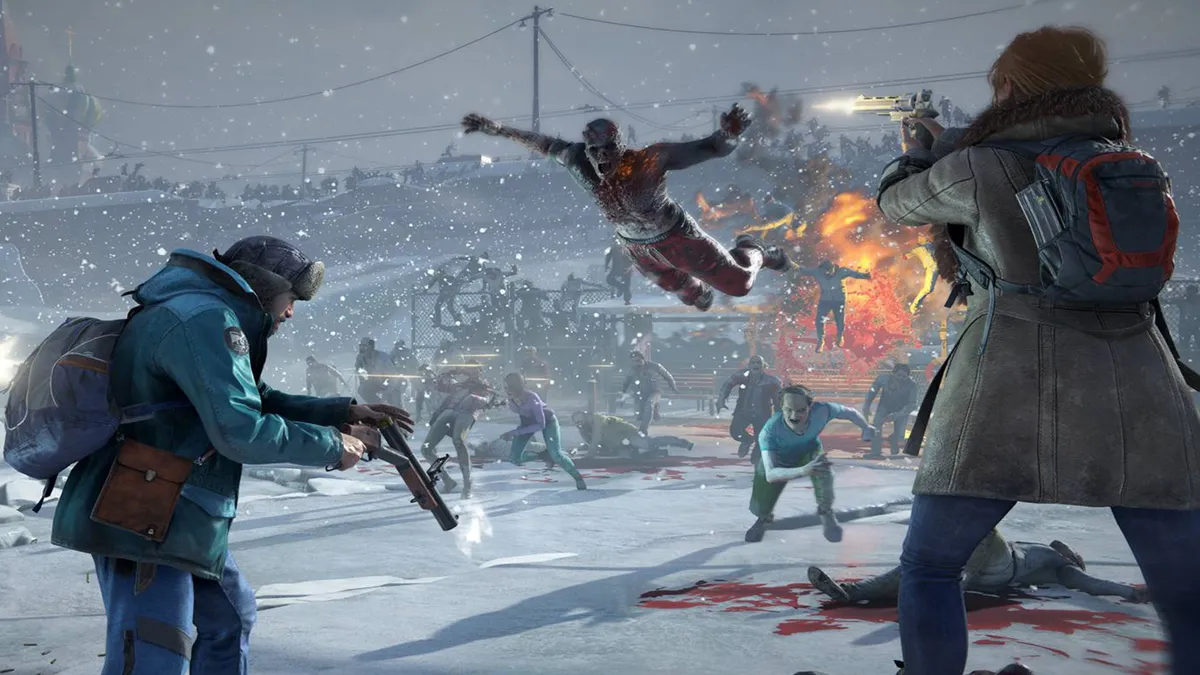
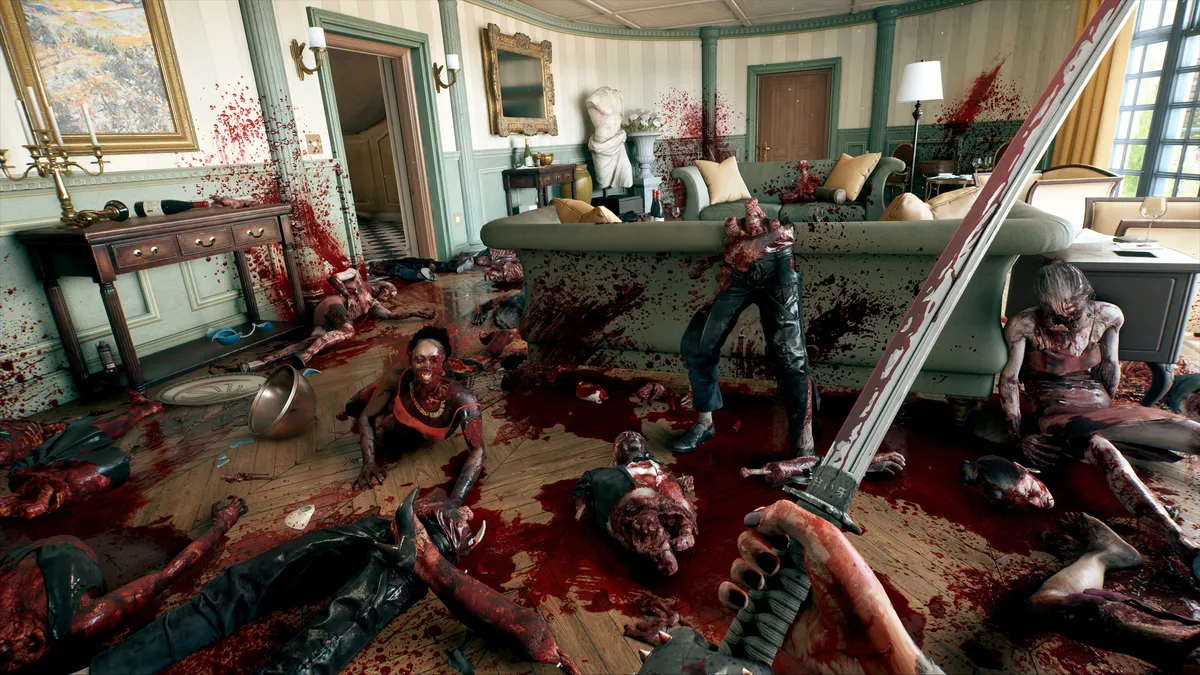
As we wrap up another year’s worth of Halloween-themed features [Ed.: Or right after awarding Game of the Year 2012 to the year's most zombie-rific title], it seems as good a time as any to reflect back on the foot soldiers that make about 99 percent of all horror games possible: Zombies. Whether fallen back on as a lazy crutch for games without a lot of enemies, used artfully as hidden metaphors or even trotted out as heroes, zombies have been a key component in videogames – horror and otherwise – for almost as long as there’s been a game industry. And time and time again, we’ve seen that their mere presence can be enough to get people interested in any given game, because hey – they’re a lot of fun to destroy.
You might not have noticed it (mainly because they all act the same), but zombies have undergone a long series of changes, subtle and otherwise, over the years. While their single-minded, shuffling hunger remains just as strong as ever, they’ve evolved with the games they populate, becoming more nuanced and complicated than most people realize. Don’t believe us? Then join us as we take a look at just how time has changed our favorite monsters.
As seen in: Death Race (1976)
Disposition: Frightened, panicky
While alternately referred to as “zombies,” “gremlins” or “stick figures,” the little white blobs in the controversial-for-its-time Death Race display all the classic characteristics of zombification, from the aimless wandering to the complete lack of self-preservation. Sometimes, you don’t even need to move to score against these idiots – they’ll wander right underneath your tires while you’re idling. We put forth that only a zombie could possibly find such a stupid way in which to die, and as such declare them to be the very first instance of a zombie in a game.
As seen in: Ghosts ‘n Goblins (1985)
Disposition: Lumbering
One of the earliest recognizable instances of a classic zombie, these pale creeps had it all. Not only could they walk in a straight line with their arms outstretched and knock Sir Arthur out of his armor (and, later, skin), but they actually came up out of the ground to do it. Also like movie zombies, they’re only really a serious threat when they mass in groups, at which point it can be difficult to jump over them or take them out quickly enough.
As seen in: Chiller (1986)
Disposition: Passive-aggressive
For a game that’s ostensibly about shooting undead creeps (but is actually more about shooting defenseless torture victims bloody), Chiller is awfully stingy with its zombies. In fact, it only really busts them out during its final stage (or first stage, if you’re playing the NES version), and even then it’s debatable if what’s onscreen actually qualifies as a “zombie.” Is the chick whose shirt can be shot off actually an undead monster clawing her way out of the grave, or has she just been buried up to her waist? The only thing here that really qualifies is the weird zombie in the foreground, which just keeps ripping off its own head and throwing it into an open grave full of flames. Fun!
As seen in: Castlevania (1987)
Disposition: Gliding
Zombies have never been less terrifying than they’ve been in the Castlevania games, in which they’ve been Dracula’s bottom-feeding cannon-fodder for about 22 years now. They also represent an early form of moral choices in games, as players confronted with zombies have the option of either killing them or jumping over them. They won’t care either way, as – like the Vaguely Threatening Zombie before them – they have no interest in anything except for moving in a straight line as quickly or as slowly as possible, depending on which game you’re playing.
As seen in: Psycho Soldier (1986)
Disposition: Grabby
To be honest, we’re not entirely sure if the “zombies” in Psycho Soldier even count as such, in the traditional undead sense. It’s hard to see much of anything under those trenchcoats and hats they’re wearing – which, by the way, seem more suited to hanging out at porn theaters circa 1976 than they do to fighting the forces of good. Still, if they aren’t zombies, then their behavior – shuffling around, arms outstretched, and making a beeline for any shimmer of movement/smell of fresh meat – is awful damn zombie-like. At this point, we feel secure in calling them a close cousin, if not the genuine article.
As seen in: Haunted Castle (1988), our nightmares
Disposition: Indifferent
While we’re going to steer clear of pointing out every stage in the evolution of Castlevania’s zombies – that’s an article for another day – it’s worth swooping back for a quick look at the little-known arcade version, which marks the first time a zombie in Castlevania dared to walk around with an exposed rib cage and gobbets of gore hanging off like it’s normal or something. These were also among the toughest zombies in Castlevania history, able to absorb two whip strikes and big enough to be difficult to jump over. Not really surprising, considering the game was intended to suck down quarters more than it was to actually be enjoyable by human beings.
As seen in: Zombi (1989)
Disposition: Inscrutable
Back in the days before Ubisoft was a household name, the publisher put out this obscure little gem, a damn-near unplayable adventure game clearly modeled after the film Dawn of the Dead. Four survivors were trapped in a mall, and were forced to explore it to look for supplies while battling the ghouls who’d wandered into the place. The zombies themselves aren’t always visible – a little icon pops up to tell you when they’re near, at which point it’s up to you to find them before they gnaw you open – but it’s not like they’re much to look at anyway. When there are no more clothes in hell, the naked shall walk the department stores, we guess.
As seen in: Friday the 13th (1989)
Disposition: Annoying
Trying to create a Nintendo game around a single, nigh-indestructible baddie is no mean feat, especially when you’re working at late-‘80s grindhouse publisher LJN. Because just wandering Camp Crystal Lake with the threat of Jason Voorhees showing up at any time apparently wasn’t spooky enough, the game’s designers decided he needed disposable zombie helpers to even the score. And so these things would rise out of the ground every few seconds to walk in straight lines as you threw rocks at them. They were also really easy to avoid. Cutting them out entirely probably would have improved the game significantly, thereby debunking the long-held theory that zombies automatically make everything better.
As seen in: Beast Busters (1989)
Disposition: Armed
Ho ho, your nerdgasmic zombie apocalypse doesn’t look so appealing when the zombies can shoot back, does it? By 1989, zombie technology had reached the point where they surpassed simple tool use and were able to comprehend and use firearms effectively. Chalk it up to radiation in the brain supply, or maybe to game developers who wanted to make a zombie-themed rail shooter, but then found out that it was a lot cheaper to animate dudes shooting at you than it was to just have them attack up close, the way zombies are “supposed” to. Whatever the reason, seeing dozens of zombies file past you with necks bent, legs stooped and firearms raised with perfect aim is kind of hilarious.
As seen in: Aliens (1990)
Disposition: Bloated
The appeal of what’s essentially a beat ‘em-up-styled shooter built around the film Aliens is instantly understandable. What’s less understandable is why, when given a menagerie of H.R. Giger-inspired alien freaks to set loose on players, the developers decided that what the game really needed was a bunch of zombies. Because, you know, giant killing machines with secondary sets of jaws, acid for blood and the ability to impregnate you to death just wasn’t scary enough. Whatever. Apparently in this version of Aliens, being impregnated with the Queen’s demon spawn turns your skin blue and gives you the urge to crawl around throwing chestbursters, use stationary machineguns and crawl around on the floor, trailing your entrails behind you.
As seen in: Aliens vs Predator (1994)
Disposition: Bloated and leggy
At first we thought these shambling blue abberations were just a symptom of the relatively unsophisticated ‘80s/early ‘90s arcade-game market, but then we played 1994’s acclaimed Alien vs Predator beat ‘em-up (the arcade one, not the SNES one), and lo and behold, there are more of the bastards! At least Capcom has given them legs, absent on most of the unfortunates crowding Konami's predecessor. Weird nonetheless.
As seen in: Super Ghouls ‘N Ghosts (1991)
Disposition: Exasperated
While the zombies of Ghosts ‘n Goblins set the tone for all zombies to come, with their outstretched arms and undying hunger, by the second sequel those same zombies just did not give a shit anymore. Look at them – their slouching posture, their failure to even raise their arms to attack. It’s like they don’t even care whether or not you accidentally bump into them and get your armor knocked off. “You know, man, whatever,” their dead eyes and slack jaws seem to say. “Not like I need this job anyway.”
As seen in: Zombie Nation (1991)
Disposition: Defensive
So, OK, here’s the thing: according to the plot of Zombie Nation, the entire US has been turned into zombies by an alien entity, and only the giant floating severed head of a ghost samurai, which shoots eyeballs and phlegm, can possibly set the situation right. With us so far? OK, now, take another look at that “zombie.” Does he look particularly dead to you? Or does he look like a stalwart defender of America’s freedoms, defending his home against a floating bald monster?
We’ve only got the game’s word that he’s a zombie, because honestly we’ve never seen healthy-looking zombies that stood on the tops of buildings, opened fire with heavy ordnance and then screamed “help!” as they fell off the roof, just before being “rescued” by the floating monster head and “converted” into a power-up. The evidence only mounts when you consider that these “zombies” are capable of the advanced skill necessary to pilot choppers and tanks.
Hey, obscure developer Meldac, are you sure you didn’t just devise the “zombie” plot as a flimsy justification for destroying a city? This is not what the box advertised!
As seen in: Wolfenstein 3D (1992)
Disposition: Excitable
The product of a secret Nazi project to create super-soldiers with guns where their hearts should be, the white-skinned creatures from Wolfenstein 3D’s second episode marked the point at which it was clear the game was throwing historical accuracy to the wind. They’re a little spooky the first time you meet them, but all they really do is fire pistol rounds at you while waving their arms around like cheerleaders, so their novelty is short-lived. Hell, the dogs in the game are probably more threatening.
As seen in: Alone in the Dark (1992)
Disposition: Janky
A true watershed moment in zombie history, the appearance of Alone in the Dark’s very first zombie – which emerges through a trapdoor in the attic of the haunted Derceto mansion – sent a clear message to the rest of zombiekind: evolve or die (again). Granted, it didn’t send the message very strongly, as it was too busy moving slowly and trying to swing its stiff, triangle-filled arms into the faces of pesky adventurers. But it was still a trailblazer, even if it looked like a cross between a gray alien and a frog in a festive overshirt.
As seen in: Doom (1993)
Disposition: Volatile
Even though the first-ever 3D zombie had made history the month before, the 2D zombies of the world weren’t about to let themselves be outdone by some ridiculous smoke-and-mirrors gimmick. Their first response was to up the ante in Doom by getting their hands on some rifles, which they’d occasionally fire – sometimes at each other – while pacing around aimlessly and trying to aim in the direction of the player. They were a little pathetic, but trying to aim a futuristic firearm while you’re dead and/or possibly possessed by ancient demons is no mean feat. Seriously, try it sometime. Let us know how that goes.
As seen in: Alone in the Dark 2 (1994)
Disposition: Surly
What a difference two years make. While the zombies of the first Alone in the Dark were weird, skeletal and barely recognizable as coherent characters, the ones in its sequel were built to look like human beings – albeit green-skinned ones – and were capable of handling firearms, in what must have felt like a smack in the face to all those lingering 2D zombies. Clearly, the game needed to be stepped up, and drastically.
As seen in: Darkstalkers (1994)
Disposition: British
In what would prove to be the last gasp of zombies still clinging to 2D unlife, the dangerously nasty Lord Raptor strutted onto the fighting-game scene like a decomposing Sid Vicious. Disguised as a rock star by day, Raptor’s true nature surfaced when facing his fellow Night Warriors, at which point he could stab them with his extending ribs or kick them in the face with a leg-turned-chainsaw (as you do). Sadly, this wasn’t enough to save 2D zombiekind. From this point onward, the species would not only exist in three dimensions, but dominate them like few others.
As seen in: Resident Evil (1996)
Disposition: Itchy, tasty
The zombies of Resident Evil were the zombies that changed everything. While they followed classic zombie behavior – moaning, shuffling, biting after clawing with outstretched arms – they marked the point at which zombies went from being kitschy, disposable baddies to being a whole damn genre unto themselves. Nobody was all that afraid of zombies before 1996, but the years that followed would see a popularization of them as monsters that would eventually lead to the fever-pitch fandom of today. Also they were a lot of fun to shoot.
As seen in: Quake (1996)
Disposition: Scabby
“Oh yeah?” growled the shooter genre in response to the adventure genre’s release of Resident Evil, “My zombies’re way better than yours!” And so Quake introduced this little fellow, whose job was to basically stand around ripping chunks off his head and throwing them at you. He wasn’t Quake’s only zombie, either, but since all the others look kind of like riffs on existing creatures from Doom, we’ll single out the one who at least does something kind of weird.
As seen in: Flesh Feast (1998)
Disposition: Dazed
Another homage to Dawn of the Dead’s successful zombies-in-a-mall scenario, Flesh Feast plays a bit like Diablo or Dungeon Siege, but in a mall with zombies. The zombies themselves aren’t all that spectacular, being normally seen from a top-down perspective, but they’re fairly plentiful and fun to shoot, so we’ll put this down as an evolution of what Zombi tried to do and what Dead Rising eventually (and more successfully) did.
As seen in: Half-Life (1998)
Disposition: Muffled
Easily one of the best-loved zombies ever to appear in a videogame – and certainly the most memorable – headcrab zombies are poor souls who’ve been taken over by alien headcrabs, who glom onto their skulls and take up residence, controlling their every move and gradually causing the body to decay and twist in horrible ways. The preferred method for dealing with them involves a crowbar, but any gun applied directly to the headcrab will be about as effective (destroying the body instead will just give you another headcrab to deal with. In Half-Life 2, you can also have fun slicing them in half with giant sawmill blades and the Gravity Gun. However you decide to dispatch them, they’re an enduringly creepy presence and it’d be hard to imagine Half-Life without them.
As seen in: The Legend of Zelda: Ocarina of Time (1998)
Disposition: Irritable, horny
When Zelda finally caved and added zombies to its rogues gallery, it didn’t settle on just any zombie – no, it needed special zombies, with a special twist. And if zombie on this list deserved to be locked up instead of killed, it’s the ReDeads, whose pelvic thrusts have added an extra coating of icky to their already-creepy attacks. Ordinarily just shriveled, naked corpses who stand around wearing spooky wooden masks, the ReDeads are instantly recognizable by their constant, low moans – but if you get too close to one, it’ll emit a piercing shriek, stunning you just long enough for it to shuffle over to where you’re standing, latch on with all four limbs and start dry-humping you like it’s going out of style. They’ve also gone through some changes over the years, not the least of which is the ability to dance, if you’ve found the right song in Ocarina’s sequel, Majora’s Mask.
As seen in: The House of the Dead 2 (1998)
Disposition: Shambly
While plenty of games feature zombies with differing appearances, it’s difficult to think of a series with more variety and diversity crammed into its undead ranks than The House of the Dead. You’ve got bargain-basement shirtless zombies with half a face, gross swamp zombies covered in slime, semi-intelligent ax-toting zombies and giant, mutated boss zombies with chainsaws, superpowers and hearts on the outside. And that’s just in The House of the Dead 2, probably the most widely played edition of the series; the sequels ramp up the variety even more, giving us everything from giant zombie cops to infected nurses.
As seen in: Zombie Revenge (1999)
Disposition: Pugnacious
Creating Zombie Revenge as a House of the Dead-spinoff brawler was an interesting move, mainly because zombies are always thought of as creatures that you’d never want to get within 10 feet of, never mind punching distance. And because just making a brawler where your only enemies are mindless, lurching stupids would get boring in a hurry, Sega gave its zombies not only the gift of martial-arts prowess, but also the ability to use weapons, up to and including guns (which you could then take after beating them up/shooting them). It’s unorthodox, sure, but it’s still a lot more fun than trying to play Onechanbara (on which more later).
As seen in: Bust A Groove 2 (1999)
Disposition: Dreamy
According to the zombie dancer Bi-O’s backstory, he’s not actually undead – he’s just the unfortunate victim of an ax-to-the-head prank by his tantrum-prone son, the gasmask-wearing dancer Gas-O. He’s also kind of an evolutionary dead end, insofar as this list is concerned, because – with the exception of a brief scene from Stubbs the Zombie – no videogame zombie, to our knowledge has solved its problems through the art of dance. But whatever – Bi-O looks plenty dead to us, he does the robot with unusual flair and his stage is the deck of a haunted ship during a storm at sea, so we love him anyway.
As seen in: Onimusha: Warlords (2001)
Disposition: Cackly
Notable zombies come and go, but few are as instantly recognizable – or as enduring to their series – as the samurai zombies from Onimusha. Clad in rags and rice-paddy hats, they’re more than just the usual shambling flesh-eaters we were used to by this point – they can use swords with the skill of a warrior, suggesting a level of intelligence previously unheard of in undead cannon fodder. They went on to evolve even further in their own series, at one point growing four spider-like legs for added intimidation.
As seen in: Conker’s Bad Fur Day (2001)
Disposition: Hungry
Technically another evolutionary dead end, the squirrel zombies from Conker’s Bad Fur Day (and, later, Conker: Live and Reloaded) are one of the only instances of anthropomorphic animals rising from the grave with horrific disfigurements and are therefore two exciting aberrations in one. They're also fast and aggressive as hell, so if Conker isn’t quick on the draw with his shotgun, it’ll only take a few seconds before he can look forward to spending the rest of eternity moldering away in the stomachs of several dozen zombies.
As seen in: Silent Hill 2 (2001)
Disposition: Sexy
No list of zombies and their evolutionary changes over the years would be complete without the nurses from Silent Hill, distinct for being just about the only undead horror that made players wonder whether they were supposed to beat it to death or awkwardly try to buy it a drink. Better still, if you read into the game’s backstory, you’ll find that they’re actually a projection of the protagonist’s sexual frustrations, which stemmed from his wife’s terminal illness, thereby giving the art-game crowd an excuse to ogle them just before braining them with a lead pipe.
That sounds really messed up, now that we actually wrote it out.
As seen in: Halo (2001)
Disposition: Pained
Although the Flood is arguably the worst part of every Halo game it appears in, it nonetheless has a unique way of spreading: autonomous spore-creatures that burrow into their hosts, take control and eventually transform them into walking, gelatinous incubators for other spores. They’re disgusting, horrific and uniformly a pain in the ass, but they’re an original take on what by now is arguably the most unoriginal baddie imaginable (except maybe for Nazis, because those actually exist), and if that doesn’t count as an evolution, we don’t know what does.
As seen in: Resident Evil (2002)
Disposition: Bitey
When Resident Evil got its lavish, GameCube-exclusive remake, of course the zombies had to be just as meticulously overhauled. The end results are some of the most terrifying creatures ever to stalk a TV screen, with diverse appearances, horrible grins and the ability to eventually come back to unlife as super-strong, super-fast “Crimson Heads” unless they’re burned or get their heads smashed in. The new treatment added some surprises to what had long been the defining portrayal of zombies, and succeeded in making the tired old creatures scary all over again.
As seen in: Eternal Darkness (2002)
Disposition: Sneaky
Eternal Darkness was a game known for springing unique tricks and twists on its players, but one of the biggest was that its battlefield was presided over by three dark, nigh-omnipotent forces of evil, and depending on which one you chose to oppose at the beginning of the game, the zombies you face throughout would be different. Red ones were physically tougher than all the others, blue ones could deal out magical damage, green ones could have adverse effects on your character’s sanity, and the black ones – which were present no matter which path you chose – were kind of weak and skeletal and not really much of a threat. Still, the prospect of facing an entirely different kind of zombie – and earning different endings as you chose all three paths – was a cool feature, and was one of the many reasons Eternal Darkness was as incredible a game as it was.
As seen in: Prince of Persia: The Sands of Time (2003)
Disposition: Bitter
When the Prince is tricked into removing a sacred dagger from a magical hourglass at the beginning of Sands of Time, it sets off a cataclysmic event that turns all the inhabitants of his father’s castle into twisted, malevolent creatures made of magical sand. They’re a lot cleverer than your standard zombie, able to fight competently in groups, but ultimately they’re just piles of sand who can be absorbed into the dagger. They’re not as gruesome as the undead monsters we’re used to, but the added horror of the Prince having to fight his friends, retainers, servants and family adds a bit of weight to what might otherwise be just a standard brawl against zombie-like stand-ins for generic swordsmen.
As seen in: Siren (2004)
Disposition: Eerie
Brought about by the interruption of a ceremony, the immensely creepy Shibito – Japanese for corpse – are the denizens of a little mountain town who’ve been transformed by an ancient evil. This transformation, aside from making them into cackling, murderous zombie-things, also gives them inappropriately expressive faces that are a hell of a lot more unsettling to look at than those of the average flesh-patchwork zombie mug. But what truly sets them apart – aside from their apparent retention of enough intelligence to use tools – is that you can “sightjack” them to see what they see, and reveal when it’s safe to try and sneak past them.
As seen in: Doom 3 (2004)
Disposition: Tech demo-y
Amid all the monster closets and plastic-looking demons of Doom 3, the gun-toting zombies of the first Doom made a triumphant return, this time sporting more diversity and overall gruesomeness than ever. Instead of wandering paper targets that occasionally shot back, Doom 3 delivered slightly smarter (and almost uniformly bald) zombies, as well as unarmed wretches who’d lurch out of the shadows and attack you old-school flesh-eater style. Much as we like to rag on the game’s shortcomings, its zombies deserve to be singled out as a bold leap forward for the graphical representation of undead; none to come before looked quite this convincing.
As seen in: Stubbs the Zombie (2005)
Disposition: Courageously hungry
An undead salesman rose from his grave to find that a retro-futuristic city full of tasty, 1950s-era paranoiacs had sprung up around it. And as he set out for what eventually turned out to be revenge, Stubbs’s wordless grunting and ability to turn any random citizen into a zombie follower just by chomping into their heads instantly won us over. He’s also, to our knowledge, the first zombie ever to be able to drive hover-cars and remotely hijack people by throwing his severed hand at them, thereby representing a dangerous – but immensely fun to play – stage into the evolution of the zombie species.
As seen in: Resident Evil 4 (2005)
Disposition: Annoyed
Prior to Resident Evil 4’s release, publisher Capcom insisted up and down that the menacing, apparently intelligent enemies that filled its quaintly xenophobic Spanish village were not, in fact, zombies. However, we have to point out that, while they’re not technically dead, they’ve all been hijacked by the gruesome Plagas parasites, and mind-controlled people who move slowly and attack with close-quarters weapons qualify as zombies in our book. If anything, they’re another important step in the evolution of zombiekind: zombies that aren’t dead, and are therefore better able to integrate into polite society.
As seen in: The Elder Scrolls IV: Oblivion (2006)
Disposition: Confused
We can’t blame the zombies in Oblivion for being upset and aggressive; we probably would be, too, if we’d been locked up in some unlit dungeon and forced to stand guard over some necromancer’s stash of illegal corpses. And unlike most other zombies, Oblivion’s green creeps can actually survive without their heads or other body parts, making them a good deal hardier than their more “modern” counterparts. After all, how do you kill a zombie when it doesn’t have a head for you to shoot? (Answer: hack it to pieces with a large chunk of metal.)
As seen in: Dead Rising (2006)
Disposition: Seeking retail therapy
While they’re relatively harmless at first, Dead Rising’s zombies are the first to really represent the “real” threat of a zombie apocalypse: the overwhelming numbers that make it hard to go anywhere or do anything without being overwhelmed by the crowd and ripped to pieces. They’re also the most interactive zombies we’ve ever dealt with, as no other game enables us to bean them with soccer balls, run them over with a lawnmower, chainsaw them to pieces and rip out their entrails in the space of about five minutes.
As seen in: Mass Effect (2007)
Disposition: Creepy
Apparently inspired by Star Trek’s borg and created by impaling humans on giant, fearsome-looking spikes, the Husks are single-minded robo-zombies who exist only to attack their own kind and act as grunts for the Geth, a race of destructive, hive-minded cybernetic creatures. Usually they’re easy to dispatch, but they’re a sad, chilling reminder of what the places you explore must have been like before the Geth came to visit. (Read: populated.)
As seen in: Dead Head Fred (2007)
Disposition: Canny
“Dead Head” Fred Neuman might not fit the classic zombie mold in the mindless, flesh-eating sense, but his body is a rotting corpse and he has a habit of collecting (and wearing) his enemies’ heads, so we’ll count him as a strange genetic offshoot from the norm. And if that’s not enough, he also fights zombies and wears their heads, some of which are flexible enough to be able to store huge amounts of fluid or air. Nasty.
As seen in: Home (2008)
Disposition: Buyer’s remorse
Much as we’re tempted to applaud any inclusion of zombies in any game, Home’s implementation of them left us a little… cold. As part of a Halloween promotion, Home players can purchase the “Zombie Deadquarters,” which amounts to a leaky basement with a grubby-looking zombie costume, for $4.99. For that, you can wander around Home in a zombie costume that everyone else can buy, or sit around with your friends in a poorly lit hovel, pretend to stalk each other and then find creative ways to fill the place with tasteful European furniture.
As seen in: Fallout 3 (2008)
Disposition: Grumpy or psychotic, depending on which kind you meet
Fallout 3 is unique in that its “zombies” are actually just normal people who’ve been disfigured and/or driven insane by exposure to massive amounts of radiation. It’s also unique in that those zombies come in two distinct varieties; the kind that fully retain their mental faculties and just want to live in peace despite their deformities, and the kind who’ve been reduced to slavering, crazed cannibals. In general, the ones with their minds intact are friendly, if suspicious of others, while the rest should be shot on sight. And if you need any help telling them apart, just be aware that the ones you can make friends with don’t normally look like fleshy skeletons that hiss and charge at you the second they see you.
As seen in: Call of Duty: World at War (2008)
Disposition: No longer racist
Possibly the product of bizarre Third Reich experiments, the existence of Nazi Zombies in an unlockable mode breaks the traditional “realism” of the Call of Duty series. Instead, it delivers a Night of the Living Dead-style experience, in which you and three other survivors have to barricade yourselves into a building and fight off ever-growing waves of Wehrmacht flesh-eaters. Their presentation and behavior isn’t precisely revolutionary, but having to continually repair barricades and flee into previously barricaded areas gives the whole thing a “last men on earth” feeling that most zombie games lack.
As seen in: SIREN: Blood Curse (2008)
Disposition: Even eerier
While the Shibito in Siren were pretty damned unsettling, their PS3 appearance refines their potential as frightening, murderous hillbillies who frequently have to be sneaked past, and who have a nasty tendency for lurching out of the shadows, trying to force their way past your barricades and ganging up to hack you to death with gardening tools. The weird, shifting faces they used to have have been replaced by bizarre, blood-caked rictus grins, but they’re still just as scary when they’re shrieking for your blood through the darkness and heavy rain.
As seen in: Left 4 Dead (2008)
Disposition: Hyper-aggressive
Say what you will about the possibly blasphemous “fast zombies” in film – in videogames, they’re an immediate godsend. While we love blowing the heads off of slow, idiot cannibals as much as anyone, there’s definitely something to be said for having to defend yourself from rushing hordes of lightning-fast, aggressive maniacs. The zombies of Left 4 Dead are a quantum leap for zombies as a species – in fact, it might actually be a case of too much evolution, as the sprinters are joined by even-more-dangerous Hunters, Boomers, Witches, Smokers and Tanks. It’s getting kind of difficult to keep track of them all, and if it keeps up for much longer, the more traditional moaners and munchers could soon find themselves obsolete.
As seen in: MySims Agents (2009)
Disposition: Friendly
Arguably another evolutionary dead end, Carl the Zombie Butler actually made his debut in MySims Kingdom, which introduced him as being unhappy with the swamp in which he was dwelling. He’s gotten an unlife upgrade since then, becoming a butler to a wealthy family in MySims Agents, in which he’s framed for breaking a crystal. He’s also loyal, sweet-natured and apparently isn’t cannibalistic in the least.
God, what a lame excuse for a zombie. Let’s move on, shall we?
As seen in: Prototype (2009)
Disposition: Enraged
As Prototype’s story advances, so too does the zombie plague that threatens to engulf all of Manhattan, turning its residents into disfigured crazies who hang out in crackhouse-like “infected buildings” and later transform into monstrous freaks that resemble nothing so much as hairless bears. Before that happens, though, they’re less a threat than they are a food source, with Alex Mercer able to tear them apart and harvest them for energy almost at will. So while they’re not all that different from, say, the sprinters of Left 4 Dead, it’s nice to be able to turn the tables and devour a few zombies once in a while.
As seen in: Onechanbara: Bikini Samurai Squad (2009)
Disposition: Easily distracted
At first glance, there is absolutely nothing original or even very interesting about the poor saps that pass for zombies in the Onechanbara games. Intended for little more than being hacked to pieces, they verge on harmless, often standing around for a while doing nothing before attacking. They do, however, have one saving grace: much like a gecko with a detachable tail, they’re able to continue functioning after their heads, arms and even their torsos have been violently hacked off. While its usefulness as a survival trait is questionable, given the unlikelihood that they’ll stick around long enough to pass it on to progeny, there are enough of the stupid bastards that we can assume they’re proliferating nicely.
As seen in: Plants vs Zombies (2009)
Disposition: Frustrated
After making their debut in a now-famous "viral" trailer, the zombies of Plants vs Zombies became an overnight sensation and a beloved internet icon, thereby marking a triumphant return to prominence for the 2D zombie, long thought to be extinct (or at least fairly rare). They’re also one of the best in-game examples of that legendary zombie persistence, chewing and clawing their way through armies of defensive plants (which they normally would never eat) just for a taste of your brains. They’re also more diverse and inventive than the lumbering idiots of earlier games, and the uncharacteristic challenge that presents means we can likely expect to see more of them – perhaps even a fad of them – very, very soon.
As seen in: Left 4 Dead 2 (2009)
Disposition: Even more hyper-aggressive-er
While their behavior isn’t greatly changed in the sequel, the run-of-the-mill zombies of Left 4 Dead 2 are just a little more destructible than before. More to the point, they’re also joined by a whole mess of new mutant offshoots, including Spitters, Jockeys and Chargers, as well as more “normal” zombies in damage-resistant Hazmat suits and riot gear. And that’s in addition to the Tanks, Smokers, Hunters, Boomers and Witches from previous games. If there’s one thing we’ve learned from this, it’s that Left 4 Dead 2 is proving to be the evolutionary equivalent of the Galapagos Islands for zombies as a species, and we’re looking forward to seeing how else it can push them forward in the future.
Since this article was published, we've come to the point where instead of updating the list, it might almost be easier to list the slim number of games that didn't have zombies in them. Was 2012 the Year of the Zombie? Will we see more of our rotting friends from here on out? Let us know which recent undead you've particularly enjoyed making... er... un-undead.
Or stick with the theme in Death by decade: The evolution of dying in games and A history of videogame chainsaw killings. We promise, most of the entries will be largely armless. (Oh, you're welcome.)
Showing 1-8 of 8 comments
GamesRadar is the premiere source for everything that matters in the world of video games. Casual or core, console or handheld - whatever systems you own or whatever genres you love, GamesRadar is there to filter out what's worth your time and to help you get even more from your games. We deliver the best advice, the most in-depth features, expert reviews, and the essential guides for all the top games.
© Future US, Inc. 4000 Shoreline Court, Suite 400, South San Francisco, California, 94080. All Rights Reserved.
|
Log in using Facebook to share comments, games, status update and other activity easily with your Facebook feed.
brickman409 - December 30, 2012 1:59 a.m.