
 Join The Community





I'm here to help you step things up a gear and discover the very best racing games you can play in 2026.
While you'll find plenty of vehicular-based racing included, as our ranking shows, there's so much more to explore. From speeding on foot, to trying to reach first place in a kart, and putting pedal to the metal on a bicycle, there's all manner of fantastic racing games to try out across all platforms, including some of the latest new games, so you're sure to find something for you here.
Taking into consideration the biggest series around - including some of the best Need for Speed games - as well as notable indie racers that do it a little differently, we've brought together a vast range that we'd recommend. With some also earning place among our rankings of the best Xbox Series X games and best PS5 games, there's so many highlights out there, and we're happily set to see more with the likes of the upcoming Star Wars game, Star Wars Galactic Racer, landing this October. But for all of the best racing games you play right now, read on below.

20. Wheel World

Developer: Messhof
Platforms: PC, Xbox Series X/S, PS5, PS4,
If you're looking for a feel-good racing game that's a little bit different, Wheel World could be the experience you're looking for. Taking on the role of a young cyclist called Kat, you set out to save Wheel World, which becomes your open-world playground as you explore on your bike and put pedal to the medal by taking on races against rival cyclists.
There's a unique edge to this racing experience since you're also accompanied by a spirit called Skully who acts as a guide as you try to help the spirits that inhabit the place. Riding is a lot of fun in Messhof's adventure, and with a variety of parts to customize your two-wheel ride with, you get to decide what style of rider you want to be. For more, check out our Wheel World review.
19. Hotshot Racing

Developer: Lucky Mountain Games / Sumo Digital
Platform(s): Switch, PS4, PS5, Xbox One, Xbox Series X, PC
Here's another one that's available on all the main platforms. While it is an all-new title, it's very much made in the style of a '90s arcade game. Its flat-shaded polygon graphics hark back to another game further up this list, and the racing mechanics are simple enough for anyone to enjoy, yet provide advanced handling traits for those who delve deeper.
Drifts and slipstreams fill your turbo boost, but slipstreaming itself can be enough to keep you with the rest of pack while you charge up, ready for a blazing finish to the race. Pretty, smooth and pleasantly wacky in its story scenes, this is only really missing car damage.
18. Dirt Rally 2.0

Developer: Codemasters
Platform(s): PC, Xbox One, Xbox Series X/S, PS4, PS5
There have been a disproportionately high number of good rally titles released over the past few years, but it's Codemasters' Dirt Rally that's risen to the top. While the official WRC games are decent simulations of this most daredevil of motorsports, Dirt Rally 2.0 nails the feeling of driving at both low and high speed.
It's ultra-smooth, ultra-realistic and every surface feels just right. Best played with a wheel and pedals (and a handbrake if you can get one), this is still lots of fun on a pad. Just be warned - there's a reason not everybody goes rallying at the weekends. It’s very, very difficult.
17. Haste

Developer: Landfall
Platform(s): PC
Haste is a fast-paced, third-person racing experience that sees you speed on foot across a collapsing universe. You can expect a story to explore, plenty of customization to change up your speedy build, and different biomes to race through.
With great music, colorful, procedurally generated levels, and different abilities to master, Haste's vibes are immaculate and it's a downright fun experience that's worth sprinting through if you're looking for a racing experience with its own unique edge.
16. Horizon Chase: Turbo Edition

Developer: Aquirius
Plaform(s): PC, Xbox One, Xbox Series X/S, PS4, PS5, Switch
Another modern yet retro-styled game, this harks back to the late '80s and early '90s when racing games were still pseudo-3D, using sprite scaling to give the illusion of 3D depth. Of course, today such scaling is hyper-smooth, even on Nintendo Switch, and the game moves like greased lightning.
The gameplay is simple, seeing you manage fuel levels by collecting canisters and picking up coins as you lap the track, all while dodging slower cars and using your turbo wisely. It's an absolute blast, and cheap too, so there’s no reason to miss it.
15. DeathSprint 66

Developer: Sumo Digital
Platforms: PC
If you're looking for something a little bit different, Sumo Digital's on-foot racer fits the bill. Set in the future in the year 2066, the racer takes place in deadly, dystopian TV show where you're a contestant. With several different online PvP modes as well as PvE episodes, there's all manner of races to try out, from timed challenges to chaotic trapped-filled tracks, and more.
With slick, stylish, and fluid racing that's satisfying to master on-foot, it has shades of Mario Kart, with items that can you an advantage or take out a fellow racer as you speed to the finish line.
14. GRID Autosport

Developer: Codemasters
Platform(s): Switch, iOS, Android
Originally a 360/PS3 racer, this Codemasters game represents the final hurrah for 'old' GRID. It's now only available on Switch in terms of the modern consoles, but the game has been beautifully optimized for Nintendo's hardware, offering a 30fps detail mode and a target 60fps reduced-detail mode.
Both look lovely, and the slightly simplified handling of the realistic cars on realistic tracks makes for the deepest racer on Switch, while still proving fun to play for novices. With everything from touring cars to single-seaters, this is true console-quality racing in your hand, and arguably better than modern GRID on the other consoles.
13. Wreckfest

Developer: Bugbear
Platform(s): PC, Xbox One, Xbox Series X, PS4, PS5
Channeling the 32-bit classic Destruction Derby, Wreckfest is a racing game that's all about destruction. The cars exhibit soft-body physics, which means their bodywork bends and warps realistically with impacts from other vehicles and the walls of the track.
Throw in about a zillion physics objects (and even a few more with the next-gen patch installed) and you've got yourself some crazy racing action. And that’s before you add in bowl events that can see you abusing ride-on lawnmowers in an ultra-silly Battle Royale. It's utter chaos and may not hold your attention long-term, but it's undeniably great fun while it lasts.
12. Dirt 5
Developer: Codemasters
Platform(s): PC, Xbox One, Xbox Series X, PS4, PS5
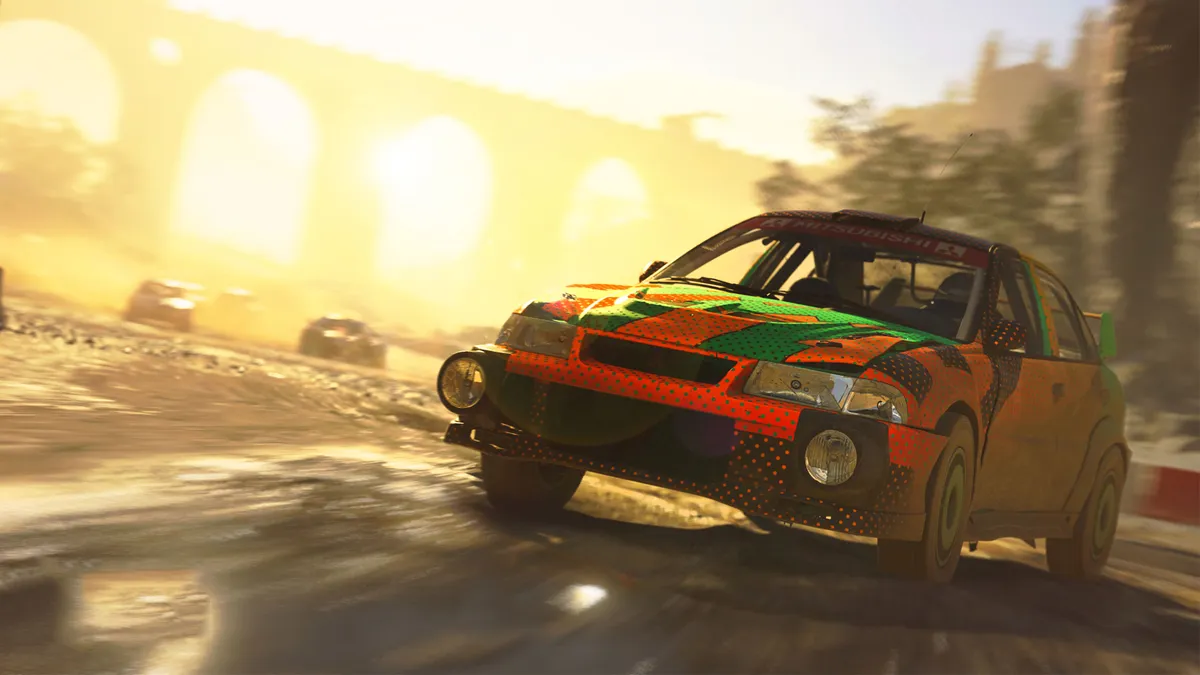
There's a warm and fuzzy feeling that comes from having a great-looking racing game to kick-start a new console generation, and Dirt 5 provided exactly that for PS5 and Xbox Series X/S. While by no means the deepest racer on this list - quite the opposite, in fact - it is nonetheless very good-looking, action-packed, and one of the most cheerful racers we’ve seen in a long while.
What makes it even better are the Playgrounds mode which allows you to craft your own Time Trial and trick arenas, and the absolutely unbelievable 4-player split-screen, which is playable across the majority of the career mode. Both gorgeous on current-gen and particularly impressive on the now-aging PS4, this is a true return to form for the core Dirt franchise.
11. Crash Team Racing Nitro-Fueled

Developer: Beenox
Platform(s): Xbox One, Xbox Series X, PS4, PS5, Switch
Another game that's available on all three major platforms (but oddly not PC), Crash Team Racing: Nitro-Fueled started off life as two classic kart racers on PS1 and PS2. They've been recreated here with incredible authenticity, much like the Spyro Reignited Trilogy, retaining the feel of the original.
You can even steer with the digital D-pad for true retro nostalgia. While the track design is superb and the weapon system's still great, it is rather difficult. So while patience is definitely rewarded, those who lack it may prefer something like Mario Kart 8. But for the rest of us, this is pure class.
10. Need For Speed: Hot Pursuit Remastered

Developer: Steller Entertainment Limited
Platform(s): PC, Xbox One, Xbox Series X, PS4, PS5, Switch
Back when this originally came out on PS3/360, it was a revolution in social gaming. The 'Autolog' online leaderboard system encouraged friends to challenge each other and vie for automotive superiority. It was such a good idea that the template has been widely adopted across gaming. But fortunately, the core gameplay remains simply great fun.
As illicit street racers or the cops chasing them, you must careen along highways and drift around arcing bends, deploying an arsenal of clever technological traps like spike strips, EMPs and even helicopters. Cooldown times are well weighted and the Burnout-esque crashes - while not quite as destructive as they should be - look gorgeous in 4K on the modern consoles. It’s well worth a go; this is old school racing game fun.
9. Forza Horizon 4
Developer: Playground Games
Platform(s): Xbox One, PC, Xbox Series X
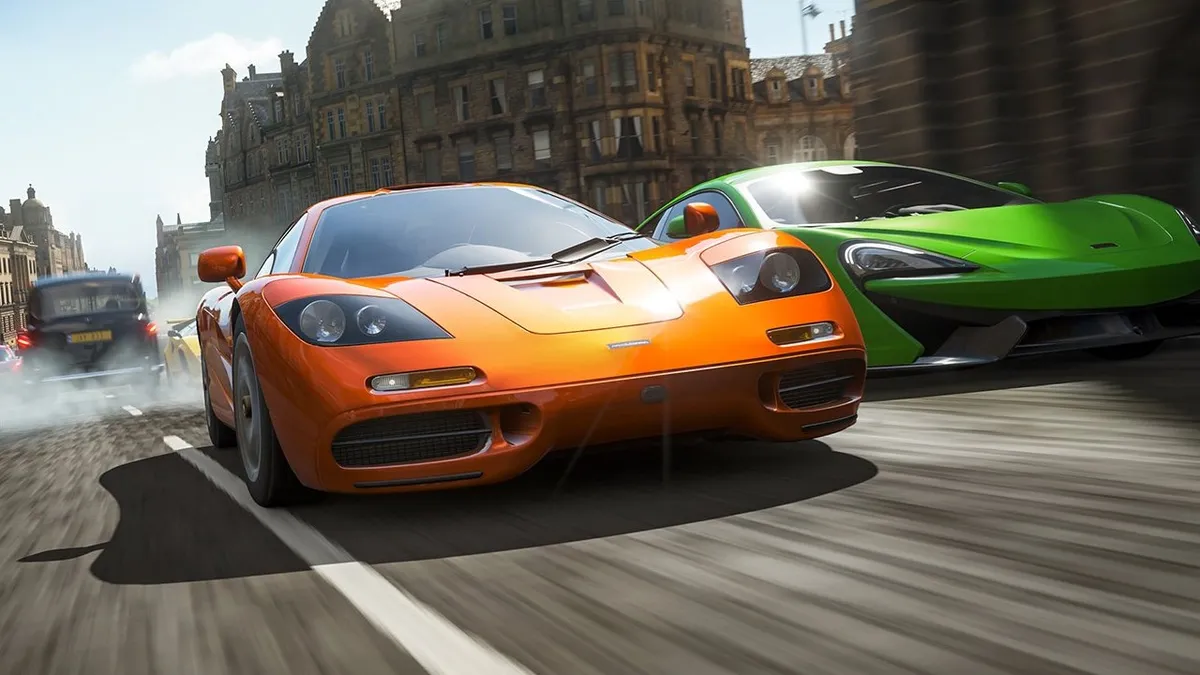
While we still love Australia's scenery in the third installment, Forza Horizon 4 has superior track design and a wonderful 'seasons' feature, changing the environment spectacularly over the game’s virtual years.
While not packed with quite as much personality as Burnout Paradise, you can still lose yourself for hours in these free-roaming worlds. Utterly beautiful and with an astonishing level of quality despite its size, you can't go wrong with this one. It's worth noting that Forza Horizon 4 has not been delisted from digital stores, but if you own a copy or can still snap one up physically, it's well worth checking out.
8. Sega Ages Virtua Racing

Developer: M2
Platform(s): Switch
The breakthrough flat-shaded 3D racing game from 1992 has been remastered for Nintendo Switch using the original arcade game's source code. So everything looks and feels exactly as it should, only it's now running at 60fps instead of the arcade version's 30fps - and at 1080p in docked mode too, making for one of those rare conversions that's truly better than arcade-perfect.
Gameplay-wise, it's beautifully simple: race a single-seater F1-styled polygon car around three blocky tracks, trying to win and not run out of time. It's pure arcade heaven and plays brilliantly. Don't miss it.
7. Burnout Paradise Remastered
Developer: Stellar Entertainment / Criterion Games
Platform(s): PC, Xbox One, Xbox Series X/S, Switch, PS4, PS5
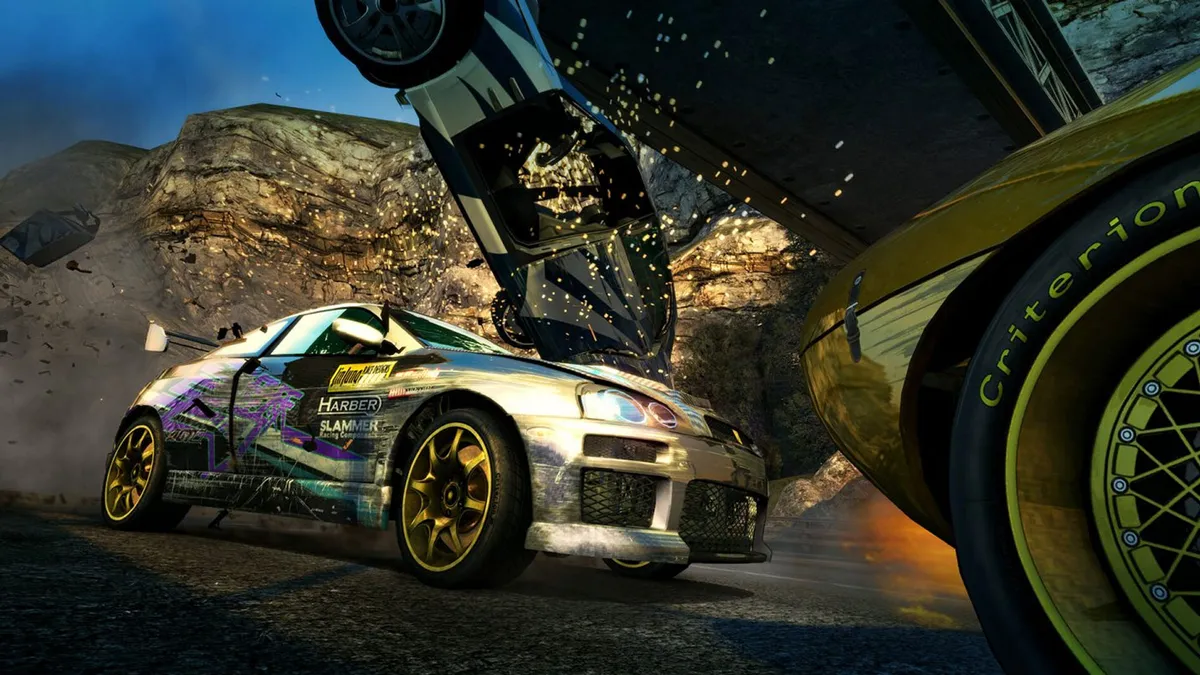
If you haven't ever played Burnout Paradise, you need to fix that right now. With DJ Atomica talking you through the incredible open-world playground of Paradise City and its former DLC add-on Big Surf Island, this game absolutely nails the atmosphere it’s going for.
Huge jumps, seamlessly-integrated online gameplay, and still some of the best crashes in the business make this a masterclass in open-world racing game design. Quite why its template has been copied but never bettered is a complete mystery since it’s 14 years old at this point, but it’s still doing the business, even holding up surprisingly well on Switch.
6. Forza Horizon 6

Developer: Playground Games
Platform(s): PC, Xbox Series X/S
Boasting one of the most impressive racing game engines in the Forza Horizon series, Forza Horizon 6 sped onto the scene in 2026 to deliver a technologically noteworthy entry in Playground Games' long running series.
With Japan setting the scene the car-fueled playground this time around, Forza Horizon 6 sees you start out as a tourist who joins the Horizon festival as a rookie driver. While the racing is entertaining in its own right, nothing beats soaking up the sights of the world as you sink into smooth drives through Japan. For more, head on over to our Forza Horizon 6 review.
5. Need for Speed Heat
Developer: Ghost Games
Platform(s): PC, Xbox One, Xbox Series X/S, PS4
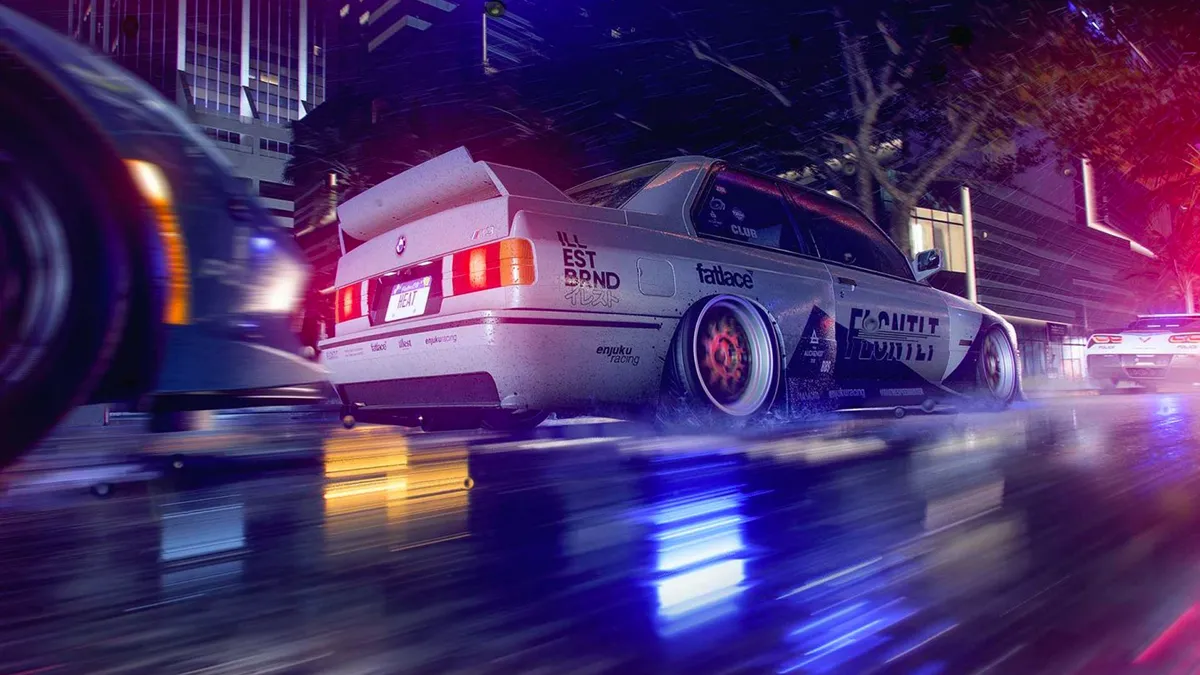
As one of the best Need for Speed games we've seen in recent years, Heat delivers a fast-paced adventure packed full of challenges as you try to rise up and earn your self a reputation in gritty world of the street racing scene.
While you'll have to contend with the cops, as you make a name for yourself, you'll get to really put the pedal to the medal in bigger racers. With great music, lots of vehicles to drive, and solid controls, Need for Speed Heat has plenty to offer racing fans.
4. Mario Kart 8 Deluxe

Developer: Nintendo
Platform(s): Switch
If you want fun over realism, then you simply have to buy a Nintendo Switch and a copy of Mario Kart 8 Deluxe. The Wii U version of the game had the makings of a classic, but felt slow and had poor multiplayer modes. That’s all fixed for the Switch remaster, and it runs at 1080p and 60fps in single-player too.
With beautiful Nintendo iconography everywhere, beautifully animated characters, and a balanced weapon system that does well to make sure everyone’s involved in multiplayer, this is one of those rare games that can be enjoyed by young and old at the same time. 4-player mode split-screen is a blast, too, if you have enough Joy Cons.
3. Gran Turismo 7
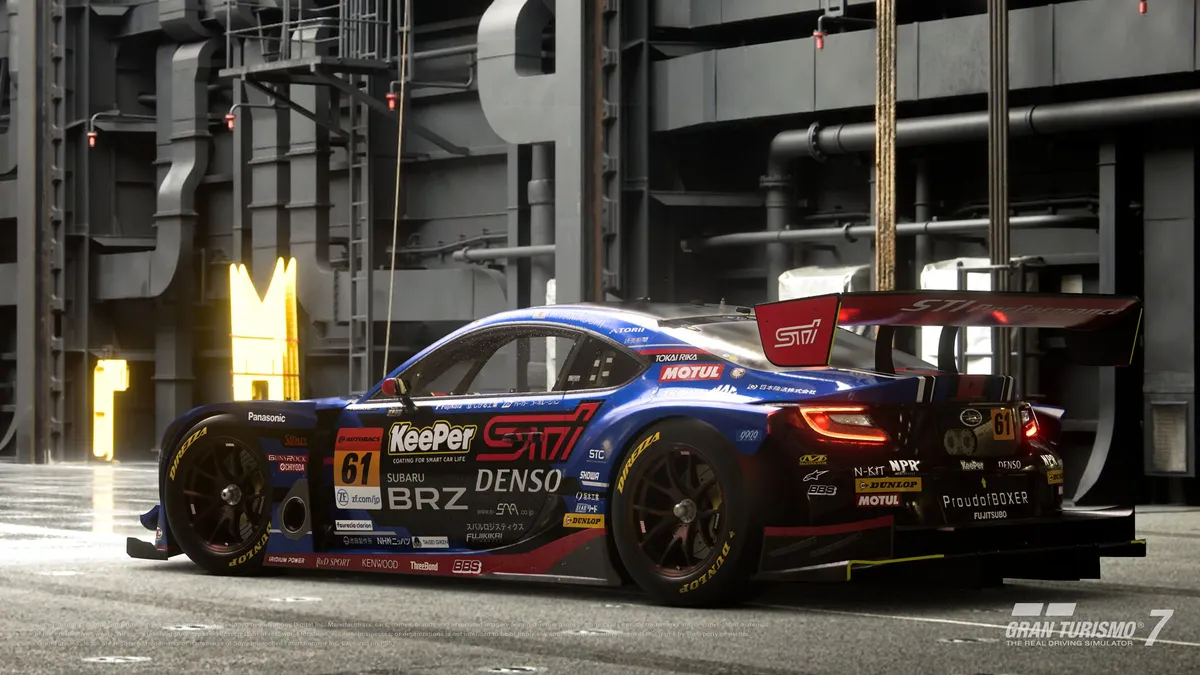
Developer: Polyphony Digital
Platform(s): PS4, PS5
If you're looking for a polished racing simulation experience, then you won't regret getting behind the wheel of Gran Turismo 7. With a wealth of challenges you can take on, loads of cars to unlock, drive, and enjoy, there's so much to do.
In short, this is a big game, and it's one you'll want to keep coming back to thanks to how good it feels to play. The cars are a joy to control, and it all runs like a dream overall - especially if you're hitting the road on PS5 (but it still holds it own on PS4, too).
2. Forza Motorsport 7

Developer: Turn 10 Studios
Platform(s): Xbox One, Xbox Series X/S
Simply put, Xbox's Forza Motorsport 7 is the best sim-racer on the market – it has everything a circuit racing fan could wish for. Approachable yet deep and so very, very detailed in its depiction of classic and modern automobiles, the game is made even better with the power of the newer Xbox models.
Fixing the few problems of its predecessor, this time even the racing is as good as the car-gazing. Call it 'simcade' all you want - this is exactly how console racing games should be done and reason enough alone to buy an Xbox.
1. Forza Horizon 5

Developer: Playground Games
Platform(s): PC, Xbox One, Xbox Series X/S, PS5
Forza Horizon 5 is a true delight and one of the best Xbox Series X games around that's now also available to enjoy on PS5. First releasing in November 2021, Forza Horizon 5 saw Playground Games whisk us away to a fictionalized representation of Mexico for the ultimate arcade racing experience. With its bold, ever-evolving open world, finely-tuned racing mechanics, absurd selection of vehicles, and truly breathtaking vistas, Forza Horizon 5 demonstrates what can occur when new technologies collides with careful iteration.
If you're into something more realistic, Forza Motorsport 7 or GT Sport is there waiting for you, but if you just want to jump into the fastest car you can find and have a wonderful time whipping it through a diverse array of locations at speed, while surrounded by scores of other players, then you won't find a better racing game than Forza Horizon 5.
If you're a fan of racing games and you're looking to add to your experience, check out our pick of the best racing wheels.

