


David Cage's first idea for a video game was the stuff of delusion: an unworkably grand outline sketched by a young person with no experience of development. He convinced a group of friends to make a demo during their evenings, outside of their day-to-day jobs. Astonishingly, the project, The Nomad Soul, went on to be acquired by Tomb Raider publisher Eidos based on prototype screenshots. Wilder still: the game was embraced by David Bowie, who contributed both his likeness and soundtrack to the project. With this debut, Quantic Dream established its reputation as an idiosyncratic studio attempting to forge distinctive modes of interactive storytelling, following it up with Fahrenheit, Heavy Rain, Beyond: Two Souls, and, most recently, Detroit: Become Human.
That reputation has been entwined with Cage's own, not least since the director appeared as himself in the tutorial sequence of Fahrenheit, the studio's second game. And, as a figure, he has been as divisive as the games his studio makes – often misunderstood and, he claims, often misquoted.

This article first featured in Edge Magazine #375. Check out subscription offers at Magazines Direct to get industry-leading coverage of the video game industry delivered right to your door (or digital device) each month.
Today, though, as we visit Quantic Dream's Paris HQ, Cage seems keen to reject any notion of auteurship, sharing credit for his games' successes with colleagues while accepting sole blame for their failings. This apparent willingness to wear fault has been thoroughly tested in recent years; after Quantic Dream was accused by a former employee of a culture of overwork and 'banter'-based toxicity, the studio instigated a slew of libel cases against high-profile media companies. Cage himself has been accused of making homophobic and misogynistic comments in the workplace – accusations that both he and members of the studio's staff categorically deny.
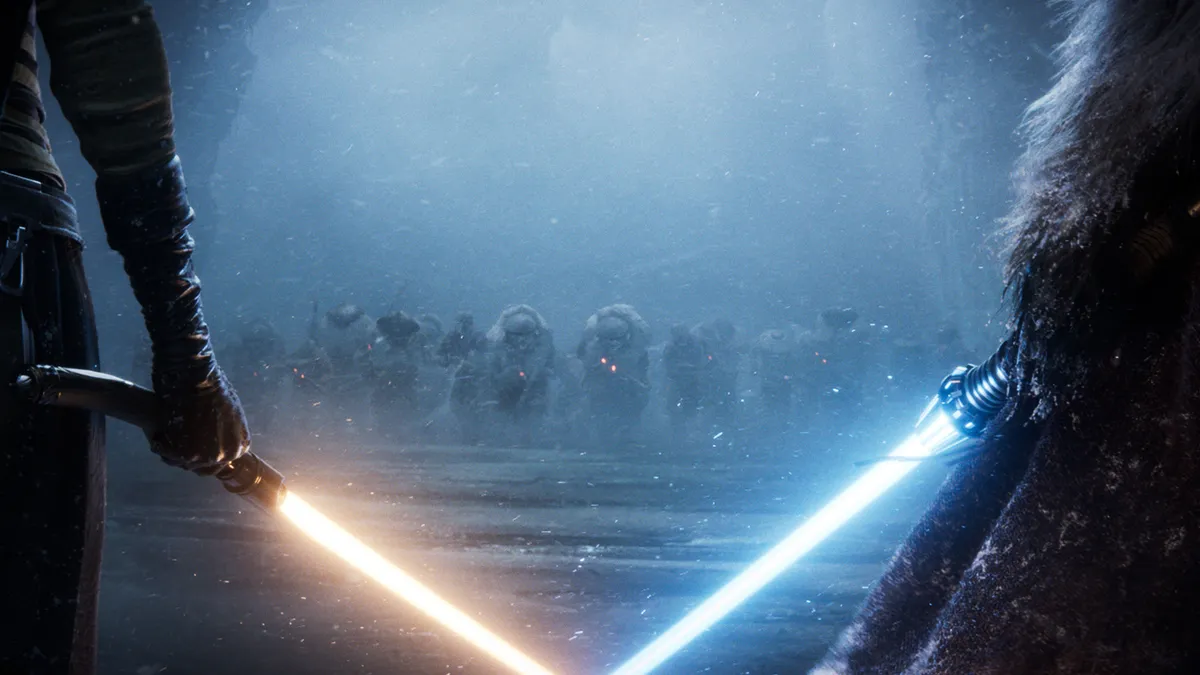
The lawsuits linger, complicating celebrations of the studio's 25th anniversary this year. At the same time, Quantic Dream is transitioning, entering a new phase as a multi-project studio, only one of which – Star Wars Eclipse – has been announced to date. But, as we sit down with Cage right now, the emphasis is on the past two-and-a-half decades, as he reflects on the good, the bad, and the excruciating.
First, though, he's keen to share a particularly Edge-shaped memory. "Before you ask me your first question, may I say something," he begins. "Twenty-five years ago, we were a group of friends dreaming of making a game called The Nomad Soul. It was a big city built in realtime 3D at a time when there were few 3D cards. We started with this idea because we didn't – I didn't – have a clue. We started working on a prototype. We developed our own engine. And in 1996 we started looking for a publisher. I didn't know anyone in the industry, but I read Edge."
"I called the magazine up and said: 'Look, we are French and we're making this game – are you interested?' The person I spoke to asked us to send in some screenshots, then they sent a writer to meet us. We were just five guys working in a tiny sound booth, with nothing more than a basic prototype. We spent three or four hours talking. Then Edge published a lengthy article with these huge screenshots. Publishers started calling. And that's how we became a professional video game studio."
Origin Story

"We showed it to publishers. They all said pretty much the same thing: 'It's impressive, but the PlayStation won't last'"
David Cage
Edge Magazine: Let's go right back to the beginning. What were you like as a kid?
David Cage: I played lots of sport. And I read whatever I could find. I love science fiction. I was just fascinated by literature. Then, later, I became fascinated by movies. I was born in 1969, so I am from this generation that was born, basically, at the same time as video games. I saw when they first appeared on the shelves. They were expensive at the time, and there were so few of them.
What was your first video game system?
An Amstrad CPC 6128. My parents bought it after I convinced them I wanted to learn how to program. Game code was printed in the back of magazines at the time – I would copy the code into the computer. Then the game wouldn't run, and I'd have to find the mistake somewhere. You try this a couple of times, and then you figure it's probably easier just to play other people's games. So, I'm still not a programmer. But I was fascinated by video games since the start.
You grew up in Mulhouse, a French town on the border with Germany – what was that like?
It is a small city near the Swiss and the German border. It was in the countryside. Before the Internet and mobile phones, you could feel very isolated at the time living in a place like that. It's a lovely town now, but at the time it was an industrial city. I had a good childhood, but at the same time I had big dreams. I wanted to become a musician.

What instrument did you play?
I learned piano when I was five. Then I started playing guitar, bass, and a bit of drums. I made music on computers. When I was 15, I started working as a composer, arranger, or studio musician. At the weekends I would drive to Paris or Germany, and work there until Sunday night, returning home in time for school the next day. I spent the money I made on instruments.
How did you become a professional musician?
Our band had made some decent money. There was a studio in Paris that had gone bankrupt, and the building was selling for cheap. We took it on, learned how to use the mixing desk and so on, and started running recording sessions. Around that time the Sony PlayStation came out. Suddenly video games could use CD-ROM media for their music, and we could record music with real instruments and real musicians. We had arrived just at the right moment.
David Cage isn't your real name, right? At what point did you decide to adopt the pseudonym?
It was around the time I called Edge. My name is David De Gruttola – a strange name with two 'T's. I would have to spell out my name to journalists. You do this a couple of times, and then you think: 'OK, I'd better find something simpler'. I used to play as Cage in the video game Mortal Kombat. I adopted that. People still misspell my name occasionally, but it made my life simpler. The name stuck.
What inspired you to start writing the design document that would become The Nomad Soul?
I can't program a game. I can't draw a game. But I can imagine a game. So, I wrote the game I was dreaming of playing. The design was about 250 pages long – naive, but sincere. I started showing it to friends who worked in games. The feedback was consistent: 'It's a great idea but impossible to make. Forget it'. Still, I managed to convince a bunch of friends to try. We knew that if we could create a city in realtime 3D, it would be ground-breaking. We got hold of a PlayStation devkit and we would work until three or four in the morning, then go to our actual jobs in the morning.
We showed the prototype to publishers. They all said pretty much the same thing: 'It's impressive, but the PlayStation won't last'. So, we started developing the game on PC instead. At that point I convinced everyone to leave their jobs. I promised to pay them all for six months using the money I had saved. That's when we contacted Edge.


Cage has begun each of his studio's projects the same way: on paper, writing a script document that often runs to thousands of pages. This script bible establishes the rules of the game's universe, but also script breakdowns by scene, including specific interactions. Cage believes it is possible to author these bibles while still allowing the development team to be reactive and adaptive. "You need a solid foundation so that you can start building," he says. "But at the same time, if you lock everything down years ahead of the master, then you refuse to listen to what the game has to say. It's particularly important to listen to the game. There’s a time when you need to tell the game what it must be. And then the game starts to tell you what it needs to be. You must keep listening and adapting."
How did you manage to get Bowie involved?
We signed with Eidos. It all happened in less than a week. Suddenly, we had millions. We hired our friends. We bought desks, computers, and cables. We found an office. I knew music would be important for this game. We discussed it among the team and made a shortlist of artists we'd like to invite to write the soundtrack. Bowie was top of that list. Eidos told us he would never agree to write the soundtrack, but he might agree to license us one of his songs. They contacted his agent, and he agreed to a meeting at the Eidos offices in Wimbledon.
And he attended in person?
He did. We spent two-and-a-half hours talking about the game, showing him the concept art, the demo and so on. He asked a few questions, but it was impossible to figure out what he thought. At the end of the meeting, he said: "OK, what do you guys expect from me?" I told him we loved his songs, and it would be a dream come true if he allowed us to use one of his songs in the game. And he said: "No, I won't do that. But I will compose an entire new album for you". We all thought: 'Is he kidding?'
He composed 12 original songs. We offered to make him a character in the game, saying it would be the very first avatar of a real person in the video game. He loved the idea. Eventually we made him two characters: David Bowie at his current age, and the young David Bowie, who was a singer in a band. He came to Paris every month, and asked about every scene. Then, when he was ready, he said: "I will deliver the music to you exactly one year from now".
And he came through.
We heard nothing for months. Then, on the day he had promised to deliver the music, he called me up and said he had sent the music. "Please listen to it, and tell me what you think," he said. The soundtrack was totally different from what I expected. The world was cold and dehumanised sci-fi, but the soundtrack was human, full of melody and acoustic instruments. I told David this had surprised me. He said: "It's important that the music doesn't say the same thing that the imagery does". I learned many things from David Bowie, but that's one I still remember and apply today.
That experience must have left a big impression.
It played a crucial role in my career. When you convince David Bowie to collaborate with you, it makes life easier when you want to talk to anyone else later. I became less afraid of rejection. So I could approach Willem Dafoe, Elliot Page, and others. This is what Bowie changed. I am no longer afraid of asking.
In Search of Intimacy

"When you convince David Bowie to collaborate with you, it makes life easier when you want to talk to anyone else"
David Cage
The next project was Fahrenheit, right?
Eidos wanted us to work on a [Nomad Soul] sequel. But after four years in this world, we wanted to do something else. There was this idea starting to grow in the studio: how can we make a game where the story is not the dressing but the substance? It was not about doing an adventure game. It was not about puzzles or inventories. Rather: can you inhabit a person and make choices that profoundly change the plot? Eidos was not interested.
The studio needed money; we had 40 staff members and wanted to invest in innovative technologies. We started with Vivendi. The game was supposed to be episodic, but we soon realised that the market was not ready. Vivendi went through challenging times, and wanted to cancel the game. We asked, pre-emptively, for them to give the game back to us rather than cancel it. It was a challenge to find a new publisher. They would ask: 'Do the characters have guns?' No. 'Do the characters jump on platforms?' No. 'Do they drive cars?' No. It's not this kind of game – it's about roleplay.
Finally, Atari agreed to help us finish the game. It was a reasonable success, but crucially it was seen as something new. Sony called. Every year the [PlayStation] US QA team votes on their favourite game of the year. That year, Fahrenheit had won. So Sony wanted to know a little more about us, who we were, and what our plans were. That's what started the relationship.
It's the early 2000s, the GTA series was also exploring the bridge between cinema and games, but in more traditional terms of interactivity, with weapons and cars and so on. You tried to dispense with those legacy designs.
We didn't want to make a game where you have a gun and kill people during a series of missions. We wanted to make a game where you feel like you're in the shoes of the character. I had written a scene that, on paper, seemed tedious: your character wakes up, takes a shower, grabs his clothes, puts music on, brews coffee, kisses his wife goodbye. I had always wanted to play a game which had this kind of daily routine in it. Video games are all about destroying buildings and blowing up enemies. I wanted to do something small and mundane. When we put this in the game, we found it created a sense of intimacy that felt new. It meant that, when something spectacular happened, you had a different relationship to those events.
Had you played Shenmue at this point?
We were working at the same time as Yu Suzuki, on similar ideas. Of course, he expressed them in alternative ways, but it was in the air, I guess. I met Suzuki afterwards and realised how close our visions had been.

You've said in the past that, with Heavy Rain, you wanted to fix design elements from Fahrenheit that you felt hadn't worked – what were the specific failings you hoped to address with the new game?
Fahrenheit's story was too inspired by the Matrix film, and other cultural influences at the time. We knew we needed to tell a more personal story. That was the start point for Heavy Rain: can I write something more intimate, closer to something maybe I have experienced? When my son was five or six years old, my wife and I had lost him in a mall. I thought he was with my wife; my wife thought he was with me. It's something that lots of parents have experienced. The mall was in Paris. Very crowded. We lost him for ten minutes. The feeling of panic, I think all parents understand this. I wondered: can those feelings be recreated in a video game? That was the start point for writing Heavy Rain.
The scene in the mall is famous in part because it became an Internet meme. Bearing in mind that section is based on personal trauma, can you take the joke?
I'm fine with it. The second the game is released, you don't own it any more – it belongs to the community. It's nice to see people who are moved by the game, and it's nice to see the memes too. Even when we were filming that scene in the motion-capture studio, the actor playing Ethan Mars had fun with it.
It's fair to say the themes you've addressed in your games have become more serious with time. Detroit, in particular, deals with challenging material, and it invites a more serious critical lens to be applied to your work. How smooth has it been moving from fantastical worlds filled with superpowers to something that's quite pointed?
It's part of our journey as a studio, probably, as you said, to start with fantasy, then become more intimate. With Detroit, we wanted to answer another question: can we talk about the serious concerns, issues, and difficulties society experiences? The story touched on minority rights – the right to be respected even if you're not like everybody else. These were difficult topics. We had some violent reactions to the game. People argued these topics aren't suitable for a video game – for some people, video games should be only entertainment. But a subject isn't trivialised just because it's addressed via a video game. I believe you can talk about anything if you do it with sensitivity and care.
"I am a white male. I'm 53. But I'm also a writer. Can I write only about 53-year-old white males who live in France?"
David Cage
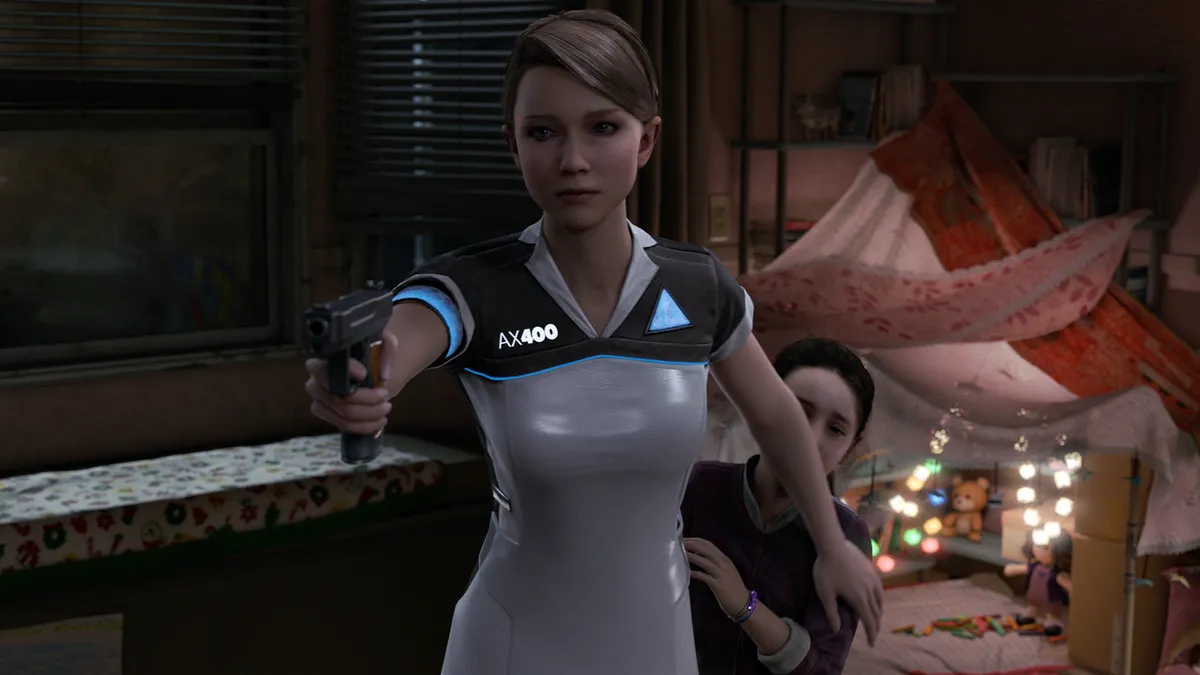
The scene in Detroit involving domestic violence became a big talking point.
We did not make fun of this topic. The intention was not for the player to enjoy this scene. It was about representing a difficult subject via a legitimate art form. In this scene you play as the android that is the subject of the attack. You are confronted with violence and feel the need to defend the child from the attacker and escape. It's a hard scene, of course, but it wasn't about 'fun'. The reaction when the game was released convinced us that it was the right thing to do. There were many women confronted with domestic violence who played the game and sent us messages to thank us for talking about it.
You have one group saying, 'Keep this political, difficult material out of games', but you also have people at the other end of the spectrum arguing that, while it's fine to address difficult subject matter in games, it must be done with input of people who have lived experience of what's being portrayed. All storytellers open themselves up to criticism when they're addressing something outside of their personal experience, so how do you ensure that you're listening as well as portraying?
Yes, I am a white male. I'm 53. But I'm also a writer. Can I write only about 53-year-old white males who live in France? Or isn't the work of a writer to put yourself in the shoes of someone else and try to imagine what it's like to be them? Yes, you need to do it with extreme sensitivity, but there is no rule saying that writers should only write about themselves. I'm also not the only one working on this script – many people read it, including women. We had sensitivity readers, too. It's not just me randomly writing something and publishing it. There's a process to ensure care.
When I look at the reactions we had when the game was released, I don't think we did anything wrong. One message stands out, from a woman who cared for a six-year-old boy. They were living with a violent man. He would punch doors and leave holes in them – an angry person. She was playing this scene when the man walked in. He watched it play out and said to her: "I'm not like this, am I?" She wrote that this was the moment she realised that they had the same dynamic as the couple in the game. She took her son, left the house, and never returned. If we only made this game for this person, I would be immensely proud. We were trying to talk about a difficult, serious topic respectfully, but without shying away from that difficulty.
Conflict and Disavowal

"If one per cent of the allegations were true, it would have been a disaster because everybody would have left"
David Cage
You're clearly an empathetic person, who's thought about this material deeply, but that hasn't necessarily been the public's perception of Quantic Dream during the past few years. We've heard about the employee who Photoshopped images of his co-workers, in some cases superimposing their faces onto the bodies of unformed Nazis and semi-naked women. Whether or not this employee considered what he was doing as mere 'banter', it's obvious how a culture in which this kind of behaviour is tolerated is harmful.
This story happened almost six years ago. At that time, one of our 200 employees shared 12 totally unacceptable images. They were stored in his personal folder, inaccessible to employers by French law. Within minutes, we received many complaints from other staff members. I was out of the office at the time. When I returned, I checked the images, then took immediate action against him, removing the images. It took less than two hours.
I do not believe we have ever been a toxic company. We have never held these horrible values. Since the start, 25 years ago, the company has always been based on humanist values of inclusivity. We have always championed diversity. You can see this through the games we make. Fahrenheit was the first game to feature a gay character who talked about his personal life. Beyond: Two Souls' story was about the right to be yourself. Detroit: Become Human was about the right to love anyone, regardless of gender. These values are upheld in our company. Half of our managers are women. We have had LGBT employees present at all levels of the studio since day one. We have a high retention rate in an industry where turnover is the rule. Time after time, in anonymous third-party surveys, employees state that they prize the atmosphere in the studio, the fact that it's a warm, friendly place to work.
Isn't that difficult to square with the studio's litigious behaviour following the allegations? Quantic Dream took a highly defensive stance. Obviously, in a studio of more than 200 people, not everyone is going to be happy, but there wasn't much humility in the response. For example, you described reports of harassment reported in reputable newspapers as a "smear campaign". It's understandable that you took these accusations personally, but as an observer the response didn't seem to show much willingness to listen.
I don't think we had an aggressive attitude. When you're accused of things that go against everything you believe in, everything you've done in your life, it hurts. It went beyond just attacking the studio culture. Of course, like any human organisation, we are not perfect by any means. But are we the kind of studio that was described? Our employees have said repeatedly: it's not true. Can we improve? Yes. Have we made mistakes in the past? Probably. But we had to do something about what was being said. We were so hurt by specific allegations that we know are wrong or false, that we had to defend ourselves. We wanted people to hear our voice.

Part of the issue is that it wasn't just one individual making the accusations – there was more than one voice. And obviously they aren't here to defend their testimony.
This is a highly competitive industry. Everybody struggles to keep talent. People in our team receive job offers from the most prestigious studios in the world every single day. Anyone who thought this is a toxic place would be gone. And if one per cent of the allegations were true, it would have been a disaster for us because everybody would have left. But you can see that there was a strong sentiment that the team wanted to stand by their studio.
[In a statement issued in February, representatives of LGBTQ+ staff at the studio said: "The recent allegations we've seen circulating on the Internet are deeply hurtful. They do not reflect our everyday lives at work. We hope to leave behind any misleading perception of our team and our studio as we move forward".]
Perhaps the most troubling accusation was levelled at you personally – that you made homophobic and misogynistic remarks in the studio. Did you say those things?
No. I have never said or even thought such things. I fully understand people were shocked by seeing those words, and I am deeply sorry for the pain and confusion they have caused to women and the LGBTQIA+ community. The quotes are abhorrent, and they do not reflect my views, nor the views of anyone at Quantic Dream.
[The lawyer who reportedly presented these quotations in court, attributing them to Cage, has not responded to requests for comment.]
Another of the criticisms levelled against Quantic Dream is that there is a culture of overwork. Former employees claim that you personally work 70-hour weeks. Do you accept that criticism? Have you taken any measures as a studio to try to ensure that people don't spend too much of their lives here?
There is no crunch culture within the studio. I wouldn't have said the same thing 25 years ago, but since then we came to understand that it is not the best method. All extra hours are voluntary and paid, according to French law. We also tried to be careful about not spending too many extra hours here, so it remains within reasonable boundaries. And we also always check in with people that they don't make too many compromises in their personal life. People are free to work extra hours, and they are free to decline them. There's no social pressure.
There was a long time when Quantic Dream was the only blockbuster studio making the sort of cinematic games you specialise in. When the rest of the world was moving to big, open-world games, tightly directed stories were even a little unfashionable, but that has started to shift. Do you feel vindicated?
We certainly saw, through the years, different studios investing more in story, and in cinematography in general. And, yes, it's a lovely thing to see more games paying attention to story. Even in action games, everybody has realised the benefits of having a strong story.
You've talked about sharing the responsibility for the success of your games with the rest of the team, but your name is synonymous with Quantic Dream, which has benefits, but also drawbacks. How comfortable do you feel being seen that way by the public?
It originated in the early years of the studio. People wanted a face and a voice that they can recognise and identify to the studio. I became the point of contact. But I never pretended I was the studio. I would tell staff that all the successes of the studio were due to the team, and all the failures were my fault. That's how I feel. I'm not responsible for the successes – I'm responsible for the mistakes.
Over the years, things have changed and there's a point where now instead of being the voice of the studio, I am the target of the studio. It's increasingly unpleasant. There was a time when having my name out there served the studio – it helped us be heard. I don't think it's the case any more. People only want to talk to me. And I'm sorry about that, because there are many interesting people here – more interesting than I am. And yet still you come here and you want to talk to me.

To read more from issue 375 of Edge Magazine, pick up a copy at Magazines Direct from August 12. In the meantime, you can reach to the Edge team on Twitter and on Facebook.

