


All the early official teases and long-standing rumors suggest that Project Helix, the next Xbox machine, is going to be a hybrid device that combines your console and PC libraries on a single device. According to Seamus Blackley, one of the principal designers of the original Xbox, that's a "boring pitch," and he's much more excited about what's coming next from Valve and Nintendo.
When it comes to Project Helix, "I don't know as a developer what I'm excited about and I don't know as a gamer what I'm excited about," Blackley says in an interview for The Expansion Pass podcast. "I am vastly more excited about Steam than about Helix. As a gamer, from a content standpoint, as I think everybody would be. Or, you know, what's Switch 3 going to be?"
Pressed by one of the hosts on why he's more interested in Nintendo and Valve than Microsoft's gaming efforts, Blackley responds in disbelief, "Are you high? Is there a gas leak over there?"
For the theoretical Switch 3, Blackley argues that "everything that comes out of Nintendo's design department is at least really interesting and cool, even when it fails, right? Even Wii U was interesting and cool. I mean, it was a mess, but it was interesting and cool."
Over at Valve, Blackley says "those guys are relentlessly focused on cool games. They fuck up business and they do weird stuff and Gabe is crazy. I love Gabe. Or GabeN, [as] we call him in public. Did you know that he has a Roman gladius sword on his desk?"
Gabe Newell's infamous blade collection aside, Blackley says that "fundamentally, they have put games first and they've funded games and they've funded people." He gives the example of the Team Fortress devs, who were a group of modders who were hired by Valve to turn their work into a full game.
To be honest, I'm not sure Valve and Microsoft's approaches are all that different at this point. Xbox's modern approach seems to be offering ways for you to access a large library of games across a variety of devices, and they're simply tripling down with devices like the Asus ROG Xbox Ally and Project Helix.
But while Xbox was pushing in this multiplatform direction years ago with cloud gaming and its efforts to break down the barriers between console and PC, the Ally and the Helix feel like they're simply following in Valve's footsteps with the Steam Deck and Steam Machine. Is Microsoft's version of that pitch more compelling than Valve's? That remains to be seen, but there's no denying that Steam has a far more devoted fandom than the Xbox brand here in 2026.
Games are fundamentally a hits-driven business, Blackley argues, suggesting that game companies run by executives who don't understand their own products have a hard time recognizing that. Xbox's move away from exclusive games, then, comes from a sort of "executive insecurity" about the business.
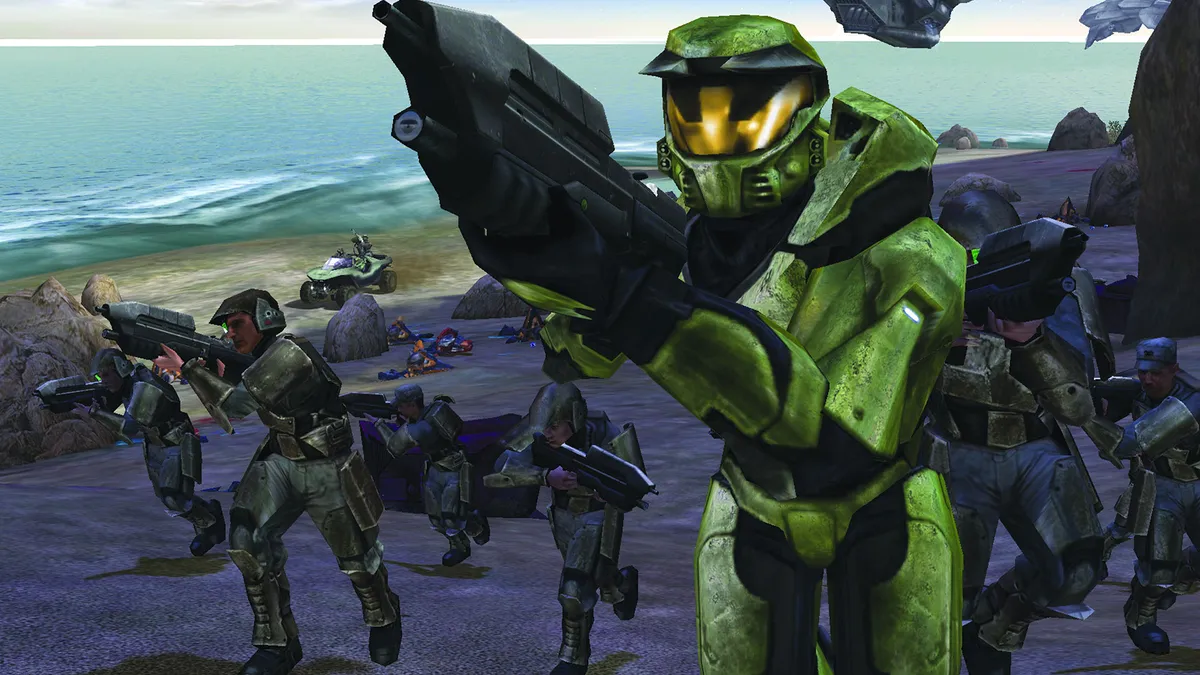
"If you've never played Wii tennis," Blackey asks, "how can you understand what an exclusive means? If you never played Halo when it was in that context, how can you make a decision about that? I'm not convinced that the people making those decisions have that experience in their mind." Ignoring the traditional power of exclusive games, then, is a way for executive decision-makers to "hedge their bet" against the expensive process of making games.
"I think that this sort of mushmouth, 'is it a PC or is it a console' thing, is hedging the bet there too," Blackley says. That leaves gamers unsure about what they're buying into with Project Helix, a problem you don't have with, say, a Nintendo platform. "If I buy the new Zelda," he says, "I know what I'm getting. I know that it's going to destroy my life for a week and I'm not going to be sad about it."
Given all the studios Microsoft now owns, it's got all the talent in the world necessary to build games that we'll happily destroy reasonable bits of our lives for. Whether it can do so in a way that makes the idea of Xbox itself exciting again is a question for the future.
Listen, our list of the best Xbox Series X games certainly trounces our list of the best Wii U games, but the gap narrows a lot when you limit your selection to exclusive games.

