
One year ago, Firaxis dug up the foundations of Civilization. The sandbox strategy genre has long suffered from late-game busywork and chore bloat, often because the player is so far ahead that the later hours of a campaign are spent merely formalizing their victory. Developers ranging from Paradox (Europa Universalis, Stellaris) to Total War's Creative Assembly have long experimented with solutions, but none have gone as far as Civilization 7.
But how far is too far? Civilization 7's hallmark additions – switching Civilizations at multiple points in the campaign, soft resets during the turning of an Age, and more competitive routes to victory – tightened up campaigns at a holistic level, but received a mixed reception from players who felt these changes were heavy-handed and impeded the freedom that sandbox strategy is known for.
As outlined in my Civilization 7 review, despite playthroughs feeling railroaded at times, I broadly liked these changes. Above all, I admired Firaxis' willingness to tackle the genre's systemic issues at the root – an energy it's carrying into Civilization 7's upcoming Test of Time update, which will let players control a single Civ through an entire campaign, hone victory conditions, and remove Legacy Paths in favor of more complementary Triumphs.
Next turn

These are the best strategy games you should be playing if you aren't already
Laying out Firaxis' original ambitions with Civilization 7, creative director Ed Beach points to the game's design pillars. "One was depth, not complexity', and one was 'impactful decisions,'" he explains. "They both were talking about not overdoing it in terms of how many small micromanagement decisions you had to make to get through a game, and how long it was going to take to play through the end of the game."
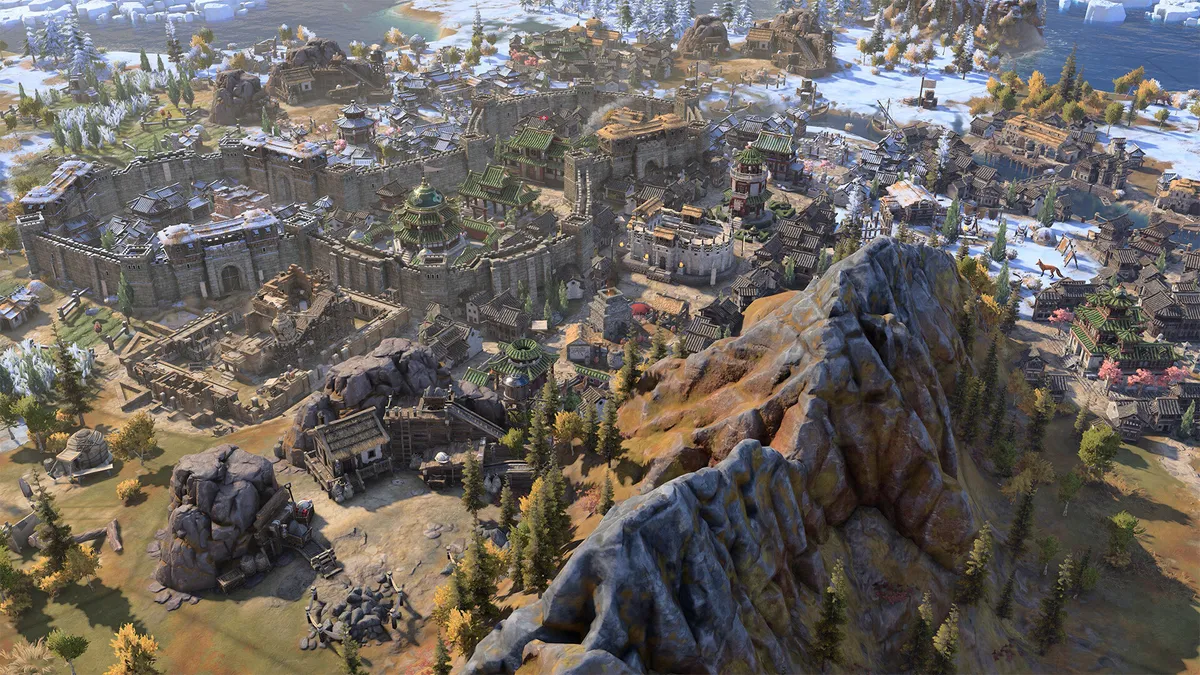
This led to a number of brilliant changes. The addition of more autonomous towns vastly cut down on the minutiae of managing a continent-spanning empire, while commanders allowed you to group your army's units to move as one, rather than ordering them individually. Yet other features were more contentious: victory conditions and Legacy Paths changed the way Civilization campaigns traditionally played out, and some found the new structure to be too rigid.
"Ed really wanted to approach [Civilization 7] and say, 'let's, let's give our fans something new to chew on, instead of following the same playbook that we had through five and six [...] Let's try to do something that's going to really be something new and fresh,'" says Shirk. " That was one of the miscalculations that we had. We delivered something that we felt was an amazing combined experience, but the number of longtime fans that came in like 'this isn't quite my Civ – this is a different Civ', we were not quite prepared for."
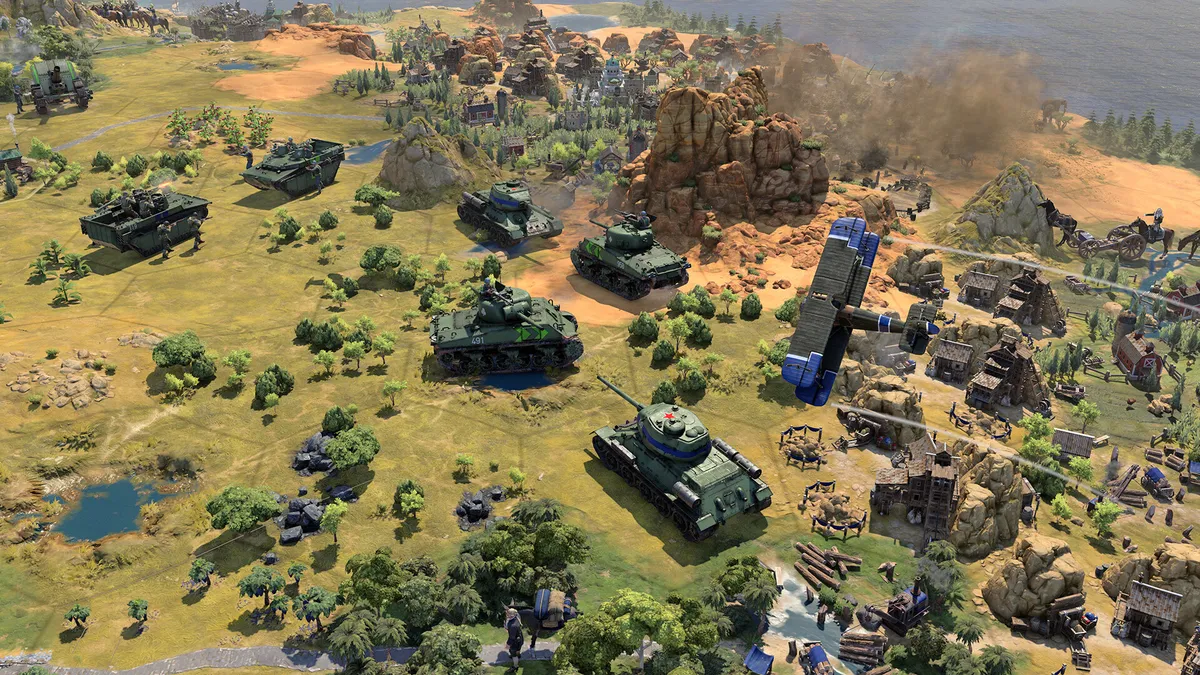
Firaxis has since spent the last year working to align those initial ambitions with the expectations of fans. It's been a two-pronged approach, says Beach, who explains that the Civilization 7 team "splintered into two groups" several months after launch. The first has focused on regular updates, smoothing out surface-level frustrations and adding new Civs, while a second team has been quietly working on "bigger, longer term plans".
The result is Civilization 7's Test of Time update, which is set to launch in the coming months – though an exact date is unspecified. As for its contents, while evolving into another Civ will still be present during Age transitions, players will now have the option to continue playing their existing Civ – albeit with an Age-appropriate Civic tree, along with syncretism, which will let you incorporate one Civilization's unique unit or infrastructure once per age.
Victories have also been reworked, and while they will still require more of an early-game focus than past Civilization titles, there will be significantly more ways to achieve it beyond Legacy Paths – which have in turn been removed in favor of a more flexible Triumphs system. It's a vast update, but importantly, is not intended to overrule Firaxis' original ambitions or undo the inroads built with new players – who have onboarded with Civ 7 far more than any past entries, according to Beach.
"I think we have come up with this smart solution to meet them in the middle. What we're testing in our workshop right now doesn't break the basic structure of Civ 7, and a lot of the people playing in our workshop are commenting on how this still feels like Civ 7," says Beach. "This is an evolution forward – this is giving [the player] more options, more ways to play the game within the confines and framework that Civ 7 has already established."
Tech research
In conjunction with players, Test of Time is still being iterated upon. Beach says that "one of the hot debates" in Firaxis right now is deciding how strong playing as a single Civ should be in comparison to switching – and how they slot into the new Apex system, in which every Civ has a particular Age they excel in.
Elsewhere, the Triumphs set to replace Legacy Paths are an attempt at giving players a defined campaign from start to finish without railroading them.
"We got the feedback, and I think it was justified, that the Legacy Paths felt too mandatory, something you had to do every time, and the wide openness that we'd had in previous Civ titles was constrained by that," says Beach. "So one thing we're doing is this catalog of Triumphs that you can go for in a game. It's typically 30 per age. They're purposely designed to be enough of them, and hard enough that you can't go for all of them. There are just too many options there – you're going to have to say 'OK, I'm focused on a military playthrough, so these three or four make sense for me this time. But collecting codices or something, those other objectives are not going to be part of my playthrough this time'."
The situation Firaxis finds itself in is, although not ideal, fascinating nonetheless. While Civilization 7's revolutionary intent was well-meaning, changing the formula of a beloved series is always going to carry risk – especially, as both Beach and Shirk point out, when it follows an entry as rich as Civilization 6.

"It's hard to launch a new title – people are always going to hold it up against the previous title, even though it had all that work and investment in it," says Beach, referring to Civilization 6 – which benefitted from a decade of development, including post-launch support. "What I love about the age structure is it's nice and modular – an even more modular, configurable system than we had for Civ 6. So I can see Civ 7 having so much flexibility in terms of how big it could get over time, but players are going to instantly, when Civ 7 comes out the gate, compare it to Civ 6. And that's a tough act to follow up."
"When you move into something like Civ 7, if you don't have all of those things from that 10-plus years of development, they [players] feel like we left things out," agrees Shirk. "That was one of the reasons why the design team originally approached this as developing something new, to really reset where that baseline was, but it's a battle that we're going to lose every time. So we have to find a better way of approaching that."
Shirk continues. "We built something so great before, and we have to compete with ourselves to come up and actually beat that. We have to start being clever, even in the future, when we approach what comes next [and] what we decide to do after Test of Time. The whole nine yards – we have to be more clever about how we go about making sure that our fans are along for the ride every step of the way, and that we clearly understand what they really want to see next, or what they feel is really missing from the title."
Warhammer's most overlooked strategy game was a "huge touchpoint" for Civilization 7's narratives

You must confirm your public display name before commenting
Please logout and then login again, you will then be prompted to enter your display name.


