





Take-Two and Zynga veteran Luke Dicken was in artificial intelligence research long before today's Large Language Model (LLM) and generative AI bubble, and he still believes in the power of the technology as a tool for augmenting games, just not in the way that ChatGPT devotees might argue.
Speaking with 80 Level, Dicken examines the ways AI has been, and can be, used in games alongside the disproportionate investment around the latest tech. He establishes two useful definitions: AI as "anything that allows a machine to make a decision," and AI use cases where "you need something faster than a human could make it, or when you need more of something than a human could make."
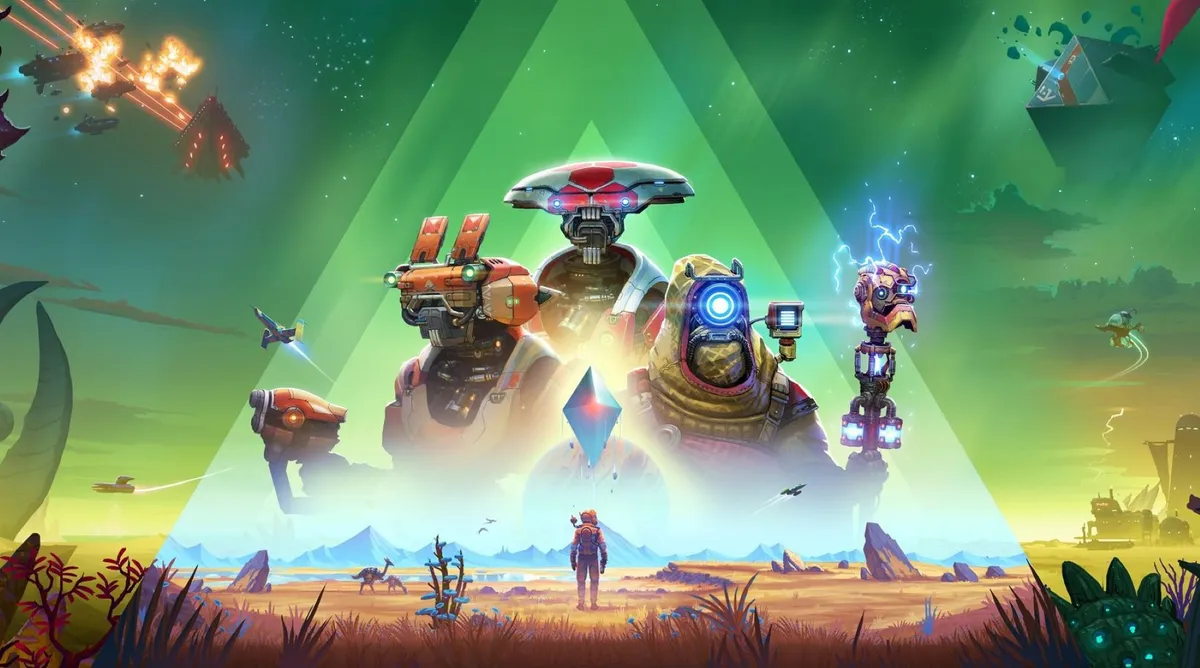
"If you think of a game like No Man’s Sky, the core of that game was a massive universe that was almost unique on a per-player basis. That would be wholly impractical for human authoring," he says in one example – not conflating procedural generation and generative AI, but rather pointing out the type of design challenge that AI might help with.
He also highlights Valve's Left 4 Dead and its AI Director, which "could modify which zombies were spawning and where, what supplies were available, and even the weather effects to create that tension."
This sort of "Dungeon Master" AI is another type of algorithmic application that catches his eye. However, he's not convinced of the usefulness of the LLM-backed dynamic NPC demos we've seen from the likes of Nvidia – not just because they're demos, not games, but because having more choices "doesn't make them interesting."
"Ultimately, the question very few people are asking is: 'What does this, from a design standpoint, allow us to do that’s beneficial to the player experience and that we couldn’t already do before?'" Dicken stresses. "That’s where the value actually lies."
More topical, divisive uses of generative AI, like offloading developer roles or relying on generated assets, appear less fruitful in Dicken's view. Asked about the state of gen AI in game development, Dickens responds, "I’ve definitely seen some good examples; as much as I might come across as an unmitigated hater here, there are things that these algorithms can do that are somewhat useful. But 'that are worth the hype?' ... That’s a harder one when the hype is this extreme.
"The hype machine wants you to believe in magic buttons that automate entire pipelines, and that just doesn’t exist in a meaningful and generalized way. That said, a lot of our work isn’t creative or novel, and a system that spits out a statistically average solution to a problem is fine in some cases."
Take-Two CEO Strauss Zelnick has made similar claims regarding the potential of AI-made games.
In our reporting on why lots of indie developers don't want to use generative AI, Öoo developer Nama Takahashi said he's "looking forward to seeing if AI can do something only AI can do." Dicken takes a similar stance here: "If you’re just using it to do the same old things a bit faster or cheaper, I’m not sure it really lives up to the hype. But where it gets interesting is when you apply it to scale issues humans simply can't match."
Some devs might disagree with using the tech at all – though Dicken does acknowledge the plagiarism concerns many creators take issue with – but some may also agree with Dicken's high-level stance: "Technology has to be in service of art to be effective, and I think that’s something that’s been overlooked throughout this GenAI hype cycle."
He's cooler on the LLM boom, Dicken explains, because his experience working with AI doesn't match the frothing, stampeding market that's erupted around gen AI.
"It’s exceptionally weird to me that a couple of companies have managed to ignite a culture war and bring the economy to the brink of collapse off the back of a handful of marginally interesting algorithms," he says, "but that’s pretty much what’s happened and I think it’s the biggest factor here in why we’ve had this shift from kind of subtle behind the scenes AI to aggressively in your face AI over the past couple of years."
He compares gen AI to scaffolding: "It can’t build a house itself; when it tries, weird things tend to happen, and you almost certainly don’t want to be liable for any house it does try to build." But again, he says "there are some really valid" applications, "at least from a technical point of view."

The looming problem is "this crazy era of Big Tech trying to 'make fetch happen' so hard that they’re burning giant piles of money subsidizing these systems," Dicken says, adding that "the math just isn't mathing." Subsidized versions of today's gen AI tools already become "an incredible expense" when people and businesses try to make them do something useful at scale. When those subsidies run dry and AI prices go up, actual costs could see "a 1,000x jump in price" in extreme cases, Dicken speculates, and "10-20x seems to be incredibly common."
"This is a five-alarm fire that ought to be keeping every business leader up at night," he continues. "They’ve allowed themselves to be lulled in by these low prices, and they’ve not been particularly diligent about quantifying the ROI of their implementations, which means they have no idea whether a new price still represents good value or not for their business. That’s terrifying, not least because most rigorous studies are showing a huge discrepancy between self-reported value of AI deployment and actual measurable value."
And to no surprise, Dicken doesn't expect the money-burning technology to solve the AAA industry's money burning problem. Rather than seek to cut costs by using AI to cut corners, he suggests big publishers ought to examine the epidemic of wasted labor.
"How many projects do you hear about that have gone through multiple resets and pivots, where leadership has wandered off at a tangent, for years in some cases!" Dicken says. "It doesn’t matter if you’re moving at 50 miles an hour or 100 miles an hour if leadership is taking the project in the wrong direction. How much of that 'ballooning strained cost' was actually spent building the thing that shipped?"
Why so many game developers don't want to use generative AI.

