





From early previews through to critic and user reviews, a common bit of feedback on Pragmata, Capcom's shooter-puzzle action game about dismantling rogue robots on the moon, is that it feels like something from a different era. Many people compared it to the tight, linear action games of the PS3 and Xbox 360, and I was delighted to see many people cite Platinum Games' Vanquish specifically (in part for its similar weapon system). Our Pragmata review is similarly positive.
Pragmata director Yonghee Cho and producer Naoto Oyama have clearly heard this feedback before. When I asked them about it in a recent interview, they both cracked a smile before my question was even relayed in Japanese via interpreter.
Simply put, I wanted to know how Cho and Oyama feel about the PS3-era comparisons, and how they look back on that era of gaming.
"The dev team has heard similar comments from both reviewers as well as players themselves," Cho begins. "Honestly, it's a huge compliment. I really enjoyed games during the PS3, Xbox 360 era, and games before that era as well, so to hear that it has a similar feel, that's basically an honor, a huge compliment, and I appreciate the sentiment."
Oyama focuses on where this feeling may have come from. Why did Pragmata scratch this specific itch for so many people?

"Maybe the reason people might feel that way is because, during the PS3 and Xbox 360 era, a lot of different developers and publishers were experimenting with new types of games and just completely new games. Maybe that's what causes people to feel that way.
"Because the Pragmata dev team, as well, they put a lot of passion into creating something new, so perhaps that's what people feel, and it reminds them of that era when so many developers were jumping into new, different ideas."
This kind reception for Pragmata and games like it is, in some ways, arguably an indictment of the stagnation in today's games industry, particularly at the AAA level. I generally believe that games are better than ever if you know where to look, but a lot of companies have de-risked themselves into outright toothlessness, and experimental releases are definitely more common in indie circles nowadays. There are a lot of reasons for that, and I do think nostalgia is a force in these conversations, but there is something to be said for that particular console generation.
The PS3 and Xbox 360 ended up being one of the wilder cycles. It was arguably the last massive leap forward technologically – the jump to HD – as modern console generations yield smaller and smaller gains. I love the SSDs in my PS5 and Xbox Series X, but AAA games haven't changed a lot since the PS4 and Xbox One. You might even say we are still playing the exact same games, if only because two average AAA production cycles will last an entire console generation nowadays.
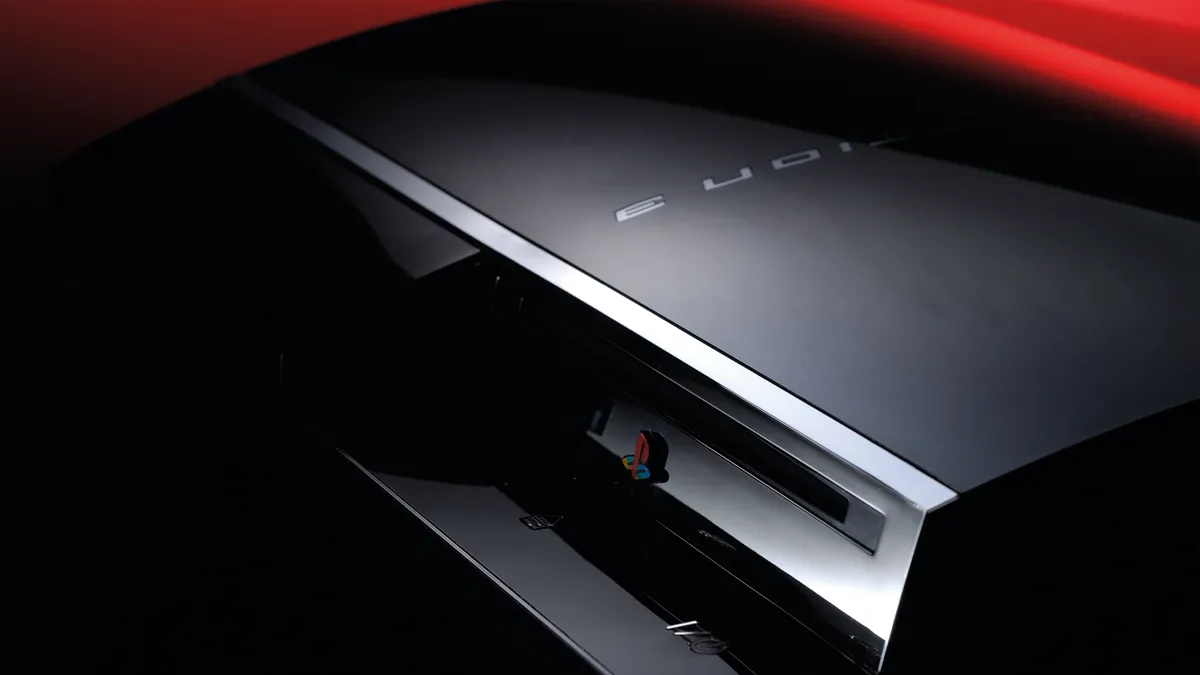
We also had more significant hardware differences between platforms 20 years ago, whereas today's systems all kind of orbit the same architecture, Nintendo's novel form factors and leaner processors notwithstanding. It's all just games running on computers in strangely shaped boxes at the end of the day, but I think there's something to be said for how hardware and the culture around it bleeds into software.
Though the consoles themselves may have helped set the stage for experimental games, the industry was also very different in the 2000s. The market was less mature. Games tended to be shorter, companies weren't facing the same forces of consolidation, development budgets hadn't ballooned so dramatically (even accounting for inflation), and the same 10 live service games weren't consuming so much of everyone's time and money. There are obviously a lot of other factors behind the past 20 years of industry sediment, but in short, the patterns that have emerged and settled today were much looser on the PS3 and 360, or just weren't there at all.
I actually spoke to Cho about the nature of scoping a game like this. "There's not really a single deciding factor on game scale in that sense," he reasons. "There's a lot of different elements that go into it.
"If you want a quick, rough overview, the director has kind of their idea of what they think would be a good scale for such a single-player game. And then from there they look into where they can place enemies, they go through level design, things like that, and see if that initial estimate is really the best length for their idea. Basically, it's a lot of trial and error, but that's the rough process."

