You are now subscribed
Your newsletter sign-up was successful
Want to add more newsletters?

Every Friday
GamesRadar+
Your weekly update on everything you could ever want to know about the games you already love, games we know you're going to love in the near future, and tales from the communities that surround them.

Every Thursday
GTA 6 O'clock
Our special GTA 6 newsletter, with breaking news, insider info, and rumor analysis from the award-winning GTA 6 O'clock experts.

Every Friday
Knowledge
From the creators of Edge: A weekly videogame industry newsletter with analysis from expert writers, guidance from professionals, and insight into what's on the horizon.

Every Thursday
The Setup
Hardware nerds unite, sign up to our free tech newsletter for a weekly digest of the hottest new tech, the latest gadgets on the test bench, and much more.

Every Wednesday
Switch 2 Spotlight
Sign up to our new Switch 2 newsletter, where we bring you the latest talking points on Nintendo's new console each week, bring you up to date on the news, and recommend what games to play.

Every Saturday
The Watchlist
Subscribe for a weekly digest of the movie and TV news that matters, direct to your inbox. From first-look trailers, interviews, reviews and explainers, we've got you covered.

Once a month
SFX
Get sneak previews, exclusive competitions and details of special events each month!
You could say we have James Bond to thank for Dungeon Keeper. After making games such as Populous and Theme Park, which tasked players with bringing joy and prosperity to their populations, Peter Molyneux had a more sinister idea as he watched secret agent 007 in action. "The idea of playing the dark side was sparked by watching movies, particularly James Bond films," he tells us.
"I was always fascinated by how the hero would infiltrate and destroy the villain's lair without a second thought about the incredible effort it must have taken to build. One scene that stuck with me was from You Only Live Twice, where an entire hollowed-out volcano – an engineering marvel, really – was obliterated. That got me thinking, 'What if players could step into the shoes of the villain and experience the pride (and chaos) of building and defending such a masterpiece?'"
Plumbing the depths

This feature originally appeared in Retro Gamer magazine #268. For more in-depth features and interviews on classic games delivered to your door or digital device, subscribe to Retro Gamer or buy an issue!
Both Carter and Molyneux credit Mark Healey, who later cofounded LittleBigPlanet studio Media Molecule, with helping to bridge the gap between early ideas and a more fully realized game world.
"At this point the entirety of Keeper was the idea: D&D, but you're running the dungeon," stresses Carter. "There was no design, art, setting, no mechanics or gameplay ideas. It wasn't until Mark Healey moved onto the project that we had anything visual to hook on to."
Molyneux is similarly quick to offer praise for Mark. "While we had a general idea of mixing dark, sinister elements with humor, it wasn't fully formed at the start," he agrees. "Mark Healey's brilliant, whimsical art style played a huge role in shaping that balance. His work brought a light-hearted, almost mischievous charm to the otherwise grim setting, and the team naturally built on that dynamic as we progressed."
What started to emerge from the team at Bullfrog was a novel blend of strategy and dungeon management. Playing as the dungeon keeper, your mission is to lead your minions through 20 diverse levels of cleverly designed scenarios, keeping them fed, housed, trained and satisfied whilst you build rooms and traps. To make this a smooth experience, beneath the hood lurked smart AI and a complex game engine built partly on the foundations of the 3D flying adventure Magic Carpet.
"The Magic Carpet engine was extremely capable but it was also designed for a very different style of game," Carter points out. "The first few demos of Keeper were entirely first-person," he continues. "One of my first jobs was to add real-time shadows, and shift the perspective to the top-down isometric view that a strategy and management game would need."
Meat-ing of minds

Finishing Dungeon Keeper was a process of whittling this giant rotating kebab of gameplay mystery meat
Simon Carter
First-person viewpoints would nonetheless end up being one part of the game. Using a Possession spell, players can see through the eyes of any character in their dungeon. It's an example of how Dungeon Keeper rolled ideas from different genres into one experience.
"We tried out so many ideas during the game's development that, by the end, we were all going a little bit mad," reflects Carter. "Finishing Dungeon Keeper was a process of whittling this giant rotating kebab of gameplay mystery meat we'd been keeping warm for four years, hacking off the bits that had gone a bit mouldy." Simon is quick to add that this was a much-loved kebab, though. "Importantly, all of this was done with love, excitement and enthusiasm, and a questionable disregard of culinary norms, basic hygiene and genre expectations," he summarizes.
Dungeon Keeper was released in July 1997 to overwhelmingly positive reviews. There was enough demand for second helpings that in November of the same year, Bullfrog released The Deeper Dungeons expansion pack. The original game and the expansion were combined the following year and packaged as Dungeon Keeper Gold.

While all of this was happening, great change was afoot behind the scenes. Immediately after Dungeon Keeper was released, Molyneux left Bullfrog, the studio he had cofounded in 1987 before it was acquired by Electronic Arts in 1995.
He departed to form Lionhead Studios, where he would go on to create games like Black & White and Fable. Looking back, Molyneux argues that the creativity of the first Dungeon Keeper game evolved from a less corporate, smaller-team approach.
"I firmly believe that small, focused teams can achieve remarkable things when given the freedom and time to evolve a concept," he reasons. "That was true in the '90s, and it remains true today. Games like Dungeon Keeper or Minecraft come from that space of raw creativity and iterative experimentation. Large, well-structured teams are excellent for refining and scaling ambitious projects, but they often lack the spontaneity and agility that small teams bring. There's a certain magic in the chaos of a small team that can't easily be replicated in a more corporate, regimented environment."
While Molyneux may not have been part of making Dungeon Keeper 2, numerous other long-term Bullfrog staff were. This helped to ensure that the essence of what made the first game great was kept intact, albeit by a larger team working in a more systematic way, but still evolved. Lead game designer duties were handed to Sean Cooper, the creator of cyberpunk strategy classic Syndicate, whom Simon Carter cites as an inspiring figure during the development of the first Dungeon Keeper. "Most of what I pulled into Keeper were ideas that I'd learned from Sean Cooper," affirms Carter.
Cooper had, in fact, been briefly involved at the very start of Dungeon Keeper before leaving Bullfrog for Virgin Interactive. His recollection of the more mature development setup as he returned for Dungeon Keeper 2 is a positive one. "It was a shift from writing games without many plans to getting really organised about what we were going to build," Cooper reflects. "It was about keeping everyone in full view of what we were all trying to do together. That's common practice today, but it was one of the first times for us."
Evolution not revolution
Games like Dungeon Keeper or Minecraft come from that space of raw creativity and iterative experimentation.
Peter Molyneux
Given the success of the first game, Cooper was keen to balance evolution with preservation.
"I wanted to keep the whole flipped premise of designing a dungeon and having the heroes trying to defeat you. For me, that was the biggest charm about Dungeon Keeper. But what I wanted to do was bring in more real-time strategy elements. Hence the turrets and more turret-focussed gameplay," he explains. In guiding players towards strategically placing different turrets, firing everything from cannon balls to lightning bolts, Cooper points out that Dungeon Keeper 2 was a forerunner to modern tower defence games.
It also leaned into aspects of popular real-time strategy games of the time. "We'd been playing a lot of Command & Conquer and Total Annihilation, and I wanted to get some of those elements into it," Cooper recalls. "Dungeon Keeper was essentially a building game. I wanted Dungeon Keeper 2 to be that plus real-time strategy. Building, but with a lot more attack and defence."
Despite having a strategic role, Cooper also spent time getting into the detail. "There was one day when I thought, 'I don't think we're getting it.' So I designed a level in the level editor," he says. "And that level – we cross-examined it, we questioned it – really unlocked things. It got filtered out across all the other levels."
Similar innovation was happening in the art department. "We decided we wanted to make a completely 3D game with 3D lighting, characters and animation," recalls art director John Miles. "I remember talking to [lead programmer] Alex Peters and he seemed quite excited about the idea. It was a technical leap," he adds. The pre-rendered sprites of the original were replaced with full 3D models. Close attention was also paid to cutscenes.
"For Dungeon Keeper 2 we took a bit more of a filmic approach," Miles explains. "We started working with Animare, a Paris-based animation company. We got them to do a lot of sketch work development of the characters, which led to them doing some animation trailers for us. I would go to Paris once a month to meet with them and make sure the trailer was going in the right direction. It was a nice two-way process because they would feed back on the characters we were producing in the game."

There's a certain magic in the chaos of a small team
Peter Molyneux
Did he have any favourite characters? "The Imps were really interesting," Miles replies. "We ended up making the Mistress and the Horned Reaper the two kinds of hero characters of the piece. In many ways it was one of those projects where it had been so well designed, with each of the character sets, it was like a chess board. The job of the art team was to bring out the strengths and weaknesses of the characters."
Also noteworthy on the artistic front was how much the lighting added to the atmosphere. "I think it was one of the first times I worked on a game where the lighting of the effects was visible on the environment," Miles laughs. "We used the lighting for the fog of war. So as you dug your dungeon, we could light up the space as we went. It lent to this sense of light and dark, the warm colours of fire, all of that kind of cinematic feeling."
Dungeon Keeper 2 included enhanced multiplayer and a sandbox mode called My Pet Dungeon among other improvements. Released in 1999, it earned high praise for expanding on the magic of the original. "It's like someone took every different gaming genre in existence and hurled them into a blender, whizzed it up and poured you out a great big helping of all the creamiest, loveliest bits," hailed PC Zone writer Charlie Brooker, who is now much better known for shows like Screenwipe and Black Mirror.
While he and other fans would no doubt have wanted the series to continue in the same deliciously demonic vein, cancelations and a few disappointments followed. A planned PlayStation 2 release of Dungeon Keeper 2 was shelved. Then the early development of a planned Dungeon Keeper 3: War For The Overworld was abandoned in 2000, as EA moved teams onto other priorities including Harry Potter games.
Moving on

Dungeon Keeper stood out for its ability to let players revel in their darker instincts while still keeping things playful and strategic."
Peter Molyneux
In 2008 the Chinese developer NetDragon released Dungeon Keeper Online after acquiring the licence from EA. But this was quite a different beast.
A massively multiplayer game with World Of Warcraft elements, it didn't reach far beyond China before servers were shut in 2013. The following year, EA released Dungeon Keeper Mobile on iOS and Android to a controversial reception, with both fans and critics bemoaning its overuse of microtransactions.
The following year brought more positive news. A group of dedicated fans who had met on the Keeper Klan forum and formed Subterranean Games (later Brightrock Games) released War For The Overworld. This crowdfunded unofficial spiritual successor was named after the strapline of the abandoned Dungeon Keeper 3 and had Molyneux and Carter's approval.
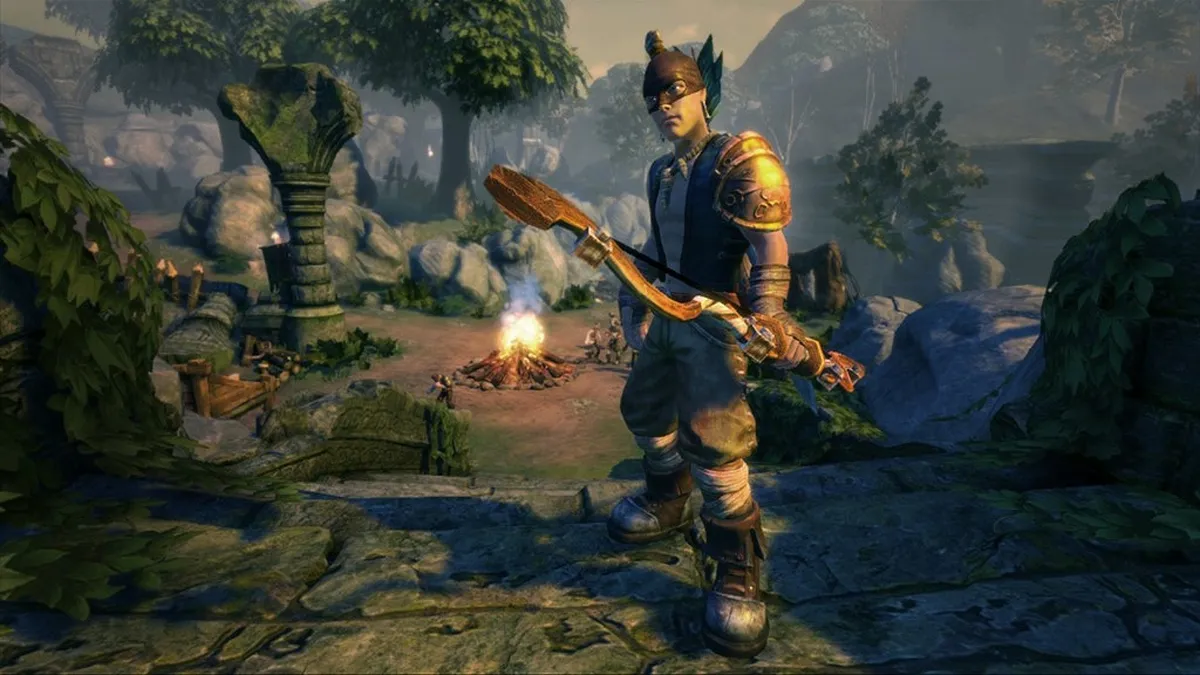
"Seeing a concept you've nurtured continue to evolve is both thrilling and humbling," Peter reflects on the various evolutions of his original idea. "It's incredible to watch new teams bring their own vision to the franchise, even if I don't always agree with the design choices," he adds.
So how does he rank Dungeon Keeper among his games? "Dungeon Keeper is undoubtedly in my top three," he replies. "It holds a special place in my heart, right alongside Fable and Black & White. Each of those games was a unique creative journey, but Dungeon Keeper stood out for its ability to let players revel in their darker instincts while still keeping things playful and strategic."
Simon also has some sage reflections on the enduring appeal of the eclectic series. "Keeper was, and is, a slightly crazy project," he contemplates. "It was a sandbox game. A management simulation. A tower defence game. A first-person shooter. It was multiplayer. It had sophisticated AI. It was a fantasy game. It was a comedy. It played with morality – it was good to be bad."
With so much packed in, he argues, the game was bound to have broad appeal. But more than anything he adds, "I like to think that the love and madness that the game was built upon peeks through, just a little."
Psst! There's a Fable reboot in the works right now, and it's launching in 2026
You must confirm your public display name before commenting
Please logout and then login again, you will then be prompted to enter your display name.