


Naturally, a Resident Evil Requiem fan appreciates the delicate nature of heroes Grace Ashcroft and Leon Kennedy, but a true connoisseur reaches in the back for something rough and bleeding from the eyes. They're loyal to mutant Selena Corey, the septic diva Capcom clearly made as more zombie meat to cut through, but who – to actor Isabella Inchbald's delight – has instead become a star.
After seeing so much Resident Evil cosplay, fan art, and even soft rock songs dedicated to the zombie, I had to talk to Inchbald about Selena Corey's current status as the It-girl of Rhodes Hill Care Center. The actor – whose past credits include morally dubious scientist Lucy in Dying Light: The Beast, and the English voice of the eponymous nun Indika in the existential horror hit from 2024 – can't believe it.
Though, when I first had my head split open by Selena's witch scream in Resident Evil Requiem, I could tell she was special. It doesn't hurt that, compared to the other patients of Rhodes Hill Care Center, where T-virus has popped everyone's brain like a birthday balloon, Selena Corey is somehow still gorgeous.
The mutant, whose name and story players only know through patient records strewn throughout Requiem, is a red rose with all its petals plucked. She was originally admitted to the Care Center for her histrionic personality disorder, which provides a clinical explanation for the romantic white ruffles she sways with, despite the various bile stains on her dress, as well as the way she lingers in the West Wing lounge, crooning fluttery oohs between nonsensical giggles.
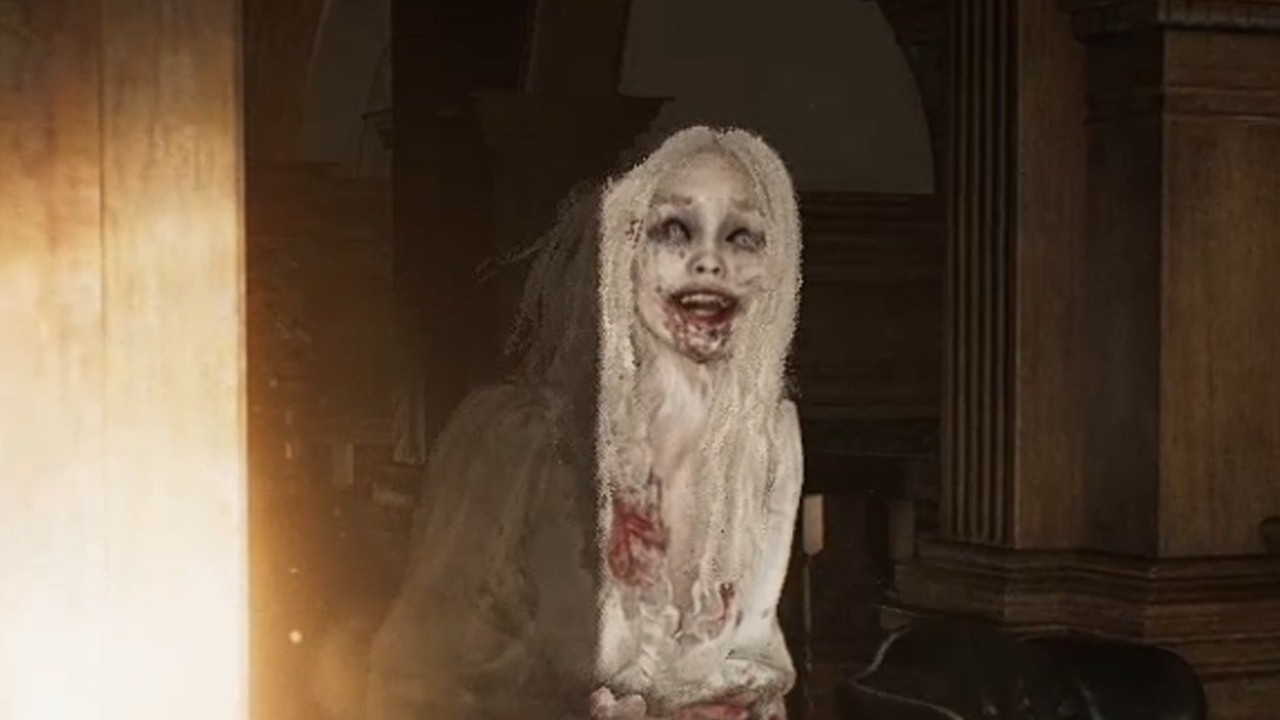
During our recent interview, Inchbald tells me she takes no credit for Selena's history. She didn't provide motion capture movements for the character, and Capcom hadn't given her enough details during recording for her to invent her own. But Inchbald says, "I think what I was channeling when I was recording her was kind of half-child and half-siren. She's an attractive zombie, who is really a little girl that wants attention."
"Thankfully, that matches her backstory a little bit," she says.
It seems that Capcom – which, deep in Pragmata's release cycle, declined to comment for this article – never anticipated Selena's status as fan-favorite. The developer didn't even mention the character's name as Inchbald recorded her distinctive mermaid melody.
The 2024 audition that led to Inchbald getting cast as the Resident Evil Requiem lounge singer required her to do "a bunch of zombie noises" for 20 minutes, and she didn't know – even during recording – that she was working on a Resident Evil game. Inchbald says, "I didn't even know that my character was called 'Selena Corey,' actually, when I was recording. I didn't even know that."

Capcom did, at least, share its goal to make Requiem's monsters more empathetic. The T-virus victims were meant to seem as if they were creatures "in between human and zombie," says Inchbald, "so they still retain some of their memories, and they're still sort of behaving like humans at certain points."
"That obviously fed a lot into the direction [for Selena Corey], rather than just, 'Be a zombie on a killing spree," says Inchbald. "It was a bit more cerebral than that."
Without hardly any other guidelines to use, Inchbald describes her work on Resident Evil Requiem as a "let loose kind of recording experience." She was told to sing, but not what to sing, or how. Ultimately, "It was quite liberating to be emoting in that way, rather than being restricted by words – words that you haven't written," says Inchbald.
In-game, surrounded by vomit and hospital rooms, Selena's song is a drama queen's proclamation that no doctor, no hazardous smell, and not even T-virus itself can kill her misguided ego. For many female horror fans who have rallied around similarly sadistic princesses, like Mia Goth's Pearl, or Katharine Isabelle's American Mary from the 2012 cult hit, these characters represent the cycle of self-obsession and self-destruction that comes when little girls are encouraged their whole lives to seek (a man's) approval.
But, from a practical standpoint, "I really am shocked in the best way possible that fans love her so much," Inchbald says to me. "Obviously, when you're playing a big role in a video game, you might think, 'Oh, where might this go?' But when you're playing a smaller role – and, frankly when you're playing a zombie, you don't think that's going to really amount to any kind of recognition."
Resident Evil Requiem changed that expectation. So "I'm glad that I've made them feel something," Inchbald says of Selena Corey's admirers, "and they've, in return, made me feel something, too."

