Join The Community





There is no greater symbol of personal success in the multiplayer FPS than your kill/death ratio. Some developers try to mitigate its precedence – Battlefield 6 asks you to think about more than stacking up bodies and increasing your own individual score – but even when a game encourages different types of play, it's hard, after decades of deathmatches and kill streaks, to redirect the competitive FPS dynamic.
This is part of the challenge faced by Expression Games. Hell Let Loose: Vietnam is a multiplayer shooter with 100-person lobbies. It's also difficult, built around teamwork and has a slower pace than its peers. Historical accuracy is vital to its creators and followers – but it's set within one of the most morally opaque wars of the 20th century. Even with the success of the original Hell Let Loose as proof of concept, how do you create a tactical FPS that's rooted in fact and realism without straying into dry simulation-game territory?
Into Battle

Big in 2026 spotlights the 50 most anticipated games of the year, with developer access that you can't get anywhere else. Join us for new Big in 2026 previews every day in January.
The act of shooting and killing is part of what separates Vietnam from its competitors. There's no 'time to kill' as such – two bullets in the upper body are enough to do the job, or have the job done to you. There's also no real individual scoring system, or visual or haptic feedback. There are no hit markers, no popups to confirm a kill. One of the best and tensest moments in our time with the game comes when we spot what looks like the silhouette of a head and shoulders about 100 metres in front of us. We crouch, pull our M-16 into our cheek – holding right-mouse to aim, Shift to steady our breathing – and fire seven rounds at it. It looks like a hit, but we have to run over there and find the enemy's body before we can be certain.
Rather than being the 'point' of the game, kills start to feel like a means to an end,something you have to do in order to hold and secure territory. The absence of any post-kill fanfare is also true to Expression's aspirations. In keeping with the team's desire for authenticity, it creates a sense of frankness and detachment. However, it risks alienating new players – there's a chance some FPS fans might bounce right off.
"It's a hard game to fully understand," admits Kieran D'Archambaud, Expression's co-founder and technical director. "With Hell Let Loose 1, we do a free weekend on Steam and get a surge of people, but a portion of them don't stick around. So, one of the things we're focusing on is having tutorials for all the major aspects of the game."
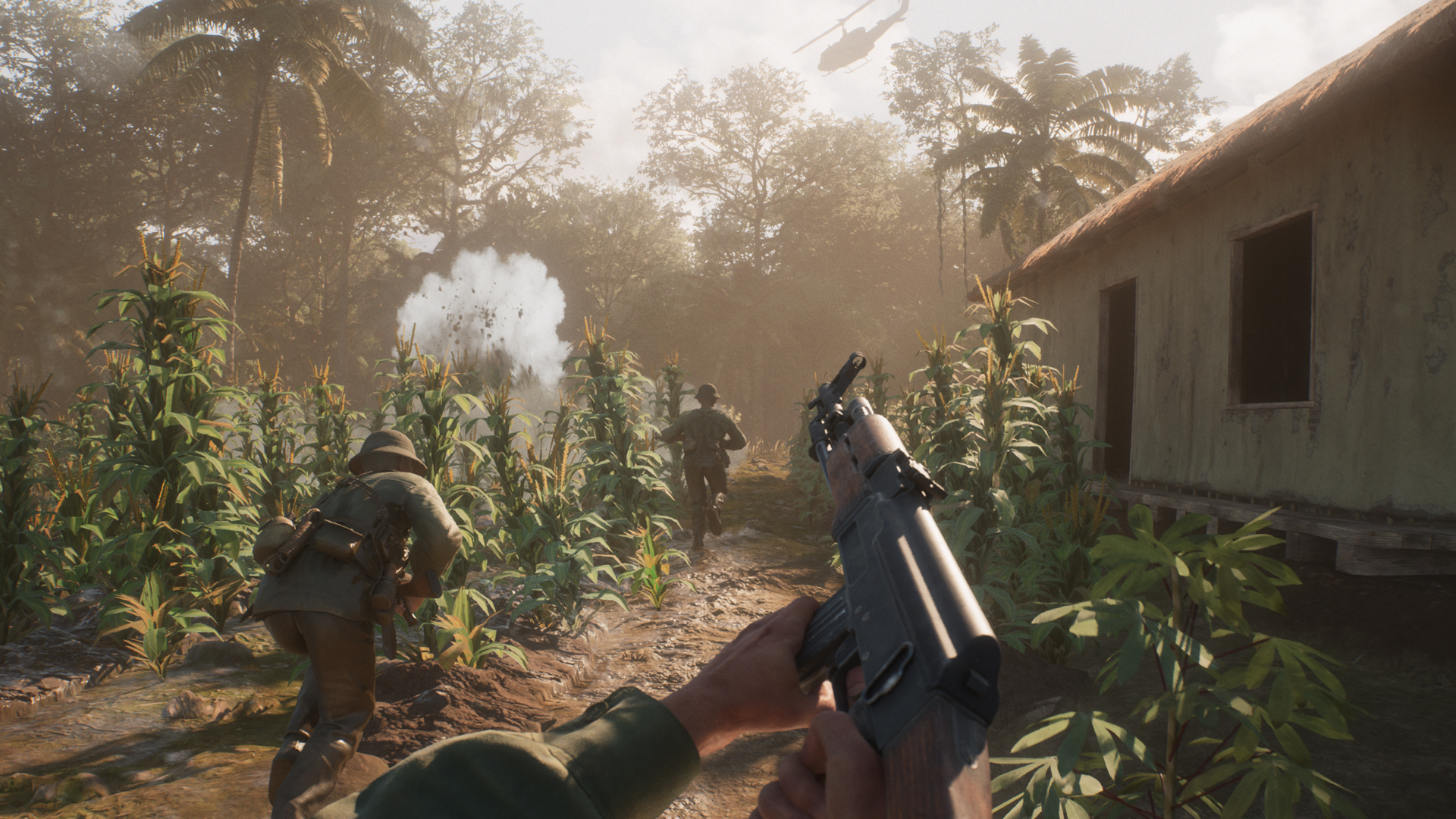
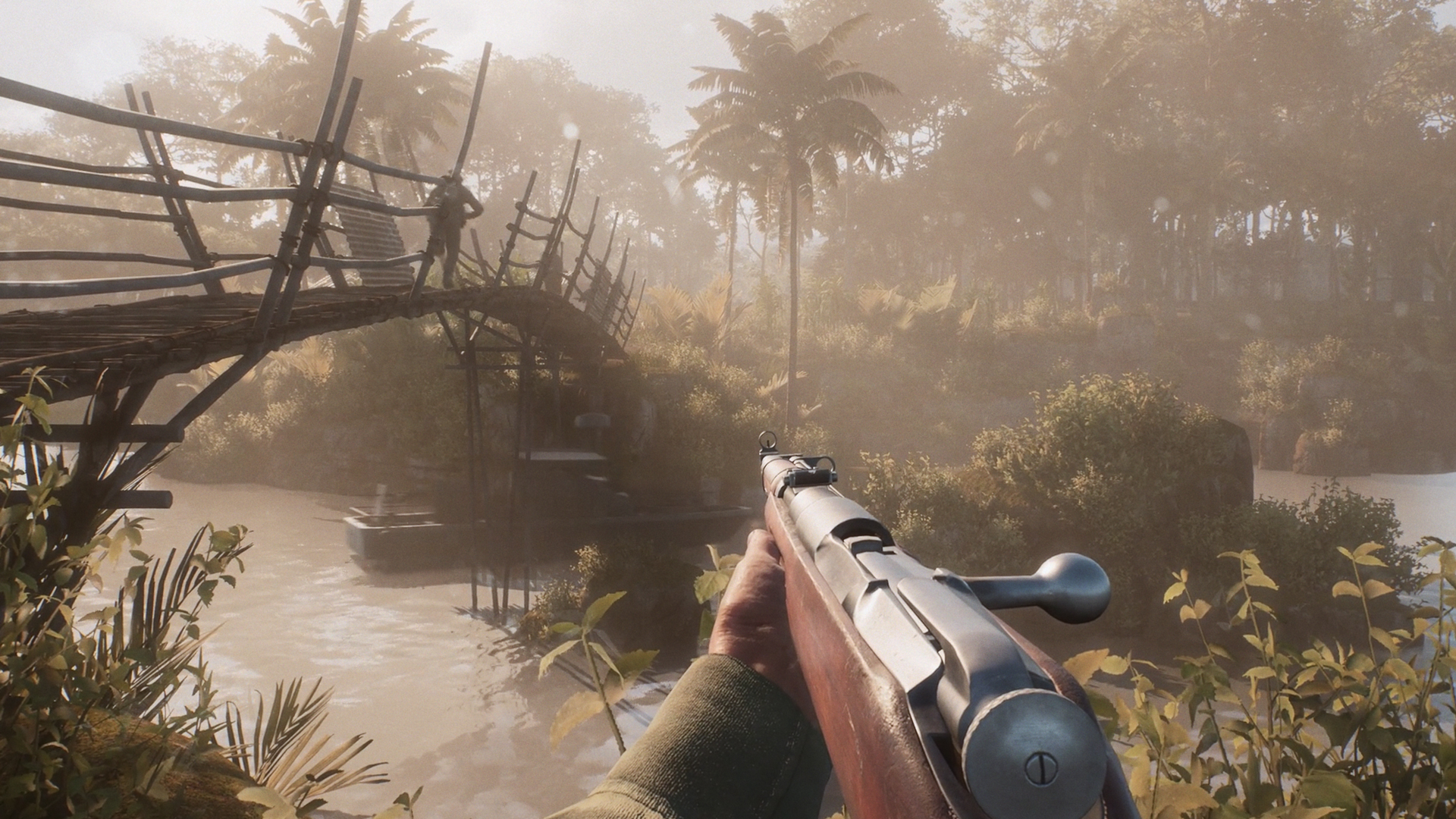
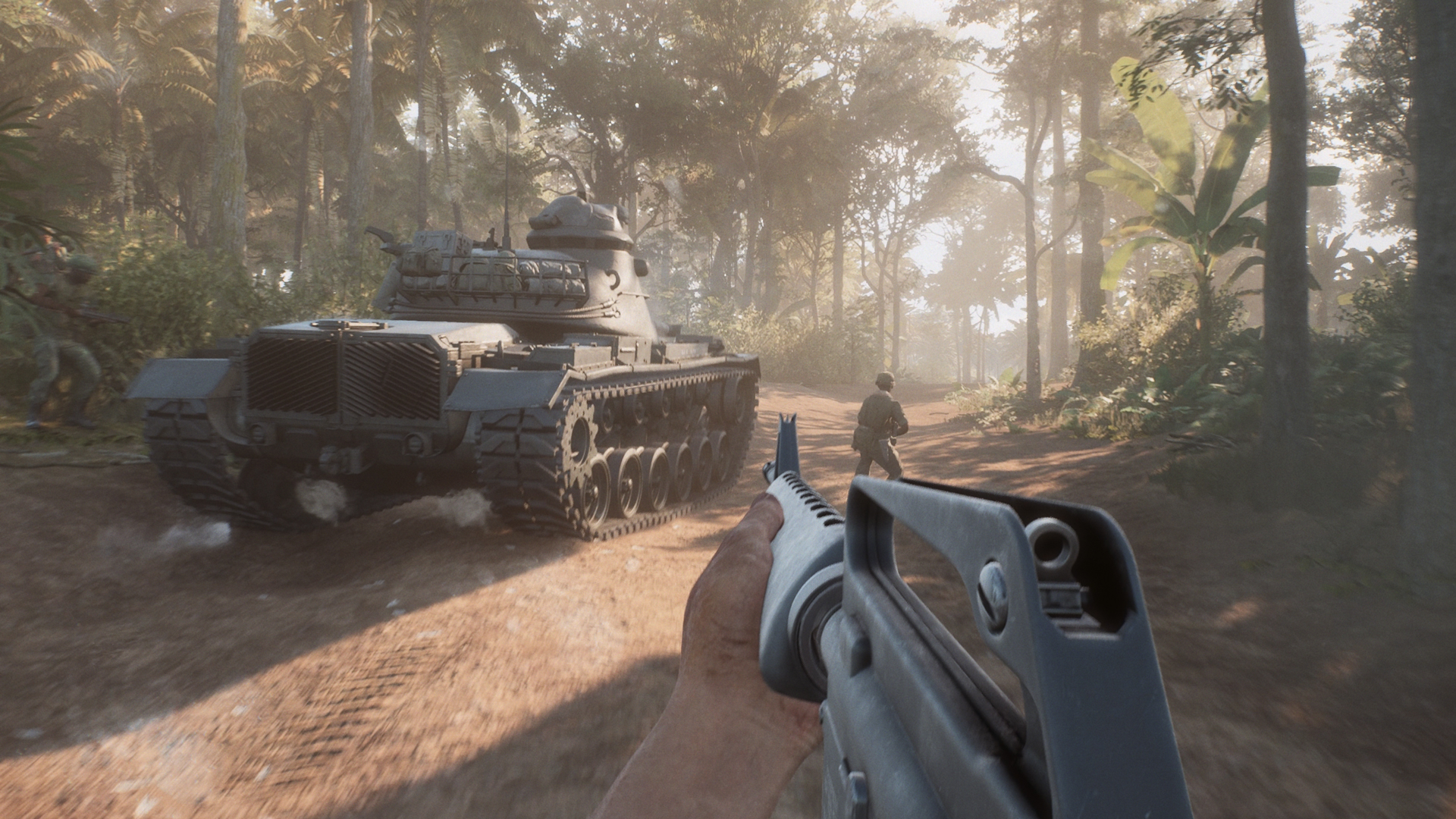
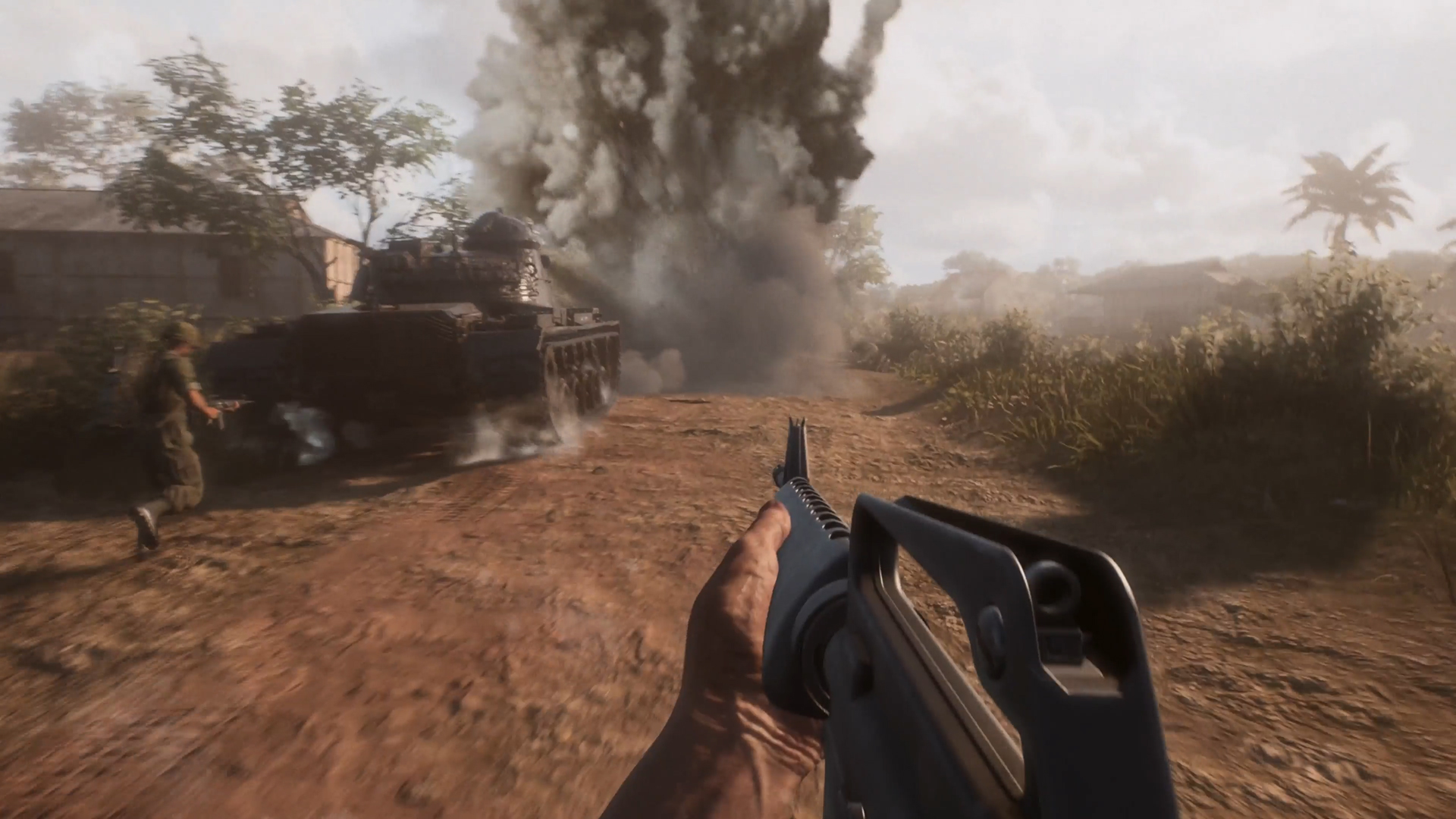
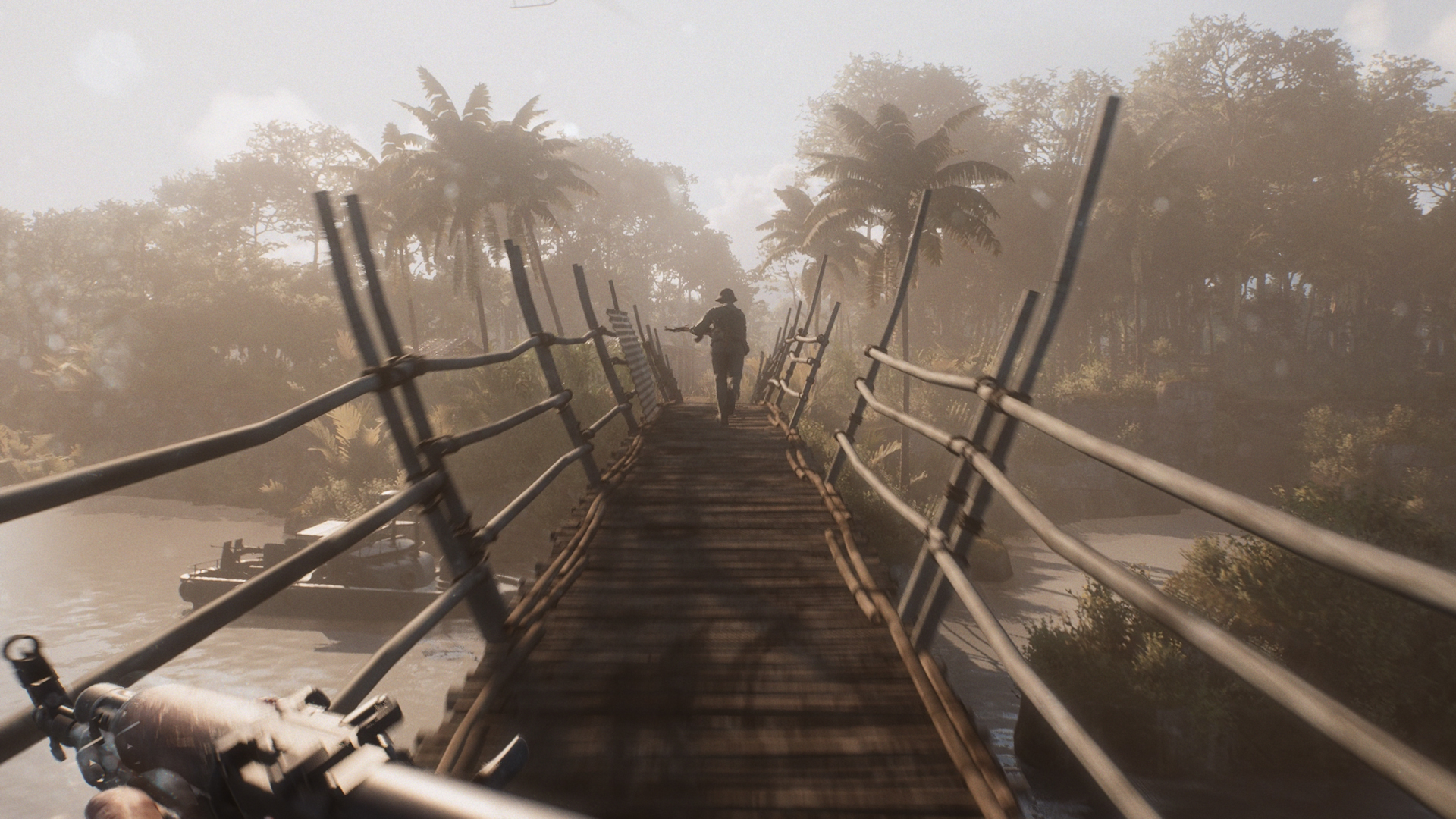
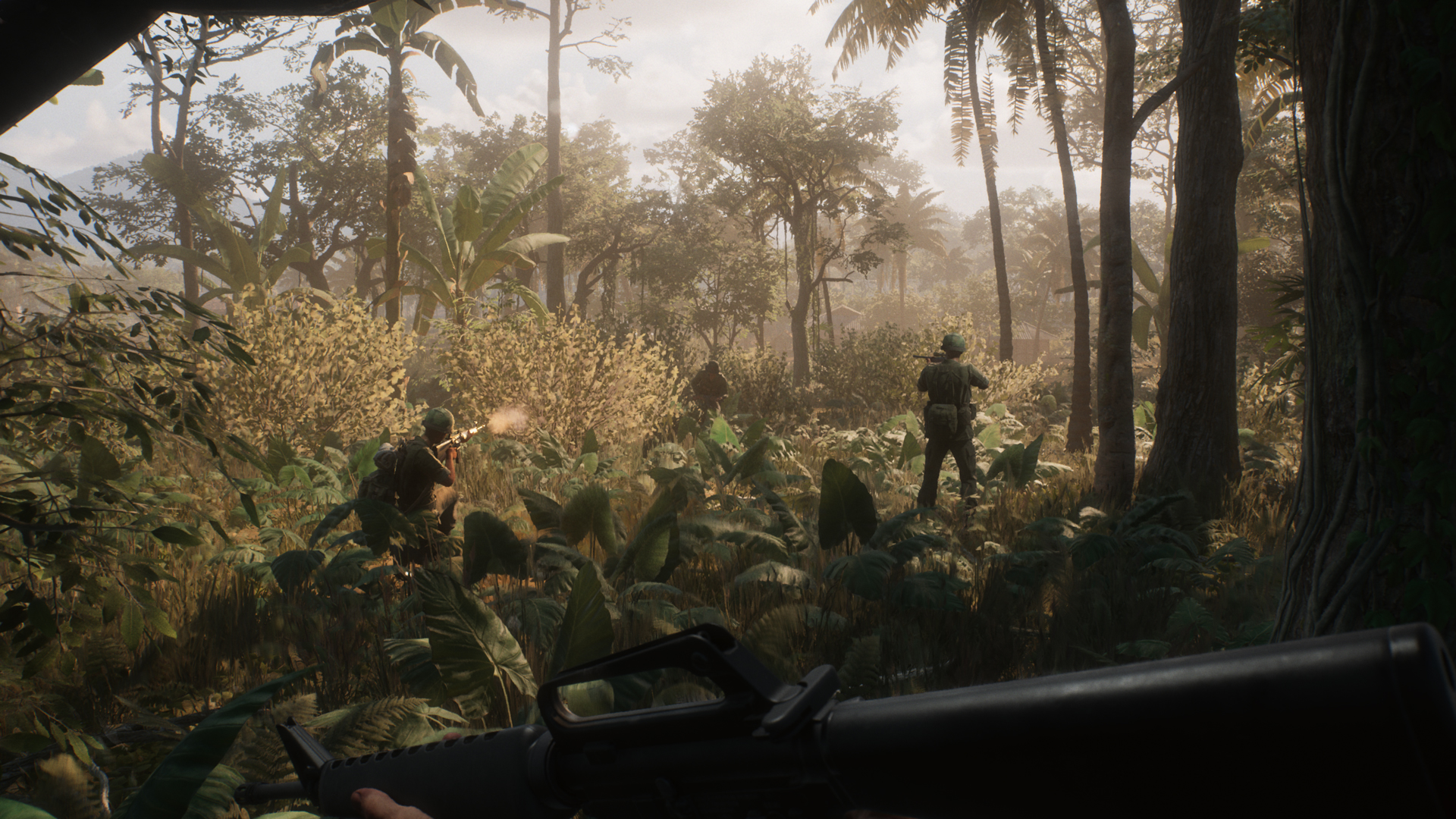
At the core of the game is a constant, often arduous, push and pull. There hasn't been a major Vietnam FPS since 2017's Rising Storm 2. With plenty of Shellshock: Nam '67, Vietcong and Battlefield Vietnam players also looking for a home, that gives Expression an opportunity to tap into an under-served playerbase. But there's a reason Vietnam games are rare. Building a believable jungle is technically demanding, and even if you perfect it, that introduces another conflict: the environments might be suitably dense, but now players can't see one another. And then you have to deal with balance.
In the original Hell Let Loose, the various armies of World War II are all similarly and equally armed. Vietnam is a different story – the equipment and tactics of the two sides are vastly different. Expression has to stay true to reality but also guarantee that neither team can easily overpower the other. As such, the NVA side can access a system of tunnels under each map, which helps them infiltrate control points without risking open combat.
The US, meanwhile, can use helicopters; if a control point looks like it's ready to fall, they can rapidly bring up reinforcements to help defend it or push out the last remnants of resistance. Matches are asymmetrical, but they're designed to be fair, too. "We run one, maybe two playtests every week, and you never know which side is going to win," D'Archambaud says.
"I think the team that wins is the team with the highest 'morale,' for want of a better description," creative director Matt White continues. "It's easy to say, 'This side won because they've got a better tank', but they haven't. They're more motivated, more organised and have more communication."
While the first game provides ready-made heroes and villains, for the sequel Expression has injected more nuance. Factual accuracy is important – the weapons, uniforms, locations and even details such as the objects and decor inside buildings are all lifted from historical documentation. But ultimately, in White's words, the game is supposed to serve as a "doorway" to encourage players to learn more for themselves.
As such, some elements of the Vietnam war are not represented here – though you fight through towns and villages, you won't find any civilians. If FPS developers have shied away from Vietnam, White suspects it's because the nature and morality of the war are difficult to characterise.
"The team that wins is the team with the highest 'morale', for want of a better description"
"The Vietnam war is very murky," he says. "I think there's an ingrained aspect in American culture about the Vietnam war. To be truthful, America's conduct in the Vietnam conflict was far from exemplary, and so I think there's a cultural hangup." "A lot of people might have different opinions about what was right and what was wrong, but what we've focused on is historical accuracy," D'Archambaud says. "We can always point to books and say, 'This is documented here'. I think, for a lot of developers, they foolishly wouldn't do that, and so they could get into a lot of problems later on."
An asymmetrical setup that is also neatly balanced; slow-paced, punishing combat that doesn't make players feel overwhelmed or frustrated; and authenticity combined with fun. Expression has to reconcile all these things. Nevertheless, Hell Let Loose: Vietnam has the potential to be a weighty alternative to the multiplayer FPS mainstream, and a game where improving your kill-death ratio is just a supplemental part of a richer experience.


You must confirm your public display name before commenting
Please logout and then login again, you will then be prompted to enter your display name.